


More news on this day
Ben Gurion Airport, Israel’s main international gateway, is grappling with an unprecedented influx of United States military aircraft as Washington rushes aerial refueling tankers to the region amid a sharp escalation with Iran, raising concerns about parking shortages, potential schedule disruptions and the vulnerability of a key civilian hub in any wider conflict.
Get the latest news straight to your inbox!
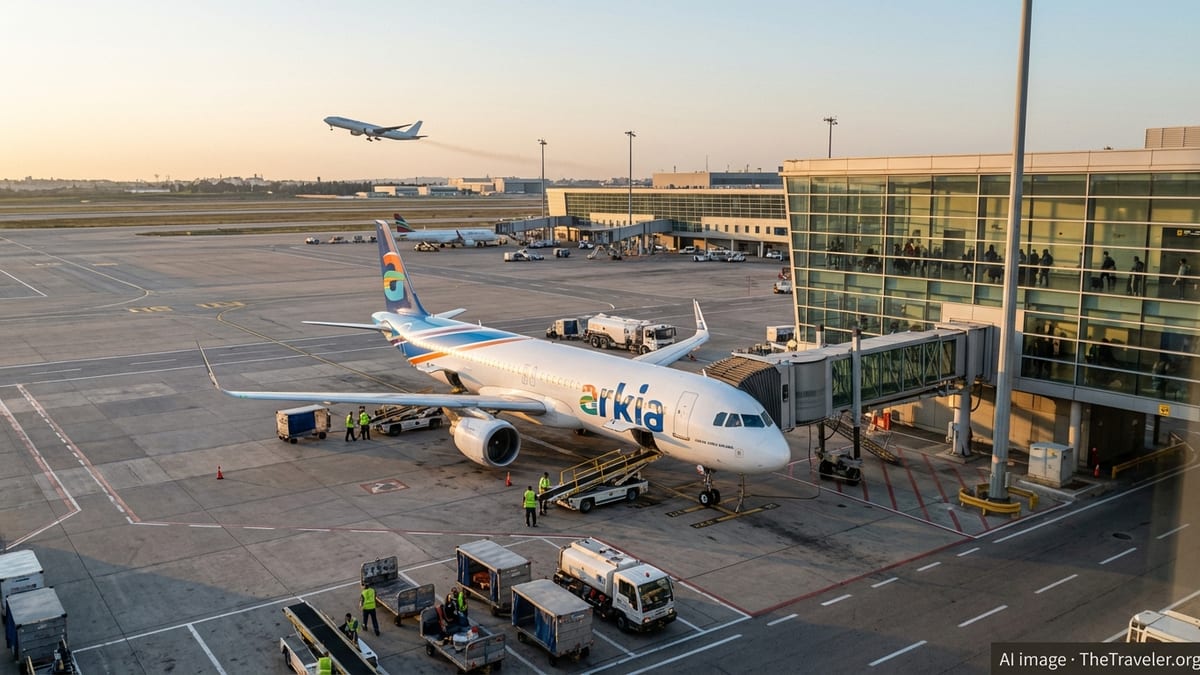
Ben Gurion’s tarmac turns into a military staging ground
Publicly available imagery and aviation reporting indicate that fleets of US Air Force KC-135 and KC-46 tanker aircraft have occupied large sections of the aprons at Ben Gurion Airport for months, part of a broader American buildup across the Middle East that began earlier this year. Analysts describe Ben Gurion as a critical logistics node for any long-range air campaign, offering rapid access to air corridors toward the eastern Mediterranean and the Persian Gulf.
Recent coverage from Israeli and international outlets suggests that at the peak of the deployment, dozens of US tankers and cargo aircraft were parked at Ben Gurion, effectively turning parts of the commercial airport into a forward operating base. Reports note that additional refueling planes are now being dispatched to Israel as hostilities with Iran intensify, with a portion of the new arrivals expected to use military airbases while others continue to cycle through the country’s main civilian gateway.
Security experts point out that the clustering of high-value military assets alongside packed passenger terminals creates a complex risk environment. While Ben Gurion is heavily fortified and has continued operating during previous rounds of regional violence, the visible presence of US aircraft associated with potential long-range strikes on Iran has raised the profile of the airport as a symbolic target in the eyes of hostile actors.
The situation underscores how a commercial facility built to handle holiday traffic and business travel has, at least temporarily, taken on the added role of staging platform for great-power military operations, a transformation that is drawing close attention from both aviation planners and nervous passengers.
Civil aviation feels the strain as parking space dwindles
Travel industry reports from Israel describe growing stress on Ben Gurion’s day-to-day operations as the US deployment occupies stands normally used by airliners. The Israel Airports Authority has publicly warned that a shortage of parking positions could force reductions in the summer schedule, with tens of thousands of tickets potentially at risk if military aircraft do not vacate key areas of the field.
Local media coverage has highlighted concerns among carriers and tour operators who depend on the busy July and August peak season. Airlines have been watching capacity bulletins closely, with some reportedly evaluating minor timetable adjustments and aircraft swaps to cope with constraints on overnight parking and turnaround times.
Travel commentary circulating on social platforms in Israel reflects mounting anxiety among would-be vacationers, many of whom booked trips months in advance. The prospect of last-minute schedule changes has prompted some travelers to seek flexible fares or consider departures from alternative airports in the region, even as official notices still describe Ben Gurion as fully operational.
For now, most flights continue to depart and arrive on schedule, but aviation planners caution that the margin for disruption is shrinking. Any additional military arrivals at Ben Gurion, or a sudden security scare requiring ground holds, could quickly ripple through the tightly packed summer timetable and complicate onward connections for international travelers.
Military basing plan shifts, but pressure on gateway remains
In the past week, new briefings and media reports have pointed to an evolving basing strategy designed to ease some of the immediate pressure on Ben Gurion. Israeli military spokespeople and local outlets indicate that many of the additional US refueling aircraft now en route to the country are expected to be stationed primarily at dedicated air force bases rather than at the main commercial airport.
Even with that shift, however, American tanker fleets already at Ben Gurion are not departing as quickly as some Israeli civil aviation officials had hoped. Coverage in Israeli newspapers describes a complicated negotiation over how many US aircraft can remain on site in the near term, with local authorities seeking to cap the number of parking positions used by foreign military planes while Washington weighs operational demands linked to potential strikes on Iranian targets.
Defense analysts note that dispersing tankers across multiple locations, including southern Israel’s Ramon Airport and inland airbases, could reduce the operational risk of missile or drone attacks on any single facility. Yet Ben Gurion’s unique combination of long runways, extensive support infrastructure and proximity to major logistics hubs means it is likely to remain a key waypoint for US aircraft for as long as the current confrontation with Iran continues.
For passengers, the behind-the-scenes basing debate translates into a simple question: how many of the busy hub’s gates and stands will be reserved for commercial flights, and how many will continue to be occupied by gray-painted refueling jets that never appear on departure boards.
Heightened Iran tensions sharpen focus on aviation security
The growing footprint of US aerial refueling operations in Israel comes against the backdrop of an intensifying confrontation with Iran, marked in recent days by cross-border strikes, attacks on bases hosting American forces and new threats around key maritime chokepoints. Open sources tracking the conflict describe the tanker deployments as a central enabler of any extended air campaign over long distances, allowing combat aircraft to operate at range from Iranian territory.
At the same time, aviation authorities and travel risk consultants are reassessing the exposure of major civilian airports in the eastern Mediterranean to spillover from the conflict. Ben Gurion has previously adjusted procedures after missile alerts, including temporary restrictions on passenger loads and changes to runway usage when regional threats spiked.
So far, no broad international flight bans have been imposed on routes into or out of Tel Aviv, and major airlines remain on the schedule. Nonetheless, updated travel advisories from several governments reference the volatile security climate, citing the possibility of sudden airspace restrictions, delays or reroutings if hostilities with Iran escalate further.
For global travelers, the picture remains highly dynamic. Those planning trips through Ben Gurion in the coming weeks are being advised by travel specialists to monitor airline communications closely, allow extra time for security procedures and remain flexible about itineraries in case heightened tensions translate into operational constraints at Israel’s main gateway.
Travelers weigh alternatives as summer peak approaches
With the high summer season now underway, the interplay between military priorities and civilian demand is becoming more acute. Israel’s tourism sector had anticipated a strong rebound, and outbound leisure travel from Tel Aviv to European and Mediterranean destinations remains in high demand despite the geopolitical backdrop.
Industry analysts say some passengers are now actively comparing routings through regional hubs such as Athens, Larnaca, Amman or Gulf airports when booking multi-leg journeys, in part to reduce exposure to any disruption at Ben Gurion. While there is no mass diversion of traffic yet, booking patterns suggest a modest uptick in interest for itineraries that avoid tight connections in Tel Aviv.
For those who continue to travel via Ben Gurion, the visible presence of US military aircraft on nearby stands offers a stark reminder of how closely civilian mobility and strategic calculations are intertwined in the region. Widebody holiday jets taxiing past lines of American tankers capture a moment in which global leisure travel brushes up against the front lines of a simmering confrontation with Iran.
How long that image defines the traveler experience at Israel’s primary airport will depend on decisions being taken far from the departure halls, in defense ministries and command centers monitoring radar screens and regional strike plans. Until those decisions yield a sustained easing of tensions, Ben Gurion is likely to remain an unusual hybrid: a bustling civilian hub whose runways and ramps are shared with a military buildup aimed at shaping the trajectory of a wider Middle East crisis.