


More news on this day
Travelers connecting through the United States on international flights are beginning to see a quieter revolution in the baggage hall, as new digital systems shift security checks away from crowded customs areas and toward remote, data driven screening that aims to cut connection times and missed flights.
Get the latest news straight to your inbox!
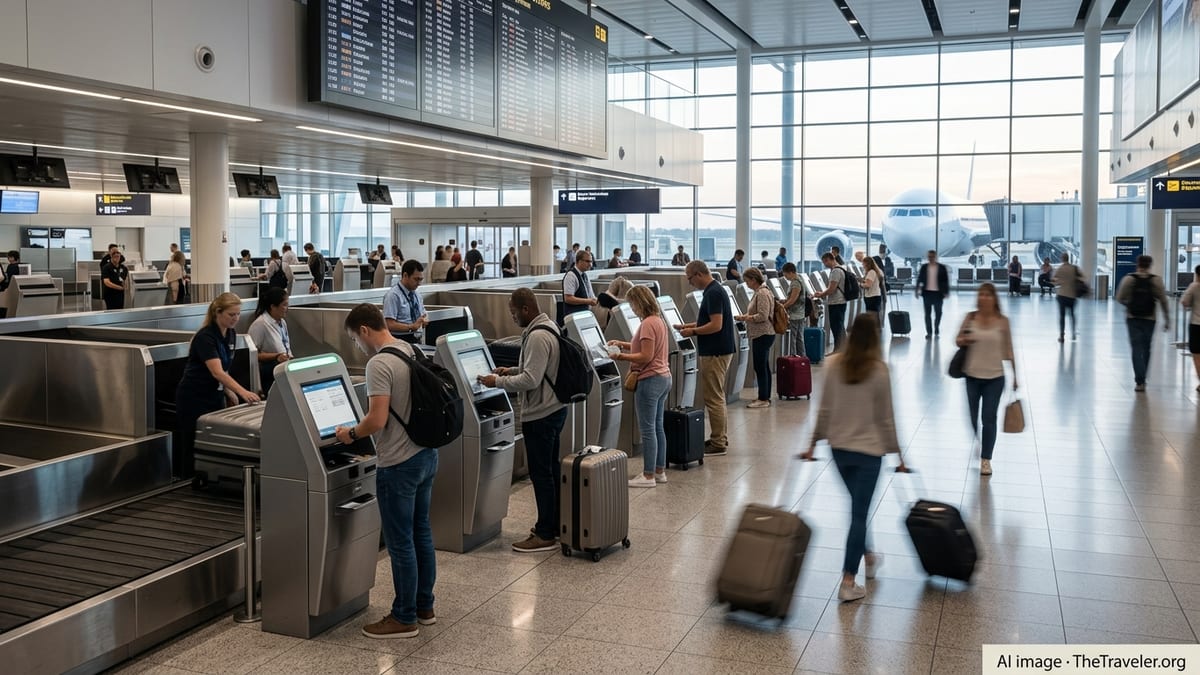
Remote Baggage Screening Cuts Recheck Time
Publicly available information shows that one of the most visible changes for passengers is the introduction of International Remote Baggage Screening, or IRBS, a data driven system that allows checked bags to be cleared by U.S. authorities without passengers reclaiming them during connections. Instead of waiting at a carousel in the customs hall and lining up to recheck luggage, eligible travelers can see their bags automatically transferred to their next flight.
According to a recent description from the U.S. Department of Energy’s Pacific Northwest National Laboratory, IRBS links security data gathered before and during a flight with screening processes in the United States, so that additional baggage checks can take place remotely while aircraft are en route. This supports a broader “One Stop Security” vision in which bags that have already been screened to U.S. standards overseas do not need to go through the same procedures again on arrival, reducing touchpoints for each suitcase and speeding the flow of people through major hubs.
Trials of the concept are already in operation on select routes. Published airline information indicates that pilots on services from Sydney to major U.S. gateways such as Los Angeles and San Francisco allow connecting passengers to bypass the traditional claim and recheck step. Early results reported from these routes suggest connection journeys can be shortened by up to three quarters of an hour, a significant gain at congested airports where layovers are often tight.
Industry and government reports indicate that the next phase of the program is focused on expanding IRBS and similar initiatives to more international origins and additional U.S. hubs. As the dataset of screened bags grows and more partners share digital baggage information, these remote screening platforms are designed to handle higher volumes while maintaining the same or higher security standards.
Global Baggage Messaging Moves Into the Cloud
Behind the scenes, a major driver of the transformation is a shift in the way airlines and airports exchange information about each bag. In May 2026, the International Air Transport Association announced the launch of its Baggage Community System, a secure digital platform that supports a newer messaging standard known as Baggage XML, or BIX. The system is intended to replace decades old baggage messages that were never designed for today’s volume of data or the need for real time tracking.
According to IATA’s published material, the Baggage Community System allows airlines, airports, ground handlers and technology providers to share baggage events through a single cloud platform instead of multiple point to point connections. Major North American and global carriers, including several with large U.S. networks, are listed among early adopters, alongside hub airports that act as key connection points for international traffic.
This modernized messaging layer is crucial for programs such as IRBS and international to domestic baggage data screening, because it ensures that each handoff in the journey is recorded and can be verified electronically. When a bag is checked in at an overseas airport, boarded onto a flight, moved through a transfer belt system or loaded onto a connecting aircraft in the United States, those events can now be captured in a consistent digital format accessible to authorized partners.
Industry baggage strategies published by IATA frame this shift as part of a decade long roadmap to reduce mishandling, standardize tracking in line with Resolution 753 requirements and open the door to more predictive tools. In practical terms, that means fewer lost bags during tight international connections and better information when disruptions occur.
Biometrics and Digital Identity Streamline Checkpoints
In parallel with new baggage data systems, U.S. travel is gradually integrating biometric identity checks and digital credentials at airport touchpoints that include bag drop, security and boarding. Documentation from the Department of Homeland Security and the Government Accountability Office highlights the continuing rollout of facial comparison technology to verify travelers at entry and exit, creating a biometric record that can be linked with travel documents and, increasingly, with baggage records.
Industry initiatives complement these government programs. IATA’s Digital Identity program describes how passengers may eventually move through bag drop, security screening and immigration using a digital wallet and biometric verification rather than presenting traditional documents at each step. The goal is a contactless, “walk through” experience in which a traveler’s face or token opens each checkpoint in sequence, while their baggage simultaneously follows a verified and traceable path in the background.
U.S. and international airlines are already using versions of this approach at major hubs. Publicly available information from large network carriers describes the expansion of “touchless ID” at check in areas and bag drops, allowing eligible customers to check bags and clear security without producing a physical passport or driver’s license. On some transatlantic connections, participating travelers who meet specific criteria can also bypass redundant security checks, with reports suggesting time savings of up to 45 minutes on the ground.
These developments are closely tied to the push for digital baggage transformation. When a traveler’s identity is verified biometrically and linked to a digital travel credential, the systems that track and screen their bags can rely on that verified link rather than repeating document checks. Combined with digital baggage messaging, this allows U.S. airports to design more direct flows for international transfer passengers, particularly at hubs that handle large volumes of long haul traffic.
Electronic Tags and End to End Tracking
Another piece of the new baggage ecosystem is the spread of electronic baggage tags and enhanced bag tracking tools. Guidance from IATA on electronic tags explains that these devices are designed to replace or complement traditional paper tags, storing bag data in a digital format that works within existing baggage systems while enabling more flexible check in options.
Electronic tags make it possible for travelers to tag bags at home or at off airport locations, then hand them over at a dedicated drop point when arriving at the airport. For U.S. gateways handling large volumes of international traffic, this can reduce congestion at check in counters and speed the journey to security and customs. As data from Bluetooth trackers and other consumer devices is integrated with airline systems, subject to passenger consent, operators expect to gain a more detailed picture of each bag’s location throughout a multi leg journey.
At the same time, global tracking platforms such as SITA’s WorldTracer continue to evolve. Documentation from technology providers describes how these systems, developed with IATA, give airlines and airports a shared environment for tracing and recovering mishandled baggage worldwide. When paired with modern messaging standards and better tracking at key points in the journey, these tools can shorten the time it takes to reunite passengers with bags that do not make their original connection.
For travelers, the combination of electronic tags, richer tracking data and improved global tracing means more timely updates on mobile devices about where bags are, when they were loaded and how they will reach a final destination. Over time, industry reports suggest that these capabilities could also support more automatic rebooking and rerouting of luggage in the event of missed connections or delays.
What International Travelers Can Expect Next
As these initiatives expand, international passengers connecting through the United States can expect a gradual but noticeable shift in how they interact with checked baggage. On routes and at airports participating in IRBS and related programs, more travelers will find that their bags are tagged through to their final destination and cleared remotely, without the need for an interim claim and recheck step.
Published reports from travel industry bodies, including the U.S. Travel Association’s work on seamless and secure travel, frame the expansion of international to domestic baggage data screening as part of a broader effort to harmonize security requirements across borders. By accepting security standards at trusted foreign airports and sharing advanced baggage and passenger information digitally, U.S. agencies and their partners aim to reduce duplicate checks, shorten queues and improve the overall experience while maintaining enforcement capabilities.
There are still practical limits. Not all airports, airlines or routes are part of the new systems yet, and some travelers will continue to encounter the traditional process of reclaiming bags and passing through customs before rechecking for a domestic connection. Privacy safeguards and opt out provisions around biometric checks remain an active area of policy discussion, and implementation can vary between locations.
Even so, the direction of travel is clear. With digital baggage messaging, biometric identity tools, electronic tags and remote screening now moving from pilots into everyday operations, the United States is using a mix of federal programs and industry platforms to rewire how checked bags move across its borders. For international passengers, that increasingly translates into shorter connection times, fewer touchpoints and a more predictable journey between flights.
Pacific Northwest National Laboratory: Airline passengers face fewer bag checkpoints
IATA: Baggage Community System to modernize baggage messaging
IATA: Digital Identity program overview
IATA: Electronic Baggage Tags guidance
U.S. Travel Association: Commission on Seamless and Secure Travel report