


More news on this day
The United States has underscored its existing Level 3 travel advisory for Ethiopia following a new security alert from the U.S. Embassy in Addis Ababa that cites reports of possible long-range attacks targeting Ethiopian military installations in October.
Get the latest news straight to your inbox!
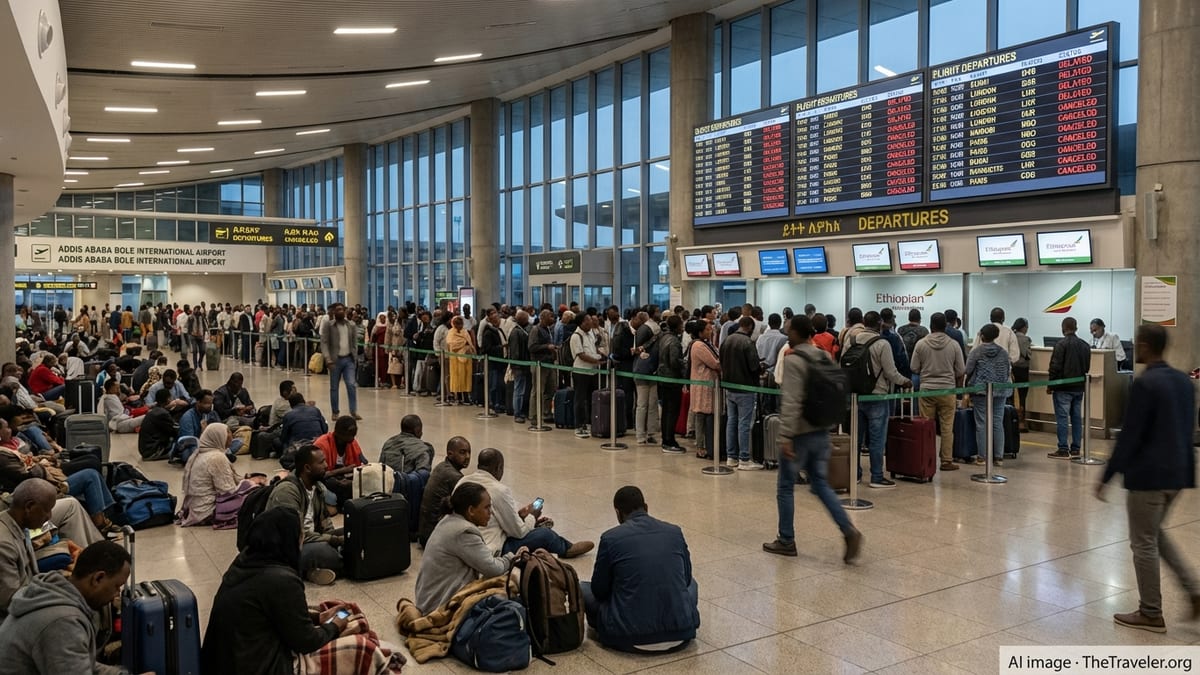
Embassy Alert Highlights Risk of Long-Range Strikes
According to a security alert issued by the U.S. Embassy in Addis Ababa on October 7, 2026, publicly available information indicates that there are reports of possible long-range attacks aimed at Ethiopian military installations at several points during October. The alert advises U.S. citizens in the country to heighten their awareness of the security environment and to be prepared to take protective action if ordered to shelter in place or move to safer locations.
The advisory does not specify the origin, capabilities, or intended timing of any potential long-range attacks. However, the focus on military targets and the embassy’s decision to publicize the concern signal that U.S. officials view the threat as credible enough to warrant immediate attention from American travelers and residents.
The security alert comes as regional tensions remain elevated, including along Ethiopia’s northern border with Eritrea. Separate public statements from the U.S. government in early October have urged restraint and a return to dialogue amid rising friction between the two neighbors, adding broader context to the concerns now being communicated to travelers.
While the embassy alert emphasizes that the threat is directed at military facilities rather than civilian sites, travelers are advised that the effects of any long-range strike, such as debris, secondary explosions, or disruptions to essential services, could extend well beyond the immediate target area.
State Department Keeps Level 3 ‘Reconsider Travel’ Rating
The U.S. State Department’s countrywide travel advisory for Ethiopia remains at Level 3, “Reconsider Travel,” most recently updated on August 27, 2026. The advisory cites unrest, crime, kidnapping, terrorism, landmines, communications disruptions, and the risk of exit bans as key factors behind the rating.
Within Ethiopia, specific regions carry a stricter Level 4 direction of “Do Not Travel.” These include the Amhara, Tigray, and Afar regions, as well as Benishangul Gumuz and Gambella. Publicly available U.S. government guidance notes that armed conflict, ethnically motivated violence, kidnapping, and sporadic clashes involving security forces and armed groups continue to affect these areas, with conditions that can deteriorate rapidly and without warning.
The advisory further explains that U.S. government personnel require special authorization to travel outside Addis Ababa to many parts of the country, reflecting the elevated risk profile beyond the capital. This limitation also affects the government’s ability to provide rapid consular support elsewhere in Ethiopia, a factor travelers are urged to consider when planning trips.
Despite the serious warnings for several regions, the advisory notes that security conditions in Addis Ababa are comparatively more stable. Even in the capital, however, the possibility of sudden unrest, targeted attacks, and restrictions on movement is acknowledged, and visitors are encouraged to maintain contingency plans and monitor developments closely.
Specific Regional Warnings and Airspace Restrictions
The latest guidance reiterates that U.S. citizens should avoid all travel to the Amhara, Tigray, and Afar regions. These areas have experienced recurring armed confrontations, localized states of emergency, and reported use of air and drone strikes, particularly since mid-2026. Public travel advisories from other governments, including the United Kingdom and European partners, point to similar risks and also advise against all or all-but-essential travel to large parts of northern and eastern Ethiopia.
Border areas with Somalia, Sudan, South Sudan, Eritrea, and Kenya are characterized as particularly high-risk due to a combination of criminal activity, insurgent operations, sporadic clashes, and the presence of landmines and unexploded ordnance. Official travel advice warns that front lines can shift quickly, checkpoints may appear with little notice, and local ceasefire arrangements may not be consistently observed on the ground.
In and around Addis Ababa, international travelers are also affected by airspace and drone restrictions. German and other European foreign ministry advisories note that Ethiopian authorities imposed an open-ended ban on drone flights in the capital and nearby areas in September 2026. This measure, introduced on security grounds, affects both recreational and commercial drone use and is enforced alongside preexisting prohibitions on photographing government buildings, military sites, and security personnel.
Given the new embassy alert about possible long-range attacks, these layered restrictions underscore how quickly conditions can change around strategic infrastructure. Travelers transiting through Addis Ababa’s Bole International Airport are encouraged to keep flight details flexible when possible and to stay in close contact with airlines for schedule changes that may result from shifts in the security environment.
Impact on Travelers and Practical Risk Management
The combination of a long-standing Level 3 advisory and the new warning about potential long-range strikes is likely to affect both tourism and business travel to Ethiopia during the coming weeks. Industry-focused travel bulletins already highlight an uptick in caution among corporate travel managers, with some organizations reportedly postponing nonessential trips or limiting staff movements to central Addis Ababa only.
Public advisories encourage travelers who decide to proceed with trips to Ethiopia to take several practical steps. These include enrolling in consular notification programs, sharing itineraries and contact details with family or employers, and preparing basic emergency kits with cash, copies of key documents, and essential supplies in case of sudden curfews or communication outages.
The State Department’s guidance notes that internet, mobile data, and telephone services are sometimes restricted or disabled ahead of or during periods of unrest. Such shutdowns can delay the delivery of security alerts, affect navigation applications, and complicate efforts to reach airlines or accommodation providers. Visitors are therefore encouraged to download critical information for offline use and to arrange backup communication methods where feasible.
Travelers already in Ethiopia are being advised in public information channels to avoid military installations, large public gatherings, and areas with a visible security presence, particularly in regions covered by “Do Not Travel” warnings. The new embassy alert’s reference to potential long-range attacks adds another layer to this standard guidance, underscoring the importance of maintaining situational awareness even in locations that appear calm on the surface.
Balancing Ethiopia’s Attractions With Elevated Security Risks
Ethiopia remains one of East Africa’s most distinctive destinations, known for its historic churches in Lalibela, the ancient city of Aksum, the dramatic landscapes of the Simien Mountains, and the Danakil Depression. Many of these marquee sites, however, are located in regions currently subject to the strongest international travel warnings, including the Amhara, Tigray, and Afar regions mentioned in the latest U.S. embassy alert.
For travelers based solely in Addis Ababa, the risk profile is lower but still notable. Urban visitors often focus on cultural attractions, museums, and food and coffee culture in neighborhoods that, according to recent traveler reports, have remained relatively calm despite tensions elsewhere. Even so, official advisories describe a security environment in which localized incidents can occur with little notice, and they emphasize that the country’s political landscape remains fluid.
Prospective visitors are therefore encouraged to weigh Ethiopia’s considerable cultural and natural appeal against the elevated and evolving security risks highlighted by the United States and other governments. For some, that may mean postponing travel plans until the outlook becomes clearer. Others may choose to limit itineraries to the capital, rely on experienced local operators familiar with current conditions, and build in flexibility to change or cut short trips if the security situation worsens.
The latest U.S. alert about possible long-range attacks on Ethiopian military installations adds a new dimension to this risk calculus. While the overall nationwide advisory level has not changed, the updated guidance signals that travelers should treat October 2026 as a period requiring particular vigilance, close monitoring of official updates, and a conservative approach to movement throughout the country.