


More news on this day
The U.S. government has issued a renewed security warning urging Americans to reconsider travel to and through parts of the Middle East, as reports point to intensifying regional tensions and renewed Houthi missile and drone activity targeting Saudi Arabia.
Get the latest news straight to your inbox!
What the updated U.S. warning says
Publicly available State Department guidance in late September 2026 emphasized a complex and fast-changing security environment across the Middle East, framing the risk as one that can escalate quickly and with limited notice. The advisory language has focused on heightened regional tension, the possibility of additional attacks, and ripple effects that can disrupt civil aviation and mobility for travelers.
Separate State Department destination guidance for Saudi Arabia continues to flag security concerns and warns that some areas present elevated risk. The advisory reiterates that threats can include terrorism and spillover from nearby conflict zones, and it calls out the Yemen border area as a location where the risk is especially acute.
For travelers, the practical takeaway is that the warning is not limited to one city or one type of incident. It is designed to alert U.S. citizens to the possibility that airspace restrictions, tightened security measures, and sudden changes to local conditions can occur with little warning, even for trips that are otherwise routine, including business travel, pilgrimages, and short stopovers.
Houthi attacks and why Saudi Arabia is in focus
Published coverage indicates the Houthi movement in Yemen has stepped up missile and drone activity aimed at targets in Saudi Arabia, a pattern that raises concerns beyond the immediate impact sites. In recent months, risk assessments have highlighted threats to airports, energy infrastructure, and maritime routes, as well as the possibility of attempted strikes near major population centers.
Travel advisories and regional risk updates from multiple governments have pointed to a range of Saudi locations that have been affected by missile and drone incidents in 2026, including areas along the Red Sea corridor and cities in the southwest near Yemen. Even when defensive systems intercept projectiles, the resulting disruptions can affect civilian schedules, road access, and airport operations.
The State Department’s Saudi Arabia advisory has also referenced the risk that Iran-backed Houthi forces could threaten or attempt additional attacks, underscoring why travelers are urged to review destination-specific guidance closely rather than relying on broad assumptions about safety across the kingdom.
How the advisory can affect flights, stopovers, and cruises
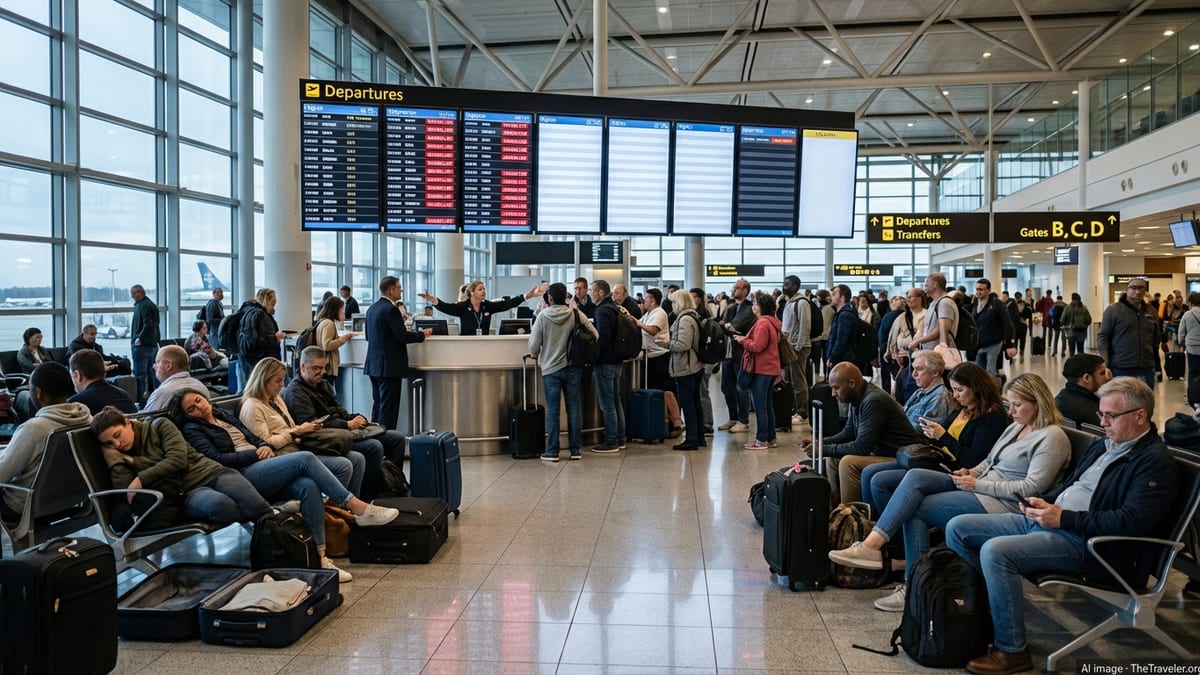
One of the most immediate travel impacts of heightened regional tension is operational: flight routings can change, airports can face delays, and airlines may adjust schedules if airspace restrictions are introduced or if carriers decide to reduce exposure to certain corridors. Travelers should be prepared for last-minute itinerary changes, particularly for trips involving connections through Gulf hubs or routes that typically traverse Red Sea or Arabian Peninsula airspace.
Maritime travel can also be affected. U.S. guidance for Yemen has previously highlighted elevated risk to vessels in the Red Sea, the Bab al-Mandeb, and the Gulf of Aden, and the broader regional warning comes as reports continue to track security incidents that influence shipping and passenger cruise planning. Even if a traveler is not going to Yemen, cruise itineraries and ferry routes can be revised when the threat environment shifts.
For travelers with time-sensitive plans, the most practical steps are to monitor airline notifications closely, confirm whether travel insurance covers security-related disruptions, and maintain flexible lodging and ground transport arrangements. In some cases, a “reconsider travel” posture can also lead organizations to update duty-of-care policies for employee travel, which may affect business travelers even when flights are operating normally.
Destination-by-destination reality: advisories vary across the region
The renewed Middle East caution does not mean every country carries the same risk level or the same constraints on movement. The State Department’s region-focused travel pages direct Americans to check the latest country-specific advisory and any recent security alerts for the exact places they plan to visit, as advisory levels and risk descriptions can differ significantly from one border to the next.
Saudi Arabia’s advisory has been presented at a “reconsider travel” level, with specific emphasis on the Yemen border area. Yemen remains under a “do not travel” advisory, reflecting the continued severity of risks there, including conflict-related threats, kidnapping, and limited ability to deliver consular assistance in many circumstances.
Because the current warning is tied to the possibility of rapid escalation, travelers should also evaluate their transit plans. A trip that includes a brief layover can still be affected by airport security posture, flight diversions, and sudden route changes, which can turn a straightforward itinerary into a multi-day disruption.
Practical steps for Americans who still need to travel
For those who decide travel is necessary, State Department materials consistently emphasize preparation and situational awareness. That includes enrolling in the Smart Traveler Enrollment Program to receive security updates, reviewing the latest country travel advisory for each destination, and checking for any newly issued security alerts shortly before departure and during the trip.
Travelers should also plan for communications and documentation challenges that can arise during fast-moving events: keep digital and paper copies of passports and key documents, ensure phones can receive local service or roaming, and establish a family or employer check-in plan. If an itinerary includes areas near the Saudi-Yemen border or other higher-risk zones, consider whether the trip can be rerouted or postponed.
Finally, given the potential for sudden disruptions, travelers may want to verify, before departure, whether their airline ticket rules allow changes without prohibitive fees and whether their insurance policy addresses trip interruption tied to security events. The State Department’s warnings are not a guarantee of disruption, but they are a signal that travelers should build flexibility into plans and avoid unnecessary exposure to higher-risk areas.