


On Istanbul’s Asian shore, the Üsküdar waterfront offers one of the city’s simplest pleasures: a flat, sea-hugging walk with ferries gliding past, tea glasses clinking, and the silhouettes of Sultanahmet rising across the Bosphorus. This guide walks you step by step from Üsküdar’s busy ferry piers to the quieter Salacak promenade, with real-world tips on tea gardens, mosques, street food and relaxed evening strolls that feel unmistakably local.
Get the latest updates straight to your inbox!
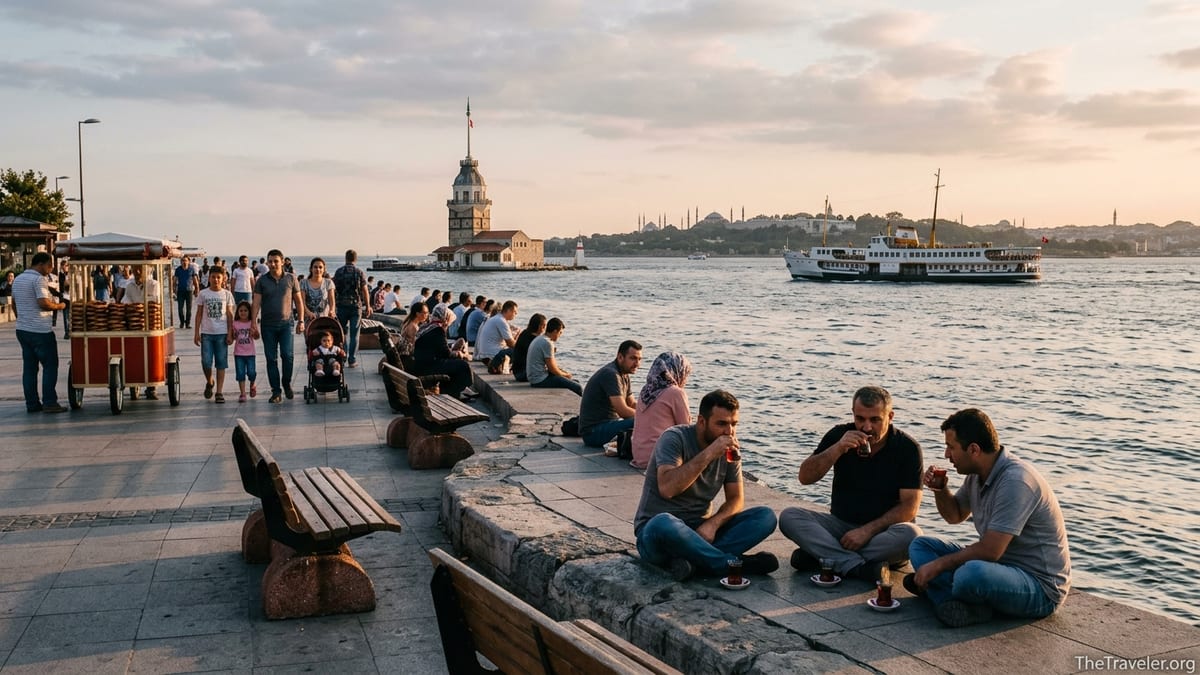
Orientation: Why Üsküdar’s Waterfront Belongs on Your Istanbul List
Üsküdar is one of Istanbul’s oldest residential districts, directly opposite the historic peninsula. Locals know its coastline as an evening escape: families push strollers, teenagers share sunflower seeds on the low seawall, office workers nurse paper cups of tea while ships move in and out of the Bosphorus. Compared with Sultanahmet or Karaköy, it is calmer and more residential, but the views back toward the Blue Mosque, Hagia Sophia and Topkapı Palace are among the most iconic in the city.
The core of this walk is the simple stretch between the main Üsküdar ferry terminal and the Salacak shoreline. From end to end, the route is roughly 2 to 2.5 kilometers one way, mostly flat and paved, with frequent benches and railings along the water. Even at a leisurely pace with photo stops and tea breaks, most visitors cover the one-way walk in 40 to 60 minutes, turning it into an easy half-day outing when combined with mosque visits and a sunset tea.
Practically, Üsküdar is easy to reach from almost anywhere in the city. Classic white-and-green Şehir Hatları ferries connect Üsküdar to Eminönü, Karaköy, Kabataş and Beşiktaş on the European side, and to Kadıköy further down the Asian shore. There is also a Marmaray rail station directly behind the piers, so many locals arrive underground from Sirkeci or Yenikapı and pop up just a few steps from the water.
This guide assumes you are starting at Üsküdar’s main ferry pier area in the late afternoon, staying through sunset and early evening when the promenade is at its most atmospheric and the skyline across the water turns from gold to deep blue.
Starting Point: Üsküdar Ferry Piers and Mosque Quarter
Your walk begins at Üsküdar İskele Meydanı, the broad square in front of the cluster of ferry terminals. When you step off the ferry from Karaköy or Eminönü, you emerge onto a busy but compact plaza framed by buses, tram stops and two important Ottoman mosques. Directly inland, a minute or two’s walk from the water, stands Mihrimah Sultan Mosque, a 16th-century work of the architect Mimar Sinan, sometimes called the İskele (Dock) Mosque because it anchors the ferry area. Its pale stone, high dome and simple courtyard make a peaceful contrast with the traffic just beyond.
On the north side of the square, right at the water, sits the smaller Şemsi Pasha Mosque, also by Mimar Sinan, with a low dome, short minaret and a stone terrace that seems to float above the Bosphorus. On calm days, the reflections of its arches shimmer in the water. Many locals consider the small park and terrace here one of Istanbul’s most poetic places to drink tea, read a book or simply watch the ferries arrive and depart.
Before you set off toward Salacak, it is worth stepping briefly into at least one of these mosques, even if only for a few minutes. Dress modestly, remove your shoes at the entrance, and avoid prayer times if you only want to look around. In the streets behind Mihrimah Sultan Mosque you will find small pastry shops selling simit (sesame bread rings) for a modest price, typically close to what you would pay elsewhere in the city, and borek bakeries where a slice of flaky cheese or spinach pastry makes a good pre-walk snack.
From the ferry square, orient yourself with the Bosphorus on your right and the mosques behind you. To walk to Salacak, you turn left along the water, heading south with the current. The promenade begins almost immediately, with a broad pedestrian sidewalk running parallel to Paşa Limanı Avenue, and a steady stream of ferries, fishing boats and cargo ships passing close enough that you can feel their wake against the stone embankment.
The Waterfront Promenade: Benches, Street Food and Local Life
As you leave the ferry square behind, the atmosphere changes quickly from transport hub to neighborhood seafront. The sidewalk widens, and a low seawall appears on your right, topped by a continuous line of people sitting cross-legged, dangling their feet toward the water, or balancing small tulip-shaped glasses of black tea on the stone. Delivery boys thread through the crowd with metal trays of tea from nearby cafés, calling out politely as they pass.
Scattered along this first stretch you will find simple pushcarts selling roasted corn, chestnuts in cooler seasons, and simit that locals tear apart and share with the ever-present seagulls. Prices are generally in line with other parts of Istanbul’s Asian side; visitors appreciate that there is little of the heavy bargaining sometimes found in more touristy areas. It is common to pick up a simit and a small bottle of water from a corner kiosk and then sit on the edge of the promenade to eat while watching the ferries cross from Eminönü and Karaköy.
Benches are frequent along the route, usually facing straight toward the water. In the late afternoon you will see pensioners chatting on “their” regular benches, couples quietly leaning against each other, and solo office workers in shirtsleeves decompressing after work. The Bosphorus traffic provides constant background movement: double-decker commuter ferries, sleek private yachts, long-distance cargo ships heading to and from the Black Sea, and the occasional coast guard boat cutting through the lanes.
Traffic along Paşa Limanı Avenue, just inland from the walkway, can be steady in rush hours, but the pedestrian path itself feels wide enough that most visitors do not find it stressful. The soundscape is a mix of lapping water, ship horns and occasional bus engines. Many Istanbulites walk here with headphones, using the long, flat path as a relaxed alternative to a gym treadmill. For visitors, this gentle stretch is a way to see local daily life without needing a guide or ticket.
Salacak and the Maiden’s Tower View: The Heart of the Walk
After about 15 to 20 minutes of unhurried walking, the outline of the Maiden’s Tower (Kız Kulesi) begins to appear more clearly offshore. As you round a slight bend, you arrive at the Salacak shoreline, where the tower sits on its small islet only a few hundred meters out in the Bosphorus. This is one of the most photographed views in Istanbul: the Maiden’s Tower in the foreground, the domes and minarets of Sultanahmet in the distance, and ferries crisscrossing between them.
Salacak itself is a compact seaside neighborhood, with low-rise apartment buildings inland and an uninterrupted pedestrian zone right at the water’s edge. The section around the Kız Kulesi view terrace is especially popular at sunset. Simple plastic stools, folding chairs and cushions line the seawall, many belonging to small tea kiosks that effectively “rent” you a seat as long as you order something. Ordering a glass of hot tea served in a tulip glass, maybe with a piece of simit or a simple pastry, and watching the light change on the tower is an experience that feels distinctly Istanbulite.
Several modest cafés and tea gardens cluster here, some with indoor seating for cooler evenings and open terraces in good weather. Menus tend to be straightforward: Turkish tea, herbal teas, instant coffee, soft drinks, tost (grilled cheese sandwiches), gözleme (stuffed flatbreads) and basic desserts like sütlaç rice pudding. Many visitors appreciate that prices are closer to what locals pay, especially compared with waterfront venues in Karaköy or the Galata Bridge area. You will also see mobile sellers walking the seawall with baskets of simit and cold drinks, making it easy to top up your snack without leaving your spot.
If you want to visit the Maiden’s Tower itself, there is usually an official ticket booth along the Salacak pier area, from which small boats shuttle visitors across. Schedules and access can change with restoration work or seasonal conditions, so it is wise to check on the day with locals or at your hotel. Even without entering the tower, many Istanbul residents consider sitting on the Salacak shore with a tea in hand the best way to enjoy it, especially as the sun drops behind the peninsula and lights begin to appear in the windows of Sultanahmet’s mosques.
Views Toward Sultanahmet and the Historic Peninsula
One of the main reasons walkers are drawn to this route is the panorama across the Bosphorus. From almost any bench between Üsküdar pier and Salacak, you can see the unmistakable outline of the Blue Mosque and Hagia Sophia rising above the Old City walls, with Topkapı Palace’s cypresses framing the scene. The changing light over these landmarks can make even a simple stroll feel like a moving postcard.
In the late afternoon, with the sun behind you in Asia, the facades of the European shore are evenly lit and easy to photograph. By golden hour, the domes and minarets take on a warm glow, and the water itself reflects bands of orange and pink. Photographers often set up tripods around Salacak to capture long exposures of ferries streaking past the Maiden’s Tower, but you will also see plenty of casual smartphone shots taken from the seawall benches.
On clear winter days the air can be particularly crisp, revealing fine details in the skyline, from the small minarets of lesser-known mosques in Fatih to the towers of Galata further up the Golden Horn. In summer the haze is sometimes thicker, but the atmosphere is livelier, with more street musicians along the promenade and an extra layer of color from vendors selling ice cream and fresh-squeezed pomegranate juice near the ferry piers.
For many visitors, this vantage point also helps make sense of Istanbul’s geography. Watching ferries shuttle steadily between Eminönü, Karaköy, Kadıköy and Üsküdar, with the Galata Bridge and Golden Horn in the background, you can visually connect neighborhoods that might otherwise feel abstract on a map. It becomes clear why locals treat ferries as a normal part of the commute, not a tourist attraction, and why meeting “by the Üsküdar ferry” is a phrase you will hear again and again.
Tea Gardens, Mosques and Quiet Detours Off the Promenade
While the sea views are the highlight, the streets just inland from the promenade offer short detours that round out the walk. Back near the main square, a few minutes behind Mihrimah Sultan Mosque, you can slip into compact backstreets where small family-run lokantas (canteens) serve home-style stews, vegetable dishes and rice trays at lunchtime. Many display their daily dishes in glass-front counters so you can simply point to what looks appealing.
Further along toward Salacak, low residential streets slope gently up from the waterfront. A short climb brings you into quieter pockets where children play football in small squares and laundry hangs between balconies. These side streets rarely appear on tourist itineraries, but ducking into them for even ten minutes can give a sense of Üsküdar as a lived-in district rather than just a scenic backdrop.
Several small mosques and neighborhood prayer halls are scattered in these inland blocks, each with its own cluster of tea houses and bakeries. It is common to see men and women chatting on plastic chairs outside these venues, stirring sugar into tulip glasses of tea. Visitors are generally welcome to sit at outdoor tables as long as they order something; a glass of tea is usually inexpensive, and staff are often patient with limited Turkish, accustomed to pointing at the glass or using a calculator to show the total.
If you prefer a slightly elevated, leafier viewpoint, local residents sometimes walk or take a short taxi ride from Üsküdar up toward parks like Fethi Paşa Grove, which offers additional vistas of the Bosphorus and the historic peninsula. While this is beyond the basic waterfront route, combining an early-evening walk along the sea with a later sunset from one of these hills makes a satisfying full day on the Asian side.
Planning Your Walk: When to Go, Safety and Practical Tips
The Üsküdar to Salacak waterfront walk is enjoyable in almost any season, but it feels different at different times of day. Many visitors aim to arrive in Üsküdar by mid to late afternoon, giving them time to explore the mosques and grab a snack before walking to Salacak for sunset. In summer, when the sun sets late, the promenade stays busy well into the evening, with families arriving after dinner. In winter, the air is sharper and you will want a warm coat and perhaps a hat, but the lower crowds and moody sky over the Old City can be very atmospheric.
In terms of safety, this route is considered one of the more relaxed and family-friendly waterfronts in Istanbul. The promenade is busy with locals until late, especially on weekends, and there is good visibility along most of the walk. Standard big-city precautions apply: keep valuables secure, be mindful of your bag or phone when taking photos near the edge, and avoid walking right at the waterline during particularly stormy weather when waves can splash over the seawall.
Footwear can be simple; ordinary trainers or walking shoes are sufficient, as the entire route is paved and mostly flat. The main accessibility issue arises where parts of the seawall seating require stepping down from the pavement, which may be awkward for those with limited mobility. However, the city has gradually improved accessibility with ramps and level paths along much of the route, and wheelchair users can still enjoy substantial sections of the promenade and the main viewing areas at Salacak.
For transport, many visitors arrive from the European side by ferry. Schedules can vary by season, but ferries between Üsküdar and hubs like Eminönü, Karaköy and Beşiktaş typically run from early morning into late evening. You pay using Istanbul’s contactless transit card, which can also be used on buses, trams and the Marmaray. It is wise to allow a buffer of time for your return ferry after sunset, especially on weekends when boats can be busier.
The Takeaway
Walking the Üsküdar waterfront from the ferry piers to Salacak is less about ticking off major sights and more about slipping briefly into the city’s everyday rhythm. You are unlikely to encounter tour groups or ticket lines along this stretch; instead you share the space with commuters, families and students unwinding by the water. The Maiden’s Tower becomes less of a postcard icon and more of a familiar neighbor, appearing and disappearing as you round bends in the promenade.
From the vantage point of a low seawall bench, tea glass warming your hands, you can watch Sultanahmet’s skyline change color, trace the routes of ferries across the Bosphorus and sense the scale of Istanbul in a single sweeping view. A simple simit, a modest tea from a Salacak café and an unhurried walk back toward Üsküdar under the evening lights can be as memorable as any grand museum visit.
Whether you have a spare afternoon in a packed itinerary or you are staying on the Asian side and looking for a local-feeling evening ritual, this waterfront route is easy to reach, low-cost and endlessly repeatable. Many travelers find themselves returning more than once, choosing different benches, trying different tea gardens and watching how the same view shifts with the weather and light. That repeatability is perhaps Üsküdar’s greatest charm.
FAQ
Q1. How long does the Üsküdar to Salacak waterfront walk take?
The one-way walk from the main Üsküdar ferry piers to the Salacak shoreline usually takes 40 to 60 minutes at a relaxed pace, allowing time for photos and a short tea break.
Q2. What is the best time of day to walk the Üsküdar waterfront?
Late afternoon into sunset is ideal, as you get clear views of the historic peninsula in daylight, then watch the Maiden’s Tower and Sultanahmet skyline light up after dark.
Q3. Is the promenade suitable for children and strollers?
Yes, the path is mostly flat and paved, and many local families use it with strollers. Just keep children away from the seawall edge and be mindful near busier road crossings.
Q4. Can I visit the Maiden’s Tower from Salacak?
Small shuttle boats usually run from the Salacak pier area to the Maiden’s Tower, but schedules and access may change with restoration or weather, so check locally on the day of your visit.
Q5. Are there places to eat along the route?
Yes, you will find simit and street food carts near the ferry piers, small lokantas a few streets inland, and simple tea gardens and cafés with light snacks and tost around Salacak.
Q6. Do I need to book anything in advance for this walk?
No booking is required for the promenade itself. You can simply show up, walk and choose any tea garden or bench you like. Only special restaurants or tower visits might need advance planning.
Q7. How do I get to Üsküdar from the European side?
The most scenic way is by ferry from Eminönü, Karaköy, Kabataş or Beşiktaş. You can also take the Marmaray train to Üsküdar station, which exits close to the waterfront.
Q8. Is it safe to walk the Üsküdar waterfront at night?
The area is generally busy and feels safe into the evening, especially on weekends, but you should follow normal city precautions, stay on well-lit sections and keep valuables secure.
Q9. What should I wear for visiting mosques along the route?
Dress modestly, with shoulders and knees covered. Women should bring a light scarf to cover their hair inside, and everyone must remove shoes at the entrance.
Q10. Can I do this walk in winter or on a rainy day?
Yes, many locals walk the promenade year-round. In winter or rain, bring a warm waterproof layer and consider choosing a tea garden with indoor seating and windows facing the water.