


Kuzguncuk is one of those rare Istanbul neighborhoods that still feels like a village. Just a short walk from Üsküdar’s busy ferry pier, this small pocket on the Asian shore of the Bosphorus offers pastel wooden houses, tiny family cafés, active churches and synagogues and a pace of life that slows to a stroll. If you are looking for a half day away from crowds, with real neighborhood life and plenty of photo opportunities, Kuzguncuk is one of the most rewarding places to explore.
Get the latest updates straight to your inbox!
Why Kuzguncuk Belongs On Your Istanbul Itinerary
Kuzguncuk sits in the Üsküdar district on the Asian side of Istanbul, yet it feels far removed from the rush of the city. The main street, İcadiye Caddesi, is lined with wooden Ottoman houses painted in soft greens, blues and reds, ground floors turned into coffee shops, book-filled cafés and bakeries. Locals still greet each other by name, shop at small grocers and sit under plane trees sipping tea. For travelers used to the intensity of Sultanahmet or Taksim, arriving here can feel like stepping into a small town on the Bosphorus.
Historically, Kuzguncuk was one of Istanbul’s earliest Jewish settlements and later home to large Armenian and Greek Orthodox communities alongside Muslims. Today you still see this heritage in the cluster of churches and synagogues close to the waterfront and on the side streets behind it. Walking just a couple of blocks you might pass the Ayios Panteleimon Greek Orthodox Church, the Surp Krikor Lusavoriç Armenian Church and the Bet Yaakov Synagogue, all serving much smaller congregations than in the past but still quietly active.
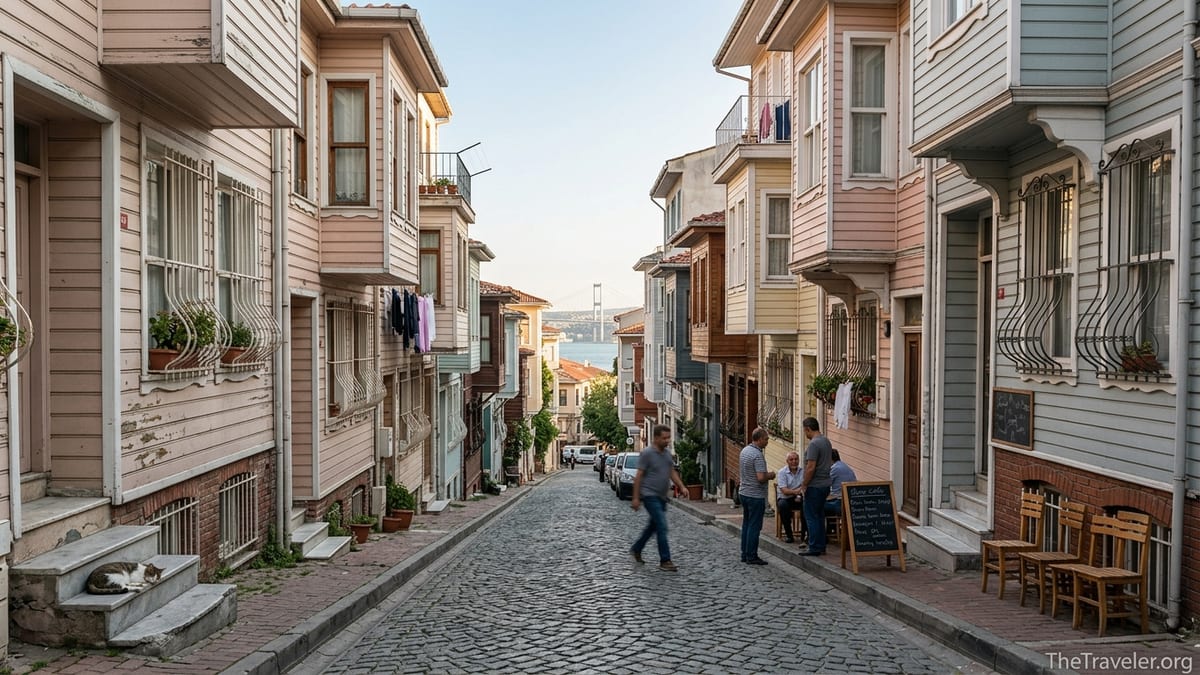
Because Kuzguncuk remains mostly residential, it feels different from more commercial “instagram-famous” areas. Houses are lived in, laundry hangs from balconies and cats sleep in sun patches on stoops. You are more likely to share a café with students, retirees and office workers on a lunch break than with large tour groups. That mix of historic architecture and present-day routine is what makes a visit here feel like a glimpse of everyday Istanbul.
Getting to Kuzguncuk and First Impressions From Üsküdar
The easiest way to reach Kuzguncuk is to start from Üsküdar, one of Istanbul’s main transport hubs on the Asian side. Ferries from Eminönü, Karaköy and Beşiktaş dock here frequently throughout the day, and the ride across the Bosphorus typically takes around 10 to 20 minutes depending on your departure point. From the Üsküdar ferry pier, Kuzguncuk is less than 3 kilometers away. Many visitors either take a taxi, which usually reaches Kuzguncuk in about 10 minutes outside of rush hour, or hop on a short bus ride heading along the Bosphorus in the direction of Beylerbeyi.
If you prefer to arrive on foot, the waterfront walk from Üsküdar to Kuzguncuk is one of the most pleasant in the city. The route follows the Bosphorus north, passing small tea gardens, fishermen on the sea wall and views of the Galata Tower and historic peninsula across the water. Expect about 30 to 40 minutes at a relaxed pace. On clear afternoons you get golden light on the European shore and cruise ships gliding by, which makes the approach to Kuzguncuk particularly scenic.
As you enter Kuzguncuk from the south, the neighborhood begins almost abruptly: low-rise buildings, a few simple seafood restaurants, a small square where locals sit on plastic chairs with tulip-shaped tea glasses. Look inland and you will see narrow streets rising up the hill. Look along the coast and you will see the waterfront curve under the shadow of the Bosphorus Bridge in the distance. It is worth pausing here at the entrance to orient yourself: the Bosphorus is to your west, Fethi Paşa Grove rises on the hill to your east and İcadiye Caddesi cuts inland through the center of the district.
Colorful Streets and Quiet Walks
Most visitors come to Kuzguncuk for its colorful timber houses and lanes that still follow the scale of a 19th century village. Start your walk on İcadiye Caddesi, the gently sloping main street packed with small shops, bakeries and cafés at street level. Side lanes running uphill from İcadiye reveal some of the most photogenic facades in the area: rows of narrow wooden houses with bay windows, iron balconies and external staircases painted in pistachio green, dark red and pale yellow. These streets are still residential, so keep voices low and step aside for residents entering and leaving their homes.
One of the most photographed blocks lies just a few minutes’ walk from the main square, where a row of tightly packed wooden houses in different pastel colors faces a cobbled lane. You will often see couples taking engagement photos here or independent photographers using the sequence of facades as a backdrop. Arrive early in the morning on weekends or in the late afternoon on weekdays if you want to take photos without crowds. The soft, indirect light at these times makes the colors appear more vivid without harsh shadows.
For a greener walk, continue inland to Kuzguncuk Bostanı, a large community garden on gently sloping land behind the main street. The garden used to be threatened by development but is now preserved as a shared vegetable patch and open green space. On a typical afternoon you may see pensioners tending tomato plants, children kicking a ball and dog owners using the paths as a mini-park. It is a rare piece of open land in central Istanbul and gives a sense of Kuzguncuk’s semi-rural past, when orchards and gardens covered much of the hillside.
Another rewarding route is to climb toward Nakkaştepe and Fethi Paşa Grove, a forested park above Kuzguncuk with walking paths shaded by tall pines and plane trees. From several clearings and terraces you get excellent views of the Bosphorus Bridge, the European shore and the minarets of the historic peninsula in the distance. Combine a loop through the grove with a descent back into Kuzguncuk in the late afternoon so you end your walk with coffee or an early dinner as the neighborhood’s lights begin to glow.
Cafés, Bakeries and Everyday Food Stops
Despite its small size, Kuzguncuk has become a neighborhood for café hopping without feeling overly polished. Along İcadiye Caddesi you will find a mix of third-wave coffee spots, old-school tea houses and eclectic places that are part home, part bookshop and part café. One much-loved example is Nail Kitabevi, a combined bookshop and café often filled with students and writers. Guests browse the shelves, then settle by the windows with a Turkish coffee or filter coffee and a slice of cake, watching life unfold on the street outside.
For something more traditional, Tarihi Kuzguncuk Fırını, the historic neighborhood bakery, has been turning out simit, crusty loaves and small cookies for generations. Travelers often seek out its mantar kurabiye, mushroom-shaped cocoa cookies dusted with powdered sugar, as an easy snack to carry during a walk. In the mornings, locals queue here for warm poğaça stuffed with cheese or olives and take them across the street to pair with tea in a simple café.
If you are looking for a sit-down breakfast or brunch, several Bosphorus-facing restaurants at the entrance of Kuzguncuk and along the coast serve classic Turkish breakfast spreads with olives, white cheese, tomatoes, menemen and bread baskets. Prices vary depending on view and setting, but a shared breakfast for two with tea is often more affordable here than in heavily touristed parts of the European side. For lunch, Metet Döner on or near İcadiye Caddesi is frequently recommended by locals and Turkish food writers for its charcoal-cooked döner kebab. Portions are typically generous, and many visitors mention that a filling döner plate with salad and ayran here costs less than in trendier central districts.
Coffee and dessert lovers will also find small specialty spots scattered through the side streets. Independent chocolatiers, tiny patisseries with a few tables and cozy, plant-filled coffee bars have appeared in recent years as Kuzguncuk’s reputation has grown. While ownership changes from time to time, the overall feel remains neighborly rather than flashy. Most places are walk-in only, and you can easily structure your visit around a leisurely progression from morning coffee to bakery stop, late lunch and an afternoon tea before heading back to Üsküdar.
Historic Churches, Synagogues and Shared Streets
What makes Kuzguncuk distinctive is not only the colorful houses, but also its long history as a place of coexistence among different religious communities. In a compact area you find several churches, two synagogues and mosques that illustrate centuries of shared neighborhood life. Even if you do not enter every building, seeing the facades and reading the plaques as you walk gives context to the peaceful atmosphere you experience today.
Near the main street stands the Bet Yaakov Synagogue, historically one of the key Jewish houses of worship in Kuzguncuk. There is also the smaller Bet Nissim Synagogue tucked on Yakup Street, which has been restored and occasionally opens for visitors or special events. Access inside synagogues in Istanbul usually requires advance coordination with the Chief Rabbinate or local foundations for security reasons, so most independent travelers simply admire the exteriors and appreciate that active Jewish life, though small, continues here.
The Christian heritage of Kuzguncuk is equally visible. The Surp Krikor Lusavoriç Armenian Church, first built in the 19th century, presents a modest stone facade along one of the side streets, while the Ayios Panteleimon and Ayios Yeorgios Greek Orthodox churches stand nearby, fronted by courtyards and iron gates. On some days you may hear bells or see parishioners going in and out for services. When the gates are open, it is often possible to slip quietly into the courtyard for a moment, taking care to respect privacy and any posted photography rules.
One of the most evocative details in Kuzguncuk is how close these places of worship sit to one another. On one short stretch you can stand near a mosque, look up a lane toward an Armenian church and a few minutes’ walk away see the entrance to a synagogue. Locals often mention that this proximity reflects how families of different backgrounds shared the same streets, shops and even courtyard wells. As you wander, it is worth slowing down to notice small details that speak of this layered history: inscriptions in Armenian or Greek above doorways, Stars of David incorporated into old ironwork and houses that once belonged to merchant families now occupied by new generations.
Photo Spots and Best Times of Day
Kuzguncuk has become popular with photographers and social media travelers, yet it is still possible to enjoy it without crowds if you time your visit. Early morning on weekdays is usually the calmest, with delivery vans on the main street and only a few dog walkers around. This is a good time for wide shots of İcadiye Caddesi with its closed shutters and colorful facades under soft light. By late morning, cafés open, residents run errands and the street becomes livelier, which works well for candid street photography.
The most iconic photo locations are the rows of colorful wooden houses on side streets and the narrow lanes where balconies nearly touch overhead. When you find a particularly pretty facade, be mindful that people live here. Instead of standing directly in front of a door and posing for long stretches, try framing your shots from across the street or from an angle that includes the full row of houses, cobblestones and street life. Often a photo of a delivery bicycle passing or a cat stretched on the steps tells a more authentic story than a staged portrait.
Another strong photographic subject is the contrast between the neighborhood and the modern Bosphorus Bridge rising in the distance. From the waterfront near Kuzguncuk you can capture wooden houses in the foreground, small fishing boats tied up along the sea wall and the bridge spanning the background. Late afternoon, when the sun moves behind the European side, gives a gentle, hazy light across the water and warm tones on the Kuzguncuk facades. On clear days around sunset, the sky can turn pastel pink and orange, reflecting off the Bosphorus and creating particularly atmospheric images.
For greenery and views, climb into Fethi Paşa Grove and look for spots where tree branches frame glimpses of the bridge and the city. Here, long lenses work well to compress the distance and pick out details like ferries crossing the Bosphorus or the outlines of mosques on the opposite shore. Even if you are using only a phone camera, pausing in these clearings and experimenting with foregrounds, such as tree trunks or park benches, can produce images that feel more like editorial travel photography than quick snapshots.
Combining Kuzguncuk With a Day in Üsküdar
Kuzguncuk is ideal to pair with a wider exploration of Üsküdar in a single day. One common pattern is to start in the morning at the Üsküdar waterfront, visiting spots like Mihrimah Sultan Mosque near the ferry pier and grabbing a quick tea at one of the traditional tea gardens overlooking the Bosphorus. From there, either walk or take a short taxi to Kuzguncuk, arriving before the main lunchtime crowd. Spend late morning and early afternoon wandering İcadiye Caddesi, exploring the side streets, visiting the community garden and stopping for lunch at a neighborhood eatery.
After a leisurely few hours in Kuzguncuk, you can return to Üsküdar by foot along the waterfront. This puts you back at the main square in time to head to other viewpoints, such as the elevated Çamlıca Hill with its broad views over both the European and Asian sides, or to walk south to the Maiden’s Tower area for sunset on the seafront promenade. Many visitors end the day by catching an evening ferry from Üsküdar back to Karaköy or Beşiktaş, watching the lights of both shores reflect on the water.
If you prefer a slower pace, make Kuzguncuk the focus and treat Üsküdar mainly as a transit hub with a short mosque or market visit. In this case, allow at least three to four hours in Kuzguncuk itself: one to two hours of walking, one hour for a relaxed café or bakery stop and some flexible time to linger in the community garden or park. Because Kuzguncuk is compact, you never feel rushed, and if a place looks inviting you can simply stop in without worrying about a tight schedule or long distances to cover.
Keep in mind that Kuzguncuk, like much of Istanbul, gets busier on weekends, when local families and groups of friends come from other districts to enjoy brunch and stroll the streets. If your schedule allows, choose a weekday for a quieter experience. On Saturdays and Sundays, arrive early or mid-afternoon, when the breakfast rush calms down but cafés and shops are still open, to avoid the peak midday crowds.
The Takeaway
Kuzguncuk is not a place of big monuments or must-see museum checklists. Its appeal lies in the small scale of its colorful houses, the sight of a synagogue down one lane and a church bell tower over another, and the rhythm of a neighborhood where children play in the street while adults sit in doorways chatting. You come here for a mood rather than a marquee attraction, and leave with the impression of having visited a village folded inside the city.
For travelers staying in central Istanbul, adding Kuzguncuk to a day in Üsküdar is an easy way to experience the Asian side beyond busy transit hubs. With straightforward ferry connections, a walkable grid of streets and plenty of spots to pause for coffee, it rewards unhurried exploration. Bring comfortable shoes, a camera or phone and an appetite for simit, cookies and döner, and let the neighborhood’s quiet corners reveal themselves as you wander.
FAQ
Q1. How much time do I need to visit Kuzguncuk?
Most visitors are satisfied with three to four hours, which is enough for a relaxed walk through the streets, a stop at the community garden, and a café or lunch break. You can easily stretch this to a full day if you combine it with a walk in Fethi Paşa Grove or additional time in Üsküdar.
Q2. What is the best way to get to Kuzguncuk from the European side?
The most pleasant route is to take a public ferry from Eminönü, Karaköy or Beşiktaş to Üsküdar, then either walk along the Bosphorus for about 30 to 40 minutes or take a short taxi or bus ride to Kuzguncuk. This approach avoids traffic on the bridges and gives you classic Bosphorus views.
Q3. Is Kuzguncuk safe to walk around as a solo traveler?
Kuzguncuk is generally considered a safe, residential area with a strong neighborhood feel. Solo travelers commonly walk its streets during the day and early evening. As everywhere, keep an eye on belongings, stick to well-lit streets after dark and follow normal big-city precautions.
Q4. Can I visit the churches and synagogues inside?
Some of the churches open for services and may allow quiet visitors outside of worship times, depending on the day and any ongoing events. The synagogues usually require prior coordination with local Jewish community organizations for security reasons, so most travelers view them from the outside only. Always respect posted signs and privacy.
Q5. Are there good places for breakfast or brunch in Kuzguncuk?
Yes, Kuzguncuk has several cafés and Bosphorus-side restaurants serving classic Turkish breakfast spreads, as well as bakeries like the historic Kuzguncuk bakery that offer simit, pastries and cookies for a simpler start to the day. Weekends tend to be busier, so arrive earlier if you want a table without waiting.
Q6. When is the best time of day to photograph the colorful houses?
Early morning and late afternoon usually offer the best light, with softer shadows and more saturated colors on the wooden facades. Weekday mornings are typically quieter, making it easier to photograph the streets without many people, while late afternoon can capture the warm glow as the sun lowers over the Bosphorus.
Q7. How does Kuzguncuk compare to other colorful neighborhoods like Balat?
Balat on the European side is more widely known and tends to be busier, with more souvenir-oriented businesses. Kuzguncuk feels smaller, calmer and more residential, with a mix of long-time locals and newer cafés. If you prefer a village-like atmosphere with fewer large tour groups, Kuzguncuk may feel more relaxed.
Q8. Can I see the Bosphorus from Kuzguncuk?
Yes, Kuzguncuk sits directly on the Asian shore of the Bosphorus. From the waterfront you can see the European side, the Bosphorus Bridge and passing ferries and cargo ships. Some cafés and restaurants near the water offer partial or full sea views, especially at the southern entrance to the neighborhood.
Q9. Is Kuzguncuk suitable for families with children?
Kuzguncuk works well for families because the streets are relatively calm compared with central Istanbul, and there are several small parks and the open community garden where children can move around more freely. Do keep an eye on kids near the waterfront and on narrow streets where cars still pass through.
Q10. What should I wear when visiting Kuzguncuk’s religious sites and neighborhoods?
Dress comfortably for walking, but bring a light layer or scarf that can cover shoulders and knees if you plan to step into church courtyards or visit a mosque. Overall, casual, modest clothing is appropriate. Comfortable shoes are important, as many streets are cobbled or gently sloped.