


Üsküdar is one of Istanbul’s most atmospheric waterfront districts, directly across the Bosphorus from the Old City and Karaköy. With its busy ferry piers, mosques and tea gardens looking back toward Sultanahmet’s skyline, it is easy to reach but confusing at first glance, because several different transport systems meet here. This guide explains, step by step, how to get to Üsküdar in 2026 by ferry, Marmaray, metro, bus and taxi, with concrete route examples from the main tourist areas and practical advice on tickets, luggage and avoiding common pitfalls.
Get the latest updates straight to your inbox!
Understanding Where Üsküdar Sits in Istanbul
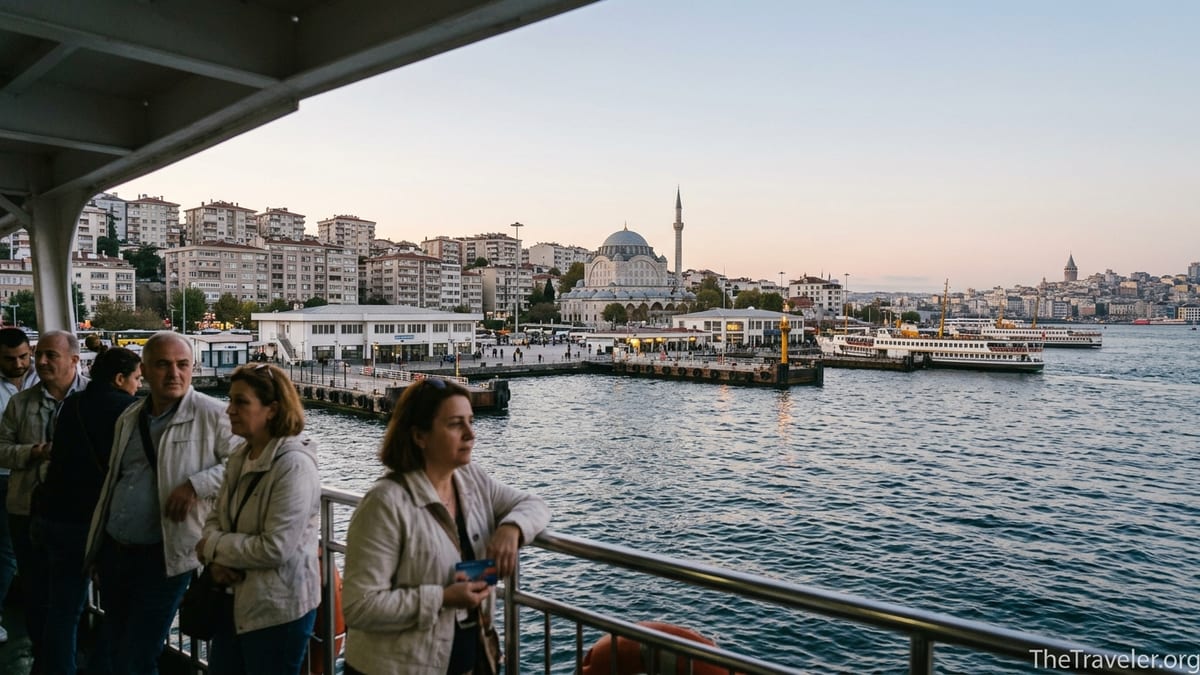
Üsküdar is on the Asian side of Istanbul, directly opposite the historical peninsula and just north of the Bosphorus Bridge. On most tourist maps you will see it facing Eminönü and Karaköy, with Beşiktaş slightly further north on the European shore. The heart of the district is the waterfront square where the ferry piers, Marmaray station and Üsküdar metro station all sit within a few minutes’ walk of each other.
For practical purposes, think of Üsküdar as a key interchange: it is the western terminus of the M5 Üsküdar – Sultanbeyli metro line and an important Marmaray stop, as well as a hub for city ferries to Eminönü, Karaköy and Beşiktaş. This makes it an ideal base if you want to stay on the Asian side but still have fast access to Sultanahmet, Galata, Taksim and the airport metro lines.
At street level, the area around the square is busy but compact. The main landmarks that help with orientation are Mihrimah Sultan Mosque above the ferry piers, the large modern Marmaray entrance close to the waterfront, and the underground entrances to the M5 metro slightly set back from the sea. Most visitors will arrive at one of these three points and then walk a few minutes to their hotel, cafe or tour meeting point.
Using Ferries to Reach Üsküdar
Istanbul’s ferries are often the most scenic and pleasant way to reach Üsküdar. Several lines cross the Bosphorus throughout the day, including frequent city-run services between Üsküdar and Eminönü, Karaköy and Beşiktaş. These are traditional white-and-yellow ferries with indoor seating, open decks and a small tea kiosk on board. Crossing time is usually around 10 to 20 minutes depending on the route and traffic on the water.
From Eminönü, ferries to Üsküdar depart from clearly signed piers on the Golden Horn side of the tram line. This route is ideal if you are staying near Sultanahmet, Sirkeci or the Spice Bazaar: you can walk or take the T1 tram to Eminönü, tap your Istanbulkart at the pier turnstiles, and be in Üsküdar in roughly 25 to 30 minutes door to door. The sailing takes you past Galata Bridge, with excellent views back to the mosques of the Old City.
From Karaköy, ferries connect directly to Üsküdar across a narrower stretch of the Bosphorus. If you are based around Galata, Şişhane or the lower part of İstiklal Avenue, walking downhill to Karaköy and catching this ferry is usually quicker than traveling via tram and Marmaray. In practice, the total journey from Galata Tower to Üsküdar often takes about 20 to 25 minutes, including the walk and short crossing.
Beşiktaş, further north, offers another useful ferry to Üsküdar, popular with travelers staying near the palace and museum belt between Dolmabahçe and Ortaköy. It is common, for example, to visit Dolmabahçe Palace in the morning, stroll or taxi up to Beşiktaş ferry pier, and then take the ferry across to Üsküdar for sunset tea by the Maiden’s Tower. Ferries on all these routes accept Istanbulkart payments and are priced similarly to other forms of public transport, making them both affordable and memorable.
Reaching Üsküdar by Marmaray and Metro
The Marmaray line is the fast, modern commuter rail that runs in a tunnel under the Bosphorus and connects the European and Asian suburbs. Üsküdar has its own Marmaray station just inland from the ferry piers. For many visitors, this is the quickest way to cross from the Old City or from areas served by the M2 metro. For example, from Sirkeci station on the European side you simply follow the Marmaray signs, tap your Istanbulkart at the gates, ride one stop under the sea and emerge at Üsküdar in just a few minutes.
If you are staying in Sultanahmet and do not want to use the ferry, an efficient route is to take the T1 tram from Sultanahmet or Gülhane to Sirkeci, walk down to the Marmaray platforms, and ride to Üsküdar. Typical travel time from Sultanahmet Square to Üsküdar via tram plus Marmaray is around 20 to 30 minutes, depending on connection times. This route is especially convenient in bad weather or when ferries are less frequent.
Travelers staying near Taksim, Şişhane or Levent can also use a combination of metro and Marmaray. One common pattern in 2026 is to take the M2 metro to Yenikapı or to a station with a direct connection to Marmaray, transfer to a Marmaray train heading toward the Asian side, and get off at Üsküdar. For example, a guest at a hotel on Taksim Square can ride M2 south to Yenikapı, follow the Marmaray signs, and be in Üsküdar after a short undersea ride, all paid with the same transport card.
Once you arrive, Üsküdar station is also the gateway to the M5 metro line, which runs east through neighborhoods like Fıstıkağacı, Bağlarbaşı, Altunizade and Ümraniye toward Çekmeköy and onward. This makes Üsküdar a useful transfer point if your accommodation is along the M5 corridor. You simply exit Marmaray, follow the clearly marked tunnels and escalators to the M5 platforms, and continue your journey without leaving the paid area.
Metro, Tram and Bus Links From Major Tourist Areas
From Sultanahmet, the two realistic options for reaching Üsküdar are the combination of tram plus Marmaray or tram plus ferry. If you prefer the sea, take the T1 tram from Sultanahmet to Eminönü, then walk a couple of minutes past the Spice Bazaar to the Üsküdar ferry pier. If you prefer to stay underground, ride T1 to Sirkeci, transfer to Marmaray and get off at Üsküdar one stop later. In everyday use, many visitors mix both, taking the ferry one way for views and Marmaray back when it is dark or windy.
From Taksim and Beyoğlu, the easiest options are via Karaköy ferry or via M2 plus Marmaray. A practical scenario: a traveler staying near İstiklal Avenue walks downhill to Karaköy, taps their Istanbulkart at the pier, and boards the next ferry to Üsküdar. In rush hour or when ferries are crowded, the same traveler might instead ride the historic funicular F2 from Karaköy to Tünel, walk to Şişhane on M2, travel to Yenikapı and then change to Marmaray for Üsküdar. The ferry is usually more pleasant; the metro combination is a good backup in bad weather.
From Beşiktaş, you can walk directly to the Beşiktaş piers and take the ferry, which is typically faster and simpler than combining multiple metro lines. This is particularly convenient if you are coming from a hotel near Dolmabahçe Palace or attending a match at Vodafone Park and want to continue to Üsküdar afterward. In the evenings, ferries can be busy with commuters heading home, but there is usually standing room available and the crossing remains short.
Several bus routes also serve Üsküdar, especially from neighborhoods that are not directly on tram or metro lines. For example, buses from the Asian-side districts of Kadıköy, Çamlıca or parts of Ümraniye converge on Üsküdar square. As a visitor, bus use is most relevant if you are staying in a residential Airbnb uphill from Üsküdar or near viewpoints like Büyük Çamlıca Mosque. In that case, you might ride the M5 or Marmaray to Üsküdar and then take a short bus ride or taxi uphill.
Using Istanbulkart and Paying for Your Journey
To move efficiently between ferries, Marmaray, metro, trams and buses, you will need an Istanbulkart, the city’s contactless transport card. As of 2026 it remains the standard way to pay for almost all public transport in Istanbul, including ferries and Marmaray. You can buy a regular card from yellow vending machines at major stations such as the airport, Sultanahmet tram stops, Marmaray hubs and ferry piers, or from official kiosks displaying the Istanbulkart logo near busy squares.
The card itself carries a purchase cost, then you load balance in Turkish lira using cash or a bank card at the same machines. Fares are deducted each time you tap at a gate or pier turnstile. A single crossing from Eminönü to Üsküdar, for example, costs broadly similar to a metro ride, and the system applies automatic discounts for transfers made within a set time window. That means that a trip such as Sultanahmet to Sirkeci by tram, then Marmaray to Üsküdar, will usually cost less than paying for two completely separate rides.
If you are only in Istanbul for a few days, it is often simplest to buy one Istanbulkart and share it within a small group by tapping once for each person at gates and turnstiles, waiting for the green light between taps. This works on ferries, metro, Marmaray and trams. Heavy users may prefer to have individual cards so that transfers register correctly for each person. There is also an official mobile application that allows QR-code payments on some services, but most short-term visitors find the physical card more straightforward.
Be cautious of unofficial “helpers” who hang around vending machines offering to assist tourists. Reports in recent years describe travelers being overcharged when someone else handles the machine and demands extra cash. To avoid problems, use the on-screen language button to switch to English, follow the prompts yourself, and keep the card and change in your own hands. If you prefer not to handle cash, some machines and kiosks also accept international bank cards for topping up.
Taxis, Ride-Hailing and Traveling With Luggage
Taxis remain a useful option for reaching Üsküdar when you are carrying heavy luggage, arriving late at night, or staying in a part of the city that is far from tram and metro lines. Yellow taxis are common on both sides of the Bosphorus, and in 2026 many travelers choose to request them through ride-hailing apps, which still dispatch regular licensed cabs but provide a pre-calculated fare and digital payment. This reduces the need to negotiate and helps avoid common disputes over meters and routes.
For example, if you land at Istanbul Airport and are heading to a hotel near Üsküdar square, you can take the airport metro lines and connect via Marmaray, but that involves several changes and escalators. With large suitcases or children, a taxi or app-based ride directly to Üsküdar is often worth the extra cost, taking roughly 45 to 75 minutes depending on traffic. In moderate traffic conditions, the meter fare will be noticeably higher than a public transport combination but still reasonable compared with many Western European capitals.
When traveling with luggage by ferry or Marmaray, it is helpful to know that station entrances usually have escalators and elevators, though they can be busy at peak hours. The Marmaray station at Üsküdar is designed to handle large commuter flows, so platforms are wide and trains frequent. On ferries, passengers routinely wheel small suitcases on board; the main thing is to board early enough to claim a space where your bag is not blocking doors or walkways.
If you decide to take a taxi across the Bosphorus rather than using Marmaray or ferry, be aware that drivers will usually choose one of the road bridges or possibly a road tunnel, and the total time can fluctuate dramatically with traffic. In the late afternoon rush hour, a taxi ride from Taksim to Üsküdar can take an hour or more, while the combination of M2 metro and Marmaray may take half that. For journeys where time is more important than comfort, public transport is generally more predictable.
Easiest Routes to Üsküdar From Key Tourist Districts
From Sultanahmet and the Old City, the simplest route in good weather is tram plus ferry: ride the T1 tram to Eminönü, walk a few minutes to the Üsküdar pier, and cross the Bosphorus by boat. In rain, wind or heavy fog, substitute Marmaray: take T1 to Sirkeci and then Marmaray to Üsküdar. Both options keep transfers to a minimum and rely only on well-signed, tourist-friendly lines.
From Taksim, Beyoğlu and Galata, the path of least resistance is usually to walk downhill to Karaköy and take the ferry. Visitors often combine this with sightseeing: they might start at Galata Tower, stroll via the cafes of Bankalar Caddesi, and board a late afternoon ferry to Üsküdar for sunset photographs. When ferry intervals are longer, it may be quicker to ride the M2 metro from Taksim or Şişhane to a Marmaray interchange and continue under the Bosphorus.
From Beşiktaş and the Dolmabahçe area, ferries again offer the easiest direct link. After visiting Dolmabahçe Palace, you can walk or take a short taxi ride to the Beşiktaş piers and cross straight to Üsküdar without changing vehicles. This is particularly appealing in the evening, when boats pass close to the Bosphorus Bridge and the city’s hills light up on both sides.
From Kadıköy on the Asian side, travelers often take a direct bus or the metro-bus combinations that feed into Marmaray or M5, depending on their exact location. A typical example would be a visitor staying near Kadıköy’s market streets who rides a bus along the coast road to Üsküdar in 20 to 30 minutes, all paid with the same Istanbulkart. If speed is the priority, a taxi between the two districts is relatively short and moderately priced compared with cross-city rides.
The Takeaway
Üsküdar is one of the easiest major districts in Istanbul to reach, because it sits at the junction of ferries, Marmaray, metro lines and busy bus routes. For most visitors, the choice comes down to whether they want the open-air views of a ferry crossing or the speed and weather protection of Marmaray and the metro. In practice, combining both in a single day often provides the best balance between efficiency and experience.
Whatever route you choose, having an Istanbulkart, planning one or two key transfer points and knowing roughly where you will emerge in Üsküdar will remove most of the stress. Once you step out into the waterfront square, the city feels smaller and more connected: the mosques of the Old City are just across the water, modern business districts are a few metro stops away, and residential hills with panoramic viewpoints rise behind you on the Asian side.
By using the guidance and concrete route examples in this article, you can move between these worlds with confidence. Whether you are commuting from a hotel in Sultanahmet, crossing after dinner in Karaköy or wheeling a suitcase off a long-haul flight, Üsküdar is only one or two straightforward connections away.
FAQ
Q1. What is the easiest way to get to Üsküdar from Sultanahmet?
The easiest way in good weather is to take the T1 tram from Sultanahmet to Eminönü and then the ferry to Üsküdar. In bad weather, take the tram to Sirkeci and change to Marmaray for one stop under the Bosphorus to Üsküdar.
Q2. Do I need an Istanbulkart to use ferries and Marmaray to Üsküdar?
Yes, you should plan to have an Istanbulkart. It is the standard payment method on ferries, Marmaray, metro, trams and most buses, and it allows you to make discounted transfers between them.
Q3. How long does the ferry from Eminönü or Karaköy to Üsküdar take?
The crossing usually takes about 10 to 20 minutes, depending on the specific route and traffic on the water. You should also allow extra time for walking to the pier and boarding.
Q4. Is Marmaray faster than the ferry for reaching Üsküdar?
For pure travel time door to door from the Old City or M2 metro stations, Marmaray is normally faster, since it crosses the Bosphorus in just a few minutes. The ferry is slower but offers open-air views and a more scenic experience.
Q5. Can I take a taxi directly to Üsküdar from Istanbul Airport?
Yes, you can take a yellow taxi or app-booked ride directly from Istanbul Airport to Üsküdar. This is convenient with heavy luggage, but expect a higher cost than using the airport metro and Marmaray combination.
Q6. Is it safe to use public transport to Üsküdar at night?
Public transport lines such as Marmaray, metro and main ferry routes are generally busy and feel safe into the evening, especially between central districts. As in any large city, stay aware of your belongings and favor well-lit stations and carriages.
Q7. Can I share one Istanbulkart with my family when going to Üsküdar?
Yes, a small group can share a single Istanbulkart by tapping once for each person at the gate or turnstile and waiting for the light between taps. Many short-term visitors do this to avoid buying multiple cards.
Q8. What is the best route from Taksim Square to Üsküdar?
In pleasant weather, walk or take a short ride down to Karaköy and use the ferry to Üsküdar. If you prefer to stay underground, ride the M2 metro from Taksim to a Marmaray interchange such as Yenikapı, then change to Marmaray to Üsküdar.
Q9. Are there good options for traveling to Üsküdar with a suitcase?
Yes. Marmaray and the metro have elevators and escalators, and ferries accept suitcases without issue. If you want to avoid stairs and crowds, a taxi or app-based ride directly to Üsküdar is often the most comfortable with large luggage.
Q10. Does Üsküdar have easy connections to other Asian-side areas?
Yes. From Üsküdar you can board the M5 metro toward neighborhoods such as Altunizade, Ümraniye and Çekmeköy, or use buses to reach nearby districts and hilltop viewpoints. This makes it a convenient base for exploring the Asian side.