


More news on this day
Value Group plans to unveil an expanded version of its RUBIK IROPS disruption-management platform at the 27th Annual GHI Conference at Olympia London from 1 to 3 December 2026, using the ground handling industry gathering to target airlines and handlers looking for more tightly integrated tools to manage irregular operations.
Get the latest news straight to your inbox!
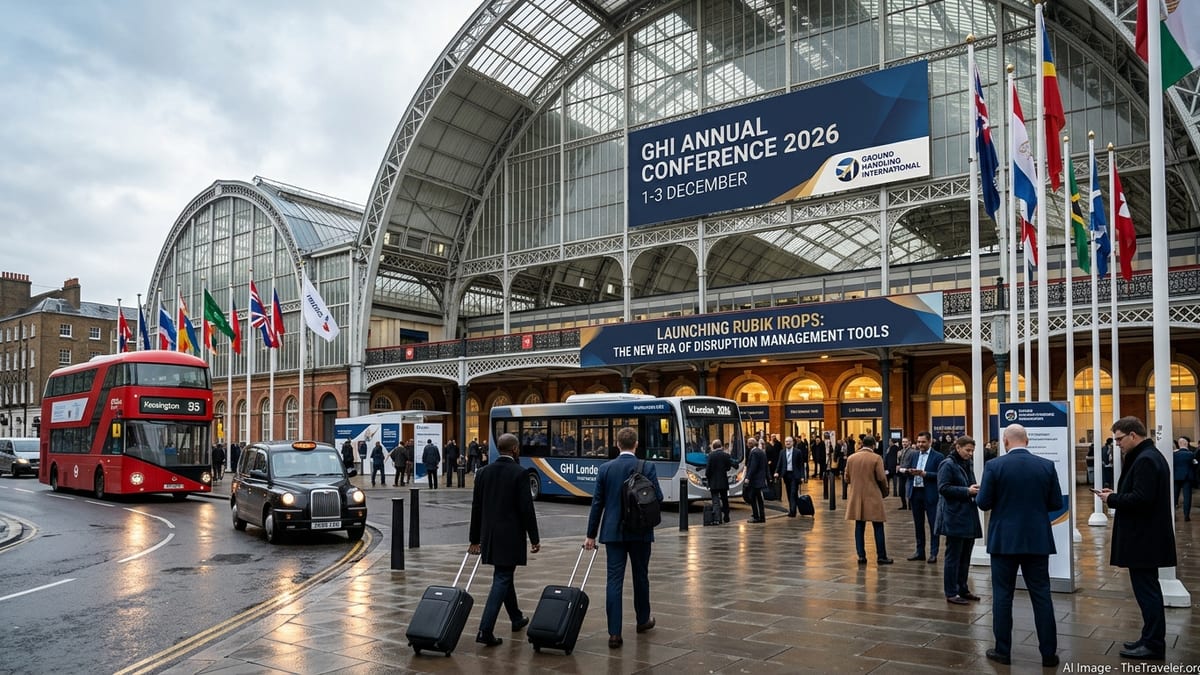
GHI London 2026: timing, venue and audience
The 27th GHI Annual Conference is scheduled to run from 1 to 3 December 2026 at Olympia London, with the main conference and exhibition based in the venue’s National Hall. Conference timings published by the organiser show sessions beginning on Tuesday 1 December and running through early afternoon on Thursday 3 December, with welcome and networking events wrapped around daytime panel discussions, workshops and one-to-one meetings.
Ground Handling International bills the London edition as the “world’s most important ground handling industry conference”, continuing a series that has run since 1999. Event information confirms that the format combines a conference programme, exhibition floor and pre-arranged business meetings between airlines, airports, ground handling companies, ground support equipment manufacturers and IT providers. The 2026 move to Olympia London follows previous editions in other European cities and is positioned as the start of a new chapter for the event in partnership with the ASA trade association.
Attendance figures for the 2026 conference have not yet been finalised, but materials for the 2025 edition point to around 1,100 delegates, including representatives from more than 100 airlines and approaching 90 exhibiting suppliers. The 2026 exhibitor list on partner sites and event databases already shows a broad mix of ground handlers, technology firms and training providers planning to attend, underlining that Value Group will be presenting RUBIK IROPS within a concentrated community of operational decision makers.
What RUBIK IROPS does in airline disruption scenarios
Publicly available product information indicates that RUBIK IROPS is part of a wider Value Group platform designed to help airlines, airports and ground handlers manage irregular operations, often abbreviated to IROPS. These are disruption scenarios where normal schedules are significantly affected, such as severe weather events, air traffic control restrictions, crew or staffing shortages, or technical issues that trigger large numbers of delays, cancellations or missed connections.
Within this context, RUBIK IROPS is presented as a dashboard-based environment that aggregates operational and customer data relating to a disruption into a single workspace. Demonstrations and technical summaries describe how the tool brings together flight schedules, passenger bookings and airline-specific rules for care and compensation, enabling operations and customer care teams to see how many passengers are affected on each route, which connections are at risk and what options exist for reaccommodation.
The platform is positioned to support a range of tasks that arise during major irregular operations events, including rebooking passengers onto alternative flights, arranging overnight accommodation or surface transport where required, and tracking the progress of recovery plans across multiple airports or stations. By centralising information that would typically be spread across reservations systems, airport departure control, hotel allocation tools and ad hoc spreadsheets or messaging channels, Value Group promotes RUBIK IROPS as a way to shorten response times and maintain a more consistent record of how each disruption is handled.
What is changing in the expanded RUBIK IROPS suite
Value Group has not yet released detailed public specifications for the expanded RUBIK IROPS suite expected to be showcased in London, and there is no official session listing or stand-level timetable available through widely indexed sources as of late November 2026. However, recent industry briefings and interviews with Value Group leadership ahead of the GHI conference indicate that the upgrade focuses on deeper integration with airline and handler systems as well as broader collaboration tools for partners involved in disruption response.
Company materials and presentations at earlier industry events describe ongoing work to connect RUBIK IROPS with airline reservation platforms, operations control tools and third-party services such as hotel providers and ground transport companies. In practice, this means that data about disrupted passengers, available inventory and applicable rules can flow more directly into the IROPS workspace, reducing the need for manual cross-checking between systems. The expanded version to be shown at GHI London 2026 is understood to build on this integration layer, although concrete release notes and live customer case studies have not yet been published for independent review.
The platform is also framed as a shared environment for airlines, ground handlers and partner service providers, rather than a tool used by a single department. In Value Group’s descriptions, a ground handler could use the system to see which passengers require hotel rooms, meal vouchers or welfare support, while airline staff working in another location handle ticket reissues and schedule changes against the same set of underlying data. The expanded suite is expected to refine these collaborative workflows, for example by clarifying role-based access or by providing more structured task allocation across multiple stations, but such enhancements remain announced plans rather than fully documented features at this stage.
Regulation, safety and staffing: why IROPS tools are under scrutiny
The published GHI 2026 programme highlights several themes that intersect directly with irregular operations management, including the impact of upcoming European regulatory changes, safety culture on the ramp and workforce pressures in ground handling. Conference sessions are set to examine new ground handling rules emerging from European institutions and national regulators, as well as global standards taking effect from late 2026, and how these measures will shape responsibilities between airlines, handlers and airports.
Within this regulatory environment, disruption-management systems such as RUBIK IROPS are being evaluated not only on how quickly they enable rebooking, but also on how clearly they document what support was offered to affected passengers, when and by whom. Compliance with passenger rights rules and new ground handling standards increasingly requires robust audit trails that show how airlines and their partners responded during major disruption events, including records of care, accommodation, communication and accessibility support. Integrated platforms that centralise this information in one place may help operators demonstrate compliance more efficiently than disparate manual records.
Workforce and skills challenges form another strand of the GHI London agenda, with sessions dedicated to human performance in ground handling and the next generation of ramp and service staff. Many ground handling companies and airports continue to report tight labour markets, particularly for specialist roles involved in operations control and large-scale passenger reaccommodation. Under these conditions, tools that can automate routine eligibility checks, highlight critical passenger information and standardise disruption workflows are being promoted as a way to help smaller or less experienced teams handle complex events with greater consistency and fewer manual handoffs.
How GHI’s meeting structure is likely to shape the London launch
Although Value Group’s precise timetable at GHI London 2026 is not yet visible in the public programme, the conference format provides various channels for suppliers to showcase new tools beyond the main-stage sessions. Ground Handling International’s delegate information confirms that attendees can pre-arrange one-to-one meetings around the conference schedule, and exhibitors commonly use these slots, along with stand demonstrations, to deliver detailed product walk-throughs tailored to each airline or handler’s operation.
Given that the official agenda is organised largely around thematic panels on regulation, safety, technology and workforce issues rather than specific product announcements, it is reasonable to expect that most RUBIK IROPS demonstrations in London will take place in these more focused meeting settings. Airline and ground handling delegates interested in the expanded suite are therefore likely to need to confirm Value Group’s stand location and request meetings through the conference app, delegate portal or on-site appointment system if they want to explore integration options or see live workflows.
Separate from the GHI conference, Value Group has promoted RUBIK IROPS in other forums, including association briefings and specialist aviation events centred on disruption management. These appearances have generally emphasised the platform’s role in connecting operational control, customer care and partner services during high-impact events, while acknowledging that full-scale rollouts require alignment with each airline’s existing IT landscape. The London showcase fits into this pattern as an opportunity to present the upgraded suite to a dense concentration of potential users, but any claims about adoption levels or measured performance improvements should be treated as indicative until supported by independently verifiable case studies.
What airlines, handlers and travellers should watch for next
For airlines and ground handling companies planning to attend GHI London 2026, the immediate practical step will be to check the latest exhibitor list, floor plan and meeting tools to identify where Value Group is located on the Olympia floor and what time slots remain available for demonstrations. Because stand numbers and individual supplier sessions can change closer to the event, delegates should verify details through official conference channels rather than relying on earlier marketing material or third-party listings.
Operational teams preparing to evaluate RUBIK IROPS or comparable IROPS platforms may find it useful to bring concrete disruption scenarios to discuss during meetings. These could include examples of hub-wide weather events, cascading air traffic control restrictions or prolonged technical issues on key routes, along with questions about how the platform would handle multi-station coordination, regulatory reporting and communication with on-the-ground partners such as hotels and transport providers. Clarifying what data sources can be integrated, what automation is available and how responsibilities are divided between airline and handler users will be important points for any purchasing decision.
Corporate travel managers and individual travellers are unlikely to interact directly with RUBIK IROPS, and there is no immediate change to consumer-facing booking channels linked to the London launch. However, the way airlines and handlers deploy disruption-management tools can affect how passengers experience irregular operations, from the speed of rebooking to the clarity of information and the handling of care obligations. Travellers flying around the conference dates of 1 to 3 December 2026 should continue to rely on their airline’s official channels and customer service teams for real-time disruption updates and offers of accommodation or alternative transport, recognising that the underlying tools used to coordinate such responses may vary significantly between carriers and may still be in the early stages of implementation.