


More news on this day
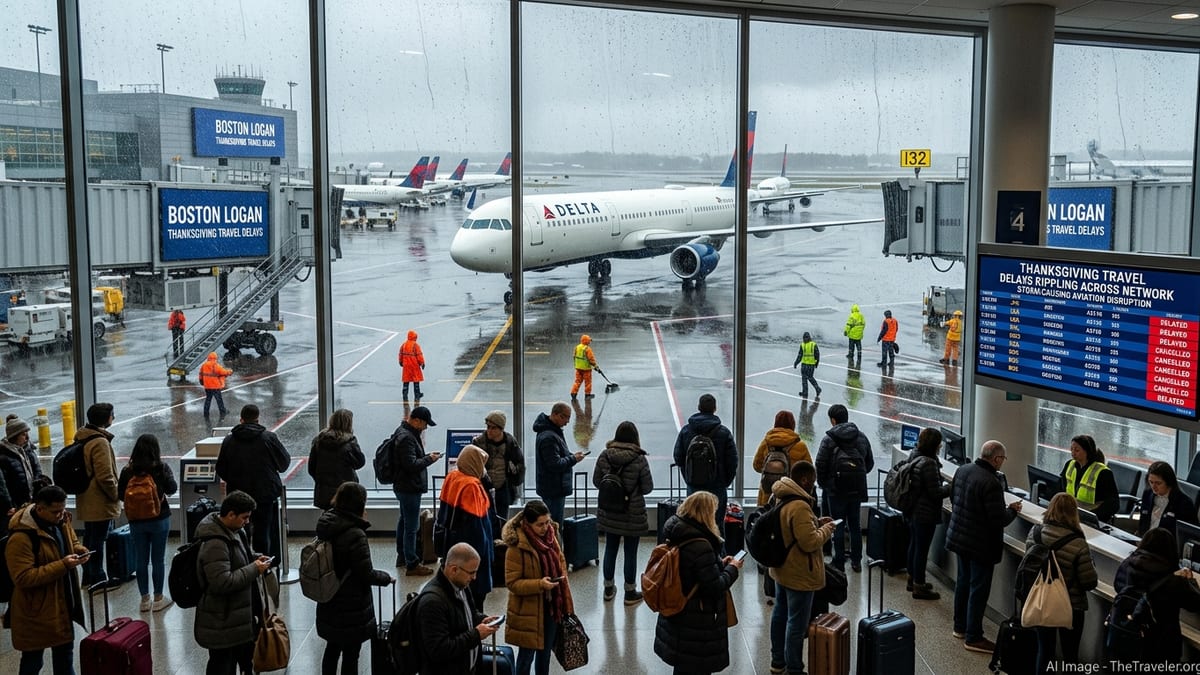
A powerful coastal storm on the US East Coast, coupled with heavy rain, strong winds and flooding in several regions, is disrupting Thanksgiving air travel on November 26, 2026, leading to mounting delays at major airports and prompting airlines to roll out weather waivers for millions of passengers.
Get the latest news straight to your inbox!
Storm System Hits East Coast Hubs At Peak Holiday Travel
The main disruption for Thanksgiving travelers is a rapidly intensifying coastal storm tracking up the Eastern Seaboard on Thursday, November 26, 2026. The National Weather Service has warned of damaging winds, heavy rain and major coastal flooding from the mid-Atlantic through New England, conditions that are particularly challenging for aviation at some of the country’s busiest hubs. Forecasts from federal agencies and private forecasters indicate that low clouds, wind shear and turbulence are likely to trigger arrival and departure delays at airports from Washington and Baltimore through New York and Boston through Thursday and into Friday morning.
Live traffic and disruption monitors on Thursday morning showed formal Federal Aviation Administration delay programs in place at Boston Logan International Airport, with intermittent delays at other East Coast hubs as the storm’s rain bands and wind fields move north. Although the FAA has not implemented a nationwide ground stop, its daily air traffic reports highlight the potential for periods of reduced capacity at several Northeast airports as controllers space aircraft farther apart for safety in low visibility and strong crosswinds.
The aviation impacts are occurring alongside broader weather disruptions. Governors and local officials in several coastal states have issued emergency declarations or high wind warnings as the storm pushes ashore, and coastal flood alerts cover tens of millions of residents. In New York City, the weather has already prompted authorities and organizers to postpone the 100th Macy’s Thanksgiving Day Parade to Saturday, a first in the event’s history, underlining the severity of the conditions facing travelers and residents in the region.
Delays Ripple Across The Network As Weather, Not Staffing, Drives Disruption
While the worst weather is concentrated along the Eastern Seaboard, the knock-on effects are being felt across the national air network. Former FAA officials and airline operations specialists have noted in recent briefings that high winds and low ceilings at a handful of large coastal hubs can cause rolling delays nationwide, as aircraft and crews arrive late into inland airports and scheduled turn times become compressed. Flights to and from the West Coast and interior hubs such as Chicago, Dallas and Denver can therefore be delayed even when local skies are relatively clear.
Industry and government sources have stressed that the current round of Thanksgiving disruption is primarily weather driven. This distinguishes it from earlier operational breakdowns in 2026 that stemmed from system outages or scheduling issues. Earlier in November, an FAA technology upgrade problem briefly triggered a rare nationwide ground stop and affected tens of thousands of flights, but officials say those technical issues have been resolved and that Thursday’s delays are tied to the active coastal storm and an overlapping winter system moving through parts of the Midwest.
The storm’s timing is particularly sensitive because it coincides with one of the busiest travel days of the year. AAA and other forecasters anticipated near-record Thanksgiving demand in 2026, including nearly six million air travelers between the start of the holiday period and the following Monday. This high baseline volume means that even modest weather-related slowdowns can quickly translate into crowded departure boards, longer lines at check-in and security, and tighter connections for passengers changing planes at major hubs.
Airlines Activate Weather Waivers And Operational Workarounds
In anticipation of the storm, several major US carriers began issuing weather waivers and adjustment policies earlier in the week. On Tuesday and Wednesday, airlines including American, Delta and United published advisories allowing customers booked through key East Coast hubs to change their travel dates without standard change fees. Some carriers are also waiving fare differences when customers rebook within a limited time window and keep the same origin, destination and cabin of service.
These waivers generally apply to tickets with travel dates from Wednesday, November 25, through Friday, November 27, for itineraries touching affected cities such as Boston, New York, Philadelphia and Washington. The specific list of eligible airports and travel dates varies by airline, and some policies cover select Southeastern and mid-Atlantic airports where the storm first came ashore. Travelers must typically rebook their flights by a prescribed deadline, and standard fare rules can resume once the worst of the weather has passed.
Operationally, airlines are adjusting schedules to keep as much of the network moving as possible. That includes proactively trimming some flights into the tightest weather windows, swapping to larger aircraft on routes where demand remains strong, and repositioning aircraft around the storm’s path. At the same time, carriers are urging passengers to use mobile apps and online tools for real-time flight status updates and rebooking, in order to reduce congestion at airport customer service desks if delays or cancellations escalate.
Regional Impacts: East Coast, Midwest And West Coast Conditions
Conditions and traveler impacts differ significantly by region. Along the mid-Atlantic and Northeast coast, including major airports in New York, New Jersey, Pennsylvania and New England, the coastal storm is the primary driver of disruption. High wind warnings and coastal flood advisories are in effect across wide areas, and forecasters expect periods of intense rainfall on Thursday with lingering showers and gusty winds into Friday. For aviation, the combination of crosswinds, wet runways and low clouds increases spacing between arrivals and departures, which slows throughput and can trigger holding patterns or ground delay programs.
In the Midwest and Great Lakes, a separate weather system is bringing rain, mixed precipitation and some wet snow to parts of Illinois, Indiana, Missouri and neighboring states. While not as intense as the coastal storm, this system can still generate localized delays, especially where snow or mixed precipitation are present during deicing operations. Some forecast products indicate that the heaviest wintry weather is north and west of the busiest Chicago air corridors, but travelers connecting through regional hubs should plan for possible schedule adjustments, particularly in the late afternoon and evening.
On the West Coast, the immediate flight disruption risk on Thanksgiving Day itself appears more limited, but not negligible. Earlier in the week, forecasters highlighted the potential for heavy rain and strong onshore winds to move into the Pacific Northwest around the peak outbound travel period, with some knock-on effects in Northern California. In Southern California, separate coastal flood concerns have been tied to a combination of high surf, king tides and the broader El Niño pattern. While skies may be clearer for flights at certain times, local authorities in coastal areas are advising residents and visitors to monitor road closures and flood-prone segments, particularly near low-lying coastal airports and access routes.
What Thanksgiving Travelers Should Check Next
For travelers still in transit or scheduled to fly through the weekend, the most important step is to verify flight status directly with the airline before heading to the airport. Because the active coastal storm continues to evolve as it moves northward, specific delay patterns can shift within hours, and airline apps typically display gate changes, estimated departure times and rebooking options more quickly than airport displays. Passengers with connections through East Coast hubs on Thursday and Friday should allow extra time between flights where possible or consider voluntary rebooking using available waivers.
Travelers should also pay attention to local ground conditions at both origin and destination. In parts of the mid-Atlantic and Northeast, strong winds and flooding can affect airport access roads, public transport links and ride-hailing wait times even if flights are operating. In the Midwest and interior Northeast, bands of rain or wet snow can slow traffic and lengthen the time required to reach regional airports. On the West Coast, coastal flooding and high surf advisories around king tides may temporarily close certain coastal routes and parking areas, which could indirectly affect airport access in low-lying coastal communities.
Looking beyond the Thanksgiving weekend, federal climate and weather agencies have recently highlighted the strengthening El Niño as a key factor shaping the broader winter outlook for the United States. Current seasonal forecasts suggest a wetter-than-average pattern for parts of the southern tier, including the Southeast, and relatively warmer conditions in sections of the northern Plains and Midwest. For travelers planning trips later in the year, this implies that winter travel challenges in 2026 and early 2027 may be more likely to arise from repeated storm systems, flooding and heavy rain in some regions rather than from tropical cyclones. As always, those booking critical journeys during the winter period should build in flexible plans, monitor official forecasts closely and review airline and hotel change policies before departure.