


More news on this day
A strengthening coastal storm is disrupting Thanksgiving across the United States on Thursday, triggering widespread flight delays, hundreds of cancellations, significant power outages and coastal flooding alerts, while forcing New York City’s 100th Macy’s Thanksgiving Day Parade to move to Saturday for the first time in its history.
Get the latest news straight to your inbox!
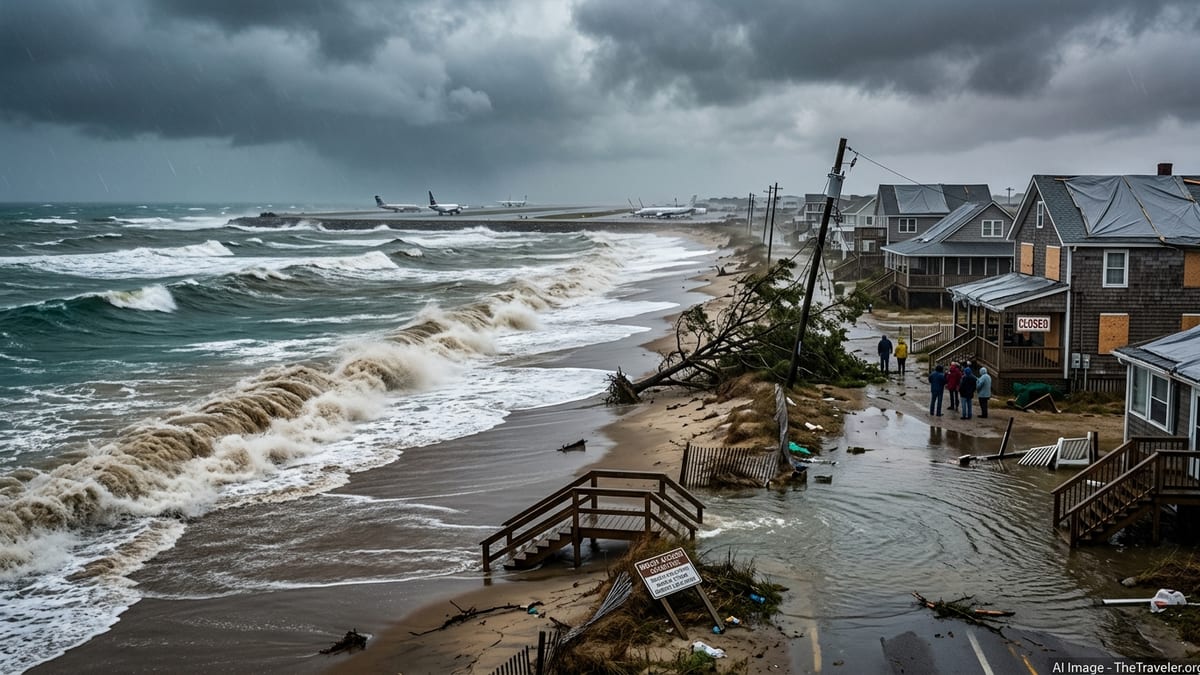
Coastal storm brings flooding risk, damaging winds and outages
The National Weather Service describes the system affecting the Eastern Seaboard on Thursday 26 November 2026 as a powerful coastal storm, with strong onshore winds, very high surf and elevated astronomical tides coinciding around high tide cycles. Forecast offices from the mid-Atlantic to New England have coastal flood warnings and advisories in place, alongside high wind warnings in some coastal counties, with the most significant impacts expected through Thursday afternoon and evening and in some locations into Friday morning.
Forecasters have warned that moderate to locally major coastal flooding is possible in vulnerable bays and back bays in New Jersey, Delaware, Maryland and parts of Long Island, as persistent northeasterly winds push water into inlets and rivers. The Weather Prediction Center’s Thanksgiving key messages stress the risk of beach erosion, dangerous surf and rapidly changing conditions along the shoreline, and advise both residents and travelers on the East Coast to prepare for coastal flooding, strong winds and possible power outages rather than treat the holiday as business as usual.
By midday Thursday, that risk was being reflected in outage data. Aggregators tracking U.S. grid conditions reported more than 600,000 customers without electricity nationwide, with Virginia and Maryland among the hardest hit states. In Virginia, more than 200,000 customers were offline around early afternoon Eastern time, while Maryland utilities collectively reported well over 100,000 outages as wind toppled branches into lines and saturated ground increased the likelihood of trees falling. Local cooperatives in southern Maryland and other mid-Atlantic utilities warned that restoration in some pockets could extend into Thursday night, depending on access and safety conditions.
Flight delays build but most major hubs remain operational
The messy weather has coincided with one of the busiest air travel periods of the year. The Transportation Security Administration said ahead of the holiday that it expected to screen approximately 17.6 million passengers nationwide between Sunday 24 November and Saturday 30 November, with Sunday 29 November projected as the single busiest day at checkpoints. That volume means even localized disruptions can have knock-on effects throughout airline networks, particularly where aircraft and crews are scheduled tightly.
On Wednesday, as the storm began to organize and other regional systems moved across the country, flight-tracking services logged several thousand delays across U.S. airports and a smaller number of outright cancellations. By early afternoon on Thanksgiving Day itself, the pattern had shifted to reflect the strengthening coastal storm: more than a thousand flights within, into or out of the United States were delayed, and several hundred had been canceled. While the raw totals fluctuate throughout the day as airlines adjust their operations, the numbers confirm that the storm is materially affecting travel plans for many passengers, though not to the extent of a nationwide ground stop.
The Federal Aviation Administration signaled ahead of time that gusty winds would likely slow arrivals and departures at New York’s LaGuardia, Newark Liberty and John F. Kennedy airports, as well as at San Francisco International, where a separate series of Pacific storms has produced hazardous surf and king tides along the California coast. On Thursday morning, LaGuardia reported wind gusts approaching 40 knots, enough to trigger spacing adjustments in air traffic flows, but all three major New York area airports remained open and functioning with delays rather than widespread cancellations. The FAA also noted that thunderstorms and convective weather in Florida could cause holding patterns and reroutes at Miami and Fort Lauderdale, where air traffic was further complicated by a runway incident.
Runway overrun in Miami compounds Southeast disruption
In Miami, a FedEx cargo aircraft overran a runway at Miami International Airport on Wednesday evening, the day before Thanksgiving, amid wet conditions. According to information released by airport and federal officials, the aircraft came to rest beyond the end of the runway, and emergency crews responded. There were no injuries reported among crew members, and there was no fire, but the incident required temporary closure of all but one of the airport’s runways while the plane was secured and investigators began their initial assessment.
The reduction in runway capacity at a major hub during an already busy travel window led to significant knock-on delays for both arrivals and departures. The Federal Aviation Administration’s real-time advisories on Thursday morning showed extended arrival metering and ground delay programs in effect for Miami, with some flights held at origin airports for hours to prevent congestion. While operations gradually improved as additional runway capacity returned, many passengers traveling through or to South Florida on Wednesday night and Thursday morning faced missed connections and rebookings that were not directly related to the East Coast coastal storm but added to the overall sense of disruption.
Elsewhere in the Southeast, thunderstorms associated with the same weather pattern that is feeding moisture into the coastal storm have slowed flights in and out of Fort Lauderdale and Orlando. Carriers have been encouraging travelers headed to or through Florida to monitor their flight status frequently and to consider allowing longer layovers where possible, as the combination of convective weather and high holiday volumes can extend irregular operations into subsequent days even after conditions improve.
Macy’s 100th Thanksgiving parade postponed to Saturday
One of the most visible consequences of the Thanksgiving storm has been in New York City, where officials and organizers have postponed the 100th Macy’s Thanksgiving Day Parade from Thursday to Saturday 28 November 2026. Macy’s confirmed the decision on Wednesday after consulting with the city and the New York Police Department, citing forecasts for sustained high winds and heavy rain on Thanksgiving Day that raised safety concerns for participants, spectators and the parade’s enormous helium balloons.
New York City Mayor Zohran Mamdani said that, based on National Weather Service guidance, forecasters expected wind gusts in parts of the city to reach 50 to 60 miles per hour on Thursday afternoon and evening. Those speeds are high enough to risk snapping tree limbs and downing power lines, but they are also above the safe operating thresholds historically applied to many of the Macy’s balloons. Moving the parade to Saturday was described as a precautionary measure taken out of an abundance of caution, and it marks the first time in the event’s century-long history that it has been rescheduled because of weather rather than modified in place.
The postponement affects not only spectators who traditionally line the route through Manhattan on Thanksgiving morning, but also thousands of performers, marching bands and support staff who traveled to New York specifically for the event. Some out-of-town groups have indicated that the additional hotel nights and logistical changes will strain their budgets, and that not all original participants will be able to stay through Saturday. City officials have not suggested any further changes to the revised schedule, and current forecasts indicate that conditions in New York should improve by Saturday, with high pressure building in behind the departing storm, though travelers are being advised to reconfirm times and street closures closer to the day.
What Thanksgiving travelers should expect next
For travelers still in transit or planning to travel later in the long weekend, the key message from weather and aviation authorities is to stay informed and to allow additional time. The coastal storm is forecast to move gradually northeastward and offshore into Friday, with winds expected to ease and coastal flooding risk to diminish after the most critical high tide cycles have passed. However, residual delays in the air travel system can persist even after skies clear, particularly if aircraft and crews are out of position from earlier disruptions.
Airlines are continuing to adjust schedules in response to both the storm and airport-specific constraints such as the situation in Miami. Many carriers activate weather waivers during such events, allowing passengers to rebook without change fees for travel within a defined window and to or from specified affected airports. Because these policies vary by airline and can change as forecasts are updated, passengers are being urged to check directly with their carrier’s official channels rather than rely on generic advice or past experience.
On the ground, those driving along the Eastern Seaboard should be prepared for localized flooding on coastal roads, reduced visibility in heavy rain and wind-blown debris, especially on bridges and elevated highways. In areas of Virginia, Maryland, Delaware and New Jersey where power outages are concentrated, traffic signals may be dark and some fuel stations and services closed until utilities complete restoration. Local emergency management agencies in several states have advised residents and visitors to avoid walking or driving through floodwaters, to secure loose outdoor items before the strongest winds arrive, and to keep mobile devices charged in case of further outages.
Looking beyond Thursday, attention is shifting to the return travel peak expected on Sunday 29 November, historically one of the busiest and most delay-prone days of the year at U.S. airports. While the current coastal storm is forecast to be over by then, its effects on aircraft positioning and crew schedules could still influence punctuality at some hubs. Travelers returning home at the end of the holiday period may wish to monitor evolving forecasts in case of new systems, verify their flight status repeatedly in the 24 hours before departure, and build in contingency time for both airport processes and onward connections.