


More news on this day
Passengers traveling between Montreal and Vancouver are facing a wave of delays and cancellations after a passenger jet veered off a runway during landing at Montreal–Trudeau International Airport, prompting a temporary runway closure and triggering knock-on disruption across the country’s busy east–west corridor.
Get the latest news straight to your inbox!
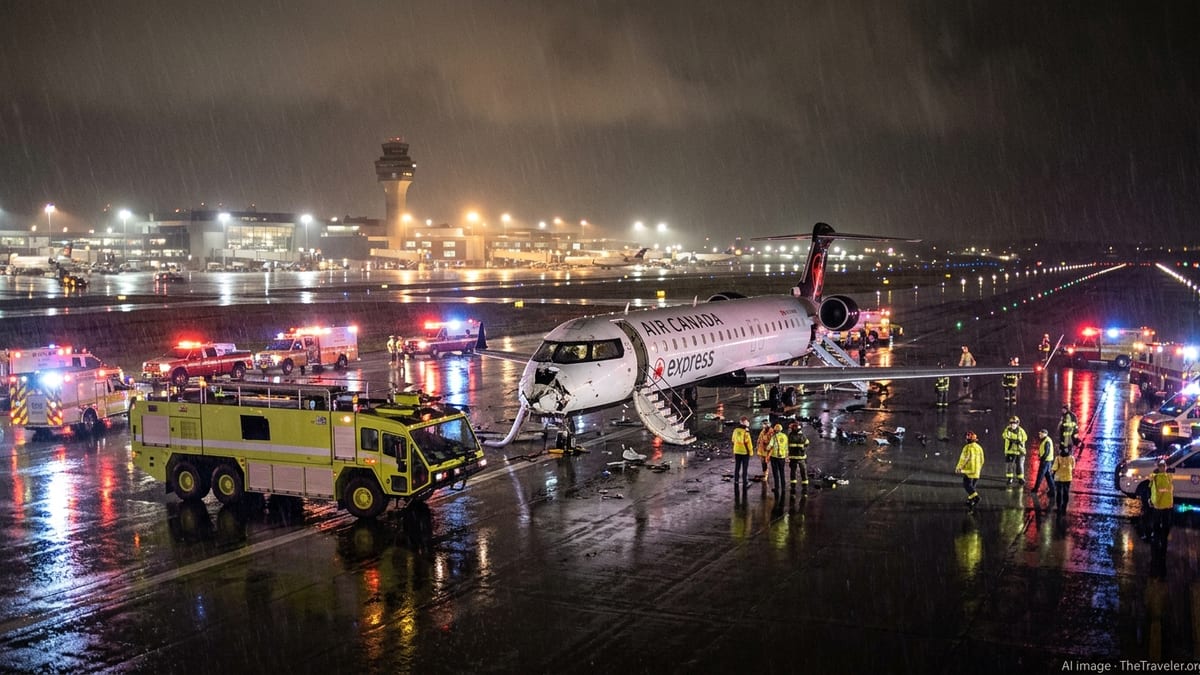
Runway excursion in Montreal disrupts transcontinental traffic
According to published coverage from Canadian news outlets, the aircraft involved in the incident had just landed at Montreal–Trudeau when it veered off the paved surface during rollout. Preliminary information indicates the jet came to rest in a grassy area adjacent to the runway, with no immediate reports of injuries among passengers or crew.
Publicly available flight-tracking data shows that one of the airport’s primary runways was taken out of service for inspections and recovery operations, constraining arrivals and departures at a time when morning and midday bank traffic between eastern Canada and western hubs such as Vancouver is typically heavy.
The excursion did not involve fire or a major structural breakup of the aircraft, but the need to secure the site, assess any damage to airport infrastructure and move the jet safely meant the affected runway remained unavailable for an extended period. That bottleneck quickly translated into schedule disruptions on longer-haul services.
Aviation safety records for Canadian airports show that runway excursions, while uncommon, often result in prolonged closures because specialized recovery equipment and detailed inspections are required before normal operations can resume.
Vancouver flights delayed or cancelled as ripple effects grow
Operational data from airline and airport information pages indicates that multiple flights on the busy Montreal–Vancouver route have been delayed, with some rotations outright cancelled as carriers reshuffle aircraft and crew assignments. Travellers booked from Vancouver to Montreal later in the day are also experiencing knock-on schedule changes.
Real-time schedules reviewed on major flight-status aggregators show services that ordinarily depart Montreal for Vancouver in quick succession now spaced further apart, with extended ground times and rolling departure estimates. Some aircraft originally scheduled to continue from Montreal to other western Canadian destinations have been reassigned or held on the ground, reducing capacity on those routes.
The disruption is not limited to direct Montreal–Vancouver flights. Publicly available information suggests that connections from Atlantic Canada and the northeastern United States into Vancouver via Montreal are also affected, as missed inbound aircraft and crew reach duty-time limits.
For travellers already in Vancouver, outbound flights that rely on aircraft originating in Montreal are among the most disrupted, with airlines posting “indefinite delay” or “cancelled” status on some services while they attempt to substitute equipment from other bases.
Passengers urged to monitor status and consider alternatives
Airline advisories and airport information screens reviewed Friday advise passengers on Montreal–Vancouver and related transcontinental routes to closely monitor their flight status before heading to the airport. Same-day schedule changes, equipment swaps and gate moves are being reported more frequently than usual.
Consumer information resources that track on-time performance note that, in similar Canadian runway incidents, airlines have often implemented flexible rebooking policies, allowing passengers to move their trips to later departures or alternative routings without additional change fees. Travellers are being encouraged to use mobile apps and online tools where possible, as telephone wait times remain elevated when large numbers of flights are disrupted.
Travel forums and social media posts from passengers at both Montreal and Vancouver airports describe long lines at customer service counters, but also report that some travellers have successfully rerouted via Toronto, Calgary or Edmonton to reach the West Coast sooner. Others have opted to delay their trips by a day in exchange for more reliable itineraries.
Given the cross-country nature of the affected routes, aviation analysts quoted in local coverage note that even a single aircraft’s unavailability can cascade through the network, particularly during peak travel periods when spare capacity is limited.
What is known about the incident and the investigation process
Details about the precise cause of the runway excursion remain limited. Published coverage so far points to an incident occurring after touchdown rather than during takeoff or approach, a scenario that can be associated with a range of factors including braking performance, surface conditions and steering inputs.
Canada’s Transportation Safety Board routinely collects data after such events, drawing on flight data recorders, cockpit voice recordings, crew interviews and runway inspections. Previous investigation summaries available on the board’s website show that runway excursions in the country have most often been linked to a combination of weather and operational decision-making rather than single-point technical failures.
In the current case, recovery teams at Montreal–Trudeau have been photographed working around the immobilized aircraft, indicating that the jet remains largely intact but likely requires engineering inspections before it can return to service. Publicly available airport operations notices referenced in local reports also highlight temporary restrictions on taxi routes in the vicinity of the disabled plane.
Once the aircraft is removed and the runway surface is cleared for use, a more detailed timeline of the incident, along with any interim safety recommendations, is expected to be published through official channels and industry bulletins.
Impact on summer travel plans and what flyers can expect next
The incident comes at a time when travel between eastern Canada and British Columbia is seasonally strong, with Vancouver serving as both a tourism gateway and a key connection point for transpacific flights. Even short-lived interruptions at a hub like Montreal can reverberate across the national network for several days.
Historical performance data from previous Canadian runway closures suggest that while most same-day disruptions are resolved within 24 to 48 hours, some passengers may continue to encounter fuller flights, limited seat availability and sporadic delays as airlines reposition aircraft and rebalance schedules.
Prospective travellers planning upcoming trips involving Montreal–Vancouver services are being advised, through travel advisory outlets, to allow extra connection time, avoid tight same-day international links and ensure that contact details are up to date in airline bookings so they can receive rebooking notifications promptly.
Industry observers note that the incident is likely to renew attention on runway safety and resilience planning at Canada’s major airports, including the contingency measures used to keep long-haul flows moving when a key piece of airfield infrastructure suddenly goes offline.