


The Vasa Museum in Stockholm is one of Scandinavia’s most visited cultural attractions, and for many travelers it is the single unmissable stop in the Swedish capital. To get the most out of your visit, it helps to understand how ticketing works, what hours the museum keeps through the year, and a few practical details about queues, guided tours, and facilities on Djurgården. This guide pulls together the latest publicly available information to help you plan your visit with confidence.
Get the latest updates straight to your inbox!
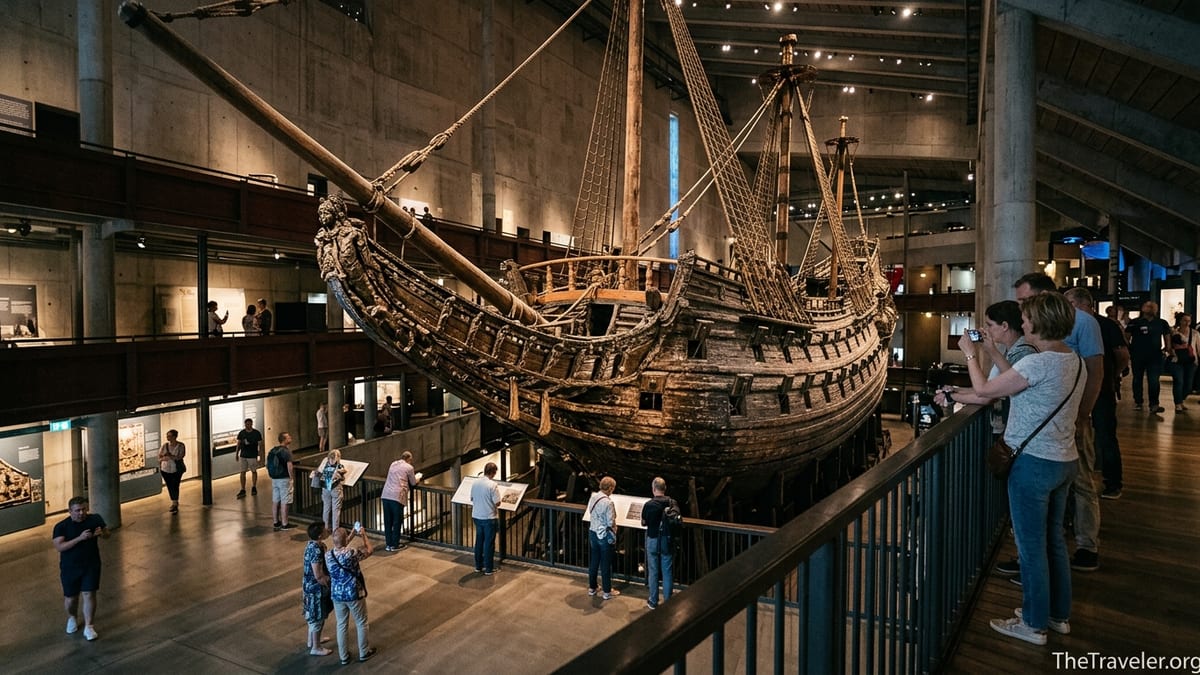
Where the Vasa Museum Is and Why It Matters for Planning
The Vasa Museum is located on the island of Djurgården, just east of central Stockholm. This is the same compact museum district where you will also find the ABBA Museum, Skansen open air museum, and Gröna Lund amusement park. In practice, that means most visitors combine the Vasa Museum with at least one other nearby attraction on the same day, so understanding its hours and ticketing in relation to the wider area can make a big difference.
From Stockholm Central Station, most travelers reach the museum by taking tram line 7 toward Djurgården and getting off at the Nordiska museet/Vasamuseet stop, or by using one of the city buses that run along Strandvägen and across the bridge to Djurgården. Many hop on hop off sightseeing buses and boats also stop within a few minutes’ walk of the museum entrance. If you time it well, you can arrive just before opening time, enter quickly, and then walk over to Skansen or the ABBA Museum afterwards.
The museum sits in a purpose built, climate controlled building that encloses the nearly intact 17th century warship Vasa. Because the interior is dimly lit to protect the wood and artefacts, there is no advantage to visiting at a particular time for daylight. What matters much more is avoiding the heaviest crowds, which tend to arrive in waves with tour groups and cruise ship excursions during late morning and early afternoon.
Current Opening Hours and Seasonal Variations
The Vasa Museum typically opens every day of the week, with slightly longer hours in the high summer season. As of mid 2026, the common pattern is that the museum opens in the morning at around 10:00 and closes in the late afternoon or early evening, with last admission some time before the posted closing hour. Travelers should always check the museum’s official website shortly before their trip, because exact hours and occasional closure dates can change from year to year.
In practice, a visitor arriving in June, July, or August can usually expect opening hours that extend into the early evening. In the shoulder seasons of spring and autumn, the museum often closes a bit earlier in the afternoon. Around major Swedish holidays such as Christmas Eve, Christmas Day, New Year’s Eve, Midsummer, and certain public holidays in spring, hours may be reduced or the museum may close entirely. For example, a traveler who visited during Midsummer weekend in a recent year found that the Vasa Museum had significantly shorter hours, while nearby attractions such as Skansen closed for the holiday itself.
One important practical detail is how closing time is interpreted. Like most major museums, the Vasa Museum expects visitors to leave the building at or before the stated closing hour, and the last entry is usually set earlier. While the exact cut off for last admission is not always highlighted in booking engines, a good rule of thumb is to plan to enter at least an hour before closing if you want a relaxed visit. This matters particularly in the short winter days of December and January, when travelers sometimes underestimate how early attractions close in Stockholm.
Ticket Types, Prices and What They Include
For individual travelers, the Vasa Museum uses a simple ticket structure with different prices for adults and children, and additional concessions for certain groups. The adult admission price in recent seasons has generally been in the mid 100s of Swedish kronor, with children enjoying free or much lower cost entry. For example, external museum price aggregators have listed adult tickets for around 195 Swedish kronor in recent years, while noting that children up to a certain age enter free with a paying adult. You should expect modest increases over time, and always verify the latest details directly with the museum or a reputable local information source.
Your ticket gives you access to the entire museum, including multiple levels of viewing platforms around the ship, the main historical exhibition, short documentary films about the Vasa, and smaller displays that focus on topics such as life on board, conservation techniques, and the archaeology of the wreck. A free audio guide is typically available via the museum’s Wi Fi network in many languages, including English, Swedish, German, French, Spanish, and others. This means that even if you cannot join a scheduled guided tour, you can still enjoy a structured visit without additional cost.
For many visitors, the museum ticket is bought on its own. However, you will also see the Vasa Museum bundled into city passes and combination tickets. Some Stockholm attraction passes include entry to the Vasa Museum alongside sites such as the Royal Palace, Skansen and Gröna Lund. Separate from city passes, certain partner museums offer a combined ticket; for instance, the nearby Vrak Museum of Wrecks has promoted a joint entry ticket with the Vasa Museum, allowing you to explore both maritime collections at a reduced combined price compared with buying each individually.
Buying Tickets: On Site vs Online and Real World Examples
Visitors can typically buy tickets either at the museum entrance on the day or in advance online. The museum has moved to cash free payments, so be prepared to pay with a credit card or mobile payment solution if you buy on site. Travelers who have tried to pay in cash in recent seasons have found that this is no longer accepted, a change that mirrors many other major attractions in Stockholm.
Online, you will find timed entry tickets sold through the museum’s own booking system and through large international ticketing platforms. For example, a traveler planning a July visit might see a Vasa Museum guided tour with entrance ticket listed at around 60 to 70 US dollars per person on a major international booking site, or a combination tour that includes a walking tour of Stockholm’s Old Town plus Vasa entry priced higher, in the range of 100 to 130 US dollars. These products often include a professional guide, skip the main ticket line access, and the simplicity of having your visit scheduled at a specific time.
For many independent travelers, buying a straightforward entry ticket in advance is mainly about convenience and queue management rather than cost savings, since the base price inside the museum and on its official booking channels is usually the same. For instance, one Reddit user discussing Stockholm museums mentioned that the Vasa Museum is one of the few attractions where they personally choose to prepay because the ticket queue can become unpleasant at peak times, while noting that the price is similar whether you pay in advance or on the day.
If you are visiting Stockholm during a quiet period in late autumn or mid winter, when cruise ships are rare and school holidays are over, you may find little or no line at the museum entrance and can comfortably buy tickets on arrival. By contrast, a traveler arriving on a July weekend when multiple Baltic cruise ships are docked in the city may face a long queue late in the morning. In that scenario, a prebooked timed entry slot around opening time can save half an hour or more of waiting.
Best Times to Visit, Crowd Patterns and How Long to Allow
The Vasa Museum is busy, but not impossibly crowded if you time your visit. Crowd data services that track visitor patterns in real time suggest that the quietest times to visit are in the first hour after opening and the last two hours before closing. Midday, particularly between late morning and mid afternoon, can be substantially busier as tour buses and cruise groups arrive.
In practical terms, this means that if you are staying in central Stockholm, one of the smoothest strategies is to take an early tram or bus and aim to reach the entrance just before opening. Travelers who have done this in recent summers describe walking straight in or with only a short wait, enjoying much easier access to the viewing platforms and exhibition panels before the main crowds build up. Another workable strategy, especially in the long days of Scandinavian summer, is to visit later in the afternoon and then stroll back along Strandvägen in the evening light.
Most visitors spend between 1.5 and 2.5 hours inside the museum. If you are content to walk around the ship, watch the main film, and read some exhibit texts, 90 minutes may feel sufficient. If you want to follow the audio guide thoroughly, examine the human remains and artefacts, and spend time in the conservation and archaeology sections, you may easily fill two to three hours. Families with children often take breaks in the café or outdoor seating areas, which can extend the visit further.
A useful approach is to book other timed activities, such as a city hall tour or boat cruise, with enough buffer time around your Vasa visit. For example, if you have a 3 pm guided tour at Stockholm City Hall, a sensible plan would be to book or plan your Vasa Museum entry no later than late morning, giving yourself time to enjoy the museum, have lunch on Djurgården, and get back into the city center without rushing.
Practical Visitor Information: Facilities, Accessibility and Families
The Vasa Museum is well equipped with services that make a visit comfortable, even on a busy day. Inside the building you will find a café and restaurant that serves light meals, pastries, and drinks. Opening hours for the restaurant can differ slightly from the museum’s overall hours, but in general it is open for lunch and afternoon refreshments on the same days as the museum. There is also a museum shop with books, models of the Vasa, and maritime themed souvenirs, which many visitors browse on their way out.
The museum building is designed with accessibility in mind. There are lifts connecting the different viewing levels, accessible toilets, and step free routes, which make it possible for visitors using wheelchairs or strollers to see the ship from multiple angles. Because the lighting is deliberately low to protect the ship’s wood, some visitors with low vision may find certain areas dim, so it can be helpful to let your eyes adjust for a minute after entering. Service animals are generally allowed in Swedish museums, but ordinary pets are not, so visitors with dogs should plan accordingly.
Families with children often appreciate the interactive and storytelling aspects of the museum. While younger children may not follow every historical detail, they are typically fascinated by the sheer size of the ship and the dramatic story of its sinking on its maiden voyage. During school holidays, the museum has been known to offer family activities or themed tours, although the specifics vary from year to year. Practical amenities such as stroller parking areas and baby changing facilities make it easier for parents to manage the visit.
Finally, it is worth remembering that the museum is entirely indoors and climate controlled. On a rainy autumn day in Stockholm, the Vasa Museum can serve as a reliable anchor for your itinerary, offering a rich experience regardless of the weather outside. In winter, when temperatures drop well below freezing, spending a few hours indoors here can be a welcome break between walks along the waterfront and ferry rides.
Combining the Vasa Museum With Other Stockholm Experiences
Because of its location on Djurgården, visiting the Vasa Museum often forms part of a wider day exploring Stockholm’s cultural attractions and waterfront. Many guided tours combine entry to the museum with a walk through the Old Town, known as Gamla Stan, a photo stop at Stockholm City Hall, or a boat cruise through the inner archipelago. For instance, one popular tour marketed to first time visitors includes city hall, the Old Town, and the Vasa Museum in a single itinerary, allowing guests to see several headline sights in one day.
If you prefer to explore independently, an easy route is to start at the Vasa Museum in the morning, then walk a few minutes to the ABBA Museum for a contrasting modern pop culture experience, and later continue on to Skansen, which mixes historic buildings, Nordic animals, and city views. You can then return to central Stockholm on foot along Strandvägen, by tram, or by boat. Those with children may choose to substitute Gröna Lund amusement park for one of the museums, especially in summer when it stays open late into the evening.
Travelers with a particular interest in maritime history sometimes pair the Vasa Museum with the newer Vrak Museum of Wrecks, also on Djurgården. Vrak focuses more broadly on shipwrecks and underwater archaeology in the Baltic Sea, while the Vasa Museum centers on its single flagship vessel. When a combined ticket is available, it can offer good value for those wanting to make a full maritime themed day out, but even without a formal combo ticket, the short distance between the two museums makes visiting both straightforward.
For visitors on brief business trips who only have a few free hours, evening openings on certain days can be especially useful. Stockholm has periodically extended opening hours for some museums midweek, making it possible to visit the Vasa Museum after a day of meetings. Checking the museum’s own calendar in the week before you travel will show whether any such late openings coincide with your stay.
The Takeaway
The Vasa Museum rewards a bit of advance planning, but it is not difficult to visit. Knowing that it is on Djurgården, that it keeps broadly predictable daytime hours with some seasonal variation, and that it uses cash free ticketing gives you a solid foundation. From there, you can decide whether to buy a simple entry ticket on the day, reserve a timed slot to avoid queues, or opt for a guided tour that folds the museum into a wider exploration of Stockholm.
Most travelers find that arriving early in the morning or later in the afternoon yields a more relaxed experience, with enough space to appreciate the dramatic sight of the 17th century warship rising through the dim light of the hall. Setting aside at least 90 minutes, and ideally up to three hours, gives you time to explore the different levels, watch the films, and absorb the story without rushing. Add in the café, the shop, and the wider attractions of Djurgården, and the Vasa Museum can easily become the centerpiece of a memorable day in Stockholm.
Because details such as exact opening hours, admission prices, and available combination tickets can change from year to year, it is always wise to confirm the latest information on the museum’s official channels or through Stockholm’s tourist information just before your trip. With those details checked and a little thought given to timing and transport, your visit to the Vasa Museum should be straightforward, rewarding, and one of the lasting highlights of your time in Sweden.
FAQ
Q1. Do I need to book Vasa Museum tickets in advance?
Booking in advance is not strictly required, but it is recommended in busy periods such as summer and on days when cruise ships are in port, as it can significantly reduce time spent in ticket queues.
Q2. How much do Vasa Museum tickets cost?
Adult tickets are generally priced in the mid 100s of Swedish kronor, with children entering free or at a reduced rate; exact prices can change, so check current details shortly before your visit.
Q3. What are the Vasa Museum’s typical opening hours?
The museum usually opens in the morning around 10:00 and closes in the late afternoon or early evening, with slightly longer hours in high summer and reduced hours or closures on some public holidays.
Q4. How long should I plan to spend at the Vasa Museum?
Most visitors are satisfied with 1.5 to 2.5 hours, which allows time to walk around the ship on several levels, watch the main film, and explore the core exhibitions at a comfortable pace.
Q5. Is the Vasa Museum suitable for children?
Yes, the dramatic story of the ship and its impressive size captivate many children, and the museum offers family friendly exhibits and practical facilities such as stroller access and baby changing areas.
Q6. Is the Vasa Museum accessible for visitors with reduced mobility?
The museum building includes lifts, step free routes, and accessible toilets, allowing visitors using wheelchairs or with limited mobility to reach multiple viewing levels around the ship.
Q7. Can I use cash to buy tickets at the Vasa Museum?
No, the museum has adopted a cash free policy, so visitors need to pay for tickets and purchases by card or mobile payment rather than with cash.
Q8. Are guided tours included in the ticket price?
General admission typically includes access to the exhibitions, films, and audio guide, while scheduled guided tours in specific languages may be included or offered for a modest additional fee depending on the season.
Q9. Can I combine a visit to the Vasa Museum with other attractions?
Yes, many visitors pair the museum with nearby sites on Djurgården such as the ABBA Museum, Skansen, or the Vrak Museum of Wrecks, and some city passes and combination tickets package these together.
Q10. What is the best time of day to visit the Vasa Museum?
The first hour after opening and the last two hours before closing are usually the quietest, while late morning and early afternoon tend to be busiest due to tour groups and cruise ship passengers.