


Stockholm Arlanda Airport is Sweden’s main international gateway and the airport most travelers will use when flying into or out of the Swedish capital. In recent years Arlanda has been undergoing major changes, with rebuilt security, evolving terminal layouts, and a growing mix of rail and bus links into the city. Planning ahead makes a noticeable difference here, especially if you are flying at peak times, changing terminals, or trying to make the most of a layover.
Get the latest updates straight to your inbox!
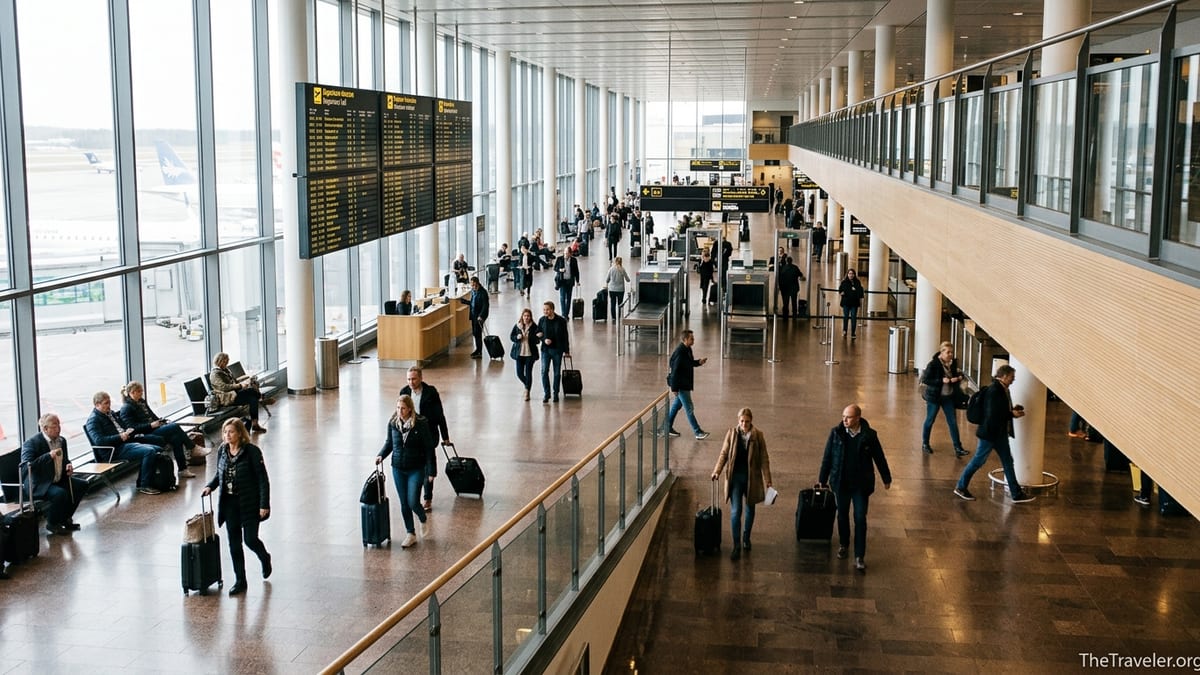
Understanding Arlanda’s Layout and Terminals
Stockholm Arlanda lies about 40 kilometers north of central Stockholm and is organized around several passenger terminals linked by an indoor concourse called SkyCity. In practice, most international and domestic flights now use Terminal 5, while Terminals 2 and 3 handle a smaller number of mainly European and regional departures. This consolidation means that older online guides which still describe separate domestic Terminal 4 are out of date; domestic traffic has largely been folded into Terminal 5 instead.
For a typical trip from Stockholm to another European city, you may depart from either Terminal 2 or 5, depending on airline. Low cost and point to point carriers have tended to use Terminal 2, while larger network carriers and long haul routes usually go from Terminal 5. For example, SAS, many Star Alliance partners, and long haul flights to North America and Asia are commonly assigned to Terminal 5, whereas some intra European flights on smaller carriers may use Terminal 2. Always check your booking and boarding pass shortly before travel, since gate and even terminal allocations can change.
Arlanda’s two rail stations, Arlanda South and Arlanda North, sit directly under the airport. Arlanda South serves Terminals 2, 3 and the former Terminal 4 area, while Arlanda North connects directly to Terminal 5. In practical terms this means that if you are arriving on the Arlanda Express or on regional commuter trains, you should know which station to get off at: Arlanda North is normally best if you fly SAS or another major network carrier from Terminal 5; Arlanda South is more convenient if you fly from Terminal 2. Both stations are indoors and connected to check in areas by escalators and lifts.
Inside security, Terminal 5’s pier layout can involve long walks, especially to the F and G gate areas used for many non Schengen and long haul departures. Travelers connecting from a European Schengen flight to a long haul departure should allow time for the walk and an extra passport control. A common real world example is a morning flight arriving from Copenhagen or Oslo into Terminal 5, with a two hour connection onto a transatlantic departure. That connection is generally safe, but only if you proceed directly from your arrival gate to passport control and then on to the long haul gate rather than stopping for shopping or a sit down meal in between.
Getting to and from Stockholm: Trains, Buses and Taxis
One of Arlanda’s main strengths is its range of ground transport options. The fastest way between the airport and Stockholm Central Station is the dedicated Arlanda Express train. Travel time is about 18 minutes from Arlanda North or South to Stockholm Central, running generally every 15 minutes during the day. A full price one way adult ticket is typically in the range of 300 to 350 Swedish kronor, with frequent promotions for advance purchase, youth and return tickets that can bring this down. For a solo business traveler on a tight schedule, the Arlanda Express is usually the simplest and most time efficient choice.
Budget conscious travelers often choose the slower commuter trains or airport buses. The SL commuter train, usually Line 40, connects Arlanda with Stockholm City’s main station in roughly 38 to 45 minutes, depending on time of day. Because of an airport supplement charged at Arlanda, the combined cost of an SL ticket plus that fee can approach 200 to 250 kronor for a one way trip, but this is still often cheaper than Arlanda Express, especially for groups or those already using Stockholm public transport passes. Another popular option is the Flygbussarna airport coach, which runs between Arlanda and several areas in the city. Typical journey time to Stockholm Cityterminalen is around 45 minutes in normal traffic, and advance purchase tickets often cost less than the commuter train, especially in off peak periods.
Taxis line up outside each terminal, but Sweden does not regulate taxi fares in the same way that some other countries do. Different companies can legally charge different rates, so visitors should check for fixed price offers into central Stockholm before getting in. Many reputable operators advertise a set fare that is broadly in line with competitors. As a rough guide, a ride to central Stockholm might cost around 600 to 800 kronor depending on company, time of day and traffic. Booking through your hotel or a known app based service helps avoid surprises, particularly late at night or after long haul flights.
For travelers with very early departures, it can be tempting to stay near the airport. Arlanda has several on site hotels linked to SkyCity or located a short shuttle ride away. For example, business travelers sometimes choose a branded hotel directly above the rail station to minimize morning stress. A realistic scenario is a 7:10 international departure where the traveler takes the lift from their hotel lobby down to the station at 4:50, catches a 5:00 Arlanda Express, and arrives at check in before 5:20 with plenty of time for bag drop and security. For visitors already staying downtown, however, the first Arlanda Express or an early Flygbussarna coach is usually sufficient, and an airport hotel is more a matter of preference than necessity.
Security, Fast Track and How Early to Arrive
Arlanda’s security has been significantly upgraded, particularly in Terminal 5 where a newer central checkpoint known as 5F uses more modern automated lanes. Officially, the main security checkpoint in Terminal 5 generally opens at around 3:45 in the morning and closes at around 22:00 at night, with even earlier opening for flights departing before 5:00. In Terminal 2, the security checkpoint usually opens at about 4:00 and closes at about 21:00. These hours can change, especially for low traffic periods, so travelers with very early or very late flights should check the airport’s latest information close to their travel date.
On an average weekday outside school holidays, travelers with European flights and no checked baggage often clear security in 10 to 20 minutes, particularly in the early morning or late evening. However, anecdotal reports from recent years have shown that during peak summer and holiday periods, security queues can grow rapidly, especially around early morning waves of departures. There have been mornings when travelers arriving less than 90 minutes before departure needed to move briskly through check in and security to make their flights. For that reason, a practical rule of thumb for Arlanda today is to aim for at least two hours before European flights and three hours before long haul departures, adding extra margin during major holidays, big event weekends or when traveling with children and checked luggage.
Fast Track security is available in Terminals 2 and 5 for eligible premium cabin passengers and elite frequent flyers. Some airlines sell Fast Track access as an add on, often for a fee comparable to a modest restaurant meal in Stockholm. In quiet periods, Fast Track may save only a few minutes, but during high season or staff shortages it can make the difference between a calm stroll to the gate and a stressful sprint. One real example reported by recent travelers involved arriving at Arlanda during a busy summer morning and facing an ordinary security line stretching far down the concourse; upgrading to Fast Track reduced the wait from well over half an hour to closer to ten minutes.
Arlanda’s website and some third party apps show estimated current security wait times in real time. These are helpful once you are already on your way, but they are not a stable planning tool for when to leave home or your hotel because conditions can change very quickly with a few delayed aircraft or an early wave of charter departures. Think of those indicators as a snapshot rather than a forecast: if they show unusually long waits as you are leaving Stockholm Central, you might choose to take the faster Arlanda Express instead of a slower bus, but you should not cut your overall schedule too close based on a momentary short queue.
Lounges, Wi Fi and Working at the Airport
Stockholm Arlanda has a growing lounge scene, with a mix of airline operated and independent pay in options. In Terminal 5, SAS runs its main SAS Lounge complex, including Business and Gold sections, used by SAS and Star Alliance premium passengers and status holders. There is also a newer lounge branded in cooperation with a major payment network aimed at cardholders seeking a quieter space before departure. Independent lounges, such as Pearl lounges and Plaza Premium style facilities, offer pay per use access, often included with certain credit cards or lounge memberships. These have become popular with travelers on airlines that do not provide their own facilities at Arlanda.
Terminal 2 hosts another Pearl lounge that serves a mix of airlines and walk up guests. For instance, a traveler flying a low cost European carrier from Terminal 2 could purchase entry on the day if space is available, or use access included via a bank card partnership. Typical inclusions are a buffet of cold snacks, a small selection of warm dishes, coffee, non alcoholic drinks and usually beer and wine, along with Wi Fi and workspaces. For travelers facing a weather delay or a long wait between connections, lounge access can turn Arlanda from a simple transit point into a reasonably comfortable place to work or relax.
For frequent business travelers, the choice of lounge often comes down to which facility is closest to their actual gate. Arlanda’s Terminal 5 is spread out, and walking from the central Security 5F area to the farthest gates can easily take 15 minutes or more. If your long haul flight departs from a gate at the far end of the F pier, for example, it may be better to use a lounge located in that zone rather than one near the central shopping area to avoid a last minute dash. Checking gate assignments on the airport screens and asking lounge staff about walking times helps you judge when to leave.
Across all terminals, the airport offers free Wi Fi, which is usually sufficient for email, browsing and standard video calls. Many travelers simply find a quiet corner near the big windows overlooking the runway, plug into one of the available power outlets and work from there instead of using a lounge. A consultant on a short trip, for instance, might check out of their Stockholm hotel at midday, head to the airport early on an afternoon Arlanda Express, and then spend two or three hours working at a café table in Terminal 5 with their laptop and a strong coffee from a Scandinavian chain rather than paying for lounge access.
Food, Shopping and Services Before You Fly
Food options at Stockholm Arlanda range from quick grab and go bakeries and espresso bars to sit down restaurants, with the richest selection inside Terminal 5. Scandinavian café chains serve pastries, sandwiches and strong coffee suitable for an early breakfast, while casual restaurants offer burgers, salads and Swedish staples. In the upgraded Market Place area of Terminal 5, for example, travelers can find a mix of international fast food brands alongside Scandinavian style bistros where you can order meatballs with lingonberries or a fish dish with seasonal sides.
Prices reflect the airport setting rather than downtown Stockholm’s cheapest cafés. A simple cappuccino might cost the equivalent of several US dollars, and a main course in a table service restaurant can easily approach the price of a mid range city meal. Travelers on tight budgets often buy snacks in Stockholm supermarkets before heading to the airport, then top up with a drink or small pastry airside. For families, children’s menus and high chairs are available in many restaurants, and some seating areas near gates have space for strollers.
Shopping is focused in Terminal 5’s central area after security, with duty free, fashion and Nordic design stores. Travelers departing the European Union can purchase duty free alcohol, tobacco and certain cosmetics; those flying within the EU see similar assortments but with normal sales taxes included. Swedish and Scandinavian design shops sell everything from wool blankets and crystal to compact souvenirs such as keyrings, textiles and chocolate. A practical example: a traveler realizing at the last moment that they need a small gift for a host family might buy a box of Swedish chocolates and a simple design item like a dishcloth in a traditional pattern from one of these shops just before boarding.
Beyond food and shopping, Arlanda offers services like luggage storage, baby changing rooms, play areas, and prayer and meditation spaces. There are also currency exchange counters and ATMs, though Sweden is a highly cashless society and many visitors manage their entire stay using cards and mobile payments only. For passengers with long layovers, some of the airport hotels sell day rooms or access to gym and shower facilities, which can be especially attractive on winter itineraries when flights often arrive early in the morning from North America.
Making the Most of Layovers and Tight Connections
Layover planning at Arlanda depends heavily on whether your flights are on the same ticket and whether you need to change terminals. If you are connecting on a single through ticket, such as a domestic Scandinavian flight arriving into Arlanda with a through checked bag onward to North America, your airline will have chosen a minimum connection time that should usually be sufficient, provided you proceed directly through passport control and to your next gate. In these cases, a layover of 1 hour 30 minutes to 2 hours is generally workable for Schengen to non Schengen connections, though longer is more comfortable.
Self connection is common as travelers mix and match low cost point to point flights with network carriers. At Arlanda, it is usually not recommended to book tight self made connections of less than three hours, particularly if crossing from Terminal 2 to Terminal 5 or vice versa and needing to collect and recheck baggage. Even with good signage and indoor walkways, any delay on your inbound flight can quickly eat into that time. A realistic scenario is a traveler arriving from elsewhere in Europe on a low cost carrier into Terminal 2 and then planning to take a separately booked long haul flight from Terminal 5. Allowing at least four hours between scheduled arrival and departure gives you room for baggage retrieval, a walk or shuttle between terminals, check in, security and passport control.
For layovers of five hours or more, many travelers choose to make a quick trip into Stockholm. Using the Arlanda Express, it is possible to go from Terminal 5 to Stockholm Central in under 20 minutes, spend a couple of hours wandering in the Old Town, and then return to the airport with ample time for security. For example, a traveler with a seven hour midday layover could arrive at 10:00, clear passport control by 10:45, board an 11:00 Arlanda Express, be in central Stockholm before 11:30, spend two hours walking through Gamla Stan and grabbing lunch, and then take a train back around 14:00 to arrive at the airport before 14:30 for an evening departure.
Those who prefer to stay in the airport during layovers can structure their time between a lounge visit, a walk around the terminals, and perhaps a short rest at an airport hotel if they have overnight or very long daytime waits. Terminals are connected landside via SkyCity, which includes some basic services and seating areas. Because walking distances within Terminal 5 can be surprisingly long, it is wise to return to your gate area at least 30 minutes before boarding time, especially when traveling with children, mobility issues or lots of cabin baggage.
The Takeaway
Stockholm Arlanda is a modern, evolving airport that rewards a bit of advance planning. Understanding the current terminal layout, choosing the right train or bus into the city, and allowing conservative margins for security and passport control all help keep your trip smooth. While peak time queues and long walks between gates can still surprise unprepared travelers, most visitors who give themselves two to three hours from arrival at the airport to departure time experience Arlanda as an efficient and fairly calm place to start or end a journey.
Concrete choices make the difference in practice. Opting for Arlanda Express rather than a slower bus when your schedule is tight, pre booking Fast Track security for a high season morning flight, or spending a long layover in a lounge or downtown Stockholm instead of at a crowded gate are the kinds of decisions that turn a potentially stressful transit into a straightforward step in your itinerary. With up to date information, realistic expectations and a little margin for the unexpected, planning a trip through Stockholm Arlanda Airport becomes an easy part of discovering Sweden and beyond.
FAQ
Q1. How early should I arrive at Stockholm Arlanda Airport before my flight?
For most European flights, plan to arrive at least two hours before departure, and for long haul or peak season departures, aim for three hours or more.
Q2. What is the fastest way to get from central Stockholm to Arlanda?
The dedicated Arlanda Express train is usually the fastest option, taking around 18 minutes from Stockholm Central Station to the airport stations.
Q3. Is the Arlanda Express worth the extra cost compared to buses or commuter trains?
For travelers short on time or catching early morning flights, the speed and reliability often justify the higher price; budget travelers may prefer buses or commuter trains.
Q4. Which terminal will my flight use at Stockholm Arlanda?
Most flights now use Terminal 5, with some European and regional services operating from Terminal 2; always check your airline’s latest information close to departure.
Q5. Does Stockholm Arlanda have free Wi Fi?
Yes, the airport provides free Wi Fi throughout the terminals, typically fast enough for email, browsing and standard video calls.
Q6. Are there lounges I can pay to enter even if I fly economy?
Yes, independent lounges such as Pearl lounges and similar facilities at Arlanda sell access or accept certain credit cards, regardless of cabin class.
Q7. Can I visit Stockholm city during a long layover at Arlanda?
With a layover of five hours or more, it is usually possible to take the Arlanda Express into central Stockholm, explore briefly, and return in time for your next flight.
Q8. How much does a taxi from Arlanda to central Stockholm usually cost?
Typical fixed fares are often in the range of roughly 600 to 800 Swedish kronor, varying by company, time of day and traffic conditions.
Q9. Is Fast Track security at Arlanda worth paying for?
During busy holiday or summer periods, Fast Track can significantly reduce waiting times, while in off peak periods the benefit may be modest.
Q10. Are there good food options at Arlanda for early morning flights?
Yes, several cafés and bakeries open early, especially in Terminal 5, offering coffee, pastries and light breakfast options before the first wave of departures.