


Landing at Venice Marco Polo Airport is exciting, but the real question starts as soon as you collect your luggage: what is the smartest way to reach your hotel in the so‑called “city centre”? In Venice, that phrase can mean very different places, from the car and bus terminal at Piazzale Roma to the narrow alleys around Rialto or the quiet canals of Cannaregio. Choosing the right route can save you money, time and a lot of bridge hauling with suitcases.
Get the latest updates straight to your inbox!
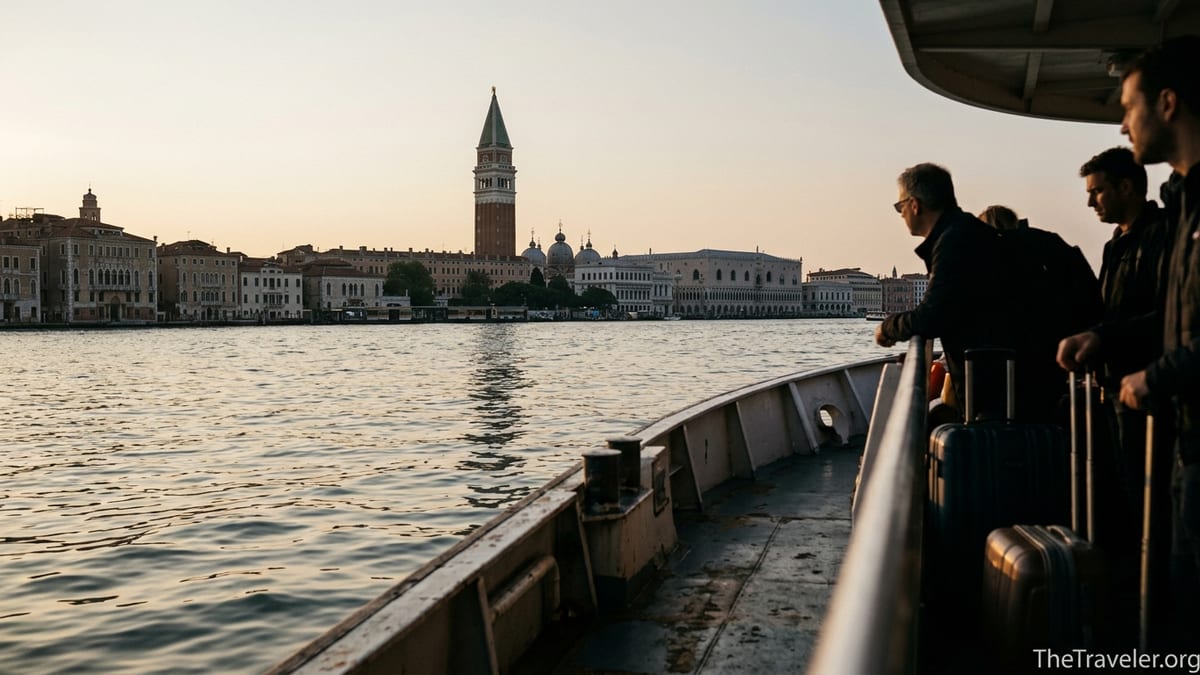
Venice “city centre” explained: it depends on your hotel
In many cities, “city centre” means one obvious place. Venice is different. The historic city is built on more than 100 small islands, and there is no single central square for arrivals from the airport. For transport planning, you should think in terms of several key hubs: Piazzale Roma, Santa Lucia railway station, the San Marco area, the Rialto area and Cannaregio around Fondamenta Nove and the northern lagoon.
When you book, your hotel might advertise “Venice city centre” even if it is a 20‑minute walk from Piazza San Marco. A guesthouse near Campo Santa Margherita in Dorsoduro, a boutique hotel beside the Frari church in San Polo and a canal‑side B&B near Fondamenta Nove in Cannaregio are all in the historic centre, but the best airport route for each is different. Before you choose a bus or boat, check your exact address and which landmark vaporetto stop it is closest to.
As a rule of thumb, if your accommodation is near car‑accessible areas like Piazzale Roma or close to the railway station, a bus from the airport will usually be simplest. If you are staying closer to the Grand Canal around Rialto or San Marco, or on the lagoon side of Cannaregio, the dedicated airport water buses operated by Alilaguna can drop you much nearer to your door. Private water taxis are the most convenient option of all, but also the most expensive, and make most sense for waterfront hotels or when you are sharing the cost in a group.
Because Venice has no cars beyond Piazzale Roma and the Tronchetto parking island, you will walk at least part of the way, often over bridges with steps. A good way to decide is to measure in a map app how far your hotel is from the nearest boat stop, then compare that walking time from the different arrival points: Piazzale Roma or Santa Lucia by bus, or San Marco, Rialto, Guglie or Fondamenta Nove by water bus.
Piazzale Roma: the gateway for buses and a short walk to Santa Lucia
Piazzale Roma is the main bus and car terminal at the western edge of Venice’s historic centre. From Venice Marco Polo Airport, two bus services run frequently to Piazzale Roma: ACTV urban bus line 5, often marked as “Aerobus,” and the ATVO Airport Bus Express coach. Both typically take around 20 to 25 minutes in normal traffic and operate throughout the day, with services running early in the morning and into the late evening according to the official timetables published by the airport and operators.
ACTV line 5 is a regular city bus used by both locals and visitors. It makes several stops between the airport and Venice, including at Mestre, and is usually a little cheaper than the private ATVO coach. ATVO Airport Bus Express runs non‑stop between Marco Polo and Piazzale Roma, uses luggage holds, and is priced slightly higher per person; the trade‑off is more comfort and fewer intermediate stops. You can buy tickets for both services from machines in the arrivals area and near the bus bays, as well as from staffed counters.
If your hotel is close to Piazzale Roma or across the Calatrava bridge near the railway station, the bus is generally the fastest and best‑value option. For example, if you are staying at a mid‑range hotel on the Grand Canal near the Scalzi bridge, you can take the bus to Piazzale Roma and then either walk about 10 minutes along the canal or hop on an ACTV vaporetto on line 1 or 2 for one stop to Ferrovia. Travelers heading to budget guesthouses around Campo Santa Margherita in Dorsoduro often do the same: bus to Piazzale Roma, then walk 10 to 15 minutes across a few bridges.
For many visitors, reaching Piazzale Roma first also makes it easier to pick up vaporetto passes or city transport cards at the Venezia Unica and ACTV points nearby. If you plan to use public transport frequently during your stay, combining an airport bus ticket with a 24‑, 48‑ or 72‑hour vaporetto pass can work out cheaper than paying separate fares. Just keep in mind that some combined tourist passes do not automatically include the airport bus supplement, so you may need to buy that part separately at the machine or counter.
Santa Lucia railway station: for rail travelers and nearby hotels
Venice Santa Lucia railway station sits directly on the Grand Canal, just a few hundred metres from Piazzale Roma. There is no direct bus from Marco Polo to the station, but the short walk or vaporetto ride from Piazzale Roma makes the transfer straightforward. If your hotel is steps from the station, or if you are arriving by plane and leaving Venice immediately by train to cities like Florence, Milan or Vienna, routing yourself via Piazzale Roma and Santa Lucia is usually logical.
From Piazzale Roma, the most direct walking route to Santa Lucia crosses the modern glass‑and‑steel Calatrava bridge. Trains depart from platforms inside the terminal, while many simple guesthouses and small hotels line the nearby Lista di Spagna and Cannaregio streets. In practice, this means that if you stay at a hotel on Lista di Spagna or Rio Terà San Leonardo, you can step off the airport bus at Piazzale Roma and be checking into your room after a 10‑ to 15‑minute walk through a mostly flat, shop‑lined route.
Another option is to take an ACTV vaporetto from the Piazzale Roma stop along the Grand Canal to Ferrovia, which is the station stop. This is handy if you have heavy luggage or mobility issues and would prefer to avoid the steps of the Calatrava bridge. Vaporettos on lines 1 and 2 run frequently during the day and evening, and the trip between these two stops takes only a few minutes.
Travelers connecting directly between Marco Polo and Santa Lucia by road sometimes book a private car or minivan transfer from the airport to Piazzale Roma. Licensed drivers can use reserved lanes and will drop you as close as possible to the water. From there you roll your suitcase across the bridge to the station. The cost is higher than public buses, but for families with several heavy bags or for late‑night arrivals, the added convenience can be worth it.
San Marco area: go by water if you want to arrive close
The area around Piazza San Marco is what many visitors imagine as “Venice city centre.” For hotels near the basilica, the Doge’s Palace, or along the eastern stretch of the Grand Canal toward San Zaccaria and Arsenale, arriving by water usually makes the most sense. The dedicated Alilaguna airport water buses connect Marco Polo directly to several central stops, including those within walking distance of San Marco.
Alilaguna’s Blue Line runs from the airport via Murano and stops at the railway station, Tronchetto, Zattere and San Marco among others, while the Orange Line links the airport with inner‑city stops such as Guglie, Rialto and Santa Maria del Giglio. The exact pattern and seasonal frequency can change, but in general you can expect boats at regular intervals throughout the day. Journey time from the airport to San Marco is often around 1 hour 15 minutes, depending on the line and intermediate stops, compared with about 25 minutes to Piazzale Roma by bus.
For example, if you are staying at a hotel a short walk from the San Zaccaria or San Marco Vallaresso vaporetto stops, an Alilaguna water bus from the airport means you disembark on the Riva degli Schiavoni waterfront and walk only a few minutes to your door. The fare is higher than the bus to Piazzale Roma, but you avoid changing to vaporettos and the long walk with suitcases through some of Venice’s busiest and most crowded alleys.
Travelers who prioritize convenience and have a higher budget may choose a private water taxi instead. From the airport dock, a sleek wooden boat can take you straight across the lagoon and up the smaller canals almost to the private entrance of many San Marco hotels. This is one of the most memorable ways to arrive in Venice, often taking around 30 to 40 minutes. However, private water taxis are priced at a substantial premium compared with buses and Alilaguna services, so they are most economical when shared by a family or group, or for special occasions.
Rialto and central Grand Canal: balancing time, cost and bridges
If your hotel is near the Rialto Bridge or along the middle stretch of the Grand Canal, you have two main strategies: come by bus to Piazzale Roma and switch to a vaporetto, or arrive closer by Alilaguna water bus. The right choice depends on how much luggage you have, what time of day you arrive and whether you prefer to save time or money.
The Alilaguna Orange Line from Marco Polo calls at Rialto, which is extremely convenient if you are staying at a guesthouse near Campo San Bartolomeo, a boutique hotel along Riva del Vin, or one of the many apartments tucked into the streets behind the bridge. Stepping off at Rialto means you face a short walk through lively shopping streets to central landmarks, usually without crossing the main bridge itself. The trade‑off is a longer travel time on the water and a higher fare than the airport bus, though you gain a direct trip with no need to change at Piazzale Roma.
Taking the bus to Piazzale Roma and then an ACTV vaporetto is usually faster overall in minutes, especially in bad weather or if you just missed an Alilaguna boat. From Piazzale Roma, line 1 vaporettos stop at every Grand Canal pier, including Rialto, while line 2 runs a limited‑stop service that still covers the major hubs. In this scenario you would buy a bus ticket at the airport, then either a single vaporetto fare or a time‑based pass at Piazzale Roma depending on your plans in Venice.
Real‑world examples illustrate the difference. A couple staying two nights at a small hotel near Campo San Silvestro might opt to take the ATVO Airport Bus Express to Piazzale Roma for a quick, air‑conditioned ride, then board vaporetto line 1 to San Silvestro and walk two minutes to their door. A family with kids and several suitcases, booked into an apartment just behind the Rialto Bridge, might instead book Alilaguna Orange Line from the airport straight to Rialto to avoid the bus‑boat interchange, even if the journey is longer and costs a bit more per person.
Cannaregio and Fondamenta Nove: when the northern lagoon is your centre
Cannaregio stretches along the northern side of Venice and includes areas that feel both central and residential. Key landmarks here include the historic Ghetto, the Strada Nova shopping street, the waterfront at Fondamenta Nove facing the lagoon and many popular mid‑range and budget hotels. For this part of the city, the best arrival point can be either Piazzale Roma and Santa Lucia, or one of the northern boat stops such as Guglie or Fondamenta Nove.
Alilaguna’s Orange Line stops at Guglie, which is very useful if your accommodation lies near the Ghetto, the Lista di Spagna or the upper end of the Strada Nova. From the airport, you cruise directly into the northern canals and step off within a short walk of many guesthouses in this district. Travelers staying closer to the lagoon, for example in apartments overlooking the islands from Fondamenta Nove, often use Alilaguna’s Blue Line to reach the Fondamente Nove stop, then walk along the waterfront to their lodging.
Alternatively, if you prefer a faster road leg, you can take the ACTV or ATVO bus to Piazzale Roma, then either walk or use ACTV vaporettos to reach Cannaregio. The walk to the Ghetto from Piazzale Roma takes around 15 to 20 minutes for most travelers, crossing several bridges but following a clear route along busy streets. For hotels nearer Santa Lucia station and the Lista di Spagna, as mentioned earlier, you may find it simplest to walk directly from Piazzale Roma or to take a short vaporetto ride to Ferrovia and continue on foot.
Travelers arriving late in the evening should pay particular attention to the operating hours of Alilaguna lines. Buses to Piazzale Roma tend to run later than some water bus routes, so for a night arrival it may be more practical to go by road and then walk to Cannaregio, even if a daylight arrival would make a direct water route more scenic. Checking the latest schedules from the airport or operator websites shortly before you travel is recommended, as timetables are occasionally adjusted seasonally.
Comparing main transfer options: bus, Alilaguna and water taxi
From Marco Polo Airport to Venice’s historic centre, you essentially choose between road and water. Road options are the ACTV line 5 city bus, the ATVO Airport Bus Express coach and private car or minivan transfers to Piazzale Roma. Water options are the Alilaguna airport water buses and private water taxis serving various stops and hotel jetties around the lagoon.
Buses are usually the most economical way in, with travel times typically around 20 to 25 minutes between the airport and Piazzale Roma under normal conditions. They are straightforward, run frequently and are familiar to anyone used to airport shuttles elsewhere in Europe. You will still need to continue by vaporetto or on foot inside Venice, but for travelers staying near Piazzale Roma, Santa Lucia or Dorsoduro, this is often the most efficient balance of time and cost.
Alilaguna water buses cost more but provide a direct lagoon crossing and a scenic introduction to the city. Lines are color coded, and the network connects the airport with major stops for San Marco, Rialto, Guglie, Fondamenta Nove, Lido and the railway station. Journey times are longer than by road, but you arrive much closer to many waterfront hotels. Tickets can usually be purchased at kiosks in the arrivals area, from vending machines or directly at the airport dock, with separate pricing from regular ACTV vaporetto tickets.
Private water taxis are the premium option. They are significantly more expensive than public buses or Alilaguna, with fares often comparable to private car transfers in major capitals. In return, you enjoy a direct ride from the airport pier to a pier near your hotel, often along hidden canals that public boats do not use. These transfers are particularly popular for travelers with limited mobility, for those celebrating a special occasion, or for groups of four to six people who can split the fare and value comfort over budget.
How to choose the right route for your specific hotel
To match your airport route to your hotel location, start with three pieces of information: the hotel’s exact address, its nearest vaporetto or Alilaguna stop, and how many bridges or minutes of walking separate that stop from the front door. Hotel websites and booking platforms often suggest the nearest stops, and in many cases the reception desk will recommend a particular route from the airport based on their experience with guests.
If your hotel is close to Piazzale Roma, Santa Lucia or within 10 to 15 minutes’ walk of those hubs, choose the ACTV or ATVO bus. This fits properties in Dorsoduro near Campo Santa Margherita, many guesthouses in San Polo around the Frari and a number of simple hotels and hostels in the Santa Croce district. For example, a student hostel five minutes’ walk from Piazzale Roma is best reached by bus; adding a water leg would simply complicate things.
For hotels near San Marco, San Zaccaria, Giglio, Rialto or the eastern Grand Canal, consider Alilaguna first, especially if you have rolling suitcases and want to minimize bridge crossings. An Orange Line boat to Rialto followed by a short walk might be ideal for a weekend stay in a boutique hotel near Campo San Bartolomeo. A Blue Line boat to San Marco and then a five‑minute walk along the waterfront could suit a classic hotel off the square.
If you are staying in Cannaregio, on the Lido, or in quieter quarters facing the lagoon such as around Fondamenta Nove, choose the Alilaguna line that stops closest to you and verify its schedule for your arrival time. When lines run infrequently or your flight lands late, revert to the default: bus to Piazzale Roma, followed by a vaporetto or a walk. Remember that Venice’s signage at the airport and in the city is generally good, and staff at ticket counters can confirm which line serves your stop when you show them your hotel address.
The Takeaway
There is no single “right” way to travel from Venice Marco Polo Airport to the city centre, because the centre itself is a patchwork of districts, canals and landmarks. Instead, the best route is the one that brings you closest to your specific hotel with a comfortable balance of time, cost and effort.
For most travellers, buses to Piazzale Roma are the fastest and cheapest connection into the historic city, particularly for hotels near the station, in Dorsoduro or around the western end of the Grand Canal. Alilaguna water buses are slower and more expensive but shine when your hotel is near San Marco, Rialto or the northern lagoon. Private water taxis deliver you almost to your doorstep and turn arrival into an experience, at a price that makes most sense for small groups.
By checking your hotel’s location carefully, understanding how Piazzale Roma, Santa Lucia, San Marco, Rialto and Cannaregio relate to one another, and considering the time of day you land, you can make a calm, confident decision at the airport. That means less time wrestling suitcases and schedules, and more time watching the domes and campanili of Venice rise from the water as your holiday truly begins.
FAQ
Q1. What is the cheapest way to get from Venice Marco Polo Airport to the city centre?
The cheapest common option is usually the public ACTV line 5 urban bus or the ATVO Airport Bus Express to Piazzale Roma, then walking or taking a vaporetto to your hotel.
Q2. How long does the bus from Marco Polo Airport to Piazzale Roma take?
In normal traffic the ACTV and ATVO buses take around 20 to 25 minutes between Marco Polo Airport and Piazzale Roma, plus extra time for walking or onward boats inside Venice.
Q3. Should I take a bus or a water bus if my hotel is near Piazza San Marco?
If your hotel is close to San Marco, an Alilaguna water bus or a private water taxi usually leaves you nearer than the bus, although the bus plus vaporetto combination can be faster and cheaper.
Q4. What is the best route if my hotel is near the Rialto Bridge?
For Rialto, many travellers either take Alilaguna’s Orange Line directly from the airport to the Rialto stop, or ride a bus to Piazzale Roma and continue by vaporetto line 1 or 2 to Rialto.
Q5. How do I reach Cannaregio and the Ghetto from Marco Polo Airport?
You can use Alilaguna’s Orange Line to Guglie if it matches your arrival time, or take a bus to Piazzale Roma and then walk about 15 to 20 minutes or use a vaporetto toward Cannaregio.
Q6. Are Alilaguna tickets included in normal vaporetto passes?
No, Alilaguna airport water buses use separate tickets from regular ACTV vaporettos and passes, so you need to buy a specific Alilaguna ticket even if you have a vaporetto pass.
Q7. Is a private water taxi from the airport worth the price?
A private water taxi is significantly more expensive but can be worth it for groups sharing the cost, travellers with limited mobility, late‑night arrivals or those staying at waterfront hotels.
Q8. What is the best option if I arrive late in the evening?
Late in the evening, buses to Piazzale Roma often offer the most reliable service, with onward travel by vaporetto or on foot; some Alilaguna lines may run less frequently at night.
Q9. How much walking should I expect with luggage inside Venice?
Even with the best route you should expect at least 5 to 15 minutes of walking, often over several bridges, so packing light and using luggage with good wheels is strongly recommended.
Q10. How do I know which stop is closest to my hotel?
Check the hotel’s website or booking confirmation for the suggested vaporetto or Alilaguna stop, and cross‑check on a map; if unsure, email the hotel or ask at airport ticket counters with your address.