


Venice Marco Polo Airport is compact but can feel surprisingly busy, especially at peak times and early mornings. Whether you are rolling in by water taxi from the lagoon or stepping off a bus from Mestre, knowing how the terminal works and how long each step usually takes will make departure day far less stressful. This guide walks you through check-in, security, passport control, lounges, food, shopping, and realistic timing for both land and water arrivals.
Get the latest updates straight to your inbox!
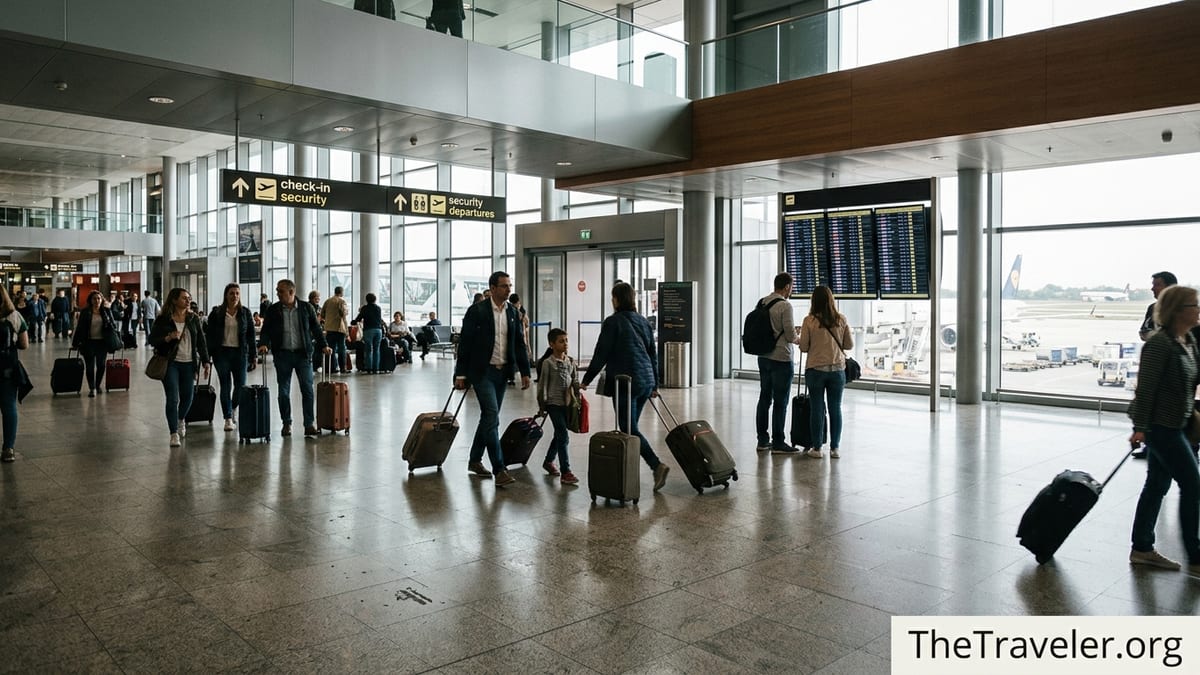
Understanding the Terminal Layout at Venice Marco Polo
Venice Marco Polo Airport (VCE) has a single main terminal spread over multiple levels, which keeps navigation fairly simple. Arrivals are on the ground floor, while most departures activity, including many check-in desks and all security checks, is concentrated on the upper levels. The departure gates are split between Schengen and non-Schengen (extra-Schengen) areas, so after security you will be directed either toward the domestic and European Schengen gates or toward passport control for flights to the UK, North America, the Middle East, and other non-Schengen destinations.
Check-in counters are located on both the ground and first floors of the terminal, grouped into islands serving different airlines. For many European carriers, the desks open around two hours before departure, while for long-haul flights they typically open about three hours before departure. This means that if you arrive very early, you may find monitors already showing your flight but your airline’s check-in desks not yet staffed.
After check-in and bag drop, all passengers proceed upstairs to security. Past security, the terminal opens into a central commercial area with restaurants, bars, duty free, and shops. From here you can walk to the gates, the Marco Polo Lounge, and the passport control area for extra-Schengen flights. Walking times are moderate: even the more distant gates are usually no more than 10 to 15 minutes from security at a normal pace.
Because there is only one main terminal, you do not need to worry about shuttles or changing buildings as you might at larger hubs. However, at busy times the central departure hall can feel crowded and noisy. Knowing where your airline usually checks in and which side of the terminal you will ultimately depart from can help you move with purpose, instead of wandering the length of the building with your luggage.
Check-In: When to Arrive and What to Expect
The airport and security checkpoints normally begin operating from around 4:00 in the morning, and early departures between 6:00 and 8:00 can create an initial rush. As a rule of thumb, plan to be at the terminal at least two hours before scheduled departure for most European flights and three hours before long-haul services. If you are departing in the very early morning and staying in Venice’s historic center, factor in that public transport options are more limited before about 4:30, so you might need a private water taxi or an overnight stay near the airport.
At check-in, you will find self-service kiosks for some airlines alongside traditional counters. Low-cost carriers such as Ryanair and easyJet often encourage online check-in and mobile boarding passes; if you are traveling with carry-on only and already checked in online, you can usually bypass the main check-in area and proceed straight to security. For full-service carriers such as Lufthansa, Air France, or Emirates, you will still need to drop checked luggage at the desks on the ground or first floor, where staff will apply tags and verify your documents for extra-Schengen flights.
Desk allocation at Venice Marco Polo is not permanent, so the exact counter number for your flight is only assigned closer to departure time. The airport’s flight information displays update as airlines open their desks, typically around three hours before intercontinental flights and about two hours before others. If you arrive earlier than that, do not be alarmed if you cannot find your counter yet; grab a coffee in the public area and watch for your flight number to appear next to a set of desk numbers.
Families and travelers with reduced mobility will find dedicated assistance points and priority check-in options with many airlines. If you have requested wheelchair help, be sure to arrive on the earlier side of the recommended window so staff have enough time to escort you through check-in and security. For example, a traveler on a 10:00 long-haul flight to Dubai might aim to arrive around 7:00 to allow for special assistance formalities, security queues, and a relaxed boarding experience.
Security, Fast Track, and Passport Control
After check-in, all passengers head upstairs to security screening. Marco Polo has multiple security lanes, including at least one designated Fast Track lane. Queue times vary considerably throughout the day: at 5:30 in the morning, you might experience a surge as several low-cost and business flights depart in a tight window, while mid-afternoon can be calmer except in peak holiday seasons. On a typical weekday, many travelers report clearing standard security in 15 to 30 minutes, but it is prudent to budget around 45 minutes during busy periods or school holidays.
The airport sells Fast Track access, which allows you to use a dedicated priority lane at security. This can be particularly useful if your water bus or bus from Venice or Mestre runs late and you arrive closer to departure than planned. For instance, a traveler arriving from the city at 7:05 for an 8:25 flight might purchase Fast Track to ensure they clear security quickly and still have time to reach the gate. Fast Track is usually more cost-effective if booked in advance together with parking or lounge access, but it can also be arranged on-site subject to availability.
If you are flying to a destination outside the Schengen Area, you will pass through passport control after security. The passport control area sits between the main commercial zone and the extra-Schengen gates. Queues for passport checks are often shorter than for security, but they can spike when several flights to the UK or North America depart in the same time frame. Travelers with EU or EEA passports occasionally have access to automated e-gates, while others join a staffed booth line. Allow at least 10 to 20 minutes for this step, more if you are traveling in peak summer or with a large tour group.
Remember that liquids, electronics, and baggage rules at Venice follow standard European security regulations. Pack your carry-on with an easy-to-access liquids bag and keep laptops or large electronics near the top so you can remove them quickly. Proactive packing can shave minutes off your time in the queue and make the process smoother for everyone, especially when lanes are crowded.
Shops, Dining, and Services After Security
Once you clear security, you enter the central departures lounge with a mix of duty free, Italian fashion brands, and food outlets. Expect to see a large walk-through duty free store where you can pick up perfumes, cosmetics, spirits, and regional products such as prosecco and Venetian biscuits. Prices are in line with many European airports, and occasional promotions appear on popular Italian liqueurs and wines. For last-minute gifts, airport shops sell Murano-style glass, masks, and other Venice-themed souvenirs, though these will generally cost more than equivalent items in the city.
Food options range from grab-and-go counters to sit-down cafes and bars. You can pick up an espresso and pastry at an Italian-style coffee bar, choose sandwiches and salads from a self-service concept, or sit down for a spritz and cicchetti with a view of the apron. For example, travelers often stop at a bar facing the windows to enjoy one last espresso or Aperol spritz while watching aircraft movements over the lagoon. Vegetarian and simple vegan options exist but can be limited, so if you have specific dietary needs, consider bringing a small snack from the city.
Wi-Fi is available throughout the terminal, and there are charging points scattered near many seating areas and at some of the food outlets. Families will find baby changing facilities near the restrooms, and some seating zones are quieter than others; if you need a calm corner, wander away from the immediate duty free exit toward the gate corridors, where noise usually drops and you can often find spare power outlets.
Retail and dining venues generally operate from early morning to late evening, aligned with the main wave of departures. However, if you have a very early flight, such as a 6:20 departure, expect more limited options. In that case, it can be wise to have breakfast at your hotel or bring something with you, as not every cafe will be open before 5:00.
Lounges at Venice Marco Polo: Marco Polo Lounge and Aspire
Venice Marco Polo offers more lounge options than you might expect for an airport of its size. The flagship facility is the Marco Polo Lounge, located in the boarding area on the first floor after security, with views over the runway and the lagoon. Open roughly from early morning to late evening, it serves a mix of airline business-class customers, frequent flyers, and pay-in guests. Inside, you will find a buffet with hot and cold snacks, self-service soft drinks and alkohol, coffee machines, wine, and often prosecco. There are workstations with power outlets, a quiet area with lounge chairs, and bathrooms; showers are available on request with towel and toiletries, which can be a welcome extra if you have come directly from a cruise ship.
Admission to the Marco Polo Lounge can be via airline invitation, lounge membership programs, or direct purchase. For example, a traveler flying economy on a legacy carrier to Paris might still access the lounge using a lounge membership card or by purchasing a single entry through the airport’s online shop in advance. Entry is typically limited to around three hours before departure, so do not plan to spend half a day there, but it is an excellent option if you want a quieter environment, reliable Wi-Fi, and snacks included in a fixed price.
In addition to the Marco Polo Lounge, there is the Aspire Executive Lounge, a more recent addition located before security above the main check-in area. This lounge is accessible to both departing and arriving passengers and even non-travelers. It offers seating, food and drink, Wi-Fi, and workspaces, making it a practical choice if you arrive too early to check in or if you are waiting with family members who are departing. For instance, someone seeing off relatives on a midday flight could spend an hour or two in Aspire with them before they head through security, all in the same quiet environment.
Some airline alliances and carriers also contract dedicated spaces or branded areas within the lounges, such as a section used for SkyTeam customers in a lounge on the upper level. However, the practical difference for most travelers is minimal: if your boarding pass grants access, staff at reception will direct you to the correct facility. If you are unsure whether your ticket includes lounge access, check the notes on your booking confirmation or ask at check-in; staff at Venice are used to handling cruise groups, tour passengers, and a mix of cabin classes and can typically clarify lounge entitlements quickly.
Arriving by Water: Alilaguna and Private Water Taxis
One of the most distinctive aspects of departing from Venice Marco Polo is the water approach. Many travelers arrive at the airport by Alilaguna water bus or private water taxi directly from the city or from cruise terminals. The water transport pier is not attached directly to the terminal building, so you will disembark at the dock and then follow signs along a covered moving walkway that leads you inland to the terminal entrance; the walk usually takes about 7 to 10 minutes at a normal pace.
Alilaguna operates several lines connecting key Venice stops, such as San Marco, Rialto, and Fondamenta Nove, with the airport. Journey time can range from about 50 minutes to well over an hour depending on route and intermediate stops. For example, travelers leaving from San Marco on the blue or orange line typically take around 70 minutes to reach the airport pier, not counting walking time from hotel to stop. Schedules vary by season, but first departures from the city to the airport are often early enough to serve morning flights, while very early departures around 6:00 can be challenging. Always check the current timetable a day or two before travel and allow a generous buffer; if your flight is at 9:00, aiming to board an Alilaguna that arrives at the airport pier around 6:45 to 7:00 gives you comfortable margin.
Private water taxis are significantly more expensive than the scheduled water bus but are the most flexible and direct option, especially for early or late flights or if you have heavy luggage. A typical private taxi from central Venice to Marco Polo can easily cost over one hundred euros, with surcharges for night departures or extra pieces of luggage. On the other hand, a 3:45 water taxi pick-up outside your hotel can deliver you to the airport pier around 4:15, well before public services begin, which is valuable if you must catch a 6:00 flight. Many travelers see this as a once-in-a-lifetime Venice experience combined with practical convenience.
Whichever water option you choose, remember to add at least 15 to 20 minutes to your calculations for walking from the pier to the terminal, using restrooms, printing a boarding pass if needed, and finding your airline’s check-in island. For instance, if an Alilaguna schedule shows arrival at the airport pier at 7:10 and your European flight departs at 9:20, you will likely be in the check-in hall around 7:25 to 7:30, which is comfortably inside the recommended window.
Arriving by Land: Buses, Taxis, and Nearby Hotels
For many travelers, especially those staying in Mestre or near Piazzale Roma, land transport is simpler and often cheaper than water options. Dedicated airport buses connect Venice’s bus terminal at Piazzale Roma and Mestre’s train station to Marco Polo in about 20 to 25 minutes under normal traffic conditions. Tickets are typically inexpensive compared with water transport and can be bought at machines, kiosks, or on mobile apps. For example, a return bus ticket between Piazzale Roma and the airport usually costs only a fraction of a one-way water taxi ride.
Public ACTV buses also run between Venice, Mestre, and the airport, sometimes taking slightly longer but offering more frequent local-style service. During very early morning hours, only some routes operate, so if you have a 6:30 departure you may need to catch one of the first buses of the day leaving Piazzale Roma around 4:20. In that scenario, you could expect to reach the terminal around 4:45, which is usually enough time for a 6:30 intra-European flight but might feel tight if you expect long queues or need to check in baggage on a busy route.
Land taxis and ride services from Mestre or the mainland side of Venice are a good middle ground between buses and water taxis in both cost and flexibility. A licensed taxi from a hotel near Mestre station, for example, can be pre-booked for an early pickup and typically reaches the airport in 15 minutes if traffic is light. Many travelers with large suitcases or traveling as a family of four find that the total taxi fare split between passengers is competitive with the cost of individual bus tickets, particularly in the early morning when schedules are sparse.
If you have a very early departure, such as a 6:00 or 6:30 flight, staying at a hotel near the airport for the last night can remove most timing stress. Several hotels in the Tessera area offer shuttle services or are within a short taxi ride of the terminal. In practice, this means you can leave your hotel around 4:15, arrive at the terminal by 4:20, and be among the first at check-in. This arrangement is particularly popular for families returning from cruises or travelers with multiple checked bags who do not want to wrestle luggage across bridges at 3:30 in the morning.
Timing Strategies for a Smooth Departure
When departing Venice Marco Polo, the key is to work backwards from your scheduled takeoff time, layering in realistic buffers for each step. Begin with the airline’s recommended check-in time: often two hours before departure for Schengen and intra-European flights, and three hours for long-haul. Then add the typical duration of your journey to the airport, plus extra for potential delays, and finally include local details such as the walk from the water pier or bus stop to the terminal.
As an example, imagine a 10:30 flight to Amsterdam. If you are staying near Rialto and plan to take Alilaguna, you might choose a departure that gets you to the airport pier around 7:45. That allows 10 minutes to walk the covered route to the terminal, putting you in the check-in hall at about 7:55, roughly two hours and 35 minutes before your flight. Even if the boat is 15 minutes late, you would still arrive in time. After checking in and dropping luggage, you could expect to clear security by around 8:45 or 9:00, leaving 60 to 45 minutes in the departure area for a relaxed coffee or a short visit to the lounge.
For an early 7:00 departure to London, staying in Venice’s historical center, you might instead opt for a private water taxi at 4:15 to arrive at the airport by about 4:40. This places you at check-in a little over two hours before departure, aligning with airline recommendations. Security queues can be longer at this hour as multiple UK and Schengen flights depart, so building in at least a 30-minute buffer for security is wise. With this schedule, you should still reach the gate area by around 6:00, comfortably ahead of boarding.
Travelers arriving by land from Mestre could plan differently. Suppose you have a 15:00 flight to Paris and are staying near Mestre station. Catching a dedicated airport bus at around 12:30 would typically put you at the terminal by 12:55 or 13:00, two hours before departure. Even if the bus is delayed by 15 minutes, you would still have more than 90 minutes to complete check-in and security. If you prefer extra margin, simply step onto the previous bus and enjoy lunch in the terminal before boarding.
Remember that queue conditions can change quickly based on time of year, weather, or schedule disruptions. Keep an eye on your airline’s app or the airport’s flight information and err on the side of arriving slightly too early rather than cutting it close. Venice’s compact terminal is not an unpleasant place to wait, and with cafes, shops, and comfortable lounges, an extra half hour can feel like bonus time rather than an inconvenience.
The Takeaway
Departing from Venice Marco Polo Airport becomes much easier once you understand the terminal layout, typical timing, and transport options. With a single main terminal, clear signage, and a manageable walking distance between key points, the airport itself is straightforward to navigate. The main variables are how you choose to reach the airport, how early you arrive, and whether you make use of extras such as Fast Track or lounges.
If you are coming from the historic center, decide early whether you will travel by water or land and check the latest schedules for buses and Alilaguna services around your flight time. For very early departures, consider a private water taxi or an overnight stay near the airport. Once at the terminal, plan on arriving about two hours before European flights and three hours before long-haul, allowing extra time in peak seasons or when traveling with checked baggage, children, or mobility needs.
After security, you can relax with a last espresso, browse Italian fashion, or retreat to the Marco Polo or Aspire lounge for a quieter wait with snacks and Wi-Fi. With realistic timing and a clear plan, your departure from Venice can be as smooth and memorable as your arrival, leaving you free to focus on the views of the lagoon as your aircraft climbs away from one of Europe’s most distinctive cities.
FAQ
Q1. How early should I arrive at Venice Marco Polo Airport before my flight?
For most European flights, plan to arrive at the terminal about two hours before departure; for long-haul or extra-Schengen flights, three hours is safer, especially in peak summer.
Q2. Does Venice Marco Polo Airport have Fast Track security and is it worth it?
Yes, there is a paid Fast Track lane at security. It can be worthwhile if you arrive later than planned or are traveling at busy times, since it usually shortens waiting times significantly.
Q3. How long does it take to get from the water bus pier to the terminal?
From the airport’s water pier, it typically takes about 7 to 10 minutes to reach the terminal entrance via the covered moving walkway, plus a few extra minutes for orientation once inside.
Q4. What is the best way to reach the airport for an early morning flight?
For departures around 6:00 or 7:00, the most reliable options are a private water taxi from the city or a land taxi or early airport bus from Mestre or Piazzale Roma; some travelers also choose to stay at an airport-area hotel the night before.
Q5. Are there good food options after security at Venice Marco Polo?
Yes, there are several cafes, bars, and snack counters after security offering coffee, pastries, sandwiches, and light meals, along with a large duty free store and Italian fashion boutiques.
Q6. Which lounges are available and who can use them?
The main airside Marco Polo Lounge serves many airlines and membership programs, while the Aspire Executive Lounge landside is accessible to departing, arriving, or even non-traveling guests for a fee or via lounge programs.
Q7. How much time should I allow for security and passport control?
On a normal day, standard security might take 15 to 30 minutes and passport control for extra-Schengen flights 10 to 20 minutes, but in busy periods you should allow up to 45 minutes combined.
Q8. Is it better to go by Alilaguna water bus or by bus from Piazzale Roma?
The Alilaguna water bus is scenic but slower and more expensive, while the land bus from Piazzale Roma or Mestre is usually faster, cheaper, and more frequent, especially practical for early or late flights.
Q9. Can I stay overnight inside Venice Marco Polo Airport?
The terminal does not function as a traditional 24-hour sleeping spot and parts of the building close for cleaning, so most travelers with very early flights either stay in nearby hotels or arrive very early in the morning rather than spending the whole night inside.
Q10. Are there facilities for families and passengers with reduced mobility?
Yes, the airport offers baby changing rooms, accessible restrooms, elevators, and special assistance services; if you need mobility help, request it through your airline in advance and arrive early to allow staff enough time to assist you through check-in and security.