


More news on this day
Hundreds of passengers traveling through the United Arab Emirates are facing long queues, missed connections and overnight airport stays after widespread disruption led to at least 30 flight cancellations and about 610 delays across Dubai, Sharjah and Abu Dhabi, affecting major carriers including Emirates, Etihad and Air Arabia.
Get the latest news straight to your inbox!
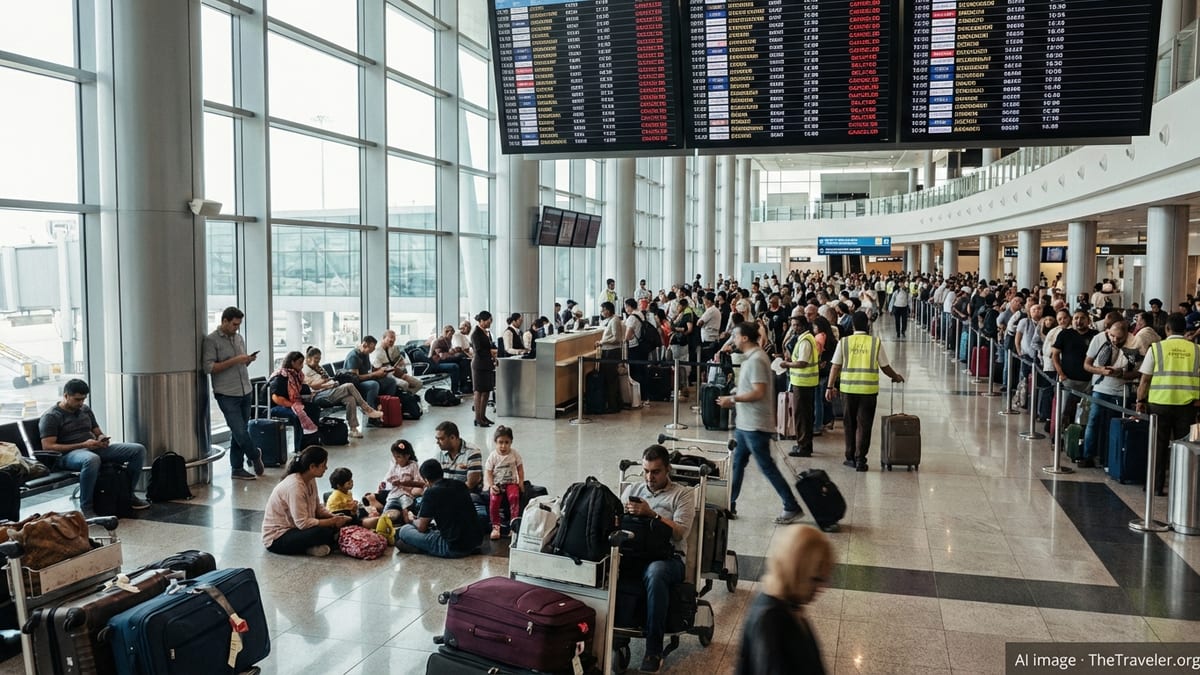
Major Gulf Hubs Struggle With Wave of Disruptions
Publicly available flight-tracking data and airport information screens on Saturday indicate an exceptional build-up of delays at the UAE’s three primary international hubs, as tight airspace, technical issues on individual aircraft and knock-on congestion combined to stretch schedules well beyond normal levels. While large Gulf hubs are accustomed to heavy traffic, the current volume of disrupted services stands out, with hundreds of flights departing or arriving significantly behind schedule.
Dubai International, one of the world’s busiest international gateways, has seen the brunt of the disruption, with long-haul and regional departures pushed back by hours and some rotations scrubbed from the schedule entirely. Reduced arrival flow, crew duty time limits and aircraft repositioning appear to be contributing to a cascading effect across the network.
In Abu Dhabi, Etihad’s operations have also been hit, with delays building across both European and Asian routes. According to data reviewed from recent days, some services have departed several hours late, while others have faced rolling rescheduling as the airline seeks available aircraft and crew.
Sharjah International, hub for low-cost operator Air Arabia, is likewise struggling to maintain on-time performance. Flight information boards show a high number of late departures on regional routes, particularly to Gulf and South Asian destinations, as the carrier adjusts rotations and aircraft utilisation in response to congested skies and schedule knock-on effects.
Emirates, Etihad and Air Arabia Forced to Trim Schedules
The disruption has not been limited to a single airline, with the UAE’s three key home carriers all affected. Published coverage in regional media over recent months has documented a pattern of schedule adjustments and temporary suspensions following episodes of airspace closures and security-related restrictions across parts of the Middle East. Those earlier interruptions left some carriers operating at reduced capacity or on modified routings, conditions that can make the network more vulnerable when fresh operational challenges emerge.
For Emirates, the combination of heavy summer demand and a tightly wound global network means that delays in and out of Dubai quickly ripple through its long-haul operations. When a widebody aircraft arrives hours behind schedule, subsequent services using the same jet can face significant hold-ups or, in some cases, cancellation if crew working limits are reached.
Etihad, operating from Abu Dhabi’s Zayed International Airport, has recently reported individual long-haul flights delayed by technical inspections and maintenance, which then disrupted return services. Such one-off events, when layered onto a region already dealing with rerouted traffic and constrained flight corridors, add further pressure to scheduling and recovery plans.
Air Arabia, which runs dense point-to-point networks from Sharjah and Abu Dhabi to the wider region, has been particularly exposed on high-frequency routes. When flights are repeatedly delayed, aircraft can fall out of position, forcing the airline to consolidate services or cancel selected rotations to restore order to the timetable.
Passenger Experience: Missed Connections and Overnight Stays
For travelers, the statistics translate into crowded terminals, rebooking lines stretching across check-in halls and a surge in last-minute accommodation needs near airports. Published accounts from recent disruption periods in the UAE describe passengers spending long hours waiting for updated departure times, with some being provided meal vouchers and hotel rooms when delays run into the night.
Transit passengers making onward connections through Dubai and Abu Dhabi are particularly vulnerable when services run hours behind schedule. With many itineraries built around relatively tight transfer windows, even moderate delays can mean missed onward flights, especially if arriving aircraft are parked at remote stands and buses add extra time to the connection.
Families and workers traveling between the UAE and South Asian, African and regional Middle Eastern destinations have also faced uncertainty over essential journeys. Reports from local and international media during earlier waves of cancellations in March and April highlighted cases of passengers rushing to rebook tickets or switch to alternative routings via other Gulf hubs when their original flights were pulled from the schedule.
Social media posts from recent days mirror those experiences, showing images of congested departure halls and packed gate areas. Some travelers have shared accounts of being informed of rolling delays only shortly before boarding time, complicating decisions about whether to leave the airport or stay close to the gate.
Airspace Constraints and Regional Tensions Add to Strain
The latest wave of disruption is unfolding against a backdrop of continued tension in parts of the broader Middle East region, which has periodically affected flight paths and capacity. Earlier this year, regional coverage documented temporary closures of segments of Gulf airspace that forced airlines to reroute, extend flying times and in some cases suspend services entirely for safety reasons.
Even when formal closures are lifted, lingering restrictions and the need to avoid certain air corridors can compress commercial traffic into narrower lanes, intensifying congestion at key entry and exit points. At peak times, this can translate into airborne holding patterns over the Gulf and approach delays into busy hubs such as Dubai and Abu Dhabi.
Industry analysts note that when hubs are operating close to their maximum throughput, relatively small shocks in available airspace or crew availability can have outsize impact. Carriers may opt to consolidate flights, cancel lightly booked services or reschedule low-priority routes in order to protect core trunk operations and maintain safety margins.
In addition, heightened security considerations and evolving travel advisories for destinations across the wider region continue to prompt schedule changes. Airlines adjust frequencies, swap aircraft types or temporarily suspend routes in response to shifting demand and operational risk assessments, making the overall timetable more dynamic and harder for passengers to predict.
What Travelers Can Do Amid Ongoing Volatility
Consumer-rights advocates and travel experts advising passengers during recent disruption events in the UAE have consistently recommended several practical steps. Travelers are urged to monitor their flight status directly through airline channels and official airport information, rather than relying solely on third-party booking platforms, as last-minute changes are most reliably reflected there.
Where possible, passengers booked on complex itineraries are encouraged to allow longer connection times at Gulf hubs, particularly during the busy summer season when traffic volumes are high and recovery windows are tight. Selecting earlier flights in the day or itineraries with more generous layovers can reduce the risk of missed onward connections if delays accumulate.
For those who experience cancellations or severe delays, published guidance on air passenger rights highlights the importance of retaining booking confirmations, boarding passes and any receipts for additional expenses incurred. While compensation frameworks differ depending on the route, ticket type and jurisdiction, documentation is often required to support later claims.
With the UAE’s airports continuing to handle large numbers of travelers despite the current disruption, observers expect airlines and airport operators to keep adjusting schedules in the coming days to stabilise operations. Passengers, however, are likely to face a period of continued volatility, with the possibility of further cancellations and late departures as carriers work to realign aircraft and crew across their global networks.