


More news on this day
The United States has renewed its regional travel warning for the Middle East, maintaining strict advisories for multiple countries and reiterating that Lebanon and several other destinations remain under the highest “do not travel” designation as conflict risks and security incidents continue across the region.
Get the latest news straight to your inbox!
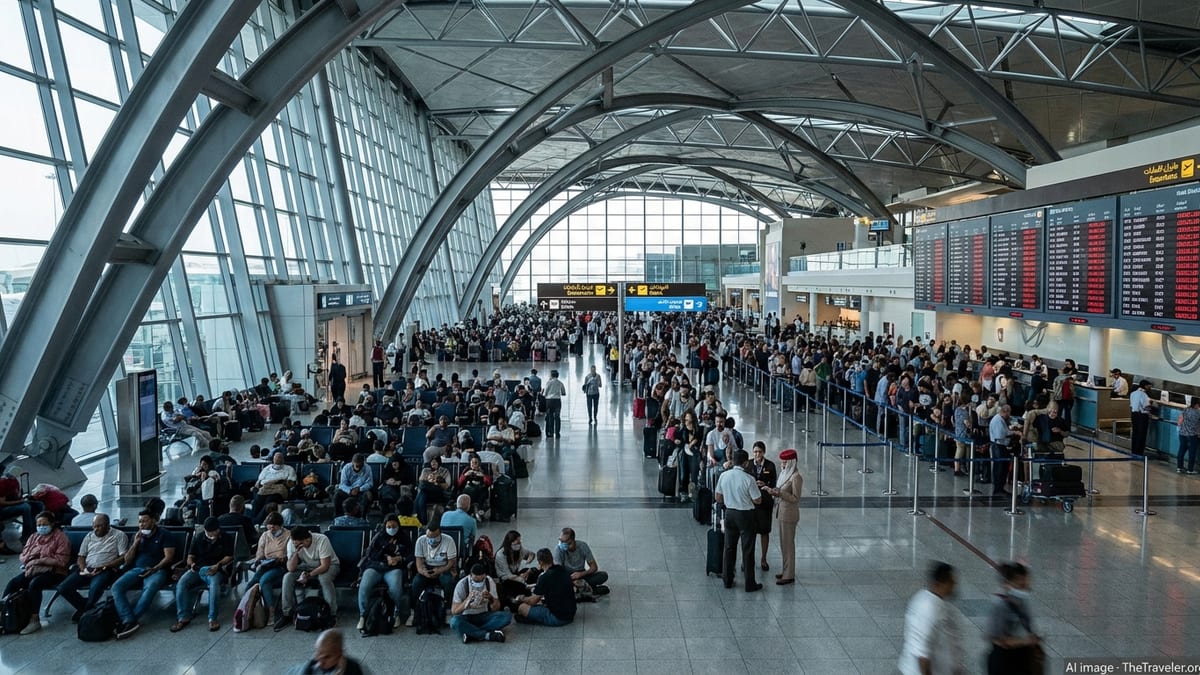
Fresh warning underscores fragile regional security
According to recently updated public guidance from the U.S. Department of State and media coverage on July 18, 2026, the renewed advisory reflects what officials describe in published materials as a complex and fast-changing security environment across the Middle East. The move follows months of hostilities linked to the U.S.–Iran war that erupted in late February, as well as recurrent clashes involving armed groups in Lebanon, Syria, Iraq and along Israel’s borders.
Publicly available information shows that the United States continues to group much of the Middle East under elevated risk levels, citing terrorism, armed conflict, civil unrest and the limited ability of U.S. missions to assist citizens in some areas. Countries such as Iran, Iraq, Lebanon, Syria, Yemen and Gaza remain listed at Level 4, which advises U.S. citizens not to travel for any reason.
The renewed regional message also builds on a worldwide caution issued in March, which urged Americans everywhere, and particularly in the Middle East, to exercise increased vigilance. That global notice highlighted the possibility of attacks on tourist locations, transportation hubs, markets and public venues associated with Western or Israeli interests.
By reiterating its highest-level warnings for Lebanon and other flashpoints, the United States is signaling that recent diplomatic steps, including a ceasefire agreement between Washington and Tehran in April, have not eliminated the underlying security threats for travelers.
Country-by-country advisories remain severe
Individual country advisories across the region continue to paint a stark risk map for U.S. travelers. Public State Department country pages indicate that Lebanon, Iran, Iraq, Syria, Yemen and Gaza are under Level 4 guidance, while Bahrain, Israel, the West Bank, Jordan, Kuwait, Oman, Qatar, Saudi Arabia and the United Arab Emirates remain at Level 3, which calls for travelers to reconsider nonessential trips.
In Iraq, the advisory emphasizes persistent threats from terrorism, kidnapping, armed conflict and civil unrest, as well as restrictions on the movement of U.S. government personnel. Non-emergency staff have been ordered to depart at various points this year, underscoring limited capacity to provide emergency services to private citizens.
For Israel, the West Bank and Gaza, the advisory notes what official travel pages describe as increased violence, military operations and attacks in recent months, along with periodic disruptions to commercial flights. Guidance indicates that terrorists and violent extremists may target public areas with little or no warning, including transport hubs and locations frequented by tourists.
In the Gulf, the United Arab Emirates and several neighboring states remain under a Level 3 advisory tied to the risk of armed conflict and terrorism. U.S. government notices describe the ongoing possibility of drone or missile attacks and refer to an aviation safety notice that urges U.S. carriers to exercise caution when operating in Middle Eastern airspace.
Air travel and evacuation planning in focus
Regional tensions have also translated into intermittent disruption for commercial aviation and concerns about potential evacuations. Earlier in the year, travel information pages documented temporary airspace closures and curtailed flight schedules affecting several Gulf and Levant hubs as hostilities escalated.
Advisories stress that airline operations may be suspended or reduced with little advance notice if conflict intensifies, leaving travelers stranded or facing sudden route changes. Travelers are urged, in public guidance, to keep itineraries flexible, monitor airline communications closely and be prepared for delays or rerouting through alternative hubs outside the immediate region.
The State Department’s general safety materials encourage U.S. citizens abroad to maintain contingency plans in case commercial options deteriorate further. Recommendations include having access to sufficient funds, keeping travel and identity documents current, and staying in regular contact with family or employers regarding changing conditions.
Officials also highlight, in publicly available documents, the importance of travel insurance that includes medical evacuation and trip interruption coverage, noting that government-assisted evacuations are rare and cannot be guaranteed even in crisis situations.
Guidance for U.S. travelers already in the region
For Americans who remain in Middle Eastern countries subject to higher alerts, the renewed warning reinforces earlier messages to register with the government’s online traveler enrollment program, which provides security updates and facilitates contact in an emergency. Public materials explain that enrollment can help embassies and consulates share information rapidly if conditions deteriorate in a specific city or border area.
Travelers in conflict-affected areas are advised to regularly review local news and official security messages, avoid demonstrations and large gatherings that could turn violent, and identify shelter locations near their accommodation and workplace. Guidance also suggests limiting movements near military installations, government buildings and facilities linked to Western or Israeli interests, which may be at higher risk of attack.
Published advisories further recommend that U.S. citizens maintain a low profile, vary daily routines and consider avoiding high-visibility venues popular with expatriates. In some countries, U.S. government personnel are restricted from using certain roads or visiting specific regions; officials advise private citizens to treat those constraints as indicators of heightened risk.
Families with dependents in the region are encouraged, in public guidance, to discuss evacuation options in advance, including the possibility of temporary relocation to safer areas if commercial flights remain available. Travelers are reminded that the situation can shift quickly and that decisions about staying or leaving may need to be revisited as conditions evolve.
What the renewed warning means for future trips
The updated Middle East travel warning does not impose legal bans on private travel, but it significantly raises the threshold for what is considered prudent tourism or business activity. Many travel insurance providers and corporate risk managers use U.S. and allied government advisories as benchmarks when deciding whether to authorize trips or provide coverage.
For leisure travelers, the persistence of Level 3 and Level 4 advisories across much of the region is likely to dampen demand for last-minute vacations, even as some destinations continue to promote cultural events and winter-sun tourism. Tour operators may adjust itineraries away from border regions and sensitive sites, or pause group departures altogether if airlines scale back service.
Business travelers and expatriate workers face a more complex calculus, balancing contractual obligations and on-the-ground requirements with evolving security assessments. Companies with large regional footprints are closely tracking the advisories and, according to industry commentary, in some cases relocating staff to lower-risk hubs while maintaining only essential personnel in higher-risk countries.
The renewed advisory signals that, despite diplomatic efforts and intermittent ceasefires, the United States sees no immediate return to pre-war levels of stability in the Middle East. Travelers contemplating trips in the coming months are being urged in public guidance to weigh the latest country-specific information carefully, prepare for rapid change and, where possible, consider postponing nonessential travel to the most affected areas.