


More news on this day
Flight disruption rippled across Asia and the Middle East on July 18, with publicly available data pointing to at least 369 cancellations and more than 5,200 delays affecting services at major hubs in Japan, Jordan, China, Indonesia and Iraq, and hitting carriers such as Emirates, ANA, Batik Air and Akasa Air.
Get the latest news straight to your inbox!
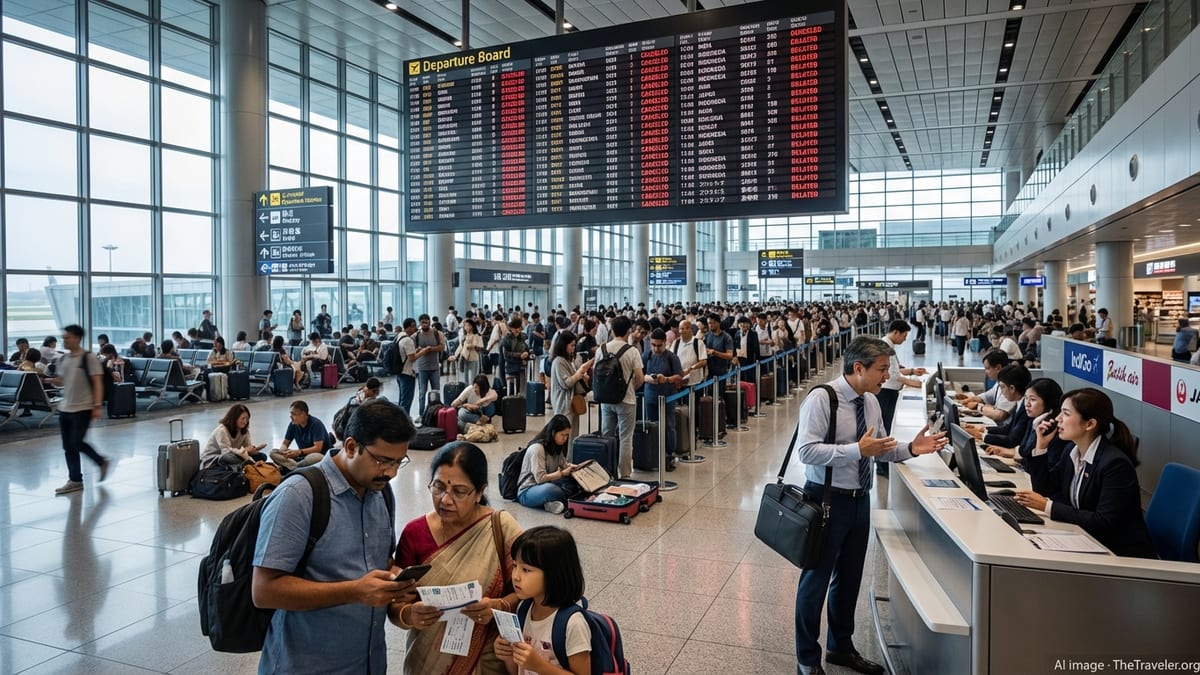
Network Strain Across Key Asian and Middle Eastern Hubs
Aviation tracking dashboards and regional media reports show that the latest wave of disruption has concentrated on a string of busy airports including Tokyo, Amman, Shanghai, Jakarta and Sulaymaniyah, alongside several secondary hubs. The mix of outright cancellations and rolling delays has left aircraft, crew and passengers out of position across multiple time zones.
Industry data compiled for the region on July 18 indicates that 369 flights were cancelled and around 5,238 were delayed, a level of disturbance that rivals some of the worst operational days recorded since travel demand began rebounding strongly in 2025. The figures cover a wide spread of domestic and international services, from short regional hops to long haul links into Europe and North America.
Publicly available flight-status pages for large carriers and airports show repeated schedule changes through the day, with a pattern of knock-on delays building as the disruption filtered through interconnected networks. In several cases, departures left many hours behind schedule, compressing turnarounds and reducing recovery buffers for the remainder of the operating day.
While cancellations are heavily concentrated at a limited number of airports, the resulting delays are being felt on a far wider scale as aircraft rotate through multiple hubs. Travel advisers warn that the effects are likely to remain visible in timetables for at least another 24 to 48 hours as airlines work to realign fleets and crew rosters.
Emirates, ANA and Regional Carriers Among Hardest Hit
Flag carriers and fast-growing low cost operators have both been caught in the latest disruption. Public flight-status tools show Emirates adjusting parts of its schedule across Asia and the Middle East, in some cases substituting equipment or rerouting services to keep long haul connections viable while coping with regional constraints.
In Japan, data for ANA indicates a series of cancellations and delays touching both international and domestic operations, amplifying congestion at Tokyo-area airports where transfer traffic connects to the rest of Asia and beyond. Even when flights continue to operate, extended holding patterns and ground waits are elongating journey times for passengers moving through the Japanese capital.
In Southeast Asia, Indonesian carriers including Batik Air and India’s Akasa Air are experiencing sustained schedule pressure on routes linking Jakarta, other Indonesian cities and major international gateways. Network planners in the region are contending with tight aircraft utilization and limited slack to absorb disruptions, which can quickly cascade into widespread delays when irregular operations occur.
Smaller regional and charter operators are also being affected, particularly on sectors linking secondary cities to the main hubs. These flights often depend on the timely arrival of inbound connections from larger airlines, making them especially vulnerable when long haul services run behind schedule or are cancelled entirely.
Operational and Geopolitical Pressures Converge
Analysts point to a combination of factors behind the latest wave of disruption. Congested airspace over parts of the Middle East has led to diversions and longer routings around Iraq and neighboring states in recent months, and published coverage continues to highlight residual restrictions that affect how carriers plan their Asia to Europe and Asia to Gulf schedules.
Extended routings add flight time, fuel burn and crew duty complications, leaving less margin to handle routine weather or technical issues. When several such pressures coincide, airlines can be forced to consolidate frequencies, cancel individual rotations or significantly delay departures to keep within safety and regulatory limits.
On the ground, summer weather patterns across East and Southeast Asia, including heavy rain and thunderstorms near Tokyo, Shanghai and Jakarta, have periodically restricted runway capacity and slowed ground handling. At busy times of day, even short interruptions to operations can push departure queues into hours-long backlogs.
The cumulative effect has been to expose how finely tuned many carrier schedules have become since traffic recovered. With fleets already heavily utilized to meet demand, relatively small disturbances can now generate outsized impacts measured in hundreds of cancelled flights and several thousand delays across a region.
Airports from Tokyo to Sulaymaniyah Face Knock-on Disruption
At Japan’s main international gateway serving Tokyo, live departure boards on July 18 reflected a mix of on-time operations, rolling delays and selected cancellations spanning both full service and low cost airlines. Passengers connecting from intra-Asia services to long haul flights have faced particularly tight margins, sometimes missing onward connections when inbound sectors run late.
In West Asia, Jordan’s capital Amman and the northern Iraqi city of Sulaymaniyah have emerged as focal points for regional disruption. Publicly available airport information from Iraqi Kurdistan shows a series of schedule adjustments on flights linking Sulaymaniyah with other Iraqi cities and with regional hubs, underscoring the broader network strain created by airspace limitations and changing demand patterns.
China’s Shanghai and Indonesia’s Jakarta, both critical nodes in Asian aviation, are likewise contending with overloaded departure and arrival banks. Reports indicate that congestion at immigration, security and baggage facilities is compounding airside delays in some terminals, further prolonging the overall disruption for travelers even after aircraft return to more regular operating patterns.
Airports and ground handlers across these cities are working within varying national regulations on crew hours, noise restrictions and nighttime operations, constraints that can force late evening cancellations when earlier disruptions push flights beyond permitted operating windows.
Travelers Confront Extended Journeys and Limited Options
For passengers, the combination of cancellations and delays is translating into longer journeys, missed connections and overnight stays at intermediate points. Travel forums and social media posts from affected routes describe last minute rebookings, extended layovers and, in some cases, downgrades to alternative cabins where replacement seats are scarce.
Consumer advocates note that rights and remedies for disrupted travelers vary widely across the region. On routes touching the European Union or the United Kingdom, established compensation rules can apply, while much of intra-Asian travel is governed by individual carrier policies that typically focus on rebooking and basic care such as meal vouchers and hotel accommodation where available.
Public guidance from several airlines encourages passengers to check real-time flight status before leaving for the airport, make use of mobile apps for rebooking and be prepared for schedule changes, especially when itineraries include multiple connections across Asia and the Middle East. For time-sensitive trips, industry experts recommend building longer connection buffers and considering alternative routings that avoid currently congested corridors.
With demand for summer travel across Asia remaining strong, analysts suggest that the region is likely to see further bouts of operational strain in the coming weeks. The current spike in cancellations and delays highlights how interlinked hubs from Tokyo and Shanghai to Amman, Jakarta and Sulaymaniyah have become, and how quickly disruption in one corner of the network can reverberate across the continent.