


More news on this day
The United States Embassy in Jerusalem has issued a new security alert urging American citizens to avoid nonessential travel to Israel and reconsider trips across the wider Middle East, as the ongoing war involving Iran triggers fresh concerns over missile attacks, airspace closures, and targeted violence.
Get the latest news straight to your inbox!
Heightened Security Concerns After Months of Regional Conflict
The alert from the US mission comes against the backdrop of the Iran war that erupted earlier this year, drawing in Israel and prompting repeated cross-border strikes and threats against American interests in the region. Publicly available information shows that since late February, the conflict has involved missile barrages, retaliatory attacks, and strikes on military and infrastructure targets across several Middle Eastern states.
Travel advisories from multiple governments describe a fluid security landscape in Israel, with the risk of sudden rocket fire, drone activity, and localized clashes. Reports indicate that some past missile salvos have reached areas near major population centers, while interception efforts have still left residents and visitors facing air raid sirens and sporadic debris hazards.
According to recent travel guidance, the United States continues to classify travel to Gaza as off-limits for its citizens and warns strongly against movement near northern Israel and certain border areas. The latest embassy communication extends that caution to broader travel planning, urging Americans to weigh the prospect of renewed escalation and the potential for rapid changes in security conditions.
Advisory Targets Both Tourists and Long-Term Residents
The new alert is framed broadly, addressing not only short-term visitors but also American citizens living, studying, or working in Israel and the surrounding region. Public advisories encourage these individuals to review personal security plans, remain aware of their surroundings, and closely monitor local news and official updates for indications of fresh tensions or transport disruptions.
For prospective travelers, the warning stresses that conditions can deteriorate quickly, leaving limited time to react. Authorities caution that in a renewed surge of hostilities, routes to and from airports or land border crossings may become difficult to access, while curfews or localized lockdowns could affect movement inside Israeli cities and across the West Bank.
Published guidance also underscores the importance of contingency planning for those who decide to travel despite the warning. Recommendations include ensuring that friends and family know itineraries, keeping travel documents readily accessible, and preparing for the possibility of extended stays if commercial flights are reduced or canceled at short notice.
Airspace Closures and Transport Disruptions Pose Additional Risks
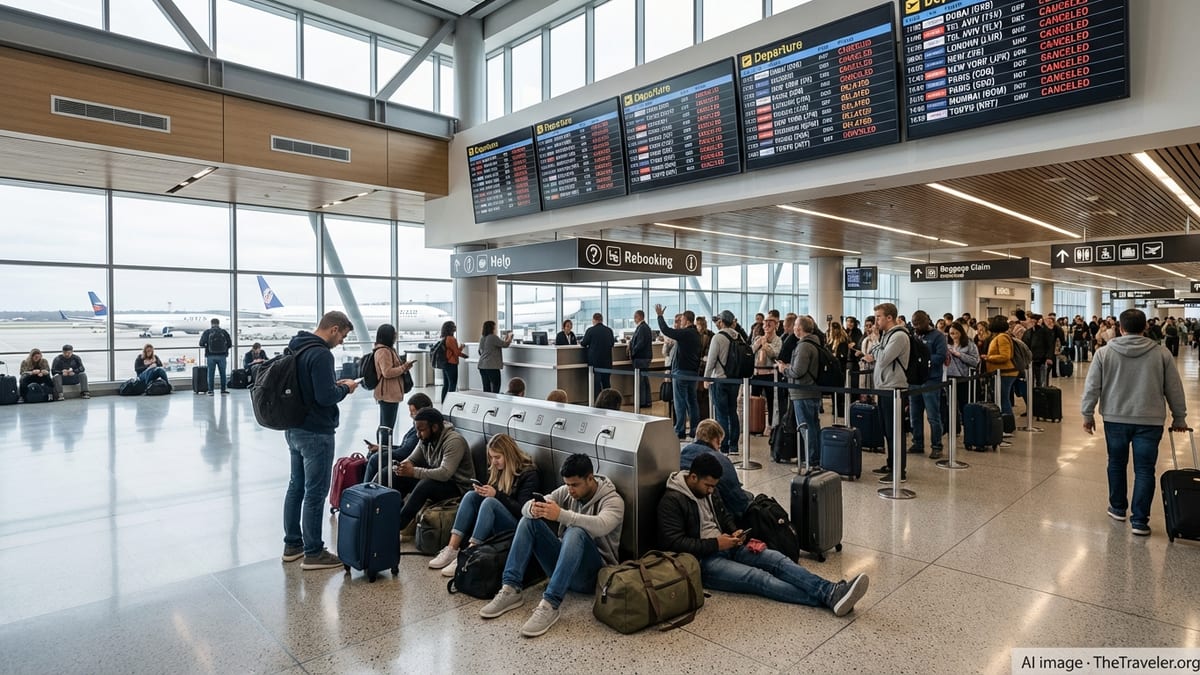
Beyond direct security threats, the Iran war has triggered significant disruptions to civil aviation and overland transport across the Middle East. Open-source assessments of the conflict detail periods during which regional airspace has been partially closed and commercial routes diverted due to concerns about missiles or drones operating at high altitude.
Travel industry observers note that airlines serving Israel may adjust schedules or suspend certain routes with limited notice if risk levels increase. Even when flights continue, passengers can face last-minute delays, re-routing via alternative hubs, or extended transit times as carriers avoid particular corridors considered vulnerable to attack.
On the ground, previous rounds of regional tension have led to temporary closures of border crossings, tighter checkpoints, and heavier military or police presence in and around key transport hubs. The current advisory signals that similar conditions could reappear with little warning, leaving travelers stranded or forced to seek alternative exit options through neighboring countries.
Global Context: Worldwide Caution and Allied Warnings
The embassy’s message aligns with a broader pattern of travel advisories issued since the outbreak of the Iran war. The US Department of State has maintained a worldwide caution notice, highlighting the increased threat environment for Americans in areas affected by regional conflict and underscoring the risk that locations associated with the United States or its allies could be targeted.
Other governments have echoed similar concerns. Travel advice published by European and Asia-Pacific states in recent days outlines the potential for further missile activity and irregular attacks connected to the Iran conflict, warning that foreigners in Israel and neighboring territories could be indirectly affected by escalations aimed at military or symbolic sites.
These overlapping advisories contribute to an environment in which international travelers are urged to treat the entire Eastern Mediterranean and Gulf region as volatile. Analysts tracking the situation point out that while periods of relative calm may occur, the underlying drivers of the conflict remain unresolved, leaving a persistent risk of renewed hostilities that could once again disrupt civilian travel at scale.
Practical Guidance for US Travelers Considering Israel
In light of the latest embassy alert, US citizens weighing a trip to Israel are being encouraged by publicly available guidance to adopt a cautious, risk-aware approach. Those with nonessential tourism plans are advised to consider postponing or rerouting to destinations outside the immediate arc of the conflict, particularly while tensions between Washington, Tehran, and regional actors remain high.
For individuals who deem their travel essential, experts recommend closely reviewing the most recent US travel advisory for Israel, enrolling in official notification services where available, and preparing for the possibility of abrupt changes in security conditions. Travelers are further urged to verify that their health and evacuation insurance policies cover conflict-related disruptions, including emergency medical care and unplanned departures.
With the Iran war continuing to cast a long shadow over the Middle East, the new warning from the US Embassy in Jerusalem reinforces a clear message to American citizens: any journey to Israel at this time carries elevated and unpredictable risks, and travel decisions should be made with full awareness of the potential consequences for safety and mobility.