


More news on this day
Travelers across Europe faced severe disruption as Vienna International Airport reported a wave of delays and at least one high-profile cancellation, affecting services operated by Cityjet, Austrian Airlines, Lauda Europe, KLM, Finnair, Aegean Airlines and other carriers and leaving passengers stranded in cities including Copenhagen, Frankfurt, Amsterdam, Athens and Heraklion.
Get the latest news straight to your inbox!
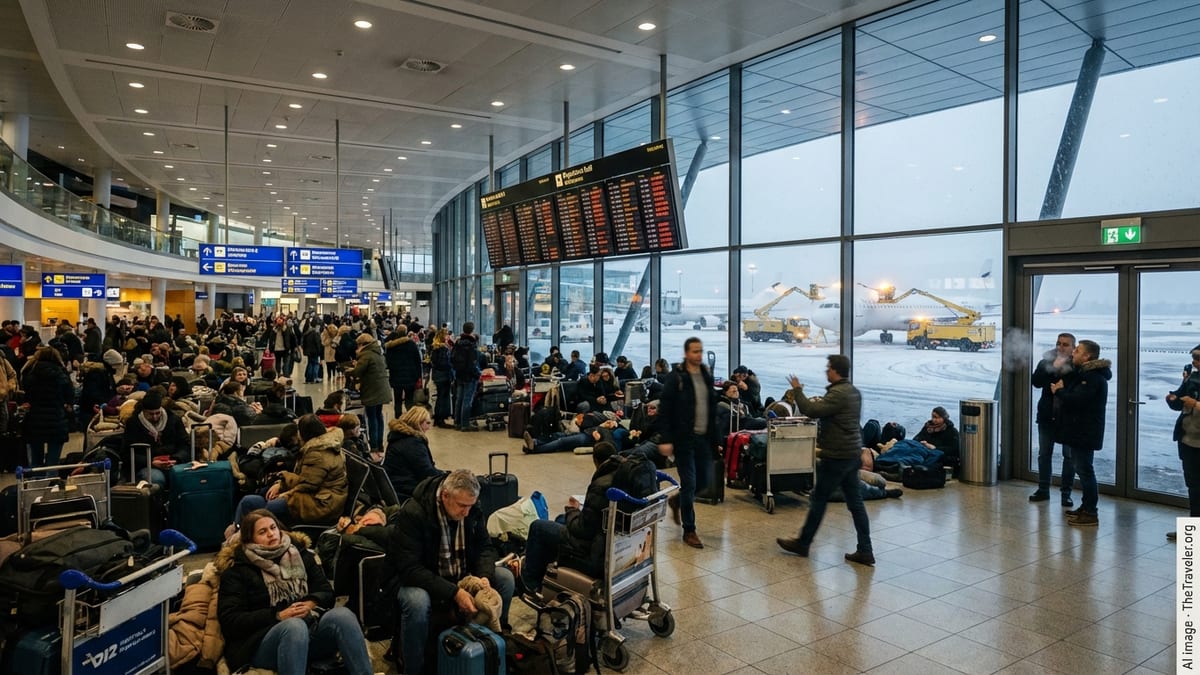
Cityjet Cancellation Triggers Fresh Wave of Disruption
According to live schedule data and aviation tracking platforms, a Cityjet service operating via Vienna was cancelled after a day of mounting delays across the airport’s network. The cancellation added to growing congestion at departure gates and transfer zones, compounding the impact on passengers already rebooked from earlier disruptions.
Publicly available operational data indicate that the cancelled Cityjet flight was one of the most visible disruptions of the day for transfer passengers, as it was scheduled to connect travelers onward to multiple European hubs. The loss of this link forced many to seek alternative routings through other cities, increasing pressure on already busy evening and late-night departures.
While Vienna International Airport has previously experienced weather-related disruption and airspace congestion, today’s disturbance was primarily characterized by scattered operational delays across several airlines rather than a single, clearly defined cause. For travelers on the Cityjet service, the result was a sudden halt to carefully planned itineraries and a race to secure fresh options at airline transfer desks.
Austrian, Lauda Europe, KLM, Finnair and Aegean Among Most Affected
Operational statistics compiled from flight-status aggregators show that Austrian Airlines, Lauda Europe, KLM, Finnair and Aegean Airlines were among the carriers registering the largest number of delayed departures and arrivals in and out of Vienna during the disruption period. In total, around forty-six flights connected to the airport were delayed, affecting thousands of passengers on both short-haul and medium-haul routes.
Austrian Airlines, the primary hub carrier at Vienna, faced knock-on effects across its European network as late inbound aircraft forced revised departure times. Lauda Europe, which operates a significant share of leisure routes from Austria, also saw multiple services push back later than scheduled, particularly those linking popular Mediterranean destinations.
Network carriers KLM and Finnair, together with regional and holiday-focused services under Aegean Airlines, reported Vienna-related delays that rippled out to their own hubs and focus cities. These delays not only affected passengers starting or ending their journeys in Vienna but also those relying on tight connections between northern Europe, central Europe and the eastern Mediterranean.
Stranded Passengers in Copenhagen, Frankfurt, Amsterdam, Athens and Heraklion
The pattern of disruption extended far beyond Vienna itself. Flight-tracking data and airport departure boards across Europe showed delayed or disrupted services on routes linking Vienna with Copenhagen, Frankfurt, Amsterdam, Athens and Heraklion. Passengers in these cities reported missed onward connections and extended waits in transit areas as they watched departure times repeatedly adjust.
At key hubs such as Frankfurt and Amsterdam, late-arriving aircraft from Vienna cascaded into further delays as ground-handling windows tightened and crews approached operational limits. In Copenhagen and Athens, delayed Vienna-bound departures left travelers uncertain whether they would still be able to make same-day onward connections once they arrived in Austria.
Heraklion, a major gateway for holiday traffic, was also caught in the disruption, with Vienna-linked services operating behind schedule and some travelers forced to overnight unexpectedly. With many flights between central Europe and Greek islands operating near capacity during peak travel periods, rebooking options were limited, leaving some passengers waiting many hours for available seats.
Broader Context of European Flight Disruptions
The latest disruption at Vienna comes amid a wider pattern of irregular operations across European air travel, where a combination of airspace constraints, staffing challenges and knock-on effects from regional conflicts has periodically strained airline schedules. Industry monitoring services have recently documented elevated levels of delays and cancellations across major hubs including Amsterdam, Paris, London and Rome.
Data from European travel and passenger-rights platforms highlight that Vienna has seen several spikes in delays this season, often linked to broader European congestion. While not every event reaches the scale of a full airport shutdown, even a single day of elevated disruption can displace thousands of travelers and overload customer-service channels across multiple airlines.
For carriers operating complex hub-and-spoke networks, a cluster of delayed departures and one or two strategic cancellations at a hub airport can trigger a chain reaction. Aircraft and crews that arrive late into Vienna may then operate subsequent flights from other cities behind schedule, creating the type of multi-airport disruption seen in Copenhagen, Frankfurt, Amsterdam, Athens and Heraklion.
What Travelers Can Expect and How to Respond
Passenger-rights organizations note that travelers affected by delays and cancellations linked to Vienna are generally protected under European Union air-passenger regulations when flying with EU-based airlines or departing from EU airports. Under these rules, airlines may have to provide meals, refreshments and accommodation during extended disruptions, as well as rerouting to final destinations when flights are cancelled.
Travel experts advise that, in disruption events such as the one affecting Vienna and its partner airports, passengers should retain boarding passes, email notifications and photos of airport departure boards as documentation. These records can be important when seeking reimbursements for additional expenses or when claiming compensation once the cause and length of delay are confirmed.
In the short term, travelers booked on upcoming flights through Vienna are encouraged to monitor airline apps and airport flight-information services closely for schedule changes. With airlines working to reset their operations after the latest wave of disruptions, further minor adjustments and rolling delays may still occur before regular patterns of punctuality are fully restored.