


More news on this day
Operations at Lisbon’s Humberto Delgado Airport were severely disrupted on Friday as a cluster of cancellations and dozens of delays involving TAP Air Portugal, easyJet, Ryanair, Portugalia, Lufthansa and Delta Air Lines left passengers stranded on key routes to North America and Europe.
Get the latest news straight to your inbox!
Major Carriers Affected on Transatlantic and European Links
Publicly available flight-tracking and scheduling data indicated that one Lisbon departure was cancelled and at least 80 additional services were subject to significant delays, affecting a mix of transatlantic and short haul routes. The disruption involved flights operated by TAP Air Portugal and its regional affiliate Portugalia, along with services from low cost rivals easyJet and Ryanair and long haul operators Lufthansa and Delta Air Lines.
The impact was felt most sharply on high demand routes connecting Lisbon to Boston, Newark and Toronto, as well as key European hubs including London, Paris and Frankfurt. These city pairs rank among Lisbon’s busiest international links by passenger volume, so even a limited number of cancellations can quickly cascade into crowded departure halls, missed connections and rebooking backlogs.
Available data for the day’s schedule showed that while the majority of flights were still operating, many were departing late enough to jeopardize onward connections within Europe and across the Atlantic. Travellers heading to North America in particular faced the dual challenge of longer flight times and tighter connection windows at intermediate hubs, magnifying the disruption.
Information compiled from airline and airport data services suggested that the disruption was concentrated in departures from Lisbon rather than inbound flights, a pattern consistent with reactionary delays building through the day as aircraft and crews fell out of position.
Lisbon’s Chronic Punctuality Problems Under Scrutiny
The latest disruption comes against a backdrop of persistent punctuality issues at Humberto Delgado Airport. Recent European air traffic performance reports have highlighted Lisbon for poor on time departure statistics, citing reactionary delays and air traffic flow management constraints as key contributors.
The airport serves as the main hub for TAP Air Portugal and its regional operations and is also a major base for Ryanair and easyJet. This concentration of activity at a constrained urban airport means that small schedule disruptions can quickly ripple across multiple carriers. When one airline experiences a knock on delay, turnaround times and gate availability for other operators are also affected.
Capacity pressures at Lisbon have been a recurring topic in European aviation analysis, with calls for infrastructure expansion and airspace optimization. Until those structural issues are addressed, observers note that days of adverse weather, technical glitches or crew availability problems are likely to translate into spikes of disruption similar to those seen on Friday.
Travel industry sources regularly point to Lisbon’s combination of dense schedules, limited runway capacity and heavy reliance on connections as factors that leave little resilience in the system when irregular operations emerge.
Passengers Face Missed Connections and Lengthy Rebooking Queues
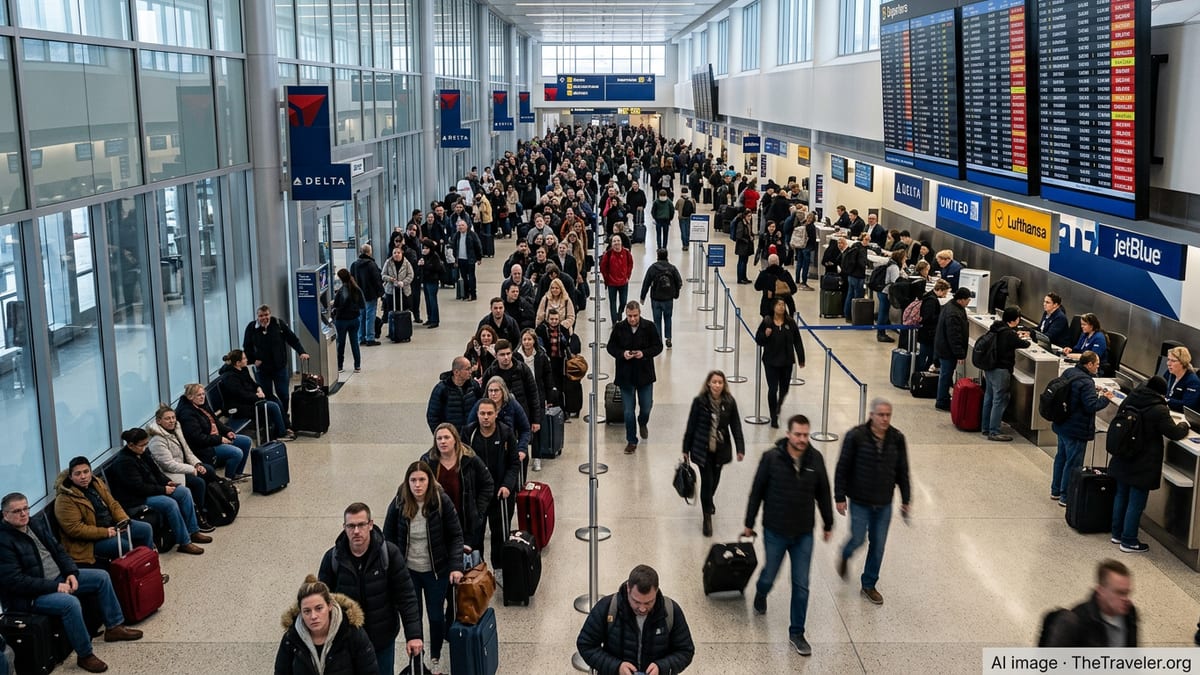
For passengers, the operational data translated into lengthy queues at check in counters, transfer desks and customer service points as travellers sought alternative routings. The mix of long haul and European flights meant that many customers were connecting on to further destinations beyond the initial hubs of Boston, Newark, Toronto, London, Paris and Frankfurt.
According to publicly available information from airlines and consumer advisory services, travellers whose flights are cancelled or heavily delayed in Lisbon may be eligible for assistance such as rebooking, meals and accommodation, depending on the circumstances. Under European passenger rights rules, financial compensation can also apply in certain cases of long delays or cancellations that are not caused by extraordinary factors.
However, rebooking options can be limited when disruption affects several carriers simultaneously. With many services operating close to capacity in the high season, displaced passengers often face the prospect of overnight stays in Lisbon or being routed through less direct connections in order to reach their final destination.
Travel forums and social media updates frequently highlight the emotional and financial strain of such disruptions, including missed events, additional hotel costs and uncertainty around baggage handling when itineraries are hastily revised.
Airlines Adjust Schedules as Delays Accumulate
Airline operational data indicated that carriers at Lisbon responded to the disruption by adjusting schedules, swapping aircraft and reassigning crews where possible in an effort to stabilize the evening wave of departures. In some cases, shorter regional sectors were delayed or consolidated to prioritize long haul flights with larger numbers of connecting passengers.
Publicly available scheduling information showed that while only one flight was fully cancelled on the day, the presence of more than eighty delayed departures suggested that airlines were attempting to keep the network moving, even at the cost of pushing many flights well outside their planned time slots. This approach can help reduce the number of stranded passengers but often leads to reduced punctuality metrics across the board.
The involvement of multiple carriers, including full service and low cost operators as well as regional affiliates, underlined how susceptible Lisbon’s interconnected traffic flows are to operational stress. When delays accumulate early in the day, recovery becomes increasingly difficult without resorting to last minute cancellations, aircraft substitutions or crew overtime.
Observers of European aviation performance note that such episodes can have knock on effects beyond Lisbon, as delayed flights export disruption to destination airports in North America and across Europe, where late arriving aircraft then affect subsequent rotations.
Advice for Travelers Using Lisbon in Coming Days
Consumer travel guidance emerging from recent episodes at Lisbon recommends that passengers with upcoming flights through Humberto Delgado Airport build extra time into their plans and monitor flight status closely. Checking in early, remaining flexible about alternative routings and keeping essential items in carry on bags are among the practical steps frequently advised.
Passengers booked on itineraries involving connections in hubs such as Boston, Newark, Toronto, London, Paris and Frankfurt are particularly encouraged to verify minimum connection times and, where possible, allow wider buffers between flights to account for potential departure delays out of Lisbon.
Travel planning resources also suggest that customers familiarize themselves with airline policies on rebooking and assistance in advance, so that they understand their options if disruption occurs. This can be especially important for journeys combining tickets on different airlines or involving low cost carriers, which may have more limited rebooking arrangements compared with large network airlines.
With Lisbon’s status as a major gateway between Europe and North America, any recurrence of the type of disruption seen on Friday is likely to continue drawing attention from travelers and industry observers watching how airports and airlines manage the ongoing strain on Europe’s air transport infrastructure.