


More news on this day
Viking has revealed the names of its next two ocean ships, announcing that the upcoming sister vessels will be called Viking Leda and Viking Vega, as the company continues to grow its ocean fleet and deepen its presence on key global routes.
Get the latest news straight to your inbox!
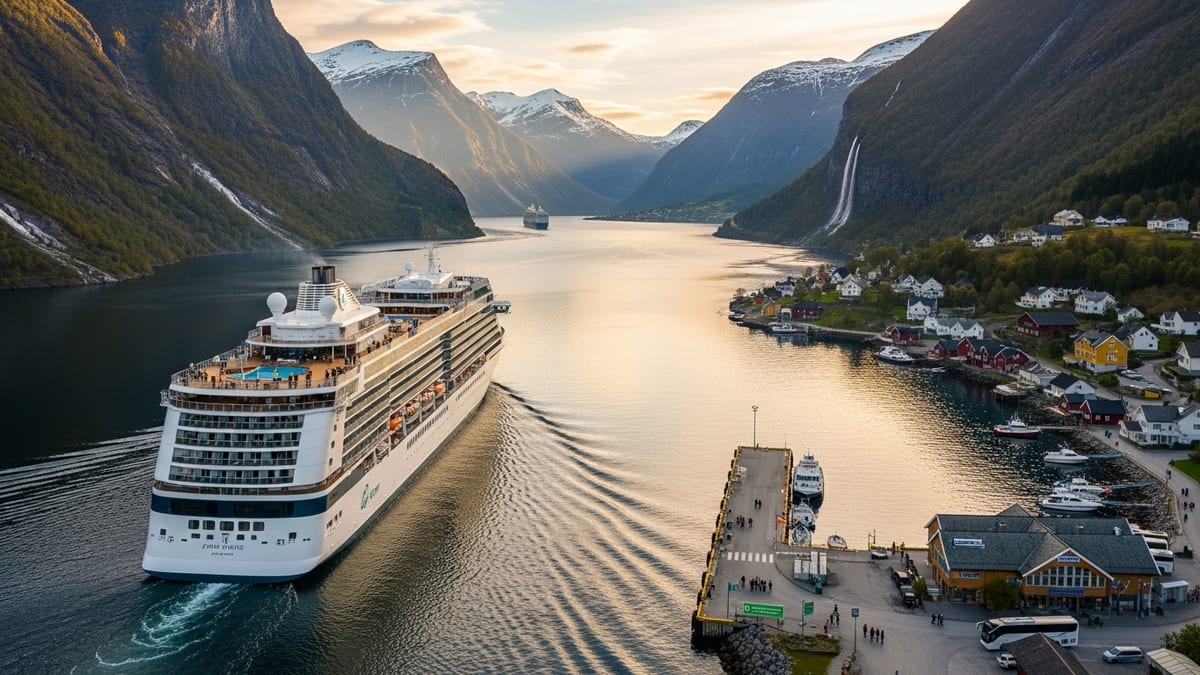
New Names Extend Viking’s Ocean Fleet Strategy
According to recent industry coverage, the next pair of Viking ocean newbuilds will carry the names Viking Leda and Viking Vega, continuing the company’s tradition of Norse and celestial-inspired ship identities. The announcement follows a period of sustained fleet growth for the cruise line, which has been steadily adding new ocean, river and expedition vessels in recent years.
Publicly available information on the orderbook shows that Viking plans to take delivery of multiple additional ocean ships by 2031, supported by long-term agreements with Italian shipbuilder Fincantieri. The naming of Viking Leda and Viking Vega aligns with this broader program, positioning the ships to slot into an expanding network of itineraries across Europe and beyond.
The new ships are expected to maintain the familiar hallmarks of the existing Viking ocean class, including all-veranda accommodation, Scandinavian-inspired interiors and an emphasis on destination-focused sailing rather than onboard theme-park style attractions. Industry reports indicate that this consistent design philosophy has been central to Viking’s branding as a premium, adults-focused cruise product.
While detailed technical specifications for Viking Leda and Viking Vega have not yet been widely circulated, the ships are anticipated to follow the established tonnage and capacity profile of the fleet, allowing Viking to deploy them flexibly on both established and emerging routes.
Growth Comes Amid Rising Demand for Ocean Cruising
The decision to name and advance two more ocean ships comes at a time when demand for upscale ocean cruising continues to rebound and, in some markets, exceed pre-pandemic levels. Booking data referenced in financial disclosures and prior press materials indicates strong interest in longer voyages and more intensive destination programs, areas where Viking has focused much of its product development.
Viking’s ocean division has grown rapidly over the past decade, evolving from a river-cruise specialist into a sizeable presence in the global cruise sector. The company’s ocean ships routinely operate itineraries in the Mediterranean, Northern Europe, the British Isles and transatlantic crossings, as well as seasonal deployments in other regions.
Analysts following the cruise industry note that adding capacity in measured steps allows brands such as Viking to adjust deployment to shifts in regional demand. The introduction of Viking Leda and Viking Vega is expected to give the company more flexibility to respond to interest in extended sailings, repositioning cruises and combination itineraries that string together multiple regions in a single voyage.
Industry commentary also suggests that the continued introduction of new tonnage strengthens Viking’s competitive stance in the premium and upper-premium segments, where several lines are updating fleets and introducing new concepts to attract repeat cruisers.
Shipyard Partnerships and a Focus on Innovation
Viking’s latest ocean ships are part of a long-standing collaboration with Fincantieri, one of the world’s largest cruise ship builders. Public documents from both companies highlight a multi-ship program that has delivered a series of near-identical vessels, streamlining construction, operations and maintenance.
Beyond fleet expansion, the company has been associated with a broader shift toward more efficient and environmentally focused ship designs. Separate announcements have detailed plans for vessels using advanced propulsion technologies, including projects centered on hydrogen-capable systems intended to reduce emissions over time.
Although Viking Leda and Viking Vega have not yet been publicly linked with specific alternative-fuel configurations, their place within this evolving fleet suggests that incremental advances in efficiency and environmental performance are likely to be incorporated. Cruise industry observers point to a trend in which each successive class or batch of ships refines energy use, waste management and overall sustainability measures.
By continuing to work with a single primary yard for its ocean program, Viking also reinforces a model where lessons learned from earlier newbuilds can be applied quickly to subsequent ships, potentially shortening lead times and smoothing the path from construction to commercial service.
What Travelers Can Expect Onboard
Based on the features of existing Viking ocean ships, travelers can expect Viking Leda and Viking Vega to follow a familiar onboard blueprint. The current fleet is characterized by all-veranda staterooms, multiple indoor and outdoor dining venues, extensive use of natural light and an emphasis on quiet, residential-style public spaces.
The onboard programming typically prioritizes destination immersion, with lecture-style enrichment, cultural performances and regionally influenced cuisine that reflects the ports of call. Reports from past sailings frequently highlight smaller-ship conveniences, such as reduced crowding and streamlined embarkation and disembarkation processes.
Viking has also built its ocean reputation on an adults-focused policy and a lack of large-scale entertainment complexes, water slides or casinos. For many guests, this differentiates the brand within a crowded cruise marketplace, appealing to travelers who value a calmer onboard atmosphere and longer time in port.
While final interior details for Viking Leda and Viking Vega have not yet been disclosed, the ships are widely expected to maintain these core brand elements, reinforcing continuity for returning guests and setting clear expectations for first-time Viking ocean cruisers.
Positioning in an Increasingly Competitive Market
The naming of Viking Leda and Viking Vega adds definition to Viking’s growth trajectory at a time when several cruise companies are investing heavily in new hardware. Larger mass-market lines are introducing increasingly complex megaships, while premium and luxury brands are rolling out smaller vessels aimed at higher-spend travelers.
Within this environment, Viking’s approach of replicating a successful mid-sized ocean ship design and deploying it globally represents a distinct strategy. Market commentary suggests that a consistent product across the fleet can simplify marketing, training and itinerary planning, while also giving travelers confidence that a new ship will deliver a familiar onboard experience.
As delivery timelines for the new ships come into focus, attention is likely to turn to which regions and itineraries will see additional capacity. Given Viking’s existing strength in Europe and on repositioning routes, observers expect Viking Leda and Viking Vega to be used both to support high-demand seasons and to open new combinations of voyages for guests seeking extended travel.
For now, the naming of the two ships signals the next phase of Viking’s ocean ambitions, adding fresh capacity to a fleet that has become a significant player in the global cruise landscape.