


More news on this day
A rare VIP-related ground stop at Ronald Reagan Washington National Airport in Washington, D.C., triggered the highest number of flight cancellations worldwide on Tuesday, as tightened security for a visiting Iraqi leader forced airlines to scrub or delay hundreds of departures and arrivals across the United States network.
Get the latest news straight to your inbox!
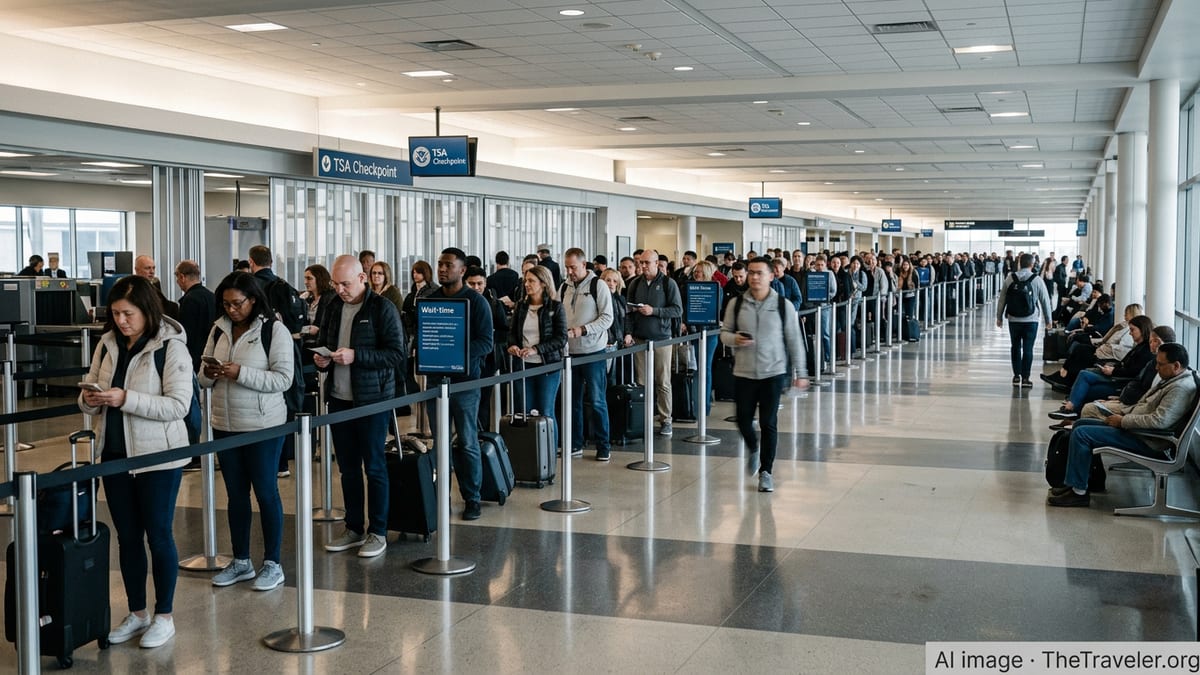
Security Lockdown at Key Washington Airport
Publicly available air traffic management notices show that the Federal Aviation Administration ordered a ground stop at Ronald Reagan Washington National Airport on Tuesday afternoon, temporarily halting most operations as law enforcement and security agencies put in place protections for the Iraqi prime minister’s movements in the capital.
Coverage from U.S. broadcasters and local Washington outlets indicates that the restrictions lasted several hours, far longer than the short pauses that often accompany routine VIP movements. The extended halt came as the Iraqi leader traveled in and out of central Washington during a high‑stakes visit tied to the ongoing war with Iran, tightening the already restricted airspace over the Potomac River corridor.
Flight-tracking data and airline status boards showed that operations at Washington National, one of the country’s most slot‑constrained and politically sensitive airports, were reduced to a trickle during the peak of the security measures. Only a limited number of arrivals and departures were permitted, with priority given to aircraft already in the air or waiting at the gates.
The airport serves as a primary business and political gateway for the U.S. capital, and even short disruptions can ripple quickly through the domestic network. On Tuesday, the combination of a ground stop and a staggered resumption of flights magnified that effect, pushing cancellation tallies for Washington far above other major hubs around the world.
Highest Cancellation Count Worldwide
According to flight‑tracking platforms that aggregate airline schedules and real‑time movement data, Ronald Reagan Washington National recorded more cancellations on Tuesday than any other airport worldwide. Reports from multiple outlets placed the number of canceled flights at well over 100, with some tallies citing more than 120 scrapped departures and arrivals at DCA alone.
These cancellations came on top of widespread delays, with dozens of flights pushed back for hours as air traffic managers gradually lifted restrictions. Travelers experienced rolling departure times, gate changes and missed connections, particularly on routes linking Washington with major hubs such as Chicago, Atlanta, Charlotte and Boston.
Comparative data from global aviation analytics firms showed that large international hubs in Europe and Asia, which often top daily disruption charts because of weather or congestion, logged fewer cancellations on Tuesday than DCA. That unusual ranking underscored how a single security‑driven decision at a relatively small, domestic‑focused airport can suddenly dominate global statistics when schedules are tightly packed and capacity is constrained.
Domestic carriers with heavy schedules at Washington National, including American Airlines and several low‑cost and regional operators, bore the brunt of the disruption. Many airlines preemptively canceled later flights once it became clear that recovery would stretch into the evening, a move aimed at avoiding overnight strandings and crew‑scheduling breakdowns.
Ground Stop Mechanics and VIP Airspace Controls
Federal air traffic management documents describe a ground stop as a tool used to halt or severely restrict departures and sometimes arrivals into a specific airport, often in response to weather, equipment outages or security concerns. In the Washington area, ground stops also interact with a dense web of airspace limitations created after the September 11 attacks and refreshed regularly through temporary flight restrictions.
For VIP movements, the government can designate security flight restrictions around specific locations and routes, effectively carving out protected corridors in the sky. Published FAA materials on temporary flight restrictions highlight that VIP events often require closing or severely limiting access to nearby airspace for defined periods, with traffic rerouted or held on the ground until the movement is complete.
Washington National’s location just across the Potomac River from downtown Washington makes it particularly sensitive to these measures. Many arrivals already follow tightly choreographed paths that bend around federal buildings, restricted zones and the river itself. When a visiting head of government is added to that equation, security planners may opt for a prolonged pause rather than constantly adjusting flows around a moving motorcade or helicopter route.
Travelers and aviation enthusiasts tracking the event noted that some aircraft were held in airborne holding patterns before being allowed to land once limited operations resumed, while others were diverted to nearby airports such as Washington Dulles International or Baltimore/Washington International. On the ground, aircraft pushed back from gates only when a narrow window opened in the traffic management plan.
Passenger Fallout Across the U.S. Network
The immediate effect for passengers at DCA was a chaotic afternoon and evening of long lines, crowded terminals and rebookings. Social media posts from travelers described departures boards filled with red “canceled” indicators, with some passengers learning of the security‑related ground stop only after arriving at the airport.
Because Washington National primarily handles domestic flights, the disruption spread quickly through the U.S. network as downline legs were canceled or delayed. Travelers flying between cities such as Dallas, Miami or Detroit and smaller regional destinations via DCA hub connections faced missed links and overnight stays, while aircraft intended to operate evening routes ended up out of position for Wednesday’s early‑morning schedules.
Operational data from the FAA’s national airspace status pages showed related delay programs and flow restrictions that extended beyond DCA as traffic managers worked to rebalance capacity. Airlines attempted to consolidate passengers onto the limited flights that did operate, prioritizing those with international connections or essential travel requirements.
Consumer advocates noted that VIP‑related ground stops occupy a gray area of airline responsibility. Because the trigger is neither weather nor a conventional technical fault, passengers navigating rebooking policies and compensation options encountered a patchwork of responses based on individual carrier rules and ticket types.
Renewed Scrutiny of DCA Capacity and Policy
The episode is likely to sharpen an already intense debate about how much traffic Washington National should handle and how resilient it can be in the face of security‑driven interruptions. Recent federal documents on slot usage and construction impacts at DCA highlight the airport’s limited runway capacity and its vulnerability to saturation during peak hours.
Local and national coverage has detailed broader concerns about operations in the capital’s airspace, from a highly publicized midair collision investigation to new restrictions on helicopters and powered‑lift aircraft near the airport. These developments have prompted calls from some policymakers and aviation safety advocates for more conservative traffic levels and more robust contingency planning for extraordinary events.
Tuesday’s VIP ground stop provided a stark, real‑time example of how swiftly those concerns can translate into large‑scale travel disruption. With a foreign leader’s security needs prioritized, ordinary passengers found themselves at the center of a cascading operational challenge that spread far beyond the Potomac shoreline.
As airlines and the FAA review the timeline and impact of the event, industry observers expect renewed discussion over how to balance security requirements for high‑profile visits with the needs of a tightly scheduled aviation system. For travelers, the incident serves as a reminder that in Washington, security decisions made far from the departure gate can determine whether a flight ever leaves the ground.