


More news on this day
Major Gulf carriers are grappling with a fresh wave of flight disruption as volcanic ash in Indonesia and ongoing airspace constraints over the Gulf trigger cancellations and delays affecting routes between Dubai, Abu Dhabi and key Gulf and Indonesian destinations.
Get the latest news straight to your inbox!
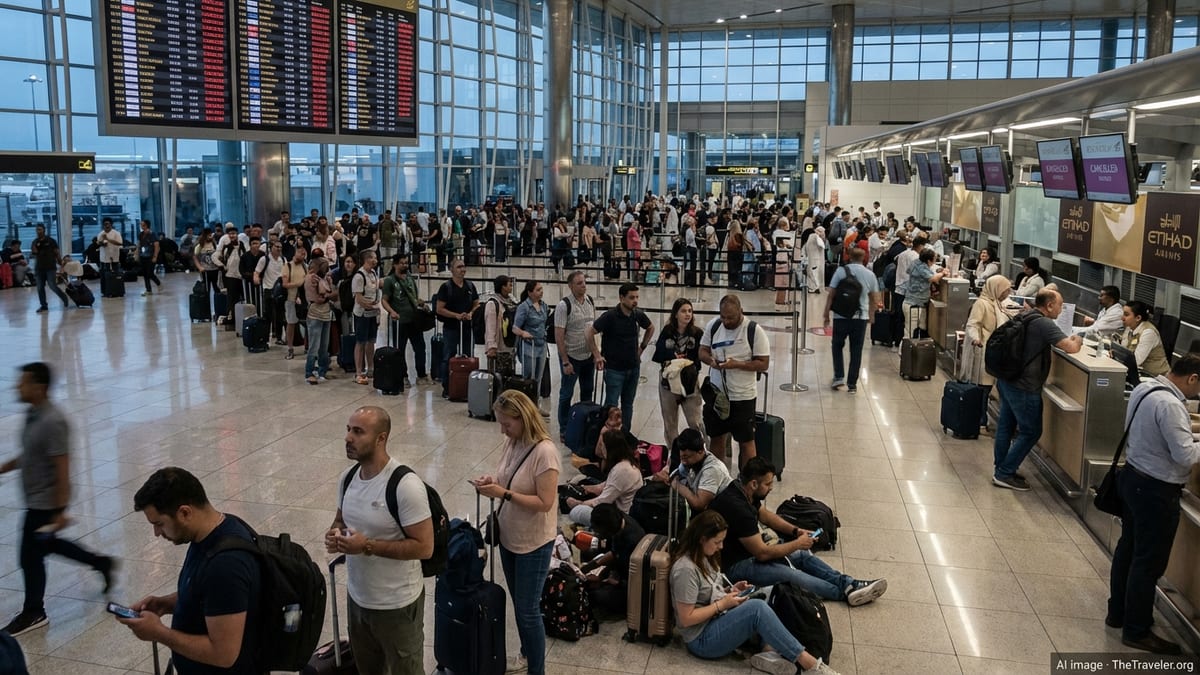
Volcanic ash from Anak Krakatau halts UAE–Jakarta links
Travel between the UAE and Indonesia has been hit after ash from the Anak Krakatau volcano prompted the temporary closure of Jakarta’s Soekarno Hatta International Airport. Publicly available information indicates that Indonesian authorities suspended operations at multiple airports over the weekend after ash clouds drifted over the capital region, forcing thousands of flights to be grounded or diverted.
According to published coverage, Emirates has cancelled a series of Dubai–Jakarta rotations since 5 September 2026, including services EK356, EK357, EK358 and EK359 across several days as ash continued to affect Jakarta’s main hub. The airline’s travel updates page on 6 September listed cancellations extending through 8 September, with customers advised that further changes remain possible as conditions evolve.
Abu Dhabi based Etihad Airways has also adjusted its Indonesia operations. Gulf media reports show the carrier delaying at least one Abu Dhabi–Jakarta service after the airport closure, with passengers urged to monitor flight status tools closely and avoid heading to the airport until they receive confirmation that their flight is operating.
By early 8 September, flights in and out of Jakarta were gradually resuming after a roughly two day shutdown, but schedules remained heavily disrupted. Data from flight tracking and airport information sites shows further cancellations on the Dubai–Jakarta route on 8 September, suggesting a lag as airlines work through aircraft and crew imbalances and reposition capacity.
Knock on delays at Dubai and Abu Dhabi hubs
The Jakarta disruption is filtering back into the Gulf’s main hubs, complicating operations already affected by regional tensions. A travel advisory published on 8 September noted widespread delays and cancellations at Dubai International Airport and Abu Dhabi’s Zayed International Airport, including additional cancellations on Emirates’ inbound Jakarta services and delays on several regional and South Asian routes.
Publicly available airport boards show that Emirates flights EK357 and EK359 from Jakarta to Dubai were among those cancelled on Tuesday, leaving some passengers in Indonesia facing rebookings via alternative routings or later dates. Other carriers operating from Dubai have reported delays to destinations such as Mumbai, New Delhi, Moscow and Nairobi as knock on effects ripple through the tightly scheduled hub operation.
In Abu Dhabi, Etihad has maintained the bulk of its network but continues to flag the possibility of short notice changes. Industry analysis compiled earlier this year highlighted that Gulf carriers are particularly exposed to shocks affecting their hubs, given the central role that Dubai and Abu Dhabi play in connecting long haul traffic between Europe, the Middle East and Asia Pacific.
For travellers, the latest round of schedule changes underscores the importance of monitoring airline channels on the day of departure. Carriers are directing customers to check flight status tools and ensure contact details are updated in booking records so that any last minute alterations or rebookings can be communicated quickly.
Regional airspace constraints add to operational strain
The Indonesian volcanic ash is hitting at a time when Gulf carriers are already managing a more complex operating environment due to regional security concerns. Aviation industry briefings and recent Gulf business coverage point to a patchwork of airspace advisories across parts of the Gulf region, prompting selective rerouting and schedule adjustments for flights transiting sensitive areas.
Recent guidance from European and other regulators has recommended that airlines avoid specific zones of Gulf airspace unless additional risk mitigation measures are in place. Publicly available reports indicate that while the majority of services on Emirates, Etihad and flydubai continue to operate, a combination of longer routings, higher fuel burn and tighter crew duty limits has reduced schedule flexibility.
Over recent days, Gulf based media have documented isolated cancellations and extended delays on a variety of routes operated by these carriers, including services to destinations in Central Asia, Eastern Europe, East Africa and within the wider Middle East. In several cases, affected flights have been removed from schedules or consolidated to reduce strain on aircraft rotations.
Analysts note that this environment leaves airlines more vulnerable when additional shocks occur, such as the Anak Krakatau eruption. With spare capacity limited and aircraft often operating close to maximum daily utilisation, severe weather or airspace closures in one part of the network can have outsized impacts on seemingly unrelated routes.
flydubai and regional routes feel secondary impacts
While flydubai does not operate direct services to Jakarta, the carrier is contending with the broader operational pressures affecting Dubai International. The airline’s operational updates highlight that it has been running a reduced summer schedule, with some flights experiencing longer durations and transit times because of temporary rerouting around constrained airspace.
Gulf focused business coverage in recent days has pointed to delays on several flydubai services from Dubai to regional destinations including Almaty, Bishkek, Moscow, Astana, Minsk, Addis Ababa, Abha and Baghdad. At least one arrival from Entebbe was reported cancelled amid a sequence of disruptions linked to regional tensions and route adjustments.
Independent passenger rights platforms also show a small number of flydubai cancellations on 8 September on routes such as Ahmedabad–Dubai, underlining that the knock on effects of wider regional and international disruptions are not limited to long haul operations. Although many of these changes are isolated, they create uncertainty for travellers connecting through Dubai on itineraries stitched together across multiple carriers.
Industry observers suggest that secondary Gulf and South Asian routes may continue to see sporadic schedule changes while airlines prioritise resources on trunk routes and work to stabilise operations following the Jakarta shutdown. Travellers booked on smaller regional services are being encouraged to allow additional connection time and to remain flexible about potential rerouting.
What passengers should do if travel is affected
Emirates’ latest travel update on Jakarta advises that customers due to connect through Dubai to Indonesia will not be accepted for travel at their point of origin until further notice, reflecting continued uncertainty around the timing and pace of schedule restoration. The carrier is directing affected passengers to contact their travel agent or Emirates directly for rebooking options and to ensure contact details are correct under the Manage Booking section.
General disruption policies published by Emirates and other Gulf airlines indicate that passengers whose flights are cancelled are typically offered rebooking on the next available service, with change fees and fare differences often waived in cases where the airline initiates the change. In more complex scenarios involving multi segment journeys, revalidation of the entire itinerary may be required.
For Etihad customers, recent network updates and historical policy documents set out options that can include complimentary date changes, re-routing via alternative gateways where available, or refunds for unused flight coupons, depending on the fare rules and the extent of disruption. However, consumer forums highlight that processing times and customer experience can vary, particularly during prolonged periods of operational stress.
Travel specialists recommend that passengers monitor both airline websites and airport departure boards in the 24 hours before travel, and consider purchasing flexible tickets or additional travel insurance where itineraries involve transiting the Gulf region to or from Indonesia. With volcanic activity and regional airspace dynamics subject to rapid change, schedules on key Gulf and Indonesian routes are expected to remain fluid over the coming days.
Gulf News Jakarta disruption coverage