


More news on this day
Flights between the UAE and Jakarta have been heavily disrupted after volcanic ash from Indonesia’s Anak Krakatau volcano led to the temporary closure of Soekarno–Hatta International Airport, prompting Emirates and Etihad Airways to cancel and delay services on one of Southeast Asia’s busiest long-haul routes.
Get the latest news straight to your inbox!
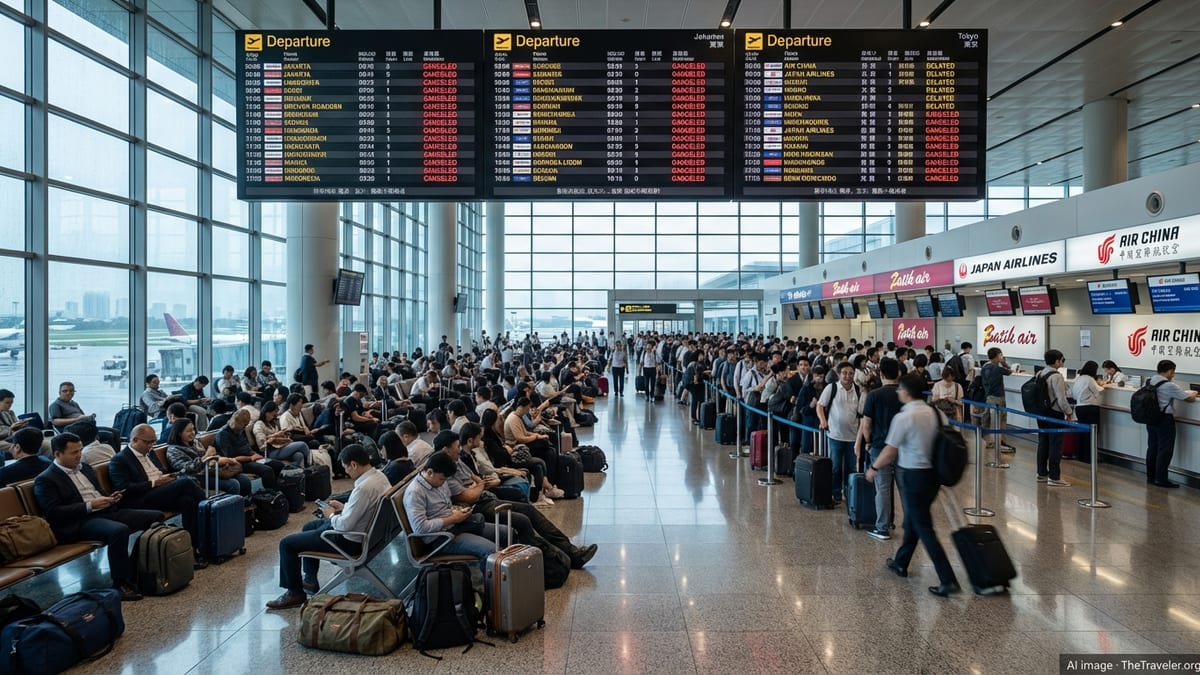
Multiple UAE–Jakarta flights cancelled as ash clouds spread
Publicly available airline updates show that Emirates and Etihad have cancelled and delayed several rotations between the UAE and Jakarta from 5 to 7 September, following the spread of volcanic ash over the Indonesian capital’s main air hub. The disruption began over the weekend and has extended into Monday as conditions around Soekarno–Hatta International Airport remain unstable.
Emirates’ online travel advisory lists at least eight Dubai–Jakarta services as cancelled over 6 and 7 September, including flights EK356 and EK358 from Dubai to Jakarta and EK357 and EK359 in the opposite direction. The carrier notes that operations are being adjusted in response to the temporary airport closure and evolving ash forecasts.
Etihad has also highlighted disruption to its Abu Dhabi–Jakarta services. Information published by UAE media and airline updates indicates that flight EY472 from Abu Dhabi to Jakarta encountered delays after the initial airport shutdown, with the return service EY473 from Jakarta to Abu Dhabi on 7 September also pushed back. Additional schedule changes remain possible as Indonesian authorities reassess airspace conditions.
Jakarta’s Soekarno–Hatta is the primary gateway for international traffic to and from Indonesia, meaning cancellations on long-haul routes have quickly cascaded across airline networks. UAE carriers, which rely on Jakarta as a key connecting point for Southeast Asian itineraries, are among those most directly affected for Gulf-based travellers.
Anak Krakatau eruption shutters airports and disrupts thousands
The aviation disruption traces back to a renewed eruption of Anak Krakatau, a volcanic island in the Sunda Strait between Java and Sumatra. Reports from Indonesian and international outlets describe a short but vigorous burst of activity that sent ash high into the atmosphere and drifting toward western Java, including the airspace around Jakarta.
Indonesia’s transport authorities temporarily suspended operations at Soekarno–Hatta and several other airports as ash clouds moved across busy flight corridors. Coverage from regional and global news organizations indicates that hundreds of flights were initially grounded, with more than a thousand services delayed or cancelled across the eight affected airports as airlines worked to reroute aircraft and reposition crews.
Volcanic ash poses particular risks to jet engines and aircraft systems, which is why global aviation safety protocols call for conservative decision-making when ash is detected near airways. The widespread closures around Jakarta reflect both the volume of ash produced and uncertainty about its dispersion patterns in the hours immediately after the eruption.
For Indonesia, which sits on the seismically active Pacific “Ring of Fire,” such events are not unprecedented. However, the scale of air travel today means that ash-related shutdowns can have rapid cross-border impacts, especially on long-haul hubs such as Dubai and Abu Dhabi that depend on smooth operations at partner airports.
Emirates blocks new Jakarta connections; Etihad warns of knock-on delays
In its latest web advisory, Emirates states that customers connecting through Dubai to Jakarta will not be accepted for travel at their point of origin until further notice. The restriction is intended to prevent passengers from becoming stranded mid-journey while Jakarta’s airport remains closed or operating at reduced capacity.
The airline is directing affected travellers to consult its online travel updates and flight-status tools before departing for the airport. Public information notes that customers whose flights have been cancelled are being encouraged to contact their travel agent or Emirates directly to arrange rebooking once schedules stabilize.
Etihad, operating from Abu Dhabi’s Zayed International Airport, has cautioned that delays on its Jakarta route may also contribute to wider schedule pressures. Local aviation coverage points to additional late departures on a number of regional and South Asian routes as aircraft and crews are reassigned to cope with the disruption.
Both carriers appear to be taking a day-by-day approach to schedule planning around Jakarta, reflecting the difficulty of forecasting volcanic ash behavior. Travellers are being reminded that departure times and flight numbers can change at short notice, even after initial disruption notices are published.
Impact on UAE-based travellers and Jakarta-bound transit passengers
The suspension of regular UAE–Jakarta links is being felt most acutely by passengers who rely on Dubai and Abu Dhabi as transit hubs. Many itineraries from Europe, North America and the Middle East to Indonesia route through Emirates and Etihad networks, making the Jakarta cancellations particularly disruptive for long-haul journeys.
Travel reports suggest that some passengers have faced overnight delays or extended stopovers as they wait for alternative routings via other Indonesian cities or regional hubs that remain open. With Jakarta handling the bulk of international arrivals and departures, capacity on alternate routes is limited, and availability can tighten quickly during sudden shutdowns.
For UAE residents and visitors planning trips to Indonesia in the coming days, published advisories emphasize the importance of monitoring airline channels closely. Checking booking details, ensuring contact information is current, and remaining flexible about travel dates or routings are being highlighted as practical steps to navigate the situation.
Travel industry observers also note that this latest disruption comes at a time when airlines in the Gulf are already managing other operational challenges, including regional airspace constraints and strong seasonal demand. Volcanic ash over Indonesia has added an additional layer of complexity to already busy schedules.
How long the disruption could last
Forecasts cited in regional coverage indicate that ash clouds around Jakarta could continue to affect aviation conditions into at least the early hours of 8 September, though the precise duration of the impact will depend on wind patterns and any further volcanic activity. Authorities typically require clear and consistent ash-free readings before allowing full restoration of normal traffic.
Airlines are likely to phase services back gradually once the airport reopens, prioritizing stranded passengers and aircraft repositioning. Given the number of cancellations already recorded, residual delays and irregular operations on UAE–Jakarta routes may persist beyond the formal lifting of restrictions.
Travel analysts point out that past volcanic events in other regions have sometimes produced rolling disruptions for several days after the initial incident, as airlines work through backlogs, reassign crews and restore aircraft rotations. A similar pattern may emerge for routes touching Jakarta, especially those connecting through global hubs in the Gulf.
For now, publicly available information from carriers and airport authorities suggests that the most reliable guidance for passengers remains dynamic flight-status updates rather than fixed timetable expectations. With ash conditions still in flux, travellers between the UAE and Indonesia are being advised to treat schedules as provisional and to build in extra time and flexibility where possible.