


New York City tends to dominate bucket lists, but the rest of New York State has quietly become one of the most rewarding regions in the United States for road trips, outdoor adventures, food and wine, and small-town culture. From the vineyard-lined hills of the Finger Lakes to the high peaks of the Adirondacks and the river towns of the Hudson Valley, there is an enormous amount to see within a half-day’s travel of Manhattan. The question for many travelers planning a first or second visit is simple: is New York worth visiting beyond New York City? The answer, increasingly, is yes, especially if you enjoy slower-paced travel, nature, and regional food and drink.
Get the latest updates straight to your inbox!
Why Look Beyond the Five Boroughs
Leaving New York City can feel counterintuitive when you have only a week or two in the state. Yet within two to six hours of Midtown you can reach wine regions with more than 100 tasting rooms, lakeside resort towns, and mountain villages where a room in a historic inn can cost less than a night in a basic Manhattan hotel. For example, midweek summer rates at a well-reviewed bed-and-breakfast in Ithaca or Canandaigua often start around the price of a casual dinner for two in Manhattan, and usually include breakfast and parking.
The variety of landscapes is another reason to head upstate. The state stretches from Atlantic beaches on Long Island to the 46 High Peaks of the Adirondacks and the broad, glacial Finger Lakes. In practice that means you can kayak on a quiet lake near Skaneateles, hike a gorge in Watkins Glen, and be back in New York City the following evening. Colorful fall foliage has become a major draw, with state tourism forecasts highlighting the Catskills, Adirondacks, Finger Lakes and Hudson Valley as some of the first regions to reach peak color each year between late September and late October.
Access has also improved. Direct Amtrak trains link New York City with Hudson, Albany, Saratoga Springs, and Niagara Falls, while regional airports in Rochester, Syracuse, Ithaca, and Albany connect with major hubs. Car rentals from these airports are typically cheaper and less stressful than picking up a vehicle in Manhattan, and driving times to popular areas like the Adirondacks or the central Finger Lakes are often under two hours.
Culturally, traveling beyond New York City offers a different lens on the state. You will find college towns with vibrant arts scenes, Indigenous history around the Finger Lakes and St. Lawrence River, and small cities like Kingston and Beacon where former factory buildings now house galleries, design shops, and breweries. For many visitors, this mix of local culture and accessible nature ends up being the highlight of their New York trip.
Hudson Valley: Easy Escapes on the River
The Hudson Valley is the quickest way to experience New York beyond the city without committing to a multi-day road trip. Towns like Beacon, Cold Spring, and Hudson sit along the Hudson River and can be reached by direct train in roughly 60 to 120 minutes from Manhattan. A typical day trip might involve a morning hike at Breakneck Ridge or Mount Beacon, lunch at a farm-to-table café using produce from nearby fields, and an afternoon browsing galleries or design stores in town.
The region’s food scene has an outsized reputation. The Culinary Institute of America in Hyde Park trains chefs who often stay in the valley, opening restaurants in river towns or working at upscale inns. It is common to find menus in places like Rhinebeck or Kingston that list the farms supplying vegetables, cheeses, and meats. Farm markets along Route 9 and on back roads sell local apples, cider, and cheeses in season, and many orchards open for pick-your-own in the fall.
For travelers interested in history, the Hudson Valley offers riverfront estates associated with the Gilded Age and with figures such as Franklin D. Roosevelt and the Vanderbilt family, as well as Revolutionary War sites near Newburgh and West Point. Many properties can be visited as part of a leisurely day out, combining short estate walks with visits to riverside breweries or wineries that pour New York State wines and ciders.
Accommodation ranges from renovated motels with retro styling near Kingston and New Paltz to design-driven inns in towns like Hudson. Weeknight stays outside the most popular leaf-peeping weekends are often noticeably cheaper than city hotels, and parking is usually included. This makes the Hudson Valley an appealing add-on for couples or solo travelers who want to decompress after a high-energy NYC stay.
Catskills: Classic Mountain Weekends Reimagined
The Catskills have gone through a quiet transformation from mid-century resort belt to a modern playground for hikers, skiers, and design-minded travelers. Within about two and a half hours’ drive of New York City, you can reach towns such as Phoenicia, Tannersville, and Livingston Manor, which act as bases for hiking, tubing, fly-fishing, and skiing. Former roadside motels have been turned into contemporary lodges with fire pits, saunas, and on-site restaurants that lean heavily on local produce.
Outdoor activities are the main reason many visitors come. In summer, trails like the Giant Ledge and Slide Mountain routes give access to broad viewpoints over forested ridges, while Kaaterskill Falls offers a relatively short but steep walk to one of the region’s best-known waterfalls. In winter, ski areas such as Hunter, Windham, and Belleayre welcome weekend skiers and boarders from the city. Spring and fall bring quieter hiking and, in October, some of the most reliable early-season foliage in the state.
Small-town main streets have also evolved. Village centers that once revolved around a single diner or hardware store now typically feature coffee roasteries, natural wine bars, and bakeries alongside long-standing pizzerias and delis. It is increasingly common to see a weekend itinerary in the Catskills that includes a farmer’s market stop, a few hours on a trail or river, and dinner at a bistro-style restaurant with a wood-fired oven.
Value is part of the appeal. While some boutique hotels price themselves on par with city lodgings during peak fall weekends, shoulder-season stays and weeknights can feel like a bargain. Cabins and cottages on quiet roads near towns such as Margaretville or Roxbury often include wood stoves, outdoor decks, and easy access to trailheads, making them suitable for families or groups of friends.
Finger Lakes: Wine Country and Lakeside Towns
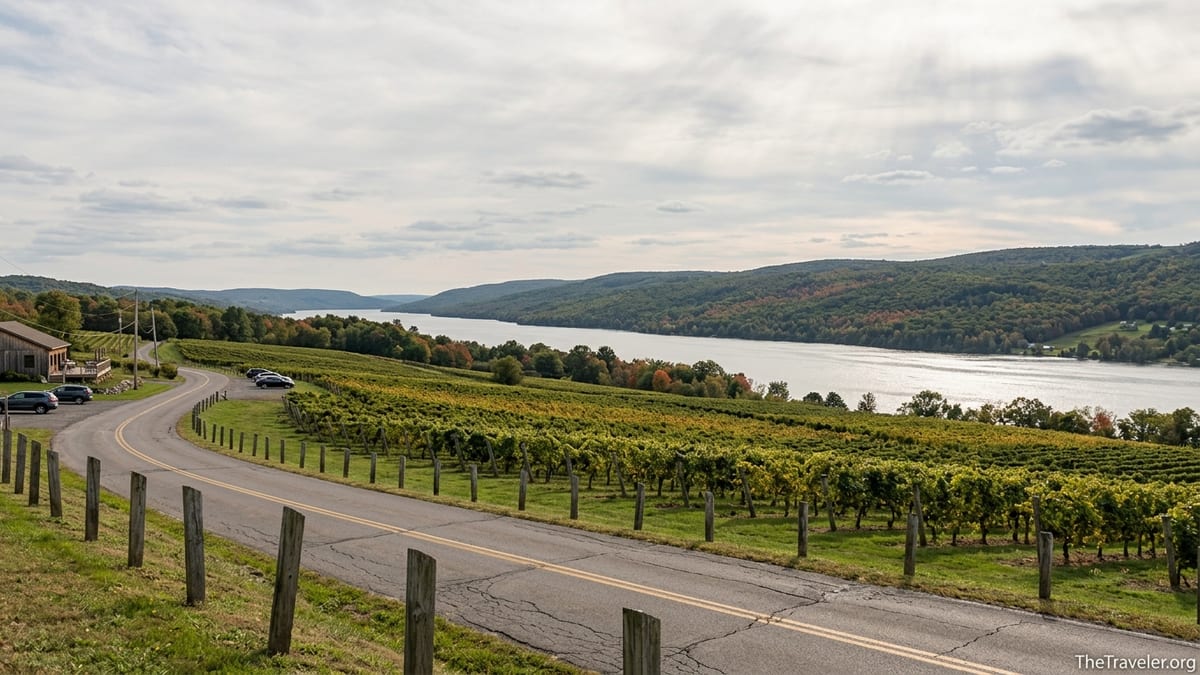
The Finger Lakes region, named for the long, narrow glacial lakes that stretch across central New York, has become the state’s premier wine country. The area is home to more than a hundred wineries and vineyards, with established wine trails circling major lakes such as Seneca, Keuka, Cayuga, and Canandaigua. Estate wineries offer tastings of cool-climate varieties including Riesling, Chardonnay, and Cabernet Franc, and some have gained national attention for sparkling wines and ice wines produced from grapes harvested in winter conditions.
A typical day along Seneca Lake might start at a tasting room overlooking the water, where flights showcase dry and off-dry Rieslings. Visitors then move between nearby estates, some of which share properties with craft breweries or casual cafés. On Keuka Lake, long-standing producers offer tours, and some specialize in dessert wines that take advantage of the region’s cold winters. Tasting fees remain moderate compared with many West Coast regions, which makes it possible to visit several wineries without overspending.
The lakes themselves are as much an attraction as the wine. Towns such as Geneva, Watkins Glen, and Skaneateles serve as bases for boating, swimming, and dining. In Watkins Glen State Park, a short walk leads through a narrow gorge past multiple waterfalls and stone bridges, a route that has become one of the most photographed in the state. Around Canandaigua Lake, visitors can combine a tasting at a nearby vineyard with a cruise on the water or a visit to gardens and historic sites.
Fall is a particularly appealing time to visit the Finger Lakes. Vineyards turn shades of yellow and red, roadside farm stands sell apples and pumpkins, and local tourism reports regularly highlight the region as one of the first in central New York to approach peak foliage each year. Lodging options range from simple lakeside motels and campgrounds to upscale inns housed in former mansions overlooking the water, giving travelers flexibility in how they structure a stay.
Adirondacks and Greater Niagara: Big Landscapes, Big Water
For travelers willing to journey a little farther, the Adirondacks and the Greater Niagara region deliver the sense of scale that many associate with national parks or the Great Lakes. The Adirondack Park, a vast protected area in northern New York, encompasses high peaks, hundreds of lakes and ponds, and small resort towns such as Lake Placid, Saranac Lake, and Old Forge. In summer, visitors hike, paddle, and camp; in winter, they skate on frozen lakes, snowshoe, and ski at areas like Whiteface Mountain.
Lake Placid, known for hosting two Winter Olympics, has become a year-round base with a lively main street facing Mirror Lake. Travelers can stay in rustic lodges, classic lakeside hotels, or rental cabins on quiet roads. Activities might include a hike up a family-friendly peak with views over the High Peaks Wilderness, a paddle on a calm pond surrounded by pines, or a drive along scenic routes that pass trailheads, waterfalls, and historic sites.
On the western edge of the state, the Greater Niagara region draws millions of visitors to Niagara Falls each year. While the falls themselves are the obvious highlight, the surrounding area offers more than viewpoints. Boat trips carry passengers close to the base of the cascades, while platforms on the American side allow visitors to walk near thundering water. Nearby, small cities and towns have been investing in waterfront parks, craft breweries, and neighborhood restaurants that give visitors reasons to stay overnight rather than treating the falls as a quick stop.
Both the Adirondacks and Greater Niagara pair well with a road trip that also includes the Finger Lakes or the Erie Canal corridor. Distances between regions are manageable, and the variety of experiences in a single week can be striking: one day exploring a vineyard trail above Keuka Lake, another standing in mist at Niagara Falls, and a third summiting a modest Adirondack peak before returning to a lakeside lodge.
Practicalities: Getting Around, Seasons, and Costs
Planning a trip beyond New York City starts with transport. Travelers short on time often take the train or a bus north or west, then rent a car for local exploration. For example, it is common to ride Amtrak from Penn Station to Albany or Syracuse, collect a rental car near the station, and drive the remaining distance to the Adirondacks or Finger Lakes. Others prefer to rent a car directly in New York City and drive, especially if they plan multiple stops. Driving times from Midtown to the Hudson Valley are often under two hours, to the Catskills around two and a half, to the central Finger Lakes approximately five, and to Niagara Falls closer to seven or eight.
Seasonality matters. Summer brings warm lake temperatures and full hiking seasons but also higher accommodation rates and more traffic in popular resort towns. Autumn is peak time for many regions, especially the Catskills, Adirondacks, and Finger Lakes, where fall foliage drives weekend demand. October weekends can sell out months in advance, while weekdays earlier in the season are calmer and often more affordable. Winter appeals to skiers, snowboarders, and those who enjoy quiet landscapes, though some smaller lakeside properties and seasonal restaurants may close or reduce hours. Spring can be a value period, with emerging greenery, waterfalls at their most powerful, and lower prices.
Costs vary widely but are generally lower than in New York City. A mid-range dinner for two in a college town like Ithaca or a small city like Rochester often comes in below what a similar meal would cost in Manhattan, particularly once drinks and tax are counted. Entry fees for state parks, when charged, are usually modest and often tied to parking rather than per-person admission. Wine tastings, where applicable, tend to be priced per flight or per sample rather than by the glass, with options for designated drivers to skip or share.
Travelers should also factor in weather. Upstate winters can be snowy and cold, which enhances activities like skiing and snowshoeing but may require more cautious driving. Summer brings warm days and cooler nights, particularly in the hills and mountains, which many visitors find more comfortable than the humid heat of the city. Checking local forecasts and road conditions before setting out is advisable, especially in shoulder seasons when conditions can change quickly.
The Takeaway
New York State beyond New York City offers more than a quick change of scenery. It is a mosaic of wine country, mountain ranges, river valleys, and lake districts, each with its own culture and character. The Hudson Valley and Catskills provide easy escapes filled with hiking, farm-to-table dining, and renovated inns. The Finger Lakes blend vineyards, gorges, and college-town energy, while the Adirondacks and Greater Niagara deliver big landscapes and big water.
For travelers who have already experienced the museums, neighborhoods, and nightlife of New York City, or who simply prefer a quieter pace, these regions can feel like discovering an entirely different state. With improving transport links, a growing focus on local food and drink, and year-round outdoor activities, the answer to whether New York is worth visiting beyond the five boroughs is increasingly clear. Plan carefully around seasons, leave time for slower roads and small-town detours, and you may find that your strongest memories of New York involve a lakeside sunset, a mountain viewpoint, or a tasting room on a country lane rather than a skyscraper skyline.
FAQ
Q1. Is it worth visiting New York State if I have only seen New York City before?
Yes. Regions such as the Hudson Valley, Catskills, Finger Lakes, Adirondacks, and Greater Niagara offer very different experiences from New York City, with small towns, outdoor adventures, and wine country that many visitors find equally memorable.
Q2. How many days should I plan for an upstate New York trip?
A long weekend is enough for a focused visit to one region, such as the Hudson Valley or Catskills. For a loop that includes the Finger Lakes or Adirondacks, five to seven days allows time for scenic drives, hikes, and vineyard or town visits without rushing.
Q3. Do I need a car to explore New York beyond the city?
A car is the most practical option for most regions, particularly the Catskills, Adirondacks, and Finger Lakes, where attractions and trailheads are spread out. Trains and buses reach some gateway towns, but local exploration is far easier with your own vehicle.
Q4. When is the best time to visit the Hudson Valley and Catskills?
These regions are appealing year-round, but fall is particularly popular for foliage and harvest events. Summer brings hiking, swimming holes, and river activities, while winter offers skiing and cozy lodge stays. Spring is quieter and can be a good value with fewer crowds.
Q5. What makes the Finger Lakes different from other wine regions?
The Finger Lakes specialize in cool-climate varieties such as Riesling and have a relaxed, accessible tasting-room culture. Many wineries overlook lakes, and it is common to combine tastings with visits to gorges, waterfalls, and college towns, which creates a varied itinerary compared with more vineyard-only regions.
Q6. Can I visit Niagara Falls and still see other parts of New York State?
Yes. Many travelers pair Niagara Falls with at least one other region, such as the Finger Lakes or the Erie Canal corridor. With a week, it is realistic to spend a couple of nights near the falls and several more exploring lakeside towns, vineyards, or cities like Rochester or Buffalo.
Q7. Are there good options for families outside New York City?
Families often enjoy the lakes and mountains. The Adirondacks offer easy hikes, canoe rentals, and small amusement parks, while the Finger Lakes have swimming beaches, boat cruises, and child-friendly museums. Many lodgings provide kitchenettes or cabins that work well for families.
Q8. Is traveling upstate New York expensive?
Costs are generally lower than in New York City, especially for accommodation and dining. Peak fall weekends and high summer can be pricey in popular towns, but shoulder seasons, weeknights, and less well-known villages often offer good value.
Q9. How does the weather differ from New York City?
Upstate regions tend to be cooler, with colder, snowier winters and more comfortable summer nights. This makes them attractive for winter sports and for escaping city heat, but travelers should pack layers and be prepared for changeable conditions, especially in the mountains.
Q10. Is it realistic to combine New York City with an upstate region in one trip?
Very much so. Many visitors spend three or four days in New York City, then travel by train, bus, or rental car to the Hudson Valley, Catskills, or Finger Lakes for another three or four days. This mix of urban energy and rural or small-town calm often makes for a balanced, memorable itinerary.