


Two to two and a half hours by train from Tallinn, Tartu offers a very different side of Estonia: a compact, bookish university city where museums, parks and wooden neighborhoods sit along the slow moving Emajõgi River. With reliable Elron rail connections, it is straightforward to swap the capital’s bustle for a weekend of student cafés, cathedral ruins and one of the Baltics’ most ambitious museums. This guide uses current 2026 information to show exactly how to ride the train from Tallinn, navigate Tartu and build a realistic two or three day itinerary.
Get the latest updates straight to your inbox!
Getting from Tallinn to Tartu by Elron train
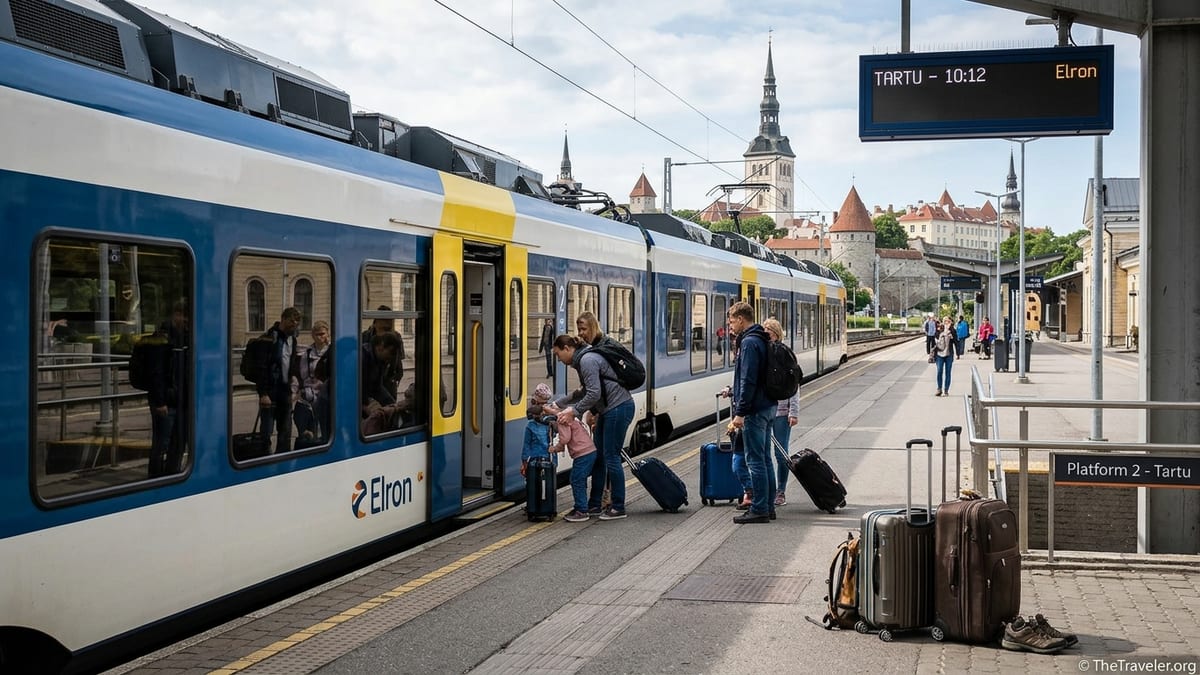
The backbone of a Tartu weekend is the direct Elron connection from Tallinn. Trains on the Tallinn Tartu line typically take around 2 hours 5 minutes to 2 hours 20 minutes, depending on intermediate stops. Current 2026 timetables show multiple departures daily from Tallinn’s Balti Jaam station, with at least one morning train that reaches Tartu before 10:00 and several evening returns that allow a full final day before heading back.
Elron publishes timetables only a few weeks or even days in advance, so travelers planning a specific weekend should always recheck exact departure times on the operator’s website or app close to the travel date. Discussions among regular passengers in early 2026 confirm that online schedules can change due to track works and that tickets are generally released at most a week or two ahead. That means you should not worry if your target weekend does not appear months in advance, but you should verify again during the week of travel.
On this line, Elron usually operates modern electric or diesel multiple unit trains with both standard class and first class sections. In 2026, standard class one way fares between Tallinn and Tartu are typically a little over 20 euros when bought on board, with slightly cheaper prices when purchased online or via the ticket machine. Elron’s official 2026 price sheet for long distance routes highlights that web and app sales remain the most advantageous, and there are separate, lower fares for children, Estonian students and some other concession groups. Since the exact Tallinn Tartu figure can be adjusted during the year, non resident visitors should check the latest price just before buying and treat any example fares as indicative rather than fixed.
Seat reservations in standard class are not sold; your ticket is valid for transport, not for a specific seat. First class, however, does come with a guaranteed seat and more space, which several recent travelers have compared in cost to booking a more comfortable lounge seat on a premium coach service. If you are traveling on a busy Friday evening or Sunday, when locals report trains can be crowded, upgrading to first class can provide a calmer start or end to your weekend.
Tickets, discounts, luggage and station access
There are three main ways to buy tickets for the Tallinn Tartu train in 2026. You can purchase online through Elron’s official sales system, use the ticket machine on the train doors for standard class tickets, or buy from the on board staff. Tickets can also be purchased from staffed ticket offices at Tallinn Balti Jaam and Tartu stations, which currently keep daily opening hours roughly from morning until evening. Online and ticket machine purchases tend to be slightly cheaper than buying from staff, and some promotions or period passes are only available through those channels.
Elron’s general ticket conditions state that standard class tickets do not guarantee a seat and are valid only for the train and date shown. If you want a guaranteed seat, you need a first class ticket. Discounted fares exist for Estonian pupils, students, pensioners and some other categories who can show appropriate documentation, while children below school age often travel at reduced or zero cost depending on age and local rules. International visitors without Estonian documents should plan on paying the full adult fare and treat any discount information as relevant primarily for residents.
Luggage arrangements on the Tallinn Tartu trains are straightforward. There is no checked baggage system; you simply bring your bags on board. The modern multiple units used on this line have luggage racks, overhead shelves and open areas near doors where larger suitcases can be placed without blocking aisles. Seasonal comments by frequent users note that weekend services can be busy, so if you are carrying a large suitcase, boarding early at Balti Jaam and moving quickly inside helps you secure a convenient space. There is no separate fee for regular luggage as long as you can manage it yourself and respect on board safety rules.
Reaching Tallinn’s Balti Jaam station is easy from the Old Town and city center. The station sits just northwest of the historic core, within a 10 to 15 minute walk from Town Hall Square. Several city tram and bus lines also stop at or near Balti Jaam, and taxis and ride hail services can drop passengers directly in front of the main entrance. For an early morning departure with luggage, a short taxi ride or tram from areas like Kadriorg or the business district can be more convenient than walking, particularly in snowy or icy conditions.
Arriving in Tartu and getting to Town Hall Square
Tartu railway station lies to the west of the city center, roughly 1.5 to 2 kilometers from Town Hall Square. The route into town passes through a mixture of residential streets and light commercial areas and gradually leads into the more historic core. On a clear day without heavy luggage, it is entirely feasible to walk from the station to the square in about 20 to 25 minutes, giving a first impression of the city’s quiet neighborhoods.
If you prefer public transport, city buses run between the station area and central Tartu. The local network, operated under the Tartu city umbrella, uses modern green buses and an electronic ticketing system. Short term visitors typically buy a contactless card loaded with single rides or day tickets from kiosks or certain machines, then tap on boarding, or they may be able to use a bank card directly depending on current rules. An example from recent visitor information for school groups shows a day ticket around 2 euros for students and mentions that the Estonian National Museum recommends buying one card per small group, which illustrates how affordable and integrated the city system is.
Taxis and app based ride services are also available at Tartu station, either waiting outside after major train arrivals or reachable within a few minutes. For travelers carrying rolling suitcases or visiting during icy winter conditions, taking a short taxi ride from the station to accommodation near Town Hall Square or the riverfront is usually the most comfortable choice. The fare for such a short hop is modest, and in wintry months it avoids slippery pavements and snowbanks at intersections.
Many visitors choose a mixed approach: taxi or bus upon arrival when bags are heaviest, then walking everywhere once settled into their hotel or guesthouse. Because the Old Town and riverside districts are compact, enjoying Tartu on foot is one of its main advantages over staying entirely in spread out Tallinn.
University heritage, Toomemägi and the Old Town
Tartu’s identity revolves around its university, founded in 1632 and one of the oldest in Northern Europe. The heart of this academic landscape is just uphill from Town Hall Square, where the classical main building of the University of Tartu dominates Ülikooli Street. Visitors can easily combine a stroll past the main building with a look at surrounding faculty houses, student nations and statues, many of which celebrate scholars and writers central to Estonian culture.
Behind the main building rises Toomemägi, or Cathedral Hill, a leafy park laced with footpaths, romantic bridges and viewpoints. The brick ruins of the medieval Tartu Cathedral crown the hill, and within one of the restored wings you will find the University of Tartu Museum. The museum’s exhibitions explore the history of science, learning and student life in Tartu, including philosophical lectures under Imperial Russia and the rise of Estonian national consciousness. Updated visitor information shows that admission prices are tiered, with separate rates for adults, concessions and family tickets, and that the museum is usually closed on at least one weekday, often Monday, while remaining open from late morning to late afternoon on other days. Travelers should confirm the exact closing day, as these can change between seasons or special events.
The Old Observatory, another university highlight located on Toomemägi, tells the story of Tartu’s role in astronomical research. Entrance is generally possible with a separate or combined ticket, depending on current museum cooperation agreements. A realistic visit that combines the cathedral ruins, park viewpoints, the main University Museum exhibitions and the observatory will comfortably fill three to four hours, especially if you pause frequently for photographs or simply sit on park benches to enjoy the student atmosphere.
Downhill, Town Hall Square provides a natural base for exploring. The pastel facade of Tartu’s neoclassical town hall anchors one end, and cafes with outdoor seating in summer line the edges. From here, narrow streets lead toward the river and university quarter, while side alleys hide bookstores, student bars and small galleries. Compared to Tallinn’s heavily touristed Old Town, Tartu’s center feels more local, with a higher proportion of residents and students using it as their everyday living room rather than as a stage set.
Estonian National Museum and why it deserves real time
A standout reason to plan at least an overnight stay in Tartu is the Estonian National Museum, known locally as ERM. Located at Muuseumi tee on the grounds of a former Soviet military airfield in the Raadi district, ERM is the largest museum in Estonia, with around 6,000 square meters of exhibition space. Its permanent displays, such as the Encounters exhibit about everyday Estonian life and Echo of the Urals about Finno Ugric peoples, are immersive and layered, encouraging slow exploration rather than a quick walk past vitrines.
Reaching ERM from Town Hall Square is straightforward but not instant. Visitor information describes the distance as roughly 2.5 kilometers, or about a 30 minute walk along Roosi Street through residential neighborhoods and newer developments. City buses run from central stops near the Old Town to a stop adjacent to the museum, and the same electronic ticketing system used elsewhere in Tartu applies. A short taxi ride from the center to the museum entrance is another simple option, particularly in winter or for those with mobility limitations.
The museum’s opening hours in recent seasons have typically been from Tuesday to Sunday, 10:00 to 18:00, with closure on Mondays. Admission prices are set in several bands, with adults paying a moderate fee that reflects the museum’s scale, and discounts available for children, students, seniors and families. Because pricing and opening days can change with exhibitions and budget decisions, travelers visiting in 2026 should check the current details shortly before their trip rather than relying on older guidebook figures.
Given its size and thematic depth, ERM rewards at least half a day. Many visitors find that three hours is an absolute minimum to see the two main permanent exhibitions calmly, and four to five hours allows time for temporary shows, interactive installations, breaks in the cafe and browsing in the museum shop. Trying to fit ERM into a rushed one hour window between trains would miss the very qualities that make it a compelling reason to come to Tartu in the first place.
Riverside neighborhoods, creative quarters and café culture
The Emajõgi River runs through Tartu’s center and shapes much of its atmosphere. On warm days, the promenades near Kaarsild, the arched pedestrian bridge, fill with walkers, cyclists and people sitting on the grass. Simple pleasures define this area: grabbing takeaway coffee from a student oriented cafe near the university, watching rowing teams glide beneath the bridges, or stepping onto small docks for closer water views. In summer, riverboats and floating terraces add a seasonal buzz that is entirely different from Tallinn’s coastal promenades.
North of the center lies Supilinn, or Soup Town, once a poor wooden suburb and now a cherished district of old timber houses, gardens and tiny lanes with names like Kartuli and Herne. A leisurely walk through Supilinn shows how Tartu’s wooden heritage coexists with new renovations and small creative projects. Photographers love the peeling paint and intricate verandas, while cafes and bakeries tucked into renovated houses serve as meeting spots for both long term residents and students.
To the south and west, Karlova offers another take on wooden Tartu. This neighborhood combines early 20th century wooden apartment buildings with pocket parks, murals and a growing number of bars and cafes. It remains primarily residential, but visitors staying in guesthouses or small hotels here enjoy quieter nights than right on Town Hall Square while still being within a 15 to 20 minute walk of the center. Exploring Karlova’s streets is a pleasant way to spend a slow morning, especially if you combine it with coffee stops in places popular with local students and young professionals.
Aparaaditehas, the former factory complex turned creative quarter, sits toward the western side of central Tartu. Inside its brick walls are design shops, studios, galleries, co working spaces and eateries, making it a natural magnet for the university crowd. Depending on your timing, you might encounter small markets, concerts or film events. Spending an evening here, moving between a casual restaurant, a bar with local craft beer and an exhibition space, highlights Tartu’s contemporary creative side and demonstrates how much cultural life fits into a compact city.
Seasonal differences, student life and daylight
Tartu’s mood changes markedly with the academic calendar and seasons. During the main university semesters, typically from September to December and February to May, cafes and bars around the center buzz with students. Events such as academic festivals, conferences and student culture nights crop up frequently, and the streets around the university remain lively late into the evening. In contrast, during the main summer holiday period in July and parts of August, as well as during the Christmas and New Year break, the city can feel calmer, with more domestic tourists and families than large groups of students.
Winter in Tartu brings short daylight hours but also its own charm. Around December and January, sunrise can be as late as mid morning, and darkness returns by late afternoon. Streets and paths, especially on Toomemägi and in wooden neighborhoods, can remain icy well into March. The municipality does spread gravel and clear main sidewalks, yet visitors should pack proper winter footwear with good grip and move cautiously on sloped streets and stairways. The silver lining is that cold, dark evenings are perfect for lingering in museums, cafes and bars, with ERM, the University Museum and smaller galleries offering warm refuges.
Summer offers very long days, especially in June, when light stretches late into the evening. This makes it easier to combine museum visits with riverside walks, picnics in parks and longer explorations of Supilinn and Karlova. Terraces appear in front of many cafes and bars, and the Emajõgi waterfront becomes one of the most pleasant urban spaces in Estonia. Small festivals, open air concerts and university related events, such as alumni gatherings, dot the calendar from late spring to early autumn, though the exact program changes every year.
Because Tartu is smaller and less dependent on cruise season than Tallinn, it never feels overwhelmingly crowded, even at summer peak. This makes it a particularly attractive base for travelers who prefer a quieter, more local atmosphere and want to see how Estonians study, work and relax outside the tourist flows of the capital.
Two and three day itineraries from Tallinn
A realistic two day Tartu weekend by train from Tallinn might begin with an early morning departure from Balti Jaam on Saturday, arriving in Tartu mid morning. After leaving luggage at your hotel near Town Hall Square or in Karlova, you could start with a late breakfast in a student cafe, then spend the late morning and early afternoon exploring the university quarter, Toomemägi Park, the cathedral ruins, the University Museum and the Old Observatory. After a pause back in the center, a riverside walk and dinner around Aparaaditehas or the Old Town would give you a rounded first impression.
On Sunday, you could devote the bulk of the day to the Estonian National Museum. After breakfast, either walk or take a bus or taxi along Roosi Street to ERM, arriving by opening time. Spending four hours there, including a lunch break, allows you to cover the main permanent exhibitions and at least one temporary show. Returning to the center mid afternoon leaves time for coffee in Supilinn or a relaxed final walk along the Emajõgi before catching a late afternoon or early evening train back to Tallinn.
For a three day version, perhaps from Friday to Sunday, you could keep the same core structure but add extra layers. On Friday afternoon after arrival, concentrate on Town Hall Square and riverside walks, then dinner and drinks in Aparaaditehas. Saturday could be dedicated to Toomemägi, the University Museum, smaller city museums and an extended exploration of Supilinn and Karlova, including stops in bookstores and neighborhood cafes. Sunday would then become your dedicated ERM day. Alternatively, on the extra day you could take a short bus ride to nearby rural sights or nature trails around Tartu, using regional buses that depart from the central coach station.
Both itineraries underline why an overnight or multi day stay makes more sense than a rushed day trip. Spending at least one evening in Tartu allows you to experience its night time student life, concerts and riverside lights, while two nights open space for museum deep dives without sacrificing time in the neighborhoods that define the city’s character.
Where to stay and what a weekend might cost
Accommodation in Tartu clusters around a few key areas: the Old Town near Town Hall Square, the riverfront, Karlova and the zone between the center and Aparaaditehas. Properties in or very near the square offer the highest walkability, with most sights and museums reachable in 10 to 15 minutes on foot, but they can be slightly more expensive and noisier on weekend nights due to bars and events. Riverfront hotels balance views with easy access to both the Old Town and university buildings, making them a good choice for first time visitors.
Karlova and adjacent residential streets provide quieter guesthouses, apartment rentals and small hotels, often at slightly lower prices than the absolute center. From here, you can usually walk to Town Hall Square in around 15 to 20 minutes, and Aparaaditehas or the university quarter are similarly close. The area around the railway station is less atmospheric, with more functional hotels oriented toward business travelers and those needing early train access, but prices can sometimes be attractive for budget conscious visitors who do not mind using buses or walking a bit farther into the center.
As of 2026, a realistic mid range weekend budget for two people arriving from Tallinn by train might look roughly as follows. Return Elron tickets for two adults in standard class could fall around 50 to 60 euros total, depending on purchase channel and any minor price changes. Two nights in a centrally located mid range hotel might cost in the region of 180 to 260 euros for a double room, though specific dates and events can push this higher or lower. Meals in cafes, casual restaurants and bars over two and a half days could add another 150 to 220 euros for two, assuming a mix of breakfasts in cafes, simple lunches and one or two nicer dinners.
Museum admissions, including the University of Tartu Museum complex and the Estonian National Museum, might total around 40 to 60 euros for two adults when spread across several visits, though concessions and combination tickets can reduce this for eligible travelers. Local transport costs within Tartu remain modest. A handful of bus rides and perhaps a short taxi or ride hail trip or two are unlikely to add more than 20 to 30 euros over the entire weekend. Summed together, a mid range couple can reasonably expect a two night Tartu weekend with trains, lodging, food, cultural visits and local transport to fall in the broad band of 420 to 570 euros, with lower or higher figures possible depending on accommodation category and dining style.
Accessibility, winter conditions and public transport ticketing
Tartu’s historic core and modern districts offer a mixed picture in terms of accessibility. The main streets around Town Hall Square and the riverside promenades are generally flat and have reasonably maintained surfaces, with curb cuts at key crossings. However, Toomemägi Park involves gentle to moderately steep climbs and some stairways, and the cathedral ruins include uneven stone surfaces that may challenge visitors with mobility limitations. The Estonian National Museum, by contrast, was designed recently and includes ramps, lifts and accessible restrooms; it is one of the more wheelchair friendly major attractions in Estonia.
Winter introduces an extra layer of challenges. While the city does clear snow on principal sidewalks and applies gravel or sand, pavements in side streets, Supilinn and Karlova can accumulate compacted snow and ice. Travelers visiting from November through March should bring footwear suitable for icy pavements and consider adjustable walking poles if stability is a concern. Those with limited mobility may find buses and taxis a better option for reaching areas like Toomemägi, Supilinn and Aparaaditehas when surfaces are slippery.
The Tartu bus system uses electronic tickets. Visitors can obtain a plastic card to load with credit and time based products, and in some vehicles it is possible to pay directly with a contactless bank card by tapping at the validator. Current local guidance suggests using the official city or regional transport app, as well as third party apps such as Tartu bussiajad, to check routes and real time departures. Because ticketing rules and payment methods can change as new systems roll out, travelers should confirm the latest options in the days before arrival, either via the municipal website or at an information counter at the bus station.
For those combining train and local transport, it is important to note that Elron tickets and city bus tickets are separate. A Tallinn Tartu rail ticket does not provide free rides on Tartu buses, and vice versa. However, both systems are reasonably priced, so even paying for both train and buses keeps the overall cost of getting around quite low, especially compared to many Western European destinations.
Verdict: day trip, weekend or essential stop
Tartu is physically close enough to Tallinn that a fast traveler could attempt it as a long day trip. With an early morning train from Tallinn and a late evening return, you could fit in a walk through the Old Town, a climb up Toomemägi and perhaps a brief visit to one museum. Yet such a compressed schedule would leave the Estonian National Museum rushed or skipped and almost completely miss the city’s evening cafe and bar culture, which are central to its university identity.
An overnight weekend, arriving on a morning train and leaving on an evening service the next day, represents the practical minimum that still lets you enjoy Tartu’s main sights at a humane pace. With two days, you can give proper time to both the university hill complex and ERM, wander through Supilinn and Karlova, and sample several different student oriented cafes and creative spaces. You will also experience how the city feels after dark, when the Emajõgi and Town Hall Square take on a different character.
For travelers building a broader Estonia itinerary, including the islands, coastal areas or the Setomaa region, Tartu works best as an essential two or three night stop that shows a side of the country missing from Tallinn’s medieval towers and business districts. The direct Elron connection, modest prices, compact layout and strong museum offerings combine to make it one of the most rewarding small city destinations in the Baltics. Whether in the soft light of a June evening along the river or in the glow of museum galleries on a February afternoon, Tartu more than justifies the short journey from the capital.