


On paper, Marriott Vacation Club’s Desert Springs Villas in Palm Desert looks straightforward: spacious villas, multiple pools and golf in the California sun. In reality, the price you see when you first search for a villa is only the starting point. Between seasonal rate swings, taxes, parking, food, activities and the complexities of the Marriott Vacation Club ownership system, the real cost of a stay can look very different from the headline number.
Get the latest updates straight to your inbox!
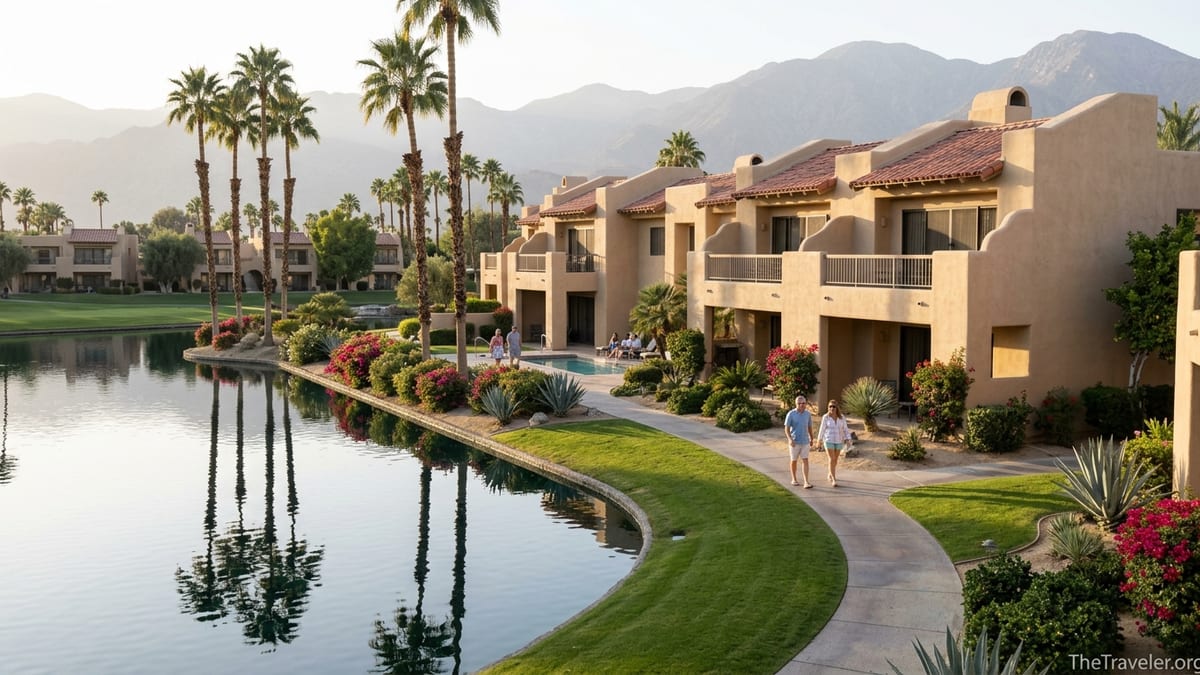
Understanding the Desert Springs Villas Properties
Before you can estimate the cost of a stay, it helps to know that “Marriott Vacation Club Desert Springs” actually refers to two neighboring timeshare resorts: Marriott’s Desert Springs Villas I and Marriott’s Desert Springs Villas II. Both sit in Palm Desert, beside the larger JW Marriott Desert Springs Resort & Spa, and share the same broad setting of manicured desert landscaping, lagoons and golf courses.
Desert Springs Villas I and II are classic Marriott Vacation Club properties, built primarily as timeshare villas with full or partial kitchens, living areas and one or two separate bedrooms. The resorts are designed for weeklong vacationers and repeat owners rather than quick one-night hotel stays, which shapes the pricing you will see. While you can book both properties as a regular hotel guest with cash or Marriott Bonvoy points, many of the people around you will be owners using Vacation Club points or deeded weeks, which affects everything from availability to how full the resort feels at different times of year.
It is also worth distinguishing these villas from the adjacent JW Marriott Desert Springs Resort & Spa, which is a full-service hotel with its own pricing structure, resort fee and parking charges. Travelers sometimes see the word “Desert Springs” and mix up the three. If you are comparing costs, make sure you are looking specifically at Marriott’s Desert Springs Villas I or II, not the JW hotel, which typically runs higher per night and layers a substantial resort fee on top.
In Palm Desert, location is part of what you pay for. You are a short drive from the El Paseo shopping district, Coachella and Stagecoach festival grounds and a wide range of desert hiking and golf. That makes the villas popular not only in winter peak season, when snowbirds escape colder climates, but also on event weekends, when prices can spike sharply compared with ordinary weeks.
Nightly Cash Rates: What You Actually Pay Per Night
For non-owners paying cash, nightly rates at Marriott’s Desert Springs Villas fluctuate significantly by season, day of week and local events. A typical midweek stay in September or early October, outside major festivals or holidays, might price around 230 to 300 dollars per night for a one-bedroom villa when booked directly with Marriott. On popular weekend nights in January or February, the same villa can push into the 350 to 450 dollar range, especially if you are booking closer to arrival or selecting a flexible cancellation rate.
Real-world traveler reports in 2025 and early 2026 show sharply higher pricing during peak school breaks and big desert events. For example, a family pricing a two-bedroom for a spring holiday week around festival season recently found total quotes in the 10,000 to 12,000 dollar range for seven nights, which works out to 1,400 to 1,700 dollars per night once taxes and fees are added. That kind of pricing is not typical year-round, but it illustrates how demand can push rates far beyond the base numbers you see during quieter weeks.
If you are flexible and travel in the shoulder seasons, you can often find more moderate prices. Late August, early September and early December typically see lower demand, with occasional sale rates under 250 dollars per night for a one-bedroom. Third-party booking sites, opaque deal platforms and last-minute discounts can sometimes shave another 10 to 20 percent off, though availability at the villas is often tighter than at standard hotels because of the priority given to timeshare owners.
Taxes in Riverside County will add roughly 12 to 15 percent to your nightly room rate, depending on the exact category and local assessments at the time you travel. When you run numbers, it is wise to simply assume that a 300 dollar base rate will land closer to 340 to 350 dollars all-in before you add parking, food or activities. On a weeklong stay, that tax line alone can add several hundred dollars to your bill.
Fees, Parking and Other On-site Costs
One of the biggest questions travelers have is whether Marriott’s Desert Springs Villas charges the same kind of resort fee the JW Marriott hotel does. The JW Marriott Desert Springs Resort & Spa prominently lists a nightly resort or destination fee of just over 50 dollars per night plus tax, which covers items like Wi-Fi, some recreational access and other inclusions. By contrast, the villas have historically not charged a separate nightly resort fee in the same way; instead, you will see more straightforward room plus tax pricing, although policies can evolve so it is important to check your specific reservation breakdown before arrival.
Parking is where many guests encounter a line item they did not expect. The official site for Marriott’s Desert Springs Villas I notes a self-parking fee of around 30 dollars per day for guests, which is in line with many resort-style properties in Southern California. Some travelers report that parking has occasionally been complimentary during certain periods or for owners, but the more reliable expectation today is that you may be charged per night for self-parking, particularly on cash reservations. Over a seven-night stay, that 30 dollar fee adds about 210 dollars before tax.
Apart from parking, most of the core resort amenities are included in your stay. You can use multiple pools, hot tubs, fitness centers and family recreation areas without extra daily charges, and shuttles around the property are typically complimentary. However, you will encounter optional charges for things like bicycle rentals, mini golf, organized kids’ activities, tennis or pickleball equipment rental and cabana reservations by the pool. Individually these might run from about 10 to 60 dollars per activity, but for a family doing several each day they can materially increase what you spend on-site.
Finally, it is worth watching for smaller fees that add up. A modest nightly energy or utility surcharge has appeared at some desert properties in the region, typically around 1 to 3 dollars per night. Laundry within your villa, if not included, may require purchasing detergent from the on-site market, and late check-out or villa move requests can sometimes come with additional costs. None of these are large by themselves, but they can nudge your end-of-stay bill higher than you expected if you have not budgeted for them.
Food, Drinks and Daily Living Costs
One of the big financial advantages of Desert Springs Villas compared with standard hotel rooms is the presence of a kitchen or kitchenette in most units. A typical one- or two-bedroom villa includes a full refrigerator, stove, microwave, dishwasher and dining area, which allows you to self-cater much of your stay. Many repeat guests drive in with groceries or make a big supermarket run on arrival day, spending perhaps 150 to 250 dollars for a week’s worth of breakfasts, snacks and a few dinners instead of relying on restaurant meals for every bite.
If you do choose to eat on property, expect pricing similar to a midrange resort. A casual breakfast sandwich or pastry from the marketplace might run 8 to 14 dollars, while poolside lunch options like burgers, salads or tacos typically land in the 18 to 28 dollar range before tax and tip. Nonalcoholic beverages hover around 4 to 6 dollars, with cocktails in the 15 to 20 dollar band. A family of four ordering lunch and drinks at the pool can easily spend 90 to 120 dollars per day if they do it daily.
Another lever on your daily spend is whether you wander over to the neighboring JW Marriott for its dining and bar options. The hotel has a wider selection of restaurants, including a teppanyaki spot and lobby bars overlooking the lagoons, but those come at resort-hotel prices. Dining at the JW can be a highlight of a special night, yet if you find yourself there every evening, it is not hard to add 150 to 250 dollars per night in food and drinks to your trip budget.
For many travelers, a realistic middle ground is to plan on one meal per day prepared in the villa, one casual off-site meal at a local restaurant in Palm Desert or Palm Springs and one higher-end resort meal every few days. For a couple staying a week, that pattern might translate to around 500 to 900 dollars in total food and beverage spend if they are moderately careful, or well over 1,200 dollars if they lean heavily into pool cocktails, room snacks and dinner at the JW.
Activities, Golf and Getting Around
Beyond the room and food, your biggest potential expense category at Desert Springs is activities. Golf is the marquee draw for many visitors, with the Desert Springs golf courses adjacent to the villas and several other well-known courses within a short drive. Prime tee times on resort or nearby public courses in peak winter season can run 150 to 250 dollars per person, while shoulder-season rates and twilight times may drop closer to 70 to 120 dollars. A golfing couple playing three rounds in January could easily spend 900 dollars or more on green fees alone.
Families often gravitate to the pools as the default activity, which keeps incremental costs low if you stick to included amenities. However, it is easy to layer on paid extras: renting a cabana for shade at a family pool, booking a spa day at the JW Marriott next door, signing kids up for supervised activities or paying for rentals like bikes, sports gear or arcade credits. A single spa treatment at the JW desert spa can run roughly 200 to 300 dollars after gratuity, and adding a couple of those into a week’s stay quickly changes the overall trip cost profile.
Transportation is comparatively straightforward. Most travelers arrive with a rental car, particularly if they are flying into Palm Springs International Airport, since rideshare availability can thin out late at night and during big events. Weekly compact car rentals for Palm Springs in the cooler months might range from 350 to 600 dollars, plus fuel and your nightly villa parking charges. If you are coming from Southern California by car, your added costs are mainly gas and possibly highway tolls, but no airfare.
Off-site excursions, from the Palm Springs Aerial Tramway to Joshua Tree National Park or the Living Desert Zoo and Gardens, add their own ticket and parking costs that can easily reach 150 to 300 dollars for a family over a week. None of these are specific to Marriott’s Desert Springs Villas, but they are part of what most travelers actually spend when they use the resort as a base for a Coachella Valley trip.
What If You Use Marriott Bonvoy or Vacation Club Points?
Many visitors do not pay cash at all but instead use Marriott Bonvoy hotel points or Marriott Vacation Club ownership points. On the Bonvoy side, nightly award rates for Marriott’s Desert Springs Villas vary widely with demand. In low-demand periods you might see standard one-bedroom villas around the mid-teens in thousands of points per night, while peak dates, especially around festivals and holidays, can climb into significantly higher brackets. Because Bonvoy now uses dynamic pricing, there is no fixed chart, and the “points price” can change like cash rates do.
Comparing value, a traveler sitting on 300,000 Bonvoy points might see a five-night stay at the villas in November priced at 60,000 points per night. If comparable paid rates are 350 dollars per night plus tax, using points would effectively save about 1,900 to 2,000 dollars in room costs, before parking and incidentals. On the other hand, using the same points for a high-end city hotel where cash rates are 700 dollars per night could yield more value per point, so whether the villas are a good redemption depends on your broader travel plans.
For Marriott Vacation Club owners, the calculation is different. Each week of ownership or bundle of Vacation Club points has an annual maintenance fee, often in the low to mid-thousands of dollars per year for Desert Springs Villas inventory, plus the original purchase cost. Owners then spend a certain number of points or use their deeded week to book a stay. If, for example, your maintenance fees are 2,300 dollars per year and you use that to book a single prime-season week in a two-bedroom villa, your effective nightly room cost is around 330 dollars before factoring in the sunk cost of buying the timeshare, parking or any additional fees.
Travelers sometimes look at these numbers and consider buying a resale timeshare at Desert Springs Villas instead of paying high nightly cash rates. While resale weeks often cost far less upfront than buying directly from Marriott, you still take on ongoing maintenance fees that typically rise over time and must be paid whether you travel or not. It can make sense for families who reliably vacation at the resort every year and value the villa space and amenities, but for occasional desert visitors, paying cash or using flexible points tends to be simpler and less risky.
Sample Trip Budgets: From Long Weekend to Festival Week
To translate all of this into real numbers, consider a three-night winter long weekend for two adults at Marriott’s Desert Springs Villas I. Suppose you find a mid-January rate of 320 dollars per night plus tax for a one-bedroom, which might come to about 360 dollars per night all-in, or roughly 1,080 dollars for three nights. Add self-parking at 30 dollars per night for 90 dollars, modest grocery shopping of 100 dollars for breakfasts and snacks, and three restaurant dinners totaling 450 dollars. Toss in poolside drinks and a couple of casual lunches for 240 dollars and 200 dollars in local activities and fuel. Your total trip outlay lands around 2,160 dollars, excluding airfare.
Now compare that with a family of four booking a peak spring-break week that coincides with a major festival. If available rates for a two-bedroom villa are coming in at 1,400 dollars per night with tax, seven nights would cost around 9,800 to 10,000 dollars. Add 30 dollars per night for parking for 210 dollars, 300 dollars of groceries, plus a conservative 1,400 dollars in on-site and off-site dining and 700 dollars in activities and excursions. That family could easily cross the 12,000 dollar mark before airfare or long-distance transportation costs.
Even owners are not exempt from real cash outlays. A Vacation Club member using points for that same spring week might not pay a nightly room rate, but if their annual maintenance fee is 2,500 dollars, they could think of that as their base lodging cost. Layer on the same 210 dollars in parking, 300 dollars of groceries, 1,400 dollars in dining and 700 dollars in activities, and the out-of-pocket for the week still approaches 5,100 dollars, ignoring the long-term cost of buying into the program.
These examples are not universal, but they illustrate how quickly the “villa rate” can become only one piece of what you really pay. Many travelers find that careful planning around meals, timing their trip for shoulder season and setting a firm daily activity budget does more to keep costs reasonable than agonizing over saving 20 dollars per night on the room.
The Takeaway
A stay at Marriott Vacation Club’s Desert Springs Villas is rarely cheap, but it can represent solid value if you use what the resort is designed to offer: home-style space, the ability to self-cater and a base for enjoying the desert without paying resort fees every night. The headline rate you see online is only a starting figure. Taxes, parking, food, golf, spa visits and day trips can easily double or even triple your core lodging cost over the course of a week.
If you are paying cash, focus on timing and flexibility. Avoid major festival and holiday weeks if you want palatable nightly rates, and look for midweek stays in the shoulder seasons, when villas are still comfortable but demand is lower. Build a food plan that mixes villa cooking with strategic splurges at the resort or in town, and decide in advance how many big-ticket activities like golf rounds or spa treatments you really want.
For Marriott Bonvoy or Vacation Club owners, measure the value of using points or ownership weeks at Desert Springs against other ways you could spend those points or fees. When cash rates are extremely high, a points redemption at the villas can offer strong value, but in more moderate periods you may find better returns at other properties. And before buying any timeshare interest, especially at resale, run the numbers carefully to understand how annual maintenance, potential increases and your own travel habits will shape your effective nightly cost over many years.
Ultimately, what you “really” pay at Marriott Vacation Club Desert Springs is a combination of the room rate, the timing of your trip and the choices you make once you arrive. With realistic budgeting and a clear sense of where your money will go, you can enjoy the pools, sunshine and space of Palm Desert without financial surprises when you check out.
FAQ
Q1. Is there a resort fee at Marriott’s Desert Springs Villas?
The villas historically do not add a separate nightly resort fee the way the neighboring JW Marriott hotel does, but policies can change, so always review your specific reservation breakdown for any destination or amenity charges before you finalize.
Q2. How much should I budget per night, including taxes and parking?
For a typical non-festival visit, many travelers find that a one-bedroom villa priced at about 280 to 320 dollars per night ends up closer to 340 to 380 dollars once local taxes and a 30 dollar nightly parking charge are added.
Q3. Are groceries and cooking in the villa really worth it financially?
Yes, for most parties they make a noticeable difference. A 150 to 250 dollar grocery run at the start of the week can replace multiple restaurant breakfasts and casual dinners that might otherwise total 400 dollars or more over seven days.
Q4. How expensive is it to visit during Coachella or other big events?
Prices rise sharply when the desert fills for festivals and major holidays. Two-bedroom villas that might be 500 to 700 dollars per night in a normal spring week can jump into four figures per night, with some families reporting total weekly costs in the 10,000 to 12,000 dollar range once taxes and fees are counted.
Q5. Do Marriott Bonvoy points offer good value at Desert Springs Villas?
They can, especially when cash rates are high. If you are seeing 350 dollar nightly rates and a redemption of roughly 60,000 points per night, you are effectively getting a value that many points collectors consider reasonable for a resort-style stay.
Q6. What extra on-site costs catch guests by surprise?
Parking fees, poolside food and drinks and activity rentals are the most common surprises. Travelers who assume parking is free or overlook how quickly snacks and cocktails add up often find their final bill higher than expected.
Q7. Is owning a timeshare at Desert Springs cheaper than paying cash?
It can lower your effective nightly rate if you use it every year and bought your interest at a favorable price, but ongoing maintenance fees, potential increases and the lack of flexibility mean ownership is not automatically cheaper than paying cash or using hotel points.
Q8. Can I use the JW Marriott Desert Springs pools if I stay at the villas?
Policies have varied over time, and some guests report weekday access with shuttles between the properties, but you should not assume full JW pool privileges are guaranteed; always check current rules with the resort before your stay.
Q9. How far in advance should I book to get reasonable rates?
For peak winter and spring weeks, looking four to nine months ahead generally yields better pricing and availability. Shoulder-season stays are sometimes more forgiving, and you may find acceptable last-minute deals outside major events.
Q10. What is a realistic total budget for a one-week stay for two adults?
For a non-peak week, a couple might reasonably expect to spend around 2,500 to 3,500 dollars in total, including lodging, taxes, parking, groceries, a mix of restaurant meals, moderate activities and local transportation, excluding airfare.