


Most travelers know the Bow Valley as the scenic corridor that delivers them to Banff and Lake Louise. What many miss is that this same valley holds a chain of small towns, provincial parks and side valleys where the Rockies feel more personal, the trailheads less crowded and locals still outnumber souvenir shops. Looking beyond the famous national park icons reveals a region that can easily fill a week on its own, with mountain experiences that feel rooted in real communities rather than on postcards.
Get the latest updates straight to your inbox!
Understanding the Bow Valley Beyond the Postcards
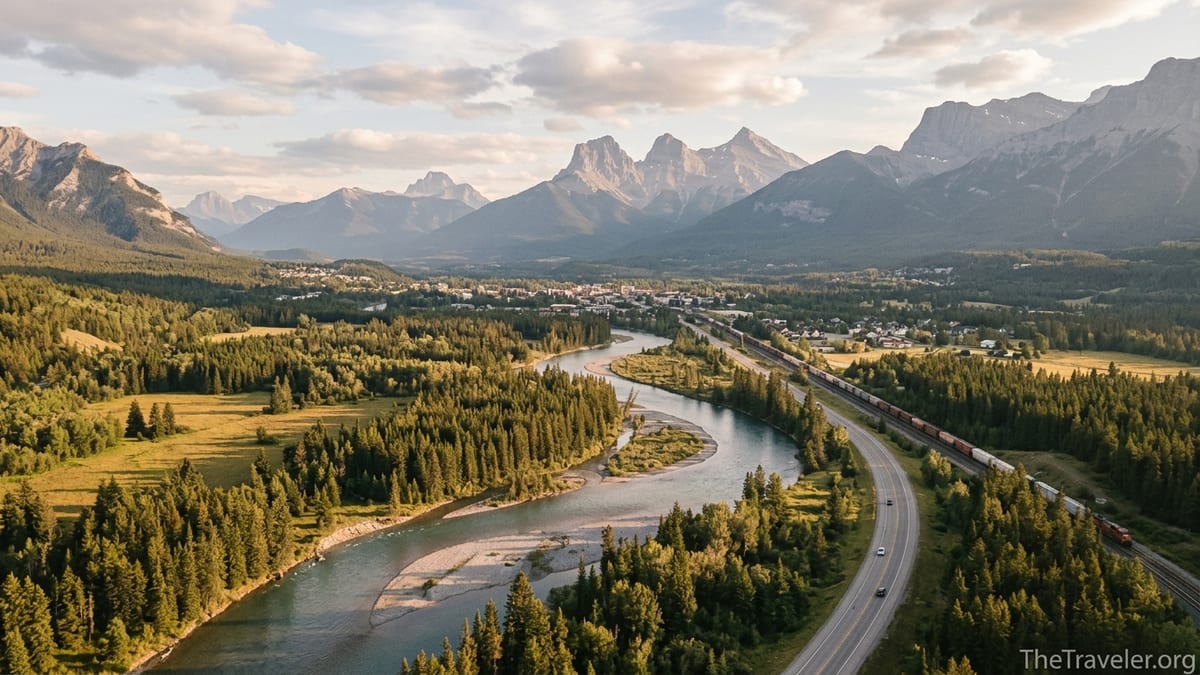
The Bow Valley stretches along the Bow River from the foothills west of Calgary through Canmore and Kananaskis toward Banff and Lake Louise. Banff and Lake Louise sit inside Banff National Park, but the same river also threads through provincial parks and small communities like Canmore, Exshaw, Dead Man’s Flats and the hamlets around Lac des Arcs. This is where the broad prairie meets the first big limestone peaks, creating wide skies, open views and a gentler feel than the dramatic walls of Lake Louise.
For travelers, that geography matters. Staying in Canmore or Kananaskis Village instead of Banff means you are technically outside the national park but still within a 20 to 30 minute drive of it, while having immediate access to provincial parks like Bow Valley Provincial Park, Spray Valley Provincial Park and the Canmore Nordic Centre. In practice, that means you can hike a quieter canyon in the morning, grab lunch at a local café in Canmore and then decide whether you feel like tackling the traffic into Banff in the afternoon.
The valley has also evolved into a year round outdoor hub. Summer brings hikers and paddlers to lakes like Barrier Lake and the Bow River, while winter transforms the Canmore Nordic Centre into a world class cross country ski venue that local families use after work. Even if you never set foot in Banff townsite, you can build an entire itinerary around this broader Bow Valley and never feel short of things to do.
Quieter Adventures in Bow Valley Provincial Park
Bow Valley Provincial Park sits at the eastern gateway to the mountains near the junction of the Trans Canada Highway and Highway 40. It covers the confluence of the Bow and Kananaskis rivers with views to peaks like Mount Yamnuska and Heart Mountain. Unlike Banff, which often sees tour buses idling in front of hotels, this park is a place of short, easy trails, river viewpoints and family friendly campgrounds that Albertans book for long weekends.
Several short walks make an ideal first day in the valley. The loop around Middle Lake, for example, takes most visitors under an hour and passes through open forest and meadows with reflections of Mount Yamnuska on calm mornings. Nearby, the Flowing Water Trail winds along side channels of the Bow River and lets you see the braided river system up close without committing to a long hike. Travelers who have just driven from Calgary often stop here to stretch their legs before continuing to Canmore.
The park is also known for easy-access viewpoints. A quick drive to the Whitefish Day Use or the many signed pullouts gives big-mountain views with none of the parking stress that plagues popular stops near Lake Louise. In summer, river float operators in Canmore and nearby towns sometimes run mellow raft trips that pass through this section of the Bow, giving visitors a sense of the wider valley beyond the stone gates of the national park.
Camping here feels different from the dense campground hubs closer to Banff. Sites in Bow Valley Campground and nearby Bow Valley Wildland Provincial Park tend to book up on summer weekends, but midweek you are more likely to be sharing the riverbank with Alberta families and long-haul road trippers than with tour groups. Firewood, simple playgrounds and evening walks along the river define the experience more than any formal attraction.
Canmore: Mountain Town With a Local Pulse
Canmore, a former coal town, has grown into a full-service mountain community where about fifteen thousand people live year round. It lies just outside the Banff National Park gate, which means you do not need a national park pass to sleep in town, though you still require one for any day trips into the park. For many travelers, that combination of real town and easy park access is what makes Canmore such an appealing base.
The town’s main streets are lined with locally owned restaurants, cafés and gear shops that serve both visitors and residents. Breakfast might be a bagel and coffee near Elevation Place, the town’s recreation and climbing centre, before a short drive to Quarry Lake or the riverside trails. Prices tend to reflect its popularity and housing crunch, but you will still find everyday spots alongside upscale dining, from breweries with mountain views to modest pizza places popular with trail crews after work.
Canmore also has a lively cultural side that many quick visitors never see. ArtsPlace, the community arts centre downtown, hosts exhibitions, concerts and workshops that are aimed as much at locals as at tourists. In autumn, the Festival of Eagles celebrates the golden eagle migration that passes along the Bow Valley, with talks, guided walks and viewing sessions on ridges above town. Staying an extra night to catch a small concert or community event can give your trip a sense of place you rarely find in strictly resort-focused destinations.
Active travelers are spoiled for choice. The Canmore Nordic Centre Provincial Park, built for the 1988 Winter Olympics and now managed as a provincial park, offers groomed cross country ski trails in winter and a dense network of mountain biking and hiking trails in summer. Paved paths and dedicated bike lanes connect much of town, although traffic and parking can be busy on peak weekends, so it is worth planning to walk or cycle to popular spots like Quarry Lake when possible.
Kananaskis Country: Wild Valleys and the Conservation Pass
South of the Trans Canada Highway, the Bow Valley blends into Kananaskis Country, a large collection of provincial parks and wildland areas that many locals casually refer to as "K Country." This region includes Bow Valley Provincial Park, Spray Valley Provincial Park, Peter Lougheed Provincial Park and several wildland parks that run along the eastern slopes of the Rockies. Compared with Banff, Kananaskis feels wilder and less commercial, with trailhead parking lots, small day-use areas and a handful of lodges instead of towns.
Reaching Kananaskis usually means turning off the highway at the Stoney Nakoda Resort and heading south along Highway 40 past Barrier Lake, the first major stop. Barrier Lake is a man-made reservoir backed by forested hills and accessible beaches, popular with paddlers and photographers who want big views without a long hike. On still mornings, it can offer sunrise reflections similar in feel to Lake Louise, but with far fewer people and easy pullouts along the shore.
Since 2021, visiting most sites in Kananaskis Country and the Bow Valley Corridor by vehicle has required a Kananaskis Conservation Pass. As of mid 2026, private vehicles pay a daily or annual fee per car rather than per person, with the revenue earmarked for trail maintenance, search and rescue and visitor facilities. Passes can be purchased online or at select locations before you park; enforcement officers routinely scan license plates at popular trailheads, and travelers report fines when they forget. Budgeting for this cost upfront is wise, especially if you plan multiple days of hiking or biking south of the highway.
The pass system has helped fund work on heavily used routes like the trails around Kananaskis Lakes and the approach to popular peaks, but it has also nudged some visitors to explore less intense outings. Families with mixed ability levels often gravitate to places such as Troll Falls, a short waterfall hike near Kananaskis Village, or picnic stops along the Kananaskis River where children can play near the water under careful supervision. Road cyclists treat Highway 40 as a training ground in late spring before annual wildlife-related closures on parts of the road.
Hidden Hamlet Life: Exshaw, Lac des Arcs and Dead Man’s Flats
Between Calgary and Canmore, small communities dot the Bow Valley on either side of the river. Exshaw, set on the north side of the Bow River about 15 kilometres east of Canmore, began as an industrial hamlet linked to cement and lime plants. Today, it still has a working edge, yet it is increasingly surrounded by trailheads that hikers from Calgary drive past every weekend. The climb up Heart Mountain, visible across Lac des Arcs, is a local favourite for strong hikers comfortable with some scrambling, while easier river walks leave straight from town.
Lac des Arcs itself is a widening of the Bow River that acts as both a roadside viewpoint and a playground for paddlers on calm days. Although there are no major visitor facilities here, roadside pullouts offer wide vistas to the surrounding peaks and the trains that thread along the valley. On windy days, whitecaps can be dramatic enough that some travelers simply sit in their parked cars and watch weather roll down from the high country while trucks grind up and down the highway.
Just west of Bow Valley Provincial Park, Dead Man’s Flats has evolved from a simple highway stop into a cluster of condo-style lodging and a couple of restaurants, popular with travelers looking for quieter and often slightly more affordable accommodation than downtown Canmore. Many units offer kitchenettes, which appeal to road trippers who would rather cook their own meals than compete for restaurant reservations in peak summer. From here, it is a short drive to Canmore, Kananaskis or onward into Banff, making it a convenient base for travelers with a car.
These communities rarely appear in glossy brochures, yet they exemplify what makes the wider Bow Valley special. They still feel like places where people work, commute and send their children to school, even as tourism grows. Staying a night in Exshaw or Dead Man’s Flats, or simply stopping for coffee in a local gas station café, can be a reminder that the Rockies are not just a park but also a lived-in landscape.
Bow Valley Parkway and the Art of Slowing Down
Even within Banff National Park, the Bow Valley has quieter corners that visitors rush past. The Bow Valley Parkway, also signed as Highway 1A, parallels the Trans Canada Highway between Banff and Lake Louise. In contrast with the high-speed main route, this older two-lane road threads through forest, meadows and viewpoints where wildlife sightings are common. Black bears, elk and occasionally wolves use the corridor, which is precisely why Parks Canada has introduced seasonal travel restrictions.
As of 2026, the eastern portion of the parkway is subject to an annual seasonal closure from March 1 to June 25, with all travel restricted overnight and daytime access limited. In recent years, a 17 kilometre stretch from near Banff to Johnston Canyon has been fully closed to private vehicles in spring, transforming it into a cycling and walking route during the day. Cyclists describe it as one of the most memorable rides in the Rockies, with long sightlines, gentle grades and the sounds of birds and the Bow River instead of engines.
For travelers willing to adapt, these restrictions can actually enhance the experience. Renting a road bike or e-bike in Banff or Canmore and spending half a day on the car-free segment offers an intimate way to experience the valley. You roll past viewpoints, pull over at picnic tables and hear the forest in a way that is impossible from a moving car. It does require planning: you must time your ride for the open hours, carry bear spray where recommended and be prepared to turn back if wildlife managers temporarily close sections for animal activity.
Even outside the spring cycling windows, the Bow Valley Parkway rewards those who treat it as a destination instead of a shortcut. Pullouts with short trails lead to lookouts over the river and the railway line. Johnston Canyon, though busy, is still a worthwhile early-morning walk to hanging waterfalls that freeze into blue ice in winter. By understanding the current closure dates and recommended practices, you can fit this scenic road into a broader Bow Valley itinerary without expecting it to function like a conventional highway.
Practical Tips: Passes, Seasons and Crowds
Exploring the Bow Valley beyond Banff and Lake Louise requires a bit of logistical awareness. First, passes. If you drive into Banff National Park or stop at its trailheads, you need a Parks Canada pass, either daily or annual. If you park in Kananaskis Country or designated sites in the Bow Valley Corridor, including many trailheads south of the highway near Barrier Lake and Spray Valley, you also need a Kananaskis Conservation Pass. Travelers who plan to split time between national parks and provincial areas should factor both into their budgets and buy them before heading deep into the mountains.
Seasonality is equally important. Summer, roughly late June through early September, sees the highest visitor numbers and warmest weather, with wildflowers in July and fall colours starting by mid September. In this period, Canmore’s hotel rates and restaurant waits peak, and parking at popular lakes and trailheads can fill quickly. Booking accommodations in Canmore or Dead Man’s Flats several months ahead is prudent, while more flexible travelers might aim for shoulder seasons like late May or early October, accepting cooler temperatures in exchange for quieter trails.
Winter brings its own charms. The Canmore Nordic Centre grooms kilometres of cross country ski trails, while snowshoe routes in Kananaskis and Bow Valley Provincial Park open a quieter side of the landscape. Conditions can change quickly, and avalanche hazards exist on and beyond many popular hikes, so visitors should check current bulletins and consider guided outings for any backcountry objectives. Driving in winter also demands caution; major storms periodically close the Icefields Parkway and sections of Highway 93, forcing long detours for those heading beyond the Bow Valley.
Regardless of season, wildlife safety shapes how the region is managed. Bears regularly move along the Bow Valley, using river corridors, railway lines and forest edges. Travel restrictions on roads like the Bow Valley Parkway, rules about food storage at campgrounds and occasional area closures can feel inconvenient, but they exist to keep both animals and people safe. Carrying bear spray on most hikes, hiking in groups where possible and giving all wildlife generous space are non-negotiable habits here.
The Takeaway
What makes the Bow Valley special beyond Banff and Lake Louise is not a single viewpoint or bucket list hike. It is the way working towns, quiet provincial parks and side valleys all share the same river and mountains, yet each offers a different pace. In Canmore, you can grab a coffee and listen to locals discuss snow conditions or housing policy. In Bow Valley Provincial Park, you can walk a short loop and see the same peaks that rise behind Banff, but with only the sound of the river for company.
By basing yourself in places like Canmore, Dead Man’s Flats or Kananaskis Village, and by planning time for easy trails, scenic drives, cultural events and unhurried river views, you experience the Rockies as more than a checklist of famous lakes. You start to notice the patterns of daily life in a mountain valley: school buses on frosty mornings, cyclists training on quiet roads, families barbecuing along the river at dusk. That, ultimately, is the Bow Valley’s quiet gift to travelers who venture beyond the postcard scenes of Banff and Lake Louise.
FAQ
Q1. Do I need both a Parks Canada pass and a Kananaskis Conservation Pass to explore the Bow Valley?
In many cases, yes. A Parks Canada pass is required if you drive into or stop within Banff National Park, which includes Banff townsite, Lake Louise and the Bow Valley Parkway. A separate Kananaskis Conservation Pass is required for most provincial sites in Kananaskis Country and the Bow Valley Corridor, including many trailheads near Barrier Lake, Kananaskis Village and Spray Valley. If your itinerary includes both national park and provincial areas, you should plan for both passes.
Q2. Is it cheaper to stay in Canmore or Dead Man’s Flats instead of Banff?
Often it is. Accommodation prices fluctuate with season and demand, but many travelers find that condo-style lodging and hotels in Canmore or Dead Man’s Flats are regularly more affordable than comparable options inside Banff townsite, especially in peak summer. These communities also offer kitchen-equipped units that can reduce dining costs. However, prices have risen across the region, so booking early and comparing dates is still important.
Q3. How busy is Bow Valley Provincial Park compared with Banff and Lake Louise?
Bow Valley Provincial Park can be busy on sunny summer weekends, especially at popular campgrounds and day-use areas, but it generally feels quieter than the core areas of Banff and Lake Louise. You are more likely to share trails with Alberta families and regional visitors than with large tour groups. Midweek visits and shoulder seasons like late May or September tend to be particularly calm.
Q4. Can I visit the Bow Valley without renting a car?
It is possible but limiting. Regional buses connect Calgary with Canmore and Banff, and local transit links some neighbouring communities and trailheads. However, many of the quieter spots in Kananaskis Country, Bow Valley Provincial Park and small hamlets like Exshaw are easiest to reach by car. Travelers without a vehicle often rely on a mix of shuttles, guided tours, e-bike rentals and walking or cycling paths to explore, but they will not have the same flexibility as those with their own transport.
Q5. When is the best time of year to see wildlife in the Bow Valley?
Wildlife can be seen year round, but spring and early summer are often particularly active as animals move through valley bottoms. This is also when seasonal travel restrictions, such as overnight closures on the Bow Valley Parkway, are in place to protect them. Early mornings and evenings increase your chances of sightings, but it is critical to watch from a safe distance, stay in your vehicle when appropriate and follow all posted guidance.
Q6. Are there family-friendly activities outside Banff and Lake Louise?
Yes. The wider Bow Valley offers many family-friendly outings, from short walks like the Middle Lake loop or Troll Falls to picnics at Barrier Lake and easy riverside trails near Canmore. In winter, the Canmore Nordic Centre provides rental equipment and gentle cross country ski loops, while in summer, outfitters offer mellow raft trips on sections of the Bow River. Staying in Canmore or Kananaskis Village can make it easier to mix outdoor time with access to playgrounds, swimming pools and casual dining.
Q7. How do current restrictions on the Bow Valley Parkway affect my trip?
As of 2026, part of the Bow Valley Parkway operates under seasonal travel restrictions, including overnight closures and a spring period when a 17 kilometre stretch east of Johnston Canyon is reserved mainly for cycling and walking. Drivers must use the Trans Canada Highway instead during those times. Travelers who plan ahead can turn these rules into an opportunity by renting bikes and experiencing a quieter, car-free roadway, but they should always check the latest dates and advisories before visiting.
Q8. Is Kananaskis suitable for beginners, or is it only for serious hikers?
Kananaskis includes both challenging mountain routes and very accessible trails. While there are steep scrambles and long backcountry objectives, there are also short family-friendly hikes, lakeside picnic areas and gentle river walks. Troll Falls, parts of the Barrier Lake shoreline and some trails near Kananaskis Village are common first hikes for visitors. Choosing routes that match your fitness, checking recent trail reports and carrying appropriate gear will make the experience enjoyable regardless of your experience level.
Q9. What should I know about winter driving and weather in the Bow Valley?
Winter in the Bow Valley brings snow, ice and rapidly changing conditions. Highways are usually maintained, but major storms can temporarily close roads such as the Icefields Parkway and affect mountain passes. If you plan to drive between November and early spring, make sure your vehicle has good winter or all-weather tires, keep an emergency kit in the car and check road reports before setting out. Allow extra time, drive cautiously and be prepared to adjust plans if conditions worsen.
Q10. How many days should I plan to explore the Bow Valley beyond Banff and Lake Louise?
If you want more than a quick look, three to five days is a good starting point. That allows time for a mix of short hikes in Bow Valley Provincial Park, cultural and culinary exploration in Canmore, a day in Kananaskis Country and perhaps a cycling or scenic drive along the Bow Valley Parkway. Travelers with a full week can add additional peaks, lake days and winter sports, or simply slow down and enjoy the rhythm of life in the valley’s communities.