


In the glittering Bay of Naples, Capri usually steals the spotlight, while tiny Procida and the Amalfi Coast islands crowd many bucket lists. Yet just a short ferry ride away, Ischia quietly offers a bigger, greener and often more affordable alternative. For travelers deciding where to spend limited days and euros, understanding what truly sets Ischia apart from Capri and other southern Italian islands can reshape an entire itinerary.
Get the latest updates straight to your inbox!
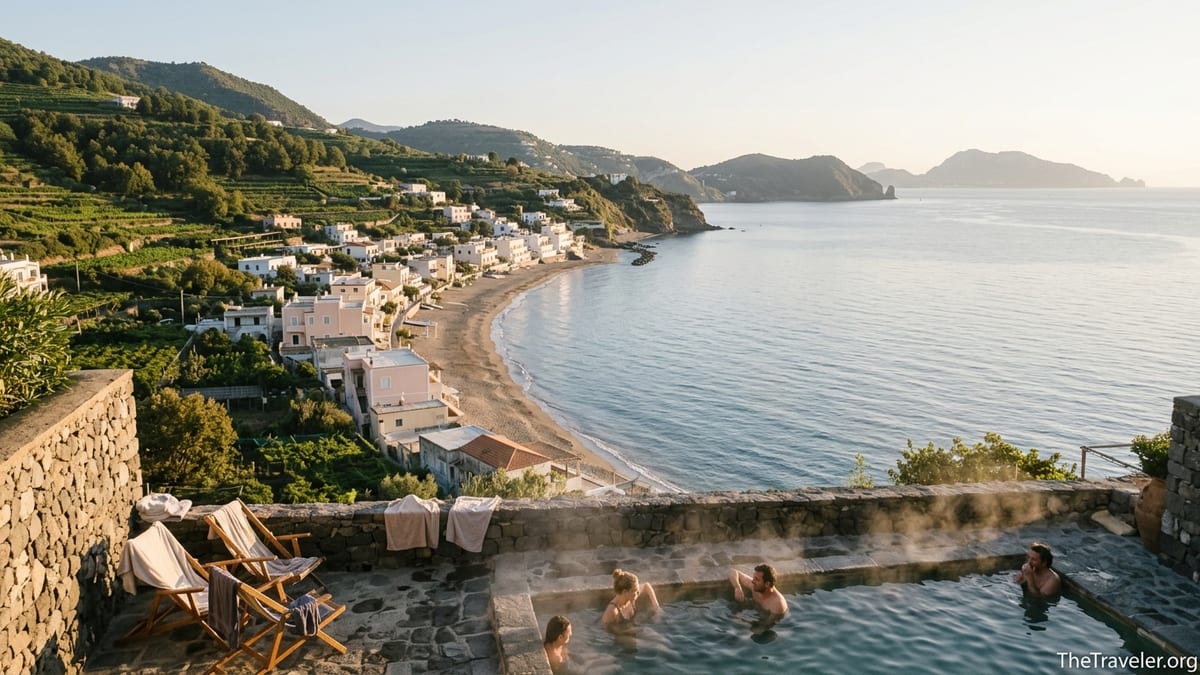
Scale, Landscape, and First Impressions
One of the biggest differences hits you before you even disembark: Ischia is large. It is the biggest island in the Bay of Naples, with several distinct towns, vineyard‑covered hillsides, and a volcanic peak, Mount Epomeo, rising over 700 meters. In practice this means it feels like a small region rather than a single resort. A traveler who spends four or five days on Ischia can move between very different settings, from the resort town of Ischia Porto to the more low‑key village feel of Sant’Angelo.
Capri, by contrast, is tiny and dramatically vertical, all limestone cliffs and narrow lanes. Many visitors never venture beyond the funicular from Marina Grande up to Capri Town, the designer boutiques along Via Camerelle, and perhaps the chairlift to Monte Solaro in Anacapri. The entire island can be crossed by bus or taxi in under half an hour, so it often feels like one dense, highly curated stage set rather than a place with separate everyday neighborhoods.
Compared with Procida and the Amalfi Coast islands such as Isola dei Galli, Ischia also stands out for its greenery. Terraced vineyards, chestnut woods on the slopes of Epomeo, and gardens that stay lush well into October give it a softer, countryside feel. While Capri’s coastline wows with white cliffs and impossibly blue water, Ischia’s coastline alternates between rocky coves and long, walkable beaches, with thermal steam sometimes rising straight from the sand.
Those first impressions shape how people actually use the islands. Ischia lends itself to renting a scooter for a day, hiking between villages, and settling into a neighborhood bar where most of the clientele are local. On Capri and some of the smaller islands, movement is more constrained by narrow roads, steep staircases, and high taxi fares, so visitors tend to follow the same few corridors.
Thermal Culture: Everyday Wellness Instead of Pure Glamour
If there is one thing that makes Ischia unmistakably different, it is thermal water. The island sits on a volcanic base, and hot springs bubble up across the coastline. This has shaped the local economy for decades, creating a dense network of thermal parks, wellness hotels, and simple public springs. Places like Poseidon Gardens in Forio or Negombo in Lacco Ameno combine multiple pools of different temperatures, saunas, sea access, and landscaped gardens where visitors can easily spend an entire day.
Crucially, these thermal experiences are not reserved for luxury travelers. A full day at a major thermal park usually costs less than a typical two‑hour spa circuit in a top hotel in Rome or Milan. There are also free or low‑cost spots where hot water meets the sea, such as the rocky cove of Sorgeto or the ancient spring of Nitrodi, where locals turn up with refillable bottles. On a weekday afternoon in shoulder season you are just as likely to rub shoulders with Neapolitan pensioners and local families as with international visitors.
Capri, in comparison, is not built around thermal water. It has luxurious hotel spas and beach clubs, but they are classic Mediterranean experiences rather than geothermal ones. A visitor splurging on a lounger at a famous Capri beach club will pay for location and service on a rocky platform beneath the Faraglioni rocks, not for volcanic pools. The island’s wellness is more about sea views from infinity pools and massages at five‑star hotels than about long soaks in mineral baths.
Other southern Italian islands offer even less in the way of structured wellness. Procida is loved for its fishing‑village scale and pastel harbor, not for spas. Islands farther south, such as those off Sicily, have hot springs in places but not the same concentration of carefully developed parks. For travelers who imagine alternating shoreline hikes with long restorative soaks, Ischia is almost uniquely suited within the region.
Prices, Crowds, and Who You Meet
Another clear dividing line is cost. Capri has long been associated with upscale tourism, and that remains evident in hotel and restaurant pricing, especially from late May through September. Four‑star hotels in Capri Town or Anacapri often start in the high hundreds of euros per night in peak season, and it is easy to spend a three‑figure sum on lunch with wine at a well‑known seaside restaurant. Even a simple coffee on the main piazzetta can feel like a small luxury purchase.
Ischia is not a budget destination, particularly in August, but mid‑range travelers generally find their money goes further. In many parts of the island it is still realistic to find a family‑run three‑star hotel with a pool for prices that would barely cover a basic guest room on Capri in high season. Apartment rentals for families, especially in areas like Forio or Serrara Fontana, often work out closer to what you might pay in Sorrento than in an Amalfi Coast hotspot. Daily expenses follow suit: pizzerias where locals eat charge ordinary mainland prices for a margherita and draft beer, and a bus ticket to circle the island is a modest outlay compared with Capri’s famously expensive taxis.
Those economics shape the crowd. Capri draws large numbers of day‑trippers who sail in on morning ferries from Naples, Sorrento, and the Amalfi Coast. Through midday, Marina Grande and the lanes around the main square can feel crushed with tour groups and day visitors trying to see the Blue Grotto, photograph the Faraglioni, and shop all in a single afternoon. Overnight Capri, especially in shoulder season, is much calmer and more romantic, but it remains heavily international and luxury‑focused.
Ischia has day‑trippers too, especially on summer weekends from Naples, but a greater share of visitors stay several nights. Many are Italian families or German and northern European repeat guests who return to the same thermal hotel year after year. The language you hear most in bars and on buses is Italian rather than English. Procida, by comparison, attracts a growing mix of Italian weekenders and international travelers seeking that slower, village feel after it was named Italian Capital of Culture in 2022, but it still lacks the sheer capacity and spa infrastructure of Ischia.
Beaches, Sea Access, and How You Actually Swim
Anyone choosing between Capri and Ischia quickly discovers that they offer fundamentally different beach experiences. Capri’s coastline is mostly vertical rock, which creates magical coves but very little sand. Beach time usually means paying for a spot at a private club built on platforms bolted into the cliffs, such as those under the Faraglioni rocks or along the coast near Marina Piccola. The water is famously clear, a deep blue over a rocky seabed, but access is via ladders and stone steps rather than long sandy entries.
Ischia, in contrast, is the best choice in the Bay of Naples if you want traditional, walk‑in beaches. Maronti, a long stretch near Barano d’Ischia, runs for around two kilometers with a mix of public sections and serviced lidos. Citara, near Forio, combines a sandy shore with views of the sunset and immediate access to the pools of Poseidon Gardens. San Montano bay, backed by cliffs and pine trees, offers shallow water suitable for younger children. Along the north and east coasts dozens of smaller coves mix sand and dark volcanic pebbles.
This difference plays out in simple, daily moments. On Ischia it is entirely normal to walk from your accommodation to a local beach with a towel over your shoulder, rent a pair of sunbeds and an umbrella for a moderate fee, and alternate between sea swims and thermal pool dips if you are near a spa. Parents push strollers along seaside promenades, and teenagers gather at free sections of beach after school. On Capri the day might revolve around a boat trip to the Blue Grotto, a swim off the side of the boat, and then a few hours at a chic but pricey beach club where every lounger is pre‑booked.
Other islands add their own flavor. Procida has small, photogenic beaches such as Chiaiolella, but with fewer services and less space than Ischia’s largest stretches. Farther south, the Aeolian Islands offer spectacular swimming in transparent water, but most spots involve climbing over rocks or jumping from boats. For travelers with mobility issues, small children, or simply a preference for sand between their toes rather than worn rock steps, Ischia is usually the easiest fit.
Everyday Life, Culture, and Food
Perhaps the most subtle difference is cultural. Capri’s center, particularly Capri Town around the Piazzetta, is shaped by decades of high‑end tourism. Luxury boutiques, glossy jewelry stores, and polished hotel terraces line its main arteries. That is part of its charm: ordering an aperitivo as early evening settles over the square can feel like stepping into a classic Italian film set. Yet outside Anacapri’s quieter backstreets, much of what you see as a visitor has been calibrated with short‑stay tourists in mind.
Ischia has resort strips, especially near Ischia Porto, but much of the island still revolves around ordinary local life. In Forio you can watch older men play cards outside bars along the harbor while fishing boats unload, and tiny grocery stores in residential alleys sell everyday produce rather than souvenirs. Weekly markets in towns like Ischia Ponte feel aimed at residents as much as visitors, with stalls offering household linens, work clothes, and local cheeses alongside beach gear.
Food also reflects this difference. Capri has superb restaurants, some of them long‑established and rightly famous. Menus often skew toward refined seafood dishes and carefully plated pastas, sometimes at prices that reflect the views as much as the ingredients. Ischia, with its deeper agricultural and pastoral tradition, layers in more rustic dishes. The signature is coniglio all’ischitana, rabbit stewed with herbs, white wine, and tomatoes, traditionally cooked in terracotta pots. Terraced vineyards produce island wines such as Biancolella and Per’ e Palummo, which you might taste in simple family trattorias in inland hamlets above Barano or Serrara.
On Procida, the culinary focus runs back toward the sea, with classic fisherman’s stews and simple grilled catch of the day eaten a few meters from the boats. But Procida’s small size means fewer choices. Ischia, by contrast, has enough resident population and repeat visitors to support everything from dockside fried fish stalls to multi‑course tasting menus inside thermal hotels. Travelers who enjoy alternating pizza nights with one or two special Michelin‑minded dinners often find Ischia delivers that balance more easily than either Capri or the smaller islands.
Getting Around and Building an Itinerary
Logistics are another area where Ischia distinguishes itself. Reaching any of the Bay of Naples islands starts in roughly the same way, with ferries and hydrofoils from ports such as Naples and Pozzuoli. Travel times vary by route and season, but Capri is often around 40 to 60 minutes by fast boat, while Ischia’s main ports usually fall in a similar range depending on stops. In summer, there is also a seasonal ferry linking Capri and Ischia directly, so determined island‑hoppers can sample both on one trip without detouring back to the mainland.
The difference emerges after you arrive. Capri’s public transport network consists mainly of small buses and the funicular between Marina Grande and Capri Town. Services are frequent, but lines can be long on busy days, and narrow roads mean buses and taxis crawl along cliff‑hugging routes. Many visitors end up spending a significant portion of the day waiting for or riding transport between sights. On Ischia, a circular bus network connects the main towns, and while services can be crowded in August, it is generally possible to circle the island or reach different beaches and thermal parks with a single, modestly priced ticket.
Itinerary planning reflects this. Capri lends itself well to one or two intense days: arrive early, visit the Blue Grotto or take a coastal boat tour, ride up to Capri Town and perhaps Anacapri, stay for sunset cocktails, then move on. Ischia rewards slower travel. Many guides suggest at least three or four nights to justify the ferry trip, with a week allowing time for a day at a thermal park, a hike up Mount Epomeo, visits to Aragonese Castle and Sant’Angelo, and multiple beach days. Procida, meanwhile, often slots naturally into itineraries as a single easy day trip from Naples or Ischia, with enough compact charm to fill a few hours without complex planning.
For travelers comparing costs beyond hotels, it is also worth considering local taxes and fees, which can differ by municipality. On Ischia, for example, overnight visitors pay a modest per‑night tourist tax that varies by accommodation type and star rating, applied for a limited number of nights. Capri applies its own taxes and landing fees, which are folded into ferry tickets and hotel rates. While these charges fluctuate by year and season, their overall impact reinforces an existing pattern: Capri is consistently one of the most expensive places to sleep in southern Italy, while Ischia tends to sit closer to the mid‑range sweet spot.
The Takeaway
For many first‑time visitors to southern Italy, Capri, Ischia, and the other islands of the Bay of Naples blur into a single dream of sun, cliffs, and clear water. In reality, they cater to quite different styles of travel. Capri remains the shorthand for glamor, dramatic scenery, and high‑octane day trips. Procida offers an intimate, pastel‑painted village world. The smaller islands along the Amalfi Coast deliver cinematic views but limited space and infrastructure.
Ischia stands apart by combining elements of all these with something uniquely its own: a true island‑as‑region, where volcanic wellness culture and everyday life still intertwine. It is big enough to explore for days, green enough to feel restorative, and affordable enough that long lunches and thermal park afternoons do not have to be rare treats. For travelers willing to trade a little of Capri’s name recognition for more space, more locals, and more time in the water, Ischia often ends up being not the consolation prize but the place they return to.
When planning a trip, the most productive question is less "Is Capri better than Ischia?" and more "What kind of island days am I really looking for?" If the answer involves sandy beaches, long soaks in thermal pools, and evenings in towns that feel lived‑in rather than curated, Ischia is likely to be the island that quietly stays with you long after the ferry pulls away.
FAQ
Q1. Is Ischia cheaper than Capri for accommodation and daily expenses?
Yes, in most seasons Ischia is noticeably cheaper than Capri, especially for mid‑range hotels, apartments, restaurant meals, and beach services, although August and holiday periods can still be pricey.
Q2. How many days should I spend on Ischia compared with Capri?
Capri works well for one or two focused days, while Ischia really starts to shine with at least three or four nights, giving time for thermal parks, beaches, and village exploring.
Q3. Can I visit both Ischia and Capri on the same trip?
Yes, many travelers pair them in a single itinerary, using ferries between Naples and the islands and, in summer, a seasonal boat that runs directly between Capri and Ischia.
Q4. Is Ischia a good choice for families with children?
Ischia is particularly popular with families thanks to its sandy beaches, shallow bays like San Montano, family‑friendly thermal parks, and more moderate prices on hotels and apartments.
Q5. What makes Ischia’s thermal parks different from hotel spas elsewhere in Italy?
Ischia’s thermal parks are often large outdoor complexes with multiple mineral pools, sea access, and gardens, used by locals and long‑stay guests rather than being limited to short, high‑priced spa sessions.
Q6. Is Capri or Ischia better for beaches?
For classic sandy beaches and easy sea access, Ischia is the stronger choice, while Capri is better known for rocky coves, cliffside beach clubs, and boat‑based swimming.
Q7. How does the nightlife on Ischia compare to Capri?
Capri’s nightlife revolves around upscale bars and a few long‑running clubs, whereas Ischia’s evenings are more low‑key, with promenade strolls, wine bars, and late dinners where locals and visitors mix.
Q8. Is it easy to get around Ischia without a car?
Yes, a network of island buses and local taxis connects the main towns, beaches, and thermal parks, and many visitors rely entirely on public transport, walking, or occasional scooter rentals.
Q9. How does Procida compare to Ischia and Capri?
Procida is much smaller and more intimate, ideal for a quiet day or short stay focused on harbor views and village life, but it lacks Ischia’s large beaches and thermal infrastructure.
Q10. Which island is best for a first‑time visitor to southern Italy?
Capri delivers the most iconic views and name recognition, while Ischia is often the better base for a longer, more relaxed stay that balances beaches, wellness, and local culture.