


Most visitors arrive in Ischia with a fixed script: a dip in a famous thermal park, a stroll around Ischia Porto, a quick day trip to the Aragonese Castle and back to Naples. Yet the island locals know is very different. Beyond the busy waterfront and marquee spas lies a quiet patchwork of vineyard lanes, forgotten coves and tiny villages where life still moves at the pace of the seasons. Seek out these corners and Ischia stops feeling like a side trip from Capri and starts to feel like its own small world.
Get the latest updates straight to your inbox!
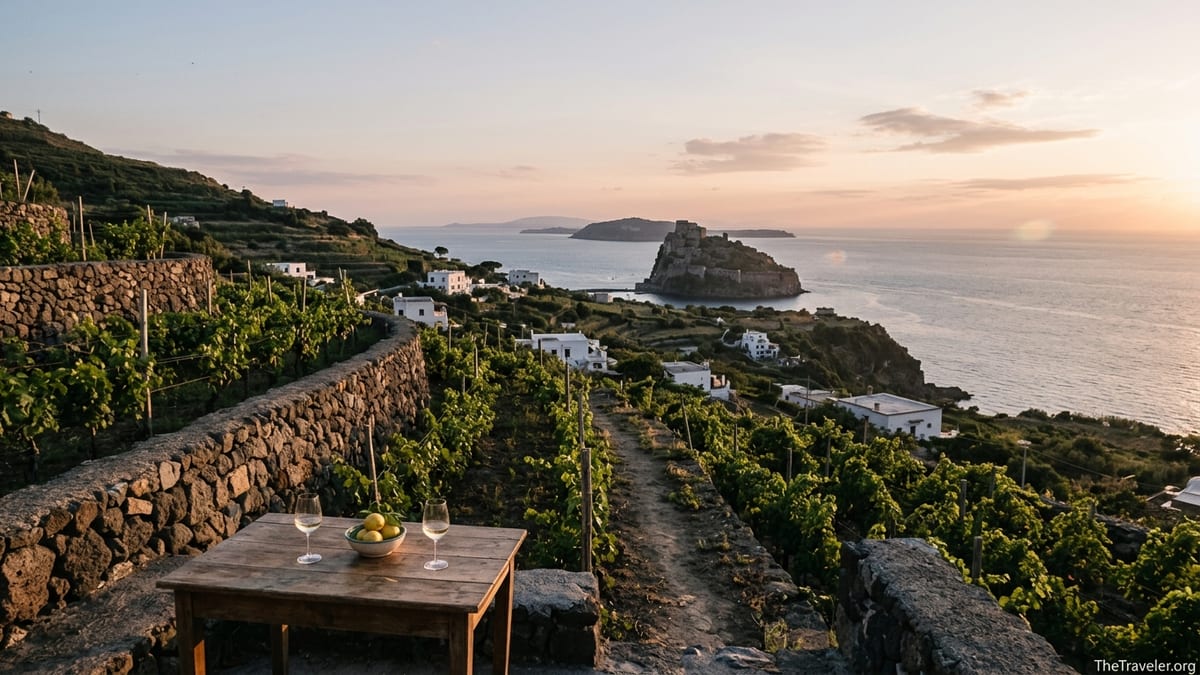
Piano Liguori: The Balcony Path Above the Sea
On maps, Piano Liguori appears as a vague green smear on the ridge between Ischia Ponte and Barano. On foot, it is one of the island’s most stirring walks and a place that most short-stay visitors never reach. A narrow lane climbs from the little village of Campagnano, just above Ischia Ponte, and becomes a mule track threading along stone-walled terraces. The Piano Liguori walk usually takes around two and a half to three hours one way, including pauses for photos and a coffee or lemonade in the tiny hamlet at the top.
The reward is a natural balcony hanging over the Tyrrhenian Sea, with views that run from the Aragonese Castle and the flat profile of Procida to the sharper cone of Vesuvius on a clear day. You share the path mostly with locals tending vineyards and gardens, not with coach groups. In early summer, the route is scented with wild fennel and broom, and lizards sun themselves on the tufa walls. There are no ticket booths or organized tours here, only a couple of simple country trattorias near the hamlet where a plate of rabbit with rosemary and white wine might cost roughly what you would pay for a single cocktail by the port.
Practical details are straightforward if you plan ahead. From Ischia Porto, a local bus up to Campagnano takes less than 20 minutes and costs only a few euros; from the bus stop you follow signs and painted arrows toward Piano Liguori. Good shoes are essential, especially if the ground is dusty or has been washed by recent rain. In high season, start early to avoid the sun; much of the path is exposed and you will not find beach umbrellas or kiosks selling water. This is the Ischia of farmers and hikers, and it feels a world away from the cruise-day rush.
Fumarole Beach and Cavascura: Cooking with the Island’s Breath
Maronti is one of Ischia’s longest beaches, a gentle arc of coarse sand backed by low cliffs and a scattering of beach clubs and bars. What many people miss is what lies tucked behind and beneath it. Near the eastern end of Maronti, close to the pretty fishing village of Sant’Angelo, the sand suddenly turns warm to the touch. Here, at a tiny section known as Le Fumarole, volcanic steam seeps through the shoreline, heating the beach so intensely that locals have long used it as a natural oven.
Today you can still experience the ritual in a simple, homespun way. Stop in Barano or Sant’Angelo for chicken pieces, potatoes, herbs and a generous bag of coarse salt, plus heavy-duty foil from a grocery shop. On the hot strip of sand, stalls sometimes rent shovels or you can borrow one from a friendly bagnino. Wrap the food tightly, bury it in the sand for about an hour, and let the island’s geothermal energy do the rest. The result is a gently smoked, delicately seasoned picnic that you can eat sitting on the rocks, with your feet in water that alternates between cool sea and surprising jets of heat where thermal springs bubble up beneath the waves.
Just behind the beach, reached via a short rocky path from the eastern end of Maronti, another lesser-known world awaits. Cavascura is a narrow, primordial gorge carved into the tufa, where rustic basins and simple stone showers channel natural thermal water that emerges at high temperatures from the rock. Compared with the more polished major thermal parks, Cavascura feels almost suspended in time: there are rough-hewn treatment rooms, basic changing cabins and a shaded bar that serves soft drinks and coffee instead of craft cocktails. The entry price is usually modest, and you are paying more for the sensation of bathing inside a canyon than for spa design.
Reaching this corner is half the experience. Rather than driving all the winding way down, many visitors opt for the small taxi boats that run from Sant’Angelo’s harbor to Maronti in around five minutes for a few euros per person. From there you walk the shoreline to the fumaroles, shoes in hand as the sand changes in temperature under your feet. Late afternoon, as the cliffs fall into shadow and the crowds thin toward dinner, the beach feels particularly otherworldly.
Baia di Sorgeto: A Natural Thermal Pool Under the Stars
On the south-west side of the island, in the village of Panza above Forio, a notch in the cliffs hides Baia di Sorgeto. The bay is not secret in the strict sense; locals have bathed in its thermal waters for centuries. Yet its location, down a long staircase of more than two hundred steps and away from the island’s main resorts, keeps many short-term visitors away. What they miss is one of Ischia’s most atmospheric places, especially outside of daytime peak season.
Here, hot springs gush directly into the sea, creating a patchwork of temperatures along the stony shoreline. Step carefully into the water and you can feel cool currents from the open bay mixing with near-scalding jets from underground vents. Locals and regulars bring plastic basins to mix cold and hot water for DIY footbaths, or use smooth rocks as informal loungers. In shoulder seasons, access is often free, though in busy summer months a small fee may be requested for maintenance and basic services.
The bay changes character with the clock. At midday in August it can be lively, with families picnicking on the steps and vendors selling drinks at the simple kiosks above. Come back on a mild evening in May or September, and the same pools are lit only by stars and the glow from scattered houses on the cliffs. Many travelers time their visit for sunset, arriving by bus or scooter in late afternoon and descending the stairs just as the sun begins to drop behind the island of Ponza on the horizon. A quick swim in water that feels like an open-air bath as the sky turns orange is one of those small, unscripted Ischia moments that never make package brochures.
If you choose to come by public transport, local buses from Ischia Porto or Forio to Panza cost only a handful of euros, but journey times can stretch with summer traffic, so allow at least 40 to 60 minutes. Renting a scooter for a day, often for a price similar to a single long taxi ride, gives you flexibility to combine Sorgeto with a stop in Forio’s old town or at Citara beach. Good water shoes are strongly recommended; the stones underfoot are uneven, and the contrasts between hot and cold patches are easier to negotiate when you can move confidently.
Vineyards and Farmhouses: Tasting Ischia’s Quiet Wine Culture
Ischia has made wine since ancient Greek settlers terraced its volcanic slopes. Yet few visitors look beyond the house white poured at hotel dinners. For a more intimate encounter, seek out the small family estates scattered over the hills of Barano, Forio and Serrara, where vines cling to narrow terraces and harvests are still done largely by hand. Here, tastings are not polished marketing events but extensions of farm life.
One such place is Tenuta del Cannavale, perched on a lush hillside around 370 meters above sea level in Barano. Reached by a country lane from the main road, the estate overlooks the Gulf of Naples and cultivates vegetables, fruit and vineyards according to organic principles. By advance reservation, guests are often welcomed on a panoramic terrace for set menus built around seasonal produce from the property and traditional dishes like coniglio di fosso, a local rabbit recipe tied to historic farming methods. Prices remain surprisingly accessible compared with coastal fine dining, especially considering that your wine is grown within walking distance of the table.
Across the island, wineries such as Cenatiempo and Pietratorcia, both family-run and rooted in mid-20th-century beginnings, quietly showcase how Ischia’s volcanic soils shape its whites and light reds. A tasting might introduce you to a crisp Biancolella from vines looking toward the sea, or a structured Forastera blend named for a specific vineyard. Many estates work on appointment-only schedules and are busy with harvest work in September, so it is wise to email or call a week or two ahead. Tasting fees are usually modest, often folded into the cost of a simple lunch or the purchase of a few bottles to take back to your hotel.
If your visit coincides with early autumn, look out for small-scale wine events that celebrate the island’s vendemmia. Local tourism offices and village notice boards sometimes advertise evenings of cellar visits, music and tastings, where minibuses shuttle visitors between farmhouses. These are more about community than spectacle: plastic cups, grilled sausage in bread, nonna’s cake and glasses refilled straight from stainless steel tanks. It is a side of Ischia that is easy to miss from a pool lounger but lingers in the memory far longer than a branded spa ticket.
Forgotten Villages: Campagnano, Noia and the Quiet Lanes Above the Port
Ischia Porto can feel hectic in high season, its promenade lined with boutiques, gelato stands and bar terraces that stay loud late into the night. Yet only a few minutes uphill by bus, a series of small hamlets unfolds where daily life is still measured more by church bells than by ferry timetables. Among them, Campagnano and the neighboring cluster of houses at Noia are particularly rewarding for travelers willing to trade beachfront convenience for atmosphere.
Campagnano, perched on a shoulder of hillside above the bay, is the trailhead for the Piano Liguori walk but also worth visiting in its own right. Whitewashed houses frame tiny lanes, with grapevines climbing over archways and small gardens full of tomatoes and basil. A couple of bars and family-run trattorias serve simple plates: spaghetti with clams, grilled local fish, mixed vegetable antipasti preserved in oil. Expect to pay less than in the port below, and to be eating alongside families who know the staff by name. In the late afternoon, older residents sit on doorsteps chatting while children play football in any corner of flat space they can find.
Nearby, the even smaller settlement of Noia hides between vineyards and chestnut trees. Few guidebooks mention it; yet a stroll along its lanes reveals traditional architecture in tufa stone, tiny chapels and farm plots where figs dry on racks in the sun. Views open suddenly onto the bay, with ferries sliding past like toy boats. Because buses thin out at night, this is a place best explored by scooter or on a daytime outing, with a slow walk down in the golden light before sunset. The reward is an encounter with Ischia as a lived-in island, not only a backdrop.
On practical terms, these hamlets make a good base for hikers and for travelers who prefer quiet evenings over nightlife. Simple guesthouses and agriturismi on the upper slopes often charge lower nightly rates than sea-view hotels, especially outside July and August, and offer home-cooked dinners for guests. A stay here lets you hear roosters instead of bar music in the morning, and to watch the first light hit the Aragonese Castle from above rather than from a crowded sea wall.
Gardens and Forests Beyond the Big Names
La Mortella, the famed subtropical garden created by composer William Walton and landscape architect Russell Page, rightly attracts garden lovers to Ischia. But away from its curated vistas, the island shelters quieter green spaces where you can walk for an hour or two and hardly meet another visitor. These are ideal refuges on overcast days or when you need a break from salt and sun.
One of the most accessible is the Cretaio forest, a wooded area in the island’s interior, reachable by bus from Ischia Porto and Casamicciola. A web of paths winds through holm oaks and chestnut trees, passing old picnic clearings and traces of volcanic craters now softened by vegetation. On damp days the smell of earth and leaves is strong, and the canopy offers shelter when the coastal promenades feel windswept. Trails vary from easy loops suitable for families to longer tracks that connect with routes toward Mount Epomeo, so you can tailor a walk to the time and energy you have.
Closer to the sea, a handful of smaller, privately tended gardens open to visitors on limited schedules. These might be attached to historic villas or small hotels, with collections of succulents or Mediterranean herbs that reveal how islanders have long coaxed beauty from windy, salty conditions. Entry fees tend to be modest and visitor numbers low, particularly outside weekends. Ask at local information points in Forio or Lacco Ameno for current opening times; in recent years, some sites have expanded visiting hours in shoulder seasons like May and October as more travelers choose to avoid peak summer heat.
Even simple walks between villages can turn into informal botanical tours. Low stone walls drip with bougainvillea, caper bushes sprout from cracks in tufa, and terraces host old olive trees whose trunks twist like sculptures. Carry a small field guide or plant identification app, and Ischia’s backroads become an open-air classroom rather than just a route between sights.
Quiet Corners by the Sea: Lesser-Known Coves and Evening Rituals
Ischia’s headline beaches, from San Montano’s sheltered crescent to the wide sands of Citara, absorb the bulk of summer visitors. To feel the coast at its most intimate, it pays to look for smaller coves and to shift your schedule slightly. Early mornings and evenings often transform spots that feel crowded at noon into peaceful refuges.
Along the coast between Forio and Lacco Ameno, for instance, small patches of sand such as Cava dell’Isola or narrow shingle inlets tucked below the main road can be wonderfully calm outside school holidays. These are places where you may need to climb steps or follow an unmarked path, but the payoff is a swim shared with a handful of locals, not a forest of umbrellas. Facilities are minimal or non-existent, so bring water, a towel you do not mind getting sandy and perhaps a loaf of bread and local cheese from a village bakery for an impromptu lunch.
Another way to experience a different side of the sea is to join locals in their evening passeggiata. In Forio, as the heat eases, residents stroll the promenade past the Chiesa del Soccorso, pausing to lean on the low walls and watch the sky turn shades of coral behind the silhouette of Epomeo. In Lacco Ameno, people gather around the mushroom-shaped rock jutting from the water, chatting as children ride bicycles in slow loops. Many visitors are already back at their hotels by this time, missing the sociable, low-key rhythm that defines island life.
Boat rentals also open up hidden angles, though they are not strictly secret. In marinas at Forio, Ischia Porto and Sant’Angelo, small motorboats without a skipper are often available for half-day hire to those with basic experience. Prices vary with season and size but can feel reasonable when split between friends. With a little seamanship and a map, you can nose into grottoes, anchor off little beaches that lack land access, and swim straight from the stern into water that grades from turquoise to deep cobalt.
The Takeaway
Ischia rewards curiosity. The island’s famous spas and postcard views are easy to enjoy, but it is the lesser-known corners that give a sense of place: a hillside trattoria where the house wine comes from the next terrace over, a staircase dropping to a steaming cove, a village bar where the television competes with church bells. These hidden gems are not locked away behind exclusive gates. They are woven into everyday life, waiting for visitors willing to slow down, walk a little further and look beyond the obvious.
Build time into your itinerary for these small detours and you will likely spend less money but gain richer memories. A bus ride into the hills, a homemade picnic on a warm beach, an evening glass of Biancolella on a farmhouse terrace cost little compared with branded experiences, yet they deliver what many travelers say they want from Italy: contact with landscapes, traditions and people that feel authentic rather than staged. In Ischia, that authenticity is not a slogan. It is the simple result of living on a volcanic rock in the Tyrrhenian Sea and making the most of what it offers.
FAQ
Q1. Are these hidden spots in Ischia suitable for first-time visitors?
Yes. First-timers can easily combine better-known sights with places like Piano Liguori, Sorgeto and the fumaroles, as long as they allow time for bus rides, walking and a slower pace.
Q2. Do I need a car to reach Ischia’s lesser-known villages and coves?
No. The island’s bus network links most villages and beaches, though schedules can stretch in high season. Renting a scooter for a day or two offers more flexibility without the cost and parking challenges of a car.
Q3. When is the best time of year to explore Ischia’s hidden gems?
Late April to early June and September to mid-October are ideal. Temperatures are mild for hiking, the sea is usually warm enough for swimming, and rural lanes and small coves are far quieter than in late July or August.
Q4. How expensive are wine tastings and farmhouse meals on the island?
Prices vary, but many small estates and agriturismi offer tastings or set menus at moderate prices, often comparable to a mid-range restaurant in town and usually including several wines and multiple courses.
Q5. Are the fumaroles at Maronti and Baia di Sorgeto safe to visit?
In normal conditions, yes, provided you follow local advice and posted signs. The sand and water around thermal vents can be extremely hot, so test temperatures carefully with your hand or foot before sitting or wading.
Q6. Can families with children enjoy these lesser-known spots?
Many can, but choose carefully. Gentle forest walks and quiet beaches suit children, while long staircases to coves or very hot thermal areas may be better for older kids who can manage uneven paths and follow safety instructions.
Q7. What should I wear for hikes like Piano Liguori or walks in the Cretaio forest?
Sturdy walking shoes or trainers with good grip, a hat, light layers and a small backpack with water and snacks are usually sufficient. In cooler months, add a windproof jacket and consider a light fleece.
Q8. Do I need to book in advance to visit wineries or farmhouses?
For most small estates and agriturismi it is wise to reserve, especially in summer or around harvest. Many accept bookings by phone or email and may not accommodate walk-ins when busy with vineyard work.
Q9. Is English widely spoken in Ischia’s smaller villages?
In main tourist towns English is common, but in hamlets and farmsteads it may be limited. A few Italian phrases, patience and gestures usually bridge any gap and are appreciated by locals.
Q10. How can I avoid contributing to overcrowding at Ischia’s fragile sites?
Travel outside peak weeks if possible, visit popular spots early or late in the day, respect paths and private land, take your rubbish with you and favor small, local businesses that care for the landscapes they depend on.