


In a city filled with Antoni Gaudí’s masterpieces, La Pedrera, also known as Casa Milà, manages to feel different from every other Gaudí attraction in Barcelona. It has the undulating stone facade and surreal rooftop chimneys you expect, but it is also a lived-in residential building, a cultural center, and one of the most complete introductions to Gaudí’s universe. Understanding how La Pedrera compares with showstoppers like the Sagrada Família, Park Güell, and Casa Batlló will help you decide how to prioritize precious sightseeing hours and what kind of experience you want to have in Barcelona.
Get the latest updates straight to your inbox!
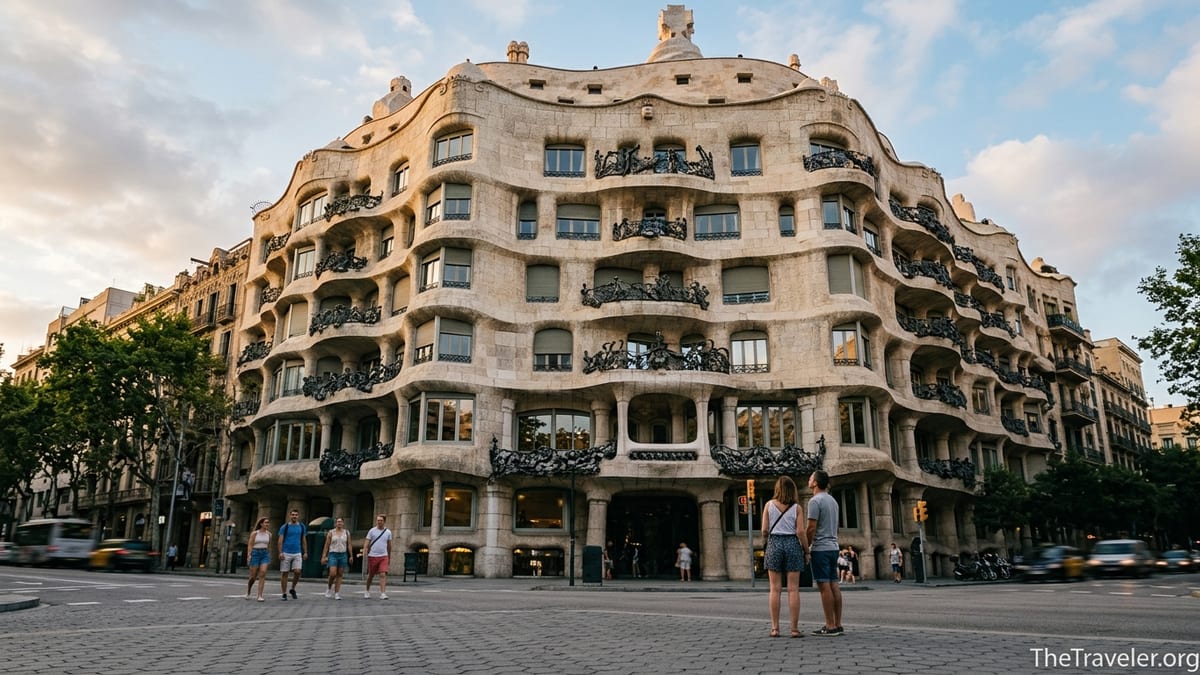
A Living Gaudí Building, Not Just a Museum Piece
One of the most striking differences between La Pedrera and other Gaudí attractions is that it remains a functioning residential building. While the Sagrada Família is a basilica under continuous construction and Park Güell is essentially a monumental park, La Pedrera still has private apartments and offices behind its stone waves. Visitors enter from Passeig de Gràcia and quickly move from the modern ticket hall into courtyards and stairwells that people actually use every day. It gives the visit a lived-in quality that you will not find at Casa Batlló, which is presented more like a theatrical set, or at Park Güell, where the houses are empty of their original domestic life.
The building’s current role as headquarters of the Fundació Catalunya La Pedrera adds another layer that sets it apart. The foundation manages exhibitions, concerts, educational activities, and social projects inside the house, so you are seeing Gaudí’s architecture in active use as a cultural center rather than as a frozen monument. On a weekday morning, you might see a temporary art exhibition being installed in one wing while school groups file through the attic museum. That sense of an evolving, working building is rare among Gaudí’s major works, most of which function primarily as sightseeing attractions.
This continuity of everyday life also affects the visitor route. At La Pedrera, you move through shared circulation spaces like the courtyard, attic, and rooftop, and then step into a carefully preserved early 20th century apartment. You are constantly aware that just a few doors away, someone may be sitting down to lunch or answering emails. In contrast, Casa Batlló and the Sagrada Família feel more detached from daily Barcelona, their interiors entirely devoted to visitors and religious functions.
Architecture in Motion: From Stone Quarry to Sculpted Light
La Pedrera earned its nickname, “the stone quarry,” because of its bold, rough-hewn facade. Instead of the colored ceramics and mosaic dragons you see at Park Güell or the shimmering scaled roof of Casa Batlló, this building is all about sculpted stone and iron. The undulating limestone exterior looks almost like a cliff that has been eroded by wind and sea, and the wrought-iron balconies twist like seaweed. Travelers who expect Gaudí to mean bright mosaic often find La Pedrera surprisingly monochrome, but that is exactly what makes it unique in his portfolio.
Inside, Gaudí pushes his structural experimentation further than in his earlier residential works. The attic, which visitors walk through as part of every ticket, is an extraordinary forest of catenary brick arches. Unlike the more decorative interiors of Casa Batlló, this space exposes the skeleton of the building and shows how Gaudí used parabolic forms to distribute weight efficiently. Models of the Sagrada Família and Park Güell are displayed here, so you can literally see how the same geometric principles echo across his projects.
Light is another way La Pedrera stands apart. Two large internal courtyards act like vertical light wells, pulling daylight deep into the apartments. When you look up from the bottom, the sky is framed by organic curves and painted walls that fade from blue to gold. The effect is very different from the stained-glass spectacle of the Sagrada Família or the jewel-box windows of Casa Batlló. In La Pedrera, the drama comes from natural light moving over white plaster, stone, and iron throughout the day, an experience that is especially noticeable if you arrive close to opening time on a sunny morning.
The Rooftop: An Outdoor Sculpture Gallery with Citywide Context
Almost every Gaudí site has an iconic viewpoint, but La Pedrera’s rooftop is unusual even in this context. The roof is not just a lookout platform; it is a walkable sculpture garden where chimneys, ventilation shafts, and stair towers become expressive figures. Unlike Park Güell’s famous lizard or the dragon-backed roof of Casa Batlló, these elements are also fully functional. They vent smoke, hide staircases, and manage water, all while creating one of the most distinctive skylines in Barcelona.
The rooftop’s varying levels and curves give you constantly changing perspectives on both the building itself and the city beyond. One moment you are face to face with a helmeted chimney that looks like a stone warrior, the next you are looking across to the spires of the Sagrada Família in the distance. Compared with the more static, balustraded rooftop at Casa Batlló, La Pedrera’s roof feels like an architectural landscape that you traverse rather than a single viewpoint where you stop for photos.
For many visitors, this rooftop is where La Pedrera decisively distinguishes itself from other Gaudí sites. Because numbers are controlled and the paths are spread out, it can feel slightly calmer than the central terrace of Park Güell in peak season. That makes it easier to appreciate small details such as the broken-ceramic trencadís on some chimneys or the texture of exposed stone. If you book a night visit, projections and subtle lighting further emphasize the sculptural forms without turning the experience into a theme-park show.
Visitor Experience, Tickets, and When to Go
Practically speaking, La Pedrera offers a different style of visit compared with other Gaudí attractions. The standard “Essential La Pedrera” ticket, which as of mid 2026 starts at around 25 euros when bought online, includes access to the courtyards, attic, rooftop, and the recreated early 20th century apartment with an audio guide in multiple languages. By contrast, Casa Batlló’s full immersive experience often costs significantly more, while Park Güell’s monumental zone ticket is usually cheaper but gives you access to an outdoor park area rather than a full house.
La Pedrera also sells specialized tickets that do not have direct equivalents elsewhere. The “Night Experience,” typically priced from about 39 to 40 euros, combines a guided tour after regular hours with rooftop projections and a drink, turning the building into an atmospheric evening venue. There is also a “Sunrise” option at a similar price that grants early-morning entry before the general public, appealing to photographers and visitors who want quieter conditions. These time-based experiences contrast with the Sagrada Família, where the main price variations are linked to tower access or guided tours rather than radically different atmospheres.
In terms of crowds, La Pedrera usually feels less hectic than the Sagrada Família and Park Güell in high season, although summer afternoons can still be busy. Most travelers report that mid-morning or late afternoon visits strike a good balance between light conditions and crowd levels. Compared with Casa Batlló, entry lines on Passeig de Gràcia tend to be shorter and more orderly, though it is still wise to book online in advance, especially if your time in Barcelona is limited to a couple of days.
Inside the Modernista Home: Everyday Life vs. Pure Fantasy
The interior apartment at La Pedrera offers a grounded, domestic counterpoint to the fantasy you might associate with Gaudí. Rooms are furnished with early 20th century pieces that show how an affluent Barcelona family would actually have lived: children’s bedroom toys, a sewing room, a compact bathroom with porcelain fixtures, and a kitchen stocked with period utensils. This re-creation contrasts with Casa Batlló, where much of the interior is left open and stylized, making you feel as if you are inside a sculpture more than a home.
Walking through La Pedrera’s apartment, you can see how Gaudí’s organic architecture translated into livable spaces. Doors and windows curve gently, built-in wardrobes follow the shape of the walls, and ceilings have subtle plaster reliefs. Yet the layout still respects practical needs, with clear separations between servant areas and the family’s more decorative rooms. This practical elegance is less obvious in Park Güell, which was conceived more as a garden city experiment than as a fully successful residential community.
For travelers curious about social history as well as architecture, La Pedrera offers more concrete context than most other Gaudí sites. Interpretive panels and the audio guide explain how the original Milà family negotiated with Gaudí, how neighbors reacted to the radical facade, and how the building adapted through the decades. By comparison, a visit to the Sagrada Família focuses on religious symbolism and construction techniques, while Park Güell’s information panels emphasize urban planning and landscape design.
Cultural Programming and Exhibitions: La Pedrera as a Contemporary Venue
Another major difference is how La Pedrera functions as a cultural venue throughout the year. Inside the building, exhibition spaces host temporary art shows, photography displays, and design retrospectives curated by the Fundació Catalunya La Pedrera. A traveler visiting in April might find a contemporary Catalan painting exhibition, while someone arriving in October could encounter a photography show linked to a local festival. This rotating program rewards repeat visits in a way that most other Gaudí attractions do not.
La Pedrera is also a recognized concert venue, particularly for jazz and classical music. Rooftop concerts during the warmer months pair live performances with views over the Eixample, offering a very different kind of Gaudí experience than the audio-visual shows at Casa Batlló or the more solemn organ music inside the Sagrada Família. Because seating and capacity are limited, these events often feel intimate despite the building’s monumental character.
Educational activities further distinguish La Pedrera. The foundation runs workshops for school groups, architectural seminars, and public lectures that use the building as a teaching tool. While Park Güell and Casa Batlló do run occasional events, few Gaudí sites are as integrated into Barcelona’s cultural calendar as La Pedrera. For visitors, this means checking the schedule before you travel can reveal extra reasons to go beyond simply ticking off another modernista facade.
Comparing La Pedrera With Sagrada Família, Park Güell, and Casa Batlló
When travelers plan a short trip, the common question is which Gaudí sites to choose. Understanding how La Pedrera differs helps make that decision easier. The Sagrada Família is unique as a still-rising basilica, charged with religious symbolism and on a scale that no house can rival. If you want to be overwhelmed by vertical space, stained glass, and the story of a century-long construction project, that is where to start. La Pedrera, by contrast, is human in scale and focused on everyday life, making it ideal for appreciating how Gaudí’s ideas worked in a residential context.
Park Güell offers expansive outdoor spaces, panoramic views over the city, and the famous mosaic terraces. It is particularly suited to sunny days and travelers who prefer gardens and viewpoints to interiors. La Pedrera, on the other hand, is largely an indoor visit with a rooftop finale, which makes it a strong choice for days when the weather is uncertain or in the heat of summer when you want shade between rooftop photos.
Casa Batlló is perhaps La Pedrera’s closest cousin in terms of visitor profile. Both stand on Passeig de Gràcia, both are UNESCO-listed Gaudí houses, and both offer immersive multimedia tours. The key difference is mood: Casa Batlló feels like walking through a dream, full of bright colors and theatrical staging, while La Pedrera is more restrained and architectural. Travelers who love design details, structural innovation, and period interiors often prefer La Pedrera. Those taken by color, storytelling, and spectacle commonly favor Casa Batlló. Many people who visit both end up appreciating La Pedrera as the place where they understood Gaudí’s methods, not just his aesthetics.
The Takeaway
La Pedrera stands apart from other Gaudí attractions in Barcelona because it combines a sculptural exterior, an extraordinary rooftop, and cutting-edge structural design with the lived reality of a functioning residential building and cultural center. Where the Sagrada Família astonishes with sacred space, Park Güell with outdoor fantasy, and Casa Batlló with color and narrative, La Pedrera quietly shows how Gaudí’s radical ideas could shape the daily lives of real people.
For travelers, this means La Pedrera is more than just another Gaudí stop. It is one of the best places in the city to see his work in context, understand his engineering genius, and experience an iconic building that continues to adapt to contemporary Barcelona. Whether you visit in the calm of early morning, at golden-hour sunset, or during a night experience with rooftop projections, you will come away with a deeper, more grounded sense of who Gaudí was and how his architecture still lives in the city today.
FAQ
Q1. Is La Pedrera worth visiting if I am already seeing the Sagrada Família and Park Güell?
Yes. La Pedrera offers a different perspective on Gaudí, focusing on residential life and structural innovation. It feels more intimate than the Sagrada Família and more architectural than Park Güell, with the added bonus of a spectacular rooftop and a recreated period apartment.
Q2. How much time should I plan for a visit to La Pedrera?
Most visitors spend about 1.5 to 2 hours exploring the courtyards, apartment, attic museum, and rooftop. If you like to read all the panels, take many photos, or attend an exhibition, plan closer to 2.5 hours.
Q3. Is La Pedrera less crowded than Casa Batlló and the Sagrada Família?
Generally yes, although high season can still be busy. Lines and crowding tend to be more intense at the Sagrada Família and Casa Batlló. Booking a timed ticket and choosing early morning or late afternoon usually results in a more relaxed visit at La Pedrera.
Q4. What is the difference between the daytime visit and the Night Experience?
The daytime “Essential La Pedrera” ticket is self-guided with an audio guide and full access to the apartment, attic, and rooftop. The Night Experience is a smaller-group guided visit after hours, with projections and lighting on the rooftop and a drink included, creating a more atmospheric and romantic feel.
Q5. How does La Pedrera compare in price to other Gaudí attractions?
As of mid 2026, standard online tickets for La Pedrera typically start around the mid-20-euro range, with special options like the Night Experience or Sunrise costing more. This puts it cheaper than many premium Casa Batlló tickets, a bit more than Park Güell’s basic monumental zone ticket, and slightly below or comparable to many Sagrada Família ticket options depending on extras.
Q6. Is La Pedrera suitable for children and families?
Yes. The rooftop’s sculptural chimneys and varied levels tend to fascinate children, and the recreated apartment shows how families lived in the early 1900s. Parents should keep an eye on younger kids on the rooftop paths, but overall it is a family-friendly visit with elevators and clear routes.
Q7. Can I visit La Pedrera in bad weather?
Yes, with some limitations. Most of the visit is indoors, so rainy or very hot days can still be enjoyable. However, access to the rooftop may be restricted or briefly closed in heavy rain or high winds for safety, so it is wise to check conditions and staff advice on the day of your visit.
Q8. Do I need to book tickets for La Pedrera in advance?
Advance booking is strongly recommended, especially in spring, summer, and during holiday periods. Buying tickets online helps you secure your preferred time slot and can reduce waiting at the entrance. Same-day tickets are sometimes available but not guaranteed at popular times.
Q9. If I have time for only one Gaudí house, should I choose La Pedrera or Casa Batlló?
It depends on your priorities. Choose La Pedrera if you are interested in structure, a more complete understanding of Gaudí’s methods, and a less theatrical, more architectural experience. Choose Casa Batlló if you prefer vivid color, immersive storytelling, and a more fantasy-like atmosphere. Many travelers who like design and history slightly favor La Pedrera.
Q10. Is La Pedrera accessible for visitors with reduced mobility?
La Pedrera offers elevators, ramps in key areas, and adapted routes, making most of the visit accessible for people with reduced mobility. Some rooftop sections have steps and slopes that may be challenging, but staff can advise on the best path and alternatives. It is advisable to mention accessibility needs when booking or on arrival.