


More news on this day
Air travel across Europe is again facing significant disruption as 132 flights are reported cancelled and 2,348 delayed in a single day, impacting major carriers including ITA Airways, Air France, Virgin Atlantic and Austrian Airlines and straining already busy hubs in London, Rome, Vienna, Paris and Brussels.
Get the latest news straight to your inbox!
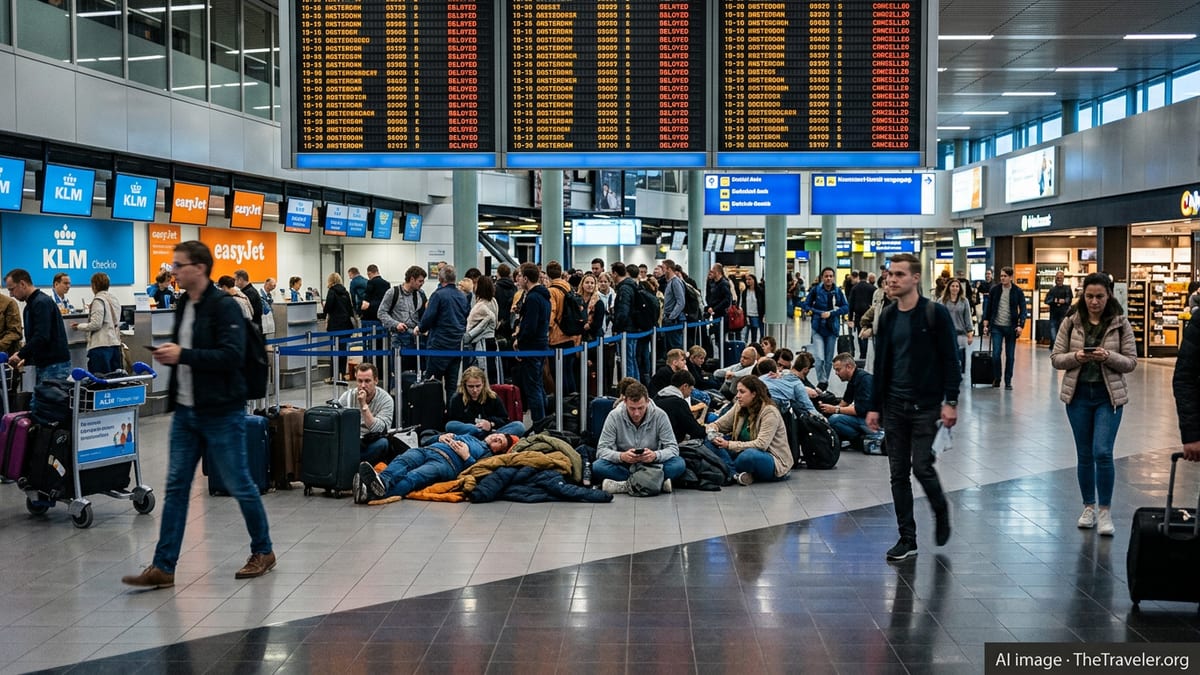
Wide Disruptions Across Key European Hubs
The latest figures highlight the scale of the disruption sweeping through European skies, with cancellations and delays concentrated in countries including Italy, France, Austria, the United Kingdom, Belgium, Switzerland and Sweden. Operational data collated from airport and flight tracking dashboards indicates that at least 132 flights were cancelled alongside 2,348 delays across Europe, affecting both short haul and long haul services.
Major airports such as Rome Fiumicino, Paris Charles de Gaulle, London Heathrow, Brussels Airport and Vienna International have been among the hardest hit, with passengers facing long queues, rolling gate changes and last minute schedule adjustments. Secondary hubs, including Zurich, Stockholm Arlanda and Venice Marco Polo, have also reported knock on disruption as aircraft and crew rotations fall behind.
The ripple effects have extended beyond national borders, as European airspace functions as a tightly interconnected network. Delays originating in one country have propagated along popular routes linking Italy to France, the UK to Austria and Belgium to Switzerland, leaving aircraft out of position for subsequent rotations and magnifying the disruption into the evening peak.
In addition to cancellations, a large share of affected services are experiencing moderate to severe delays, often exceeding one hour. This has led to missed connections for transfer passengers, particularly at large connecting hubs in Paris, London and Rome, where banks of flights are timed to feed long haul departures.
Airlines Hit: ITA Airways, Air France, Virgin Atlantic and Austrian
The disruption has cut across airline groups and national carriers, with ITA Airways, Air France, Virgin Atlantic and Austrian Airlines among those seeing significant schedule changes. Publicly available operational summaries show ITA Airways dealing with cancellations and rolling delays on core routes linking Rome Fiumicino with London, Paris, Brussels and Vienna, routes that are critical for both business and leisure travel.
Air France has been contending with delays on flights serving Paris Charles de Gaulle and Paris Orly, particularly on services to Italy, Belgium and Switzerland. These routes form part of the airline’s wider European network feeding long haul operations, meaning punctuality issues have the potential to affect onward journeys to North America, Africa and Asia.
In the UK, Virgin Atlantic and other long haul focused airlines have faced schedule pressures at London Heathrow, where a combination of late arriving aircraft and congested departure slots has contributed to cancellations and extended delays. Some carriers have resorted to consolidating frequencies or upgauging aircraft on remaining services in order to re accommodate disrupted passengers.
Austrian Airlines, based at Vienna International Airport, is also experiencing disruption on routes to Rome, Brussels, Zurich and other key business destinations. Vienna serves as an important connecting hub between Western Europe and Central and Eastern Europe, so delays on Austrian’s network have knock on effects for passengers travelling onward to cities in the Balkans and beyond.
Operational Pressures Behind the Latest Wave of Cancellations
Reports from aviation data providers and recent industry analyses point to a mix of operational triggers behind the latest spike in disruption. Persistent air traffic control bottlenecks in parts of European airspace, coupled with localized weather challenges and tight airline staffing levels, have created a fragile operating environment in which relatively minor issues can quickly escalate into widespread delays.
France and Italy remain particularly sensitive points in the network, as a large volume of overflights from the UK, Scandinavia and Central Europe traverse their airspace on route to Mediterranean and Southern European destinations. When flow restrictions or control capacity constraints arise, airlines are often forced to accept longer routings or departure slot holds, which in turn disrupts carefully timed schedules.
Weather has also played a role, with seasonal storms and low visibility episodes affecting departure and arrival rates at major hubs. Even short lived weather events can reduce runway capacity and create backlogs that take hours to resolve, while aircraft and crews subsequently miss their planned rotations. Airlines operating tightly optimized fleets are particularly vulnerable, as there is limited slack in the system to absorb sudden shocks.
At the same time, European carriers and ground operations providers are still balancing staffing and resource levels after several years of volatility. While airlines have rebuilt capacity, they continue to face constraints in certain specialist roles. This can lengthen turnaround times on the ground and slow recovery once a disruption has begun.
Impact on Passengers in London, Rome, Vienna, Paris and Brussels
For travelers, the most visible effects are lengthy queues at check in and security, crowded departure lounges and departure boards dense with orange and red delay indicators. At London Heathrow and other UK airports, passengers on affected Virgin Atlantic and partner services have reported multi hour delays and, in some cases, missed long haul connections that require overnight accommodation or rerouting via alternative hubs.
In Rome and other Italian airports, disrupted ITA Airways services have caused challenges for both domestic and international travelers, particularly those using Rome Fiumicino as a gateway to onward European or intercontinental flights. Similar scenes have unfolded in Paris and Brussels, where disrupted Air France and partner airline operations have forced some passengers to accept substantial schedule changes.
Vienna International Airport has seen a combination of late arriving and delayed departing flights, which is particularly problematic for connecting passengers who rely on short transfer windows. When inbound services arrive behind schedule, minimum connection times are quickly breached, and rebooking is required, placing additional pressure on airline call centers and airport ticket desks.
Across the network, knock on effects extend beyond the immediate day of disruption. Aircraft and crews ending the day out of position can lead to altered schedules and pre emptive cancellations on subsequent days as airlines work to reset operations. Passengers on early morning departures are sometimes surprised to find their flights affected by a chain of events that began the previous afternoon in another country.
What Passengers Can Do When Flights Are Delayed or Cancelled
Travel rights frameworks in Europe offer a degree of protection for passengers caught up in such disruption. Under European and UK passenger rights regulations, travelers whose flights are cancelled are generally entitled to a choice between a refund of the unused ticket and re routing to their final destination, subject to the specific conditions of their ticket and the cause of the disruption.
In many cases of long delay, airlines are expected to provide care and assistance, which may include meal vouchers, refreshments and, when necessary, hotel accommodation and ground transport between the airport and the place of lodging. The exact entitlements depend on factors such as length of delay, flight distance and whether the disruption is deemed within the airline’s control.
Travel experts typically advise passengers to check their flight status directly with their airline or via airport information before departing for the airport, particularly during periods of widespread disruption such as those currently affecting Europe. Early awareness of a cancellation or severe delay can increase the chances of securing an alternative routing or rebooking before remaining seats are taken.
Passengers are also encouraged to retain receipts for any additional expenses incurred as a result of disruption, such as meals and accommodation, in case these costs are later eligible for reimbursement. In more complex cases, including missed connections on separate tickets, travel insurance policies may provide a secondary layer of protection, subject to policy terms. As European aviation enters a busy travel period, such preparation can help mitigate the impact of further days marked by cancellations and extensive delays.