


HDFC ERGO is one of the biggest travel insurers for Indians heading overseas, from quick business trips to year-long study programs. Its plans can be excellent value, but the details vary sharply by destination, trip type, age and medical history. Before you lock in a policy on the app or through your bank, it pays to slow down and read the fine print. A thirty-minute review can be the difference between a fully paid hospital bill in Berlin and a denied claim because you overlooked an exclusion.
Get the latest updates straight to your inbox!
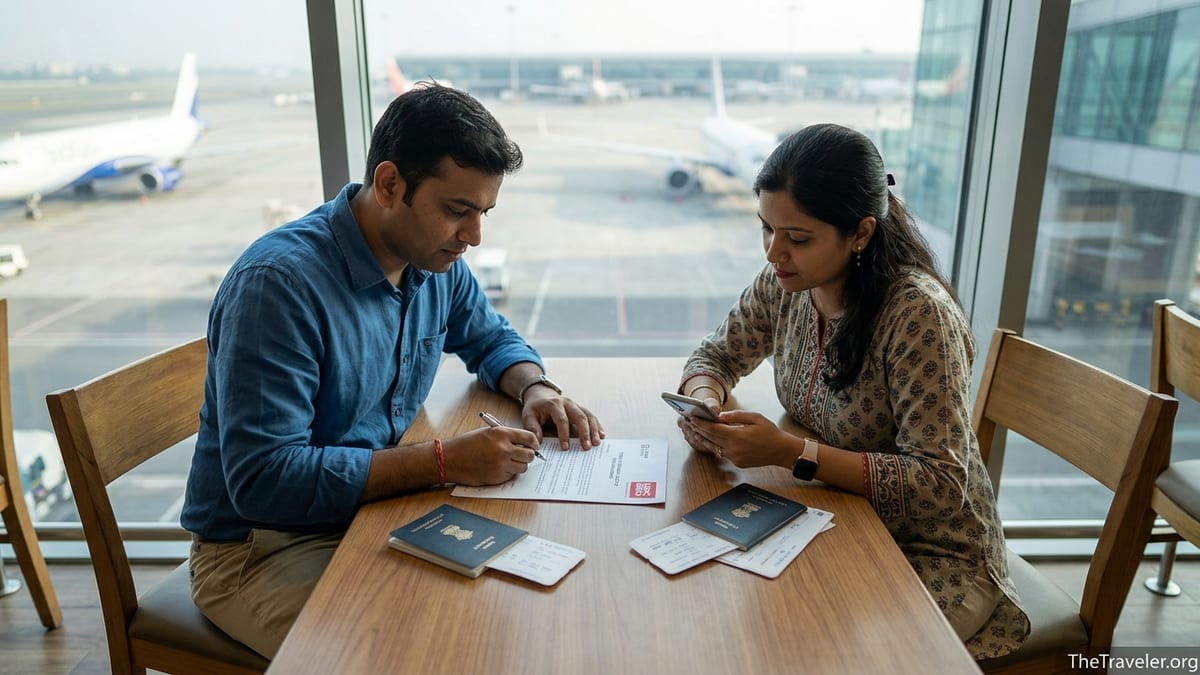
Understand Which HDFC ERGO Travel Product You Are Actually Buying
HDFC ERGO sells several different travel products, and the first thing to check is which one you are being offered. The website and banking partners typically highlight individual international travel insurance for leisure or business trips, annual multi-trip plans for frequent flyers, and specialised student travel policies branded as Student Suraksha. Each of these has different age limits, benefit structures and exclusions, even though they all sit under the broad label of “HDFC ERGO travel insurance.”
For instance, if you are a 32-year-old software engineer taking a 15-day holiday to Singapore, you will usually fall under a standard single-trip international plan. By contrast, if you are a 20-year-old going to Canada for a two-year master’s program, the adviser will likely suggest a Student Suraksha overseas student plan because universities often insist on specific benefits such as study interruption, sponsor protection and mental health coverage. Checking the exact product name on the quote or proposal form helps you later find the correct policy wording document and know what you are signing up for.
You should also confirm whether your plan is a single-trip policy or an annual multi-trip policy. HDFC ERGO’s international travel range typically offers single-trip cover for travellers from around 6 months up to 70 years and annual multi-trip plans for adults from about 18 to 70 years. In practice, that means a consultant who travels to Dubai and Europe several times a year might find a multi-trip plan more convenient, while a family doing one big vacation would stick to single-trip. Misunderstandings here can be costly if you assume you are covered for multiple journeys but have only bought a one-off policy tied to specific dates.
Finally, note whether you are buying directly from HDFC ERGO or through a partner such as HDFC Bank. Bank websites often feature HDFC ERGO products with their own marketing pages, but the contract is still with HDFC ERGO. Always rely on the insurer’s latest policy wording and customer information sheet rather than a brief product blurb or a salesperson’s summary.
Check Destination Region, Trip Duration and Sum Insured
The second area to scrutinise is the geographic and temporal scope of your coverage. HDFC ERGO classifies destinations into regions such as Asia (sometimes excluding Japan), worldwide excluding a set of high-cost countries, and worldwide including those countries. Premiums for a 7-day trip to Thailand will typically be much lower than for a similar stay in the United States or Canada, because hospital costs in North America are significantly higher. When you generate a quote, confirm that the selected region matches every country you intend to visit on that trip, including stopovers where you might leave the airport.
Trip duration is equally important. HDFC ERGO’s single-trip plans commonly cover trips up to around 180 days, but student policies may run for a year or more, and annual multi-trip plans cap each individual journey, often at 30 to 45 days per trip. Imagine a consultant who buys an annual multi-trip plan and then takes a 60-day work assignment in Germany. If their particular multi-trip variant has a 30-day maximum stay per trip, the second month might be completely uninsured. Before purchasing, match your longest expected stay against the maximum trip duration stated in the policy schedule.
Sum insured choices require some realistic thinking. On HDFC ERGO’s travel quote pages, you will see several medical coverage bands, for example 50,000 US dollars, 100,000 US dollars or 500,000 US dollars. For a budget holiday in Southeast Asia, many travellers opt for a mid-range limit, because public hospital bills are generally lower. For the United States, Japan or Western Europe, under-insuring can be dangerous; a single emergency surgery can approach or exceed 100,000 US dollars. Travellers flying to New York for three weeks often choose the highest available band even if it raises the premium, because they have heard real stories of fellow passengers whose hospitalisation bills ran into tens of lakhs of rupees.
Pay attention to per-benefit limits inside the overall sum insured. For example, a policy might have an overall medical sum insured of 100,000 US dollars, but limit dental emergencies to 250 US dollars, daily hospital cash to a small fixed amount, and personal liability to a separate cap. If you are going on a ski trip in Switzerland with expensive rented equipment, you may care more about the personal liability and baggage limits than someone visiting relatives in Dubai who will be mostly at home.
Read What Medical Events Are Covered and What Are Excluded
Medical coverage is usually the core of any HDFC ERGO travel insurance policy, and it is where claim disputes most often arise. The headline marketing line might say that overseas medical expenses are covered, but the policy wording will define exactly what counts as a covered illness or injury. Typically, it includes inpatient treatment, outpatient visits, ambulance costs and sometimes emergency medical evacuation and repatriation of mortal remains. Student plans may also extend to certain mental health treatments or pregnancy-related expenses, subject to waiting periods and restrictions.
One crucial point to check is the treatment of pre-existing diseases. HDFC ERGO’s public material for its generic travel products clearly notes that expenses related to treatment of pre-existing conditions during the trip are generally excluded. That can surprise a 55-year-old traveller with controlled diabetes who assumes that because he is stable, any heart-related issue abroad will be paid. In practice, if an event is traced back to a chronic condition declared on the proposal, it might be classified as pre-existing and rejected. Some travellers with significant medical history choose higher-end plans from other providers that offer limited emergency stabilisation for pre-existing conditions, then use HDFC ERGO for younger, healthier family members.
Age-specific conditions deserve attention. Older travellers, especially those near the upper age limit, should look for medical sub-limits such as caps on cardiac events or higher deductibles. A practical example: a 68-year-old woman visiting her children in London might face a higher premium and specific co-payment clauses compared with her 30-year-old son flying there on the same dates. If you are arranging cover for parents from India, take time to read the geriatric conditions in the medical section of the policy wording, not just the marketing brochure.
Also examine exclusions around high-risk activities. HDFC ERGO’s student and travel policy wordings typically exclude injuries from professional sports, organised motor racing and hazardous activities like bungee jumping and off-piste skiing. If you are booking an adventure-heavy holiday in New Zealand with skydiving and jet skiing, a basic plan may not protect you if an accident happens during those activities. In such cases, consider whether the plan is appropriate at all or whether you should choose a more specialised adventure sports rider from another insurer.
Scrutinise Non-medical Benefits: Baggage, Trip Delays and Liability
Beyond medical costs, HDFC ERGO travel insurance policies bundle several non-medical benefits that can be extremely useful in the right circumstances. Baggage loss and delay cover is often the most visible. Suppose an Indian family lands in Paris for a 10-day vacation and their checked-in suitcase containing clothes and toiletries does not arrive. A typical HDFC ERGO plan would pay a fixed amount per lost bag up to a maximum, or reimburse essential purchases if the bag is delayed beyond a specified period, say 12 hours. However, there might be caps per kilogram, requirements that you obtain written confirmation from the airline and limitations on items like electronics and jewellery.
Trip cancellation, curtailment and missed connection benefits can also be complex. Imagine you have booked a 2 lakh rupee package tour to Japan, and a week before departure you suffer a serious accident that makes travel impossible. If your policy includes trip cancellation cover, you may recover non-refundable costs subject to conditions, such as the event being sudden, unforeseen and not related to a pre-existing ailment. Similarly, if a connecting flight delay causes you to miss your onward leg and pay out of pocket for a new ticket, you might claim under missed connection, but only if the delay meets the minimum threshold and the cause is covered, such as bad weather or airline technical issues.
Another often-overlooked protection is personal liability. This kicks in if you accidentally injure someone or damage property abroad and are legally liable to pay compensation. For example, a traveller in Germany who cycles into a parked car, breaking a headlight, may face a claim for repair costs. A typical HDFC ERGO travel plan allocates a separate sum insured for personal liability, which can be very valuable in countries with high legal expenses. The catch is that liability arising from intentional acts, professional activities or ownership of motor vehicles will be excluded, and you must not admit liability without the insurer’s consent.
Students should pay particular attention to education-specific non-medical benefits under Student Suraksha-style products. Features like study interruption (compensating tuition fees if you must drop a semester due to a covered medical event), sponsor protection (if your fee-paying parent dies in an accident) and compassionate visit (paying for a relative to fly out if you are hospitalised for a long period) can make a significant difference during a multi-year degree abroad. When comparing costs, do not just look at the base premium; consider the financial impact of an interrupted academic year in a country like the United States or Australia.
Verify Claim Process, Cashless Network and Documentation
Even the most generous policy is only as good as its claim service. Before buying HDFC ERGO travel insurance, review how you are supposed to seek help during an emergency. The policy wording usually lists an assistance provider with 24x7 international helpline numbers. In a real-world situation, such as being admitted to a hospital in Dubai with appendicitis, you would be expected to contact this assistance company as soon as possible so they can arrange a cashless guarantee of payment with the hospital, subject to policy terms.
Ask yourself practical questions. Will you have access to phone or internet overseas to contact the assistance number? Do you prefer WhatsApp-based support or a traditional call centre? Some travellers, especially seniors, feel more comfortable when their children in India can call on their behalf. It helps to save the helpline numbers and your policy details separately from your phone, perhaps printed in your passport cover, in case your phone is lost or stolen along with your luggage.
For reimbursement claims such as delayed baggage purchases or missed connection expenses, check HDFC ERGO’s documentation list in advance. Typically, they will ask for original boarding passes, airline delay certificates, hotel bills, purchase receipts and sometimes proof that costs were non-refundable. One frequent problem is travellers discarding boarding passes or booking through multiple apps, making it hard to reconstruct their journey. A simple habit like photographing every boarding pass and keeping all receipts in a dedicated envelope can speed up claim processing when you return.
It is also worth reading recent customer experiences through consumer forums and social media, not to replace official information but to understand common pain points. Some customers praise quick claims for straightforward medical emergencies, while others complain about delays for more complex scenarios or incomplete paperwork. This can guide you to ask sharper questions before buying, such as average turnaround times and whether cashless is available in specific hospital chains in your destination country.
Compare Premiums, Deductibles and Optional Add-ons
Price will always influence your choice, but with travel insurance it is about value rather than just the lowest premium. HDFC ERGO often markets headline rates like “travel insurance from around 31 rupees per day,” which may apply to young travellers, short Asia trips and the lowest sum insured. When you actually enter details for a 45-year-old going to the United States for 20 days with a higher medical limit, the premium rises sharply, as it should. Rather than being surprised, use this as a starting point to weigh trade-offs between coverage and cost.
Check whether your quote includes any deductibles or co-payments. A deductible means you bear the first slice of loss; for example, a 50 US dollar deductible on outpatient visits would require you to pay small clinic bills yourself, with the insurer covering larger costs above that amount. Some travellers deliberately choose policies with modest deductibles to reduce premium, reasoning that they can afford minor expenses but need protection from catastrophic bills. Others prefer zero-deductible plans for simplicity, especially when arranging cover for parents who might not want to worry about paying anything at the hospital counter.
Optional add-ons and variants can be useful but should not be bought blindly. On some travel products, HDFC ERGO may offer higher baggage limits, adventure sports extensions or additional home burglary cover during the period you are away. Ask yourself whether these are relevant to your actual plans. If you live in a gated apartment complex with strong security and are taking only cabin baggage, home burglary and checked baggage extensions may add cost without real benefit. On the other hand, if you are carrying expensive camera gear to Iceland and plan to check it in, boosting baggage cover could be sensible, provided you understand any sub-limits on electronics.
Always compare the HDFC ERGO quote with at least one or two other reputable Indian travel insurers. Even if you eventually choose HDFC ERGO because of brand comfort, a quick comparison will reveal whether its pricing for your age group and destination is broadly competitive. Many financial advisers in India share real cases where travellers saved a few hundred rupees but ended up with complicated claim conditions; for a once-a-year trip that might cost lakhs of rupees, shaving off a tiny amount of premium by cutting benefits is usually false economy.
Match Policy Terms With Visa, University and Employer Requirements
For some journeys, your choice of travel insurance is not entirely free; consulates, universities or employers may specify minimum criteria. Schengen visas, for example, require medical cover of at least 30,000 euros, including emergency medical expenses and repatriation. HDFC ERGO’s Schengen-friendly plans are structured to meet these thresholds, but you should still verify that the sum insured and benefits align with the consulate checklist at the time of your application. Visa officers occasionally reject applications when the policy dates do not fully cover the travel period or when repatriation is not clearly mentioned.
Students heading to the United States, Canada, Germany or Australia often face even more detailed requirements from universities. A German university health centre may insist on coverage for mental health, maternity, pre-existing conditions after a waiting period or specific deductible limits. While HDFC ERGO’s Student Suraksha-style policies include student-friendly features such as study interruption, sponsor protection and compassionate visit, they may or may not tick every box in a particular university’s checklist. Some universities allow you to waive their campus insurance if you show proof that your Indian plan meets or exceeds their standards; others insist you buy the local plan regardless. Before buying a long-duration HDFC ERGO student policy, send the policy brochure and wording to the university’s insurance office and request a written confirmation that it is acceptable.
Corporate travellers should coordinate with their HR or travel desk. Large Indian companies sometimes maintain group travel insurance arrangements with HDFC ERGO, branded separately from the retail plans advertised online. If your employer already covers you for business trips abroad, buying a personal HDFC ERGO travel policy for the same trip could lead to overlapping coverage or confusion over which policy responds first in a claim. Instead, you might consider purchasing a top-up personal plan that only covers leisure days before or after the official business trip, if allowed.
Finally, keep an eye on regulatory changes. The Indian insurance regulator has introduced standardisation around health insurance wordings, pre-existing disease definitions and customer information sheets, and some of this flows into travel products as well. Policy wordings on the insurer’s site are periodically updated, sometimes with new product names like “Explorer” or “TravelX” for international travel. When you compare feedback from friends or online forums, check the year of their experience; a student who used an HDFC ERGO travel plan in 2018 may have had significantly different terms from those now attached to policies issued in late 2024 or 2025.
The Takeaway
Buying HDFC ERGO travel insurance is not just a formality for your visa or a box to tick on an airline checkout page. It is a financial safety net that follows you from the moment you leave home in India until you return, and its usefulness depends entirely on how carefully you choose and understand it. Before paying the premium, make sure you know which exact product you are buying, which regions and dates it covers, what medical events and risky activities are included or excluded, and how non-medical benefits like baggage and trip cancellation actually work.
Look beyond glossy marketing to the policy wording, especially around pre-existing conditions, age limits, deductibles and claim procedures. Align your chosen plan with any visa, university or employer rules, and consider real-world scenarios: if your luggage goes missing in Paris, if you fall ill in New York, or if your parent studying in Sydney has to interrupt a semester, will the policy respond in the way you expect. If there is any doubt, call HDFC ERGO’s customer service or a trusted insurance adviser before purchase rather than arguing after a claim is rejected.
In many cases, HDFC ERGO’s travel offerings provide a solid balance of coverage and price for Indian residents travelling abroad. By investing a little time upfront to check the details explained above, you can board your flight with far more confidence that an unexpected accident or disruption will not turn into a long, expensive battle over fine print.
FAQ
Q1. Is HDFC ERGO travel insurance mandatory for getting a Schengen visa?
It is not mandatory to buy specifically from HDFC ERGO, but Schengen consulates require travel medical insurance that meets their conditions. Many HDFC ERGO plans are designed to satisfy these requirements, as long as you choose an adequate sum insured and ensure your travel dates are fully covered.
Q2. Does HDFC ERGO travel insurance cover pre-existing medical conditions?
Most standard HDFC ERGO travel policies exclude treatment arising from pre-existing diseases, especially for short leisure or business trips. Some student or specialised plans may offer limited coverage in specific situations, but you should assume that chronic conditions like long-standing diabetes or heart disease are generally not covered unless the policy wording explicitly states otherwise.
Q3. What is the difference between single-trip and annual multi-trip HDFC ERGO travel plans?
A single-trip plan covers one specific journey for its entire duration, often up to several months. An annual multi-trip plan covers multiple trips over a year, but each individual trip is limited to a set number of days, such as 30 or 45. Frequent business travellers often choose multi-trip cover, while occasional holidaymakers usually find single-trip policies more cost-effective.
Q4. How do I decide the right sum insured for my destination?
Consider local medical costs and the length of your stay. For lower-cost destinations in parts of Asia, a mid-level sum insured might suffice for a short holiday. For the United States, Canada, Japan or Western Europe, many travellers prefer higher limits because hospitalisation and emergency surgery can be extremely expensive. If you are unsure, err on the side of a higher sum insured, especially for older travellers.
Q5. Are adventure sports covered under HDFC ERGO travel insurance?
Standard HDFC ERGO travel policies generally exclude injuries from hazardous activities such as bungee jumping, off-piste skiing, professional sports or organised motor racing. Some recreational activities may still be covered if they are low risk and not explicitly excluded, but you should always check the policy’s exclusion list. If your trip is heavily adventure-focused, you may need a specialised plan or extension.
Q6. How does baggage loss or delay cover work in practice?
If your checked baggage is delayed beyond a specified number of hours, HDFC ERGO may reimburse you for essential purchases like clothing and toiletries, up to a limit. In the case of total loss, the policy can pay a lump sum based on declared or estimated values, subject to per-item and overall caps. You will usually need airline reports, baggage tags and purchase bills to support your claim.
Q7. Can I buy HDFC ERGO travel insurance after starting my trip?
Travel insurance is intended to be purchased before you begin your journey, and most policies start from the date and time you depart from India. Some online portals may allow same-day purchase close to departure, but buying after leaving the country or once an incident has already occurred will typically not be valid. It is best to arrange cover at least a few days before your flight.
Q8. What should I do in an emergency hospitalisation abroad under an HDFC ERGO policy?
Contact the assistance helpline listed on your policy as soon as possible, or ask a companion or hospital staff to do so. Provide your policy number, location and a brief description of the emergency. The assistance provider can coordinate with the hospital to arrange cashless treatment where possible and guide you on documents needed. Avoid paying large bills yourself unless instructed; it is easier when the insurer deals directly with the hospital.
Q9. How are claims settled if my expenses are in foreign currency?
While you will pay bills in local currency abroad, HDFC ERGO settles claims in Indian rupees, typically using an exchange rate such as the one published by the Reserve Bank of India on the date the expense becomes due or is settled. You should submit original invoices and proof of payment so the insurer can convert amounts accurately during claim processing.
Q10. Do I need travel insurance if my credit card already offers some cover?
Many premium credit cards include basic travel insurance, but the coverage is often limited, may apply only when you buy tickets with that card, and might not meet visa or university requirements. An HDFC ERGO travel policy bought in your own name lets you choose destination-specific sums insured, student benefits or multi-trip cover. If you rely on card benefits, read their terms and compare them carefully with a standalone policy before deciding.