


For Indian travellers planning trips to destinations like Europe, the United States or Southeast Asia, HDFC ERGO and ICICI Lombard are often the two names that come up first when buying travel insurance. Both are large, well-established general insurers with strong brand recognition and a wide product range. Yet their travel policies differ in subtle ways that can matter a lot when you are stuck with a medical emergency in New York or a missed connection in Frankfurt. This guide breaks down how each insurer’s international travel insurance works in practice, using real-world style examples to help you decide which one is a better fit for your next trip.
Get the latest updates straight to your inbox!
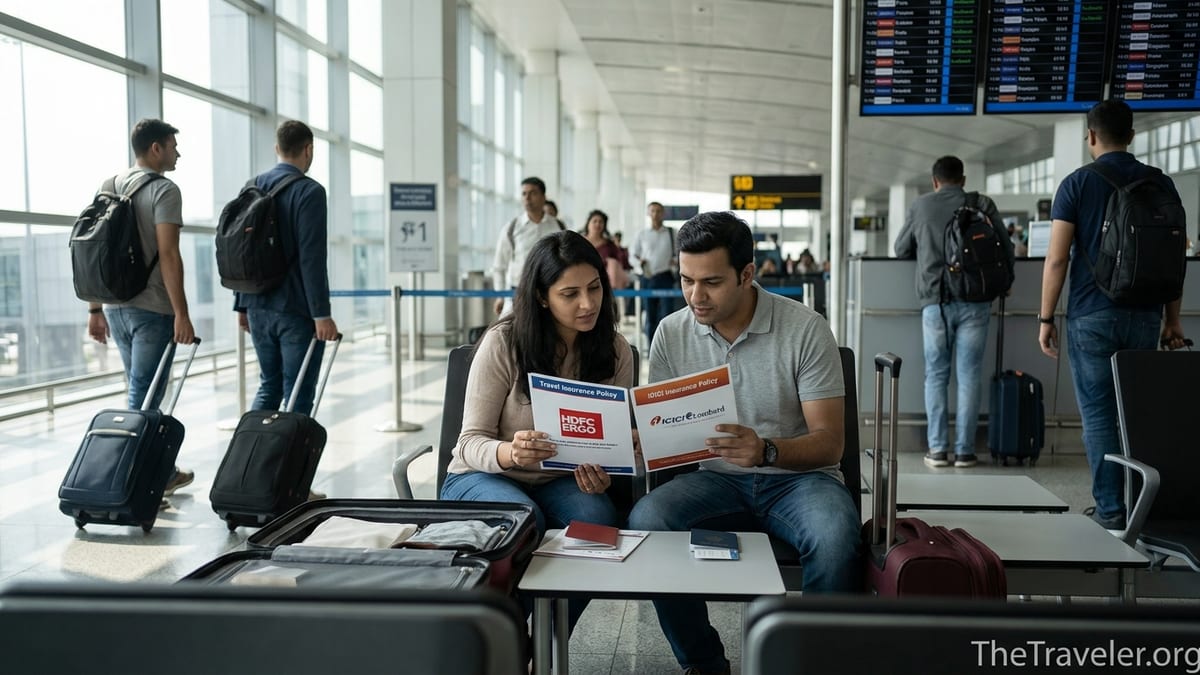
Company background and why it matters for travellers
HDFC ERGO and ICICI Lombard are among India’s biggest private general insurers, and both distribute travel insurance aggressively through banks, online aggregators and their own websites. HDFC ERGO is a joint venture between HDFC and Munich Re’s ERGO Group, giving it strong reinsurance backing and a reputation for conservative underwriting and high claim settlement ratios in health and other retail lines. Independent comparisons of their health portfolios in 2025 and 2026 consistently show HDFC ERGO with a claim settlement ratio in the mid to high 90 percent range, significantly above ICICI Lombard’s mid 80 percent range, although these figures relate to health rather than travel.
ICICI Lombard, backed by ICICI Bank, is known for product innovation and digital capability. It offers a broad spread of retail lines including car, health, home and international travel insurance. The company is often praised for user-friendly online purchase journeys and a wide mix of add-ons and destination-specific plans. For a traveller who values app-based service, flexible covers such as cruise protection, and quick policy issuance, the ICICI Lombard ecosystem can feel slightly more modern in day-to-day use.
For travel insurance specifically, both underwrite policies directly under their own brands rather than via white-label arrangements. That means the claim experience is heavily influenced by each company’s own processes. While the exact claim settlement ratios for travel are not disclosed separately, the broader health and retail claim trends offer a useful proxy: HDFC ERGO tends to score higher on claim approval consistency, while ICICI Lombard focuses on more varied product features and digital conveniences.
In practice, this background translates into a subtle trade-off for travellers. If you are primarily concerned with claims being paid smoothly, you may lean toward HDFC ERGO. If you want more options like cruise cover, sports add-ons or easy online management, ICICI Lombard may appeal more.
Core coverage: what both insurers typically include
At a broad level, HDFC ERGO’s international travel insurance and ICICI Lombard’s travel plans look quite similar on paper. Both typically include emergency medical coverage in foreign currencies, cover for emergency medical evacuation and repatriation of mortal remains, personal accident benefits, baggage loss or delay, trip delay, and third-party liability up to specified limits. Both also offer COVID-19 related medical cover within their overseas medical limits, subject to policy terms at the time of purchase.
For example, a 30-year-old Bengaluru-based software engineer flying to Germany for a two-week holiday in September might see HDFC ERGO offering sum insured options like 50,000, 100,000 or 500,000 US dollars for medical expenses, alongside benefits for checked baggage loss and trip delay. On ICICI Lombard’s side, a similar Europe-focused plan might show medical covers in comparable bands, often with some built-in Schengen-compliant wording and limits for personal liability and emergency evacuation. For a straightforward tourist trip, either insurer can satisfy most visa and consulate requirements.
There are also similarities in non-medical benefits. If your Mumbai to London flight is delayed by more than the number of hours specified in the policy, both insurers may pay a fixed amount per delay event to cover the cost of meals or basic necessities, up to a maximum cap. If your checked-in suitcase fails to show up on the belt in Singapore, their baggage delay benefit can reimburse the cost of buying basic clothing and toiletries up to a specified limit. These are the bread-and-butter protections any serious travel policy in India now offers, and both HDFC ERGO and ICICI Lombard check those boxes.
Where differences emerge is in the fine print: sub-limits for specific medical events, the scope of adventure sports coverage, age limits, and how flexible each company is when things go wrong just outside the written wording. That is where the choice starts to get more nuanced.
HDFC ERGO travel insurance: strengths, examples and ideal traveller profile
HDFC ERGO positions its international travel insurance around medical robustness and a wide hospital network. The company highlights access to around 100,000 cashless hospitals worldwide, plus 24x7 assistance for overseas claims and medical coordination. Many of its travel plans fall in the 40,000 to 1,000,000 US dollar sum insured range for medical expenses, which is in line with what Indian travellers to Europe and North America typically buy for peace of mind.
Consider a family of four from Pune planning a three-week self-drive holiday across the US West Coast. They choose an HDFC ERGO policy with 250,000 US dollar medical coverage per insured person. On day five, the father develops acute appendicitis in Los Angeles and needs an emergency surgery that costs around 45,000 US dollars at a private hospital. Through HDFC ERGO’s assistance partner, the claim is processed on a cashless basis, with the hospital directly coordinating with the insurer. The family only pays for non-covered incidentals, such as certain administrative charges and personal comfort items. This is the type of scenario where a conservative, medical-first insurer can really justify a slightly higher premium.
HDFC ERGO’s documentation for travel insurance emphasises emergency medical expenses, emergency evacuation, dental treatment following an accident, personal accident coverage, and journey and baggage related contingencies. For younger travellers under about 60 or 65, pre-policy medical check-ups are usually not required for standard tourist plans, which makes buying a policy online straightforward. Older travellers, especially those in their late 60s or early 70s, may face medical questionnaires or stricter underwriting, but that is standard across insurers.
From a traveller profile perspective, HDFC ERGO’s travel insurance tends to suit those who are risk-averse and willing to pay a bit more for a smoother claim possibility. A retired couple from Chennai visiting their children in Toronto for two months or a mid-career executive flying frequently to Europe for work may appreciate the brand’s reputation for high claim settlement and lower complaint ratios in other segments. If you value a traditional insurer mindset and strong medical backing more than a wide choice of niche add-ons, HDFC ERGO is a compelling option.
ICICI Lombard travel insurance: strengths, examples and ideal traveller profile
ICICI Lombard’s travel insurance portfolio comes across as slightly more feature-rich and marketing-driven. The company offers single-trip and multi-trip international plans, destination-specific options such as dedicated products for the USA or Schengen countries, and features like cruise cover and personal effects coverage that are highlighted in its product descriptions. For many customers buying via its website or app, the interface feels modern and easy to navigate.
Imagine a 28-year-old solo traveller from Gurgaon booking a two-week Mediterranean cruise that departs from Barcelona and stops in Italy and Greece. An ICICI Lombard international travel plan that explicitly references cruise coverage can feel more reassuring in such a case. If the cruise is delayed due to weather and the traveller has to spend an extra night in Barcelona with additional hotel costs, or if their cabin luggage is damaged during embarkation, the policy’s cruise-related clauses and personal effects coverage may provide reimbursements that feel more tailored to this style of trip.
ICICI Lombard also leans into convenience features. Its online journeys often allow you to quickly choose between trip types (single trip, annual multi-trip), select geographic zones such as worldwide including or excluding the USA and Canada, and add covers like home burglary protection while you are abroad. Its product literature for travel insurance emphasises coverage for personal liability, hijack distress allowance in some plan variants, and coverage for passport loss, along with standard medical and baggage benefits.
In terms of traveller fit, ICICI Lombard is attractive for frequent fliers who value flexibility and digital self-service. A consultant who does multiple short trips a year to Dubai, Singapore and London might find an annual multi-trip plan with ICICI Lombard more convenient to manage through a single portal rather than buying separate single-trip plans each time. Younger travellers and cruise or tour-package buyers may also gravitate toward ICICI Lombard’s more marketing-forward positioning and destination-tailored options.
Pricing, age bands and how much you might actually pay
Both HDFC ERGO and ICICI Lombard price travel insurance based on destination, trip duration, age band and sum insured. For most short holidays, premiums are relatively modest compared to the cost of flights and hotels. As of mid 2026, typical base premiums for a healthy 30-year-old travelling to Europe for 10 to 15 days with a 50,000 to 100,000 US dollar medical cover often fall in the range of roughly 700 to 1,500 Indian rupees with major private insurers, though actual prices vary by day, discounts and channel.
In many aggregator and agent quotes, ICICI Lombard’s travel plans for like-for-like coverage come out slightly cheaper than HDFC ERGO’s. For instance, for a two-week trip to France and Italy, you might see an ICICI Lombard policy at around 900 to 1,000 rupees and an HDFC ERGO option closer to 1,100 to 1,300 rupees for broadly comparable medical limits and non-medical benefits. The difference is not dramatic, but over multiple trips or for a large family, these savings can add up.
Age bands and senior traveller pricing show more divergence. For travellers in their 60s and early 70s, both insurers charge significantly higher premiums than for 30-somethings, reflecting the higher medical risk overseas. ICICI Lombard may sometimes offer marginally more competitive pricing for older travellers or allow slightly more flexible trip durations without mandatory medical tests, while HDFC ERGO can be stricter but may compensate with higher perceived reliability. It is not unusual for a 68-year-old heading to the USA for three weeks with a 100,000 US dollar cover to pay 6,000 to 12,000 rupees or more, depending on health disclosures and the exact plan.
For student and long-stay plans, both companies offer specialised products, often marketed through education consultants and university tie-ups. Premiums in such cases can range into several tens of thousands of rupees per year, but they usually include extended medical benefits and specific features like study interruption cover. On price alone, ICICI Lombard often edges ahead by a small margin, while HDFC ERGO asks a bit more in exchange for its track record on claims across other segments.
Real-world claim scenarios: where the differences actually show up
To understand how the choice between HDFC ERGO and ICICI Lombard matters in practice, it is useful to think through realistic travel mishaps. Take the example of a 35-year-old marketing professional from Mumbai travelling to New York for a client meeting and a short holiday. In the middle of the trip, she slips on ice and fractures her wrist, requiring an emergency room visit, X-rays and a minor surgical procedure. The total medical bill climbs to the equivalent of 12,000 US dollars, an amount that would be financially painful to pay out of pocket.
If she is covered by an HDFC ERGO international travel plan with a 100,000 US dollar medical limit, the assistance provider will typically coordinate with a network hospital for cashless treatment where possible. Given HDFC ERGO’s generally strong claim performance in other health-related products, the probability of a medically justified emergency claim like this being approved is generally perceived as high, although individual outcomes can differ based on documentation and policy conditions.
Now consider a different scenario: a 40-year-old traveller from Ahmedabad is on a week-long trip that includes both a Mediterranean cruise and a couple of nights in Rome. His suitcase is severely damaged during loading at the port, and two days later a storm delays the cruise’s arrival at the final port, forcing him to pay extra for hotel accommodation and missing a pre-booked flight back to India. An ICICI Lombard plan that explicitly includes cruise cover, personal effects damage, and trip delay benefits could address multiple parts of this situation in a more straightforward way, provided all supporting documents like airline and cruise certificates are submitted.
Where travellers sometimes report frustration with any insurer, including these two, is in grey-area claims such as pre-existing condition flare-ups, ambiguous documentation, or non-medical expenses that they assumed were covered. This is where HDFC ERGO’s more conservative but consistent claims philosophy versus ICICI Lombard’s flexible, feature-heavy approach become visible. In a tight, clear-cut medical emergency, HDFC ERGO often feels like a safer bet. In complex itinerary-based problems, ICICI Lombard’s broader benefits and cruise or multi-trip options might prove more useful.
How to choose: matching insurer to your trip type
For most Indian travellers, the right question is not which insurer is objectively better, but which one is better for the specific trip they are planning. For a single short holiday to a Schengen country with a focus on sightseeing and museums, both HDFC ERGO and ICICI Lombard can provide adequate cover; the choice may simply come down to whichever offers the right medical limit at a reasonable premium on the day you buy.
However, if you are planning a high-cost destination such as the United States or Canada, where basic emergency care can run into tens of thousands of dollars, favouring reliability over a small premium saving can be sensible. In such cases, many financial advisers in India lean toward insurers like HDFC ERGO that show higher claim settlement ratios in their health portfolios and relatively low complaint numbers per 10,000 claims, even if the specific travel claims data is not separately published.
On the other hand, for travellers whose itineraries include cruises, multiple countries in one journey, or frequent short trips over a year, ICICI Lombard’s travel products may align more naturally with their needs. An annual multi-trip plan, cruise-specific add-ons and convenient app-based service can outweigh marginal differences in historical health claim statistics for someone who values flexibility and ease of management above all.
Before buying, it is worth shortlisting one plan from each insurer for your exact route and dates, then comparing line by line: emergency medical limit, sub-limits for outpatient or day-care treatment, inclusion of pre-existing disease emergencies (if any), baggage and delay limits, and policy excess or deductibles. Small differences in these numbers can matter a lot more than the brand name on the certificate.
The Takeaway
HDFC ERGO and ICICI Lombard are both credible choices for Indian travellers seeking international travel insurance, but they serve slightly different priorities. HDFC ERGO leans toward medical solidity and conservative claims handling, backed by strong performance in its wider health book. ICICI Lombard emphasises flexible products, destination-specific features and a polished digital experience, often at a marginally lower price point for comparable covers.
If you are planning a medically sensitive trip, travelling with elderly parents, or heading to high-cost destinations where a single hospital visit could challenge your finances, the balance of factors nudges toward HDFC ERGO, especially if you secure a plan with a robust medical sum insured and minimal sub-limits. For younger, tech-savvy travellers, frequent fliers or those booking cruises and multi-country trips, ICICI Lombard’s travel offerings may feel better tuned to real-world itineraries and budget considerations.
Ultimately, the best approach is to treat the insurer name as one factor among many. Focus first on matching the policy’s medical limit, exclusions and non-medical benefits to your actual trip, then compare how HDFC ERGO and ICICI Lombard price that risk for someone of your age and destination. A half-hour of careful comparison before you fly can make the difference between a stressful dispute and a quietly settled claim when things go wrong far from home.
FAQ
Q1. Which is better overall for international travel insurance, HDFC ERGO or ICICI Lombard?
Both are reputable, but HDFC ERGO is generally favoured for perceived claim reliability, while ICICI Lombard often wins on pricing, digital experience and flexible, feature-rich plans.
Q2. Is there a big difference in premiums between HDFC ERGO and ICICI Lombard for short trips?
For a typical 7 to 15 day holiday, ICICI Lombard is often slightly cheaper for similar medical limits, but the gap is usually a few hundred rupees rather than a dramatic difference.
Q3. Which insurer is better for travel to high-cost destinations like the USA or Canada?
For high-cost medical destinations, many travellers prefer HDFC ERGO because of its strong overall health claim settlement record, provided the policy offers a high enough medical sum insured.
Q4. I am going on a cruise in Europe. Should I prefer ICICI Lombard or HDFC ERGO?
ICICI Lombard often highlights specific cruise covers and personal effects protection in its travel plans, which can be an advantage for cruise-heavy itineraries, although you should check the exact wording before buying.
Q5. Do both HDFC ERGO and ICICI Lombard cover COVID-19 related medical expenses abroad?
As of mid 2026, both typically include COVID-19 related hospitalization within the overseas medical cover on many plans, but coverage terms can change, so you must confirm this at the time of purchase.
Q6. Which company is better for senior citizen travel insurance from India?
Both offer travel cover for older travellers, but premiums rise sharply with age and underwriting becomes stricter. HDFC ERGO is often seen as more conservative on medical risk, while ICICI Lombard may sometimes offer slightly more flexible pricing or conditions.
Q7. Can I buy annual multi-trip travel insurance from both HDFC ERGO and ICICI Lombard?
Yes, both offer multi-trip options, but ICICI Lombard more visibly promotes annual multi-trip products, which can be convenient for frequent business or leisure travellers.
Q8. How do I decide the right medical sum insured when choosing between these insurers?
Start with your destination’s healthcare costs, then consider trip length and your health profile. For the USA, many advisers suggest at least 100,000 to 250,000 US dollars, whether you buy from HDFC ERGO or ICICI Lombard.
Q9. Are pre-existing conditions covered by HDFC ERGO and ICICI Lombard travel policies?
Most standard travel plans from both insurers exclude routine treatment of pre-existing conditions, though some may cover emergencies arising from stable conditions on a limited basis. You should read the specific clause carefully before purchase.
Q10. If price is my main concern, is it safe to simply pick the cheaper of the two?
If you are young, healthy and travelling to a relatively lower-cost destination, choosing the cheaper option between HDFC ERGO and ICICI Lombard can be reasonable, but you should still compare medical limits, exclusions and claim procedures rather than looking only at the premium.