


For many UK families, the local Post Office is still a familiar first stop when planning an overseas holiday. You might be changing money for a week in Spain, renewing passports, or picking up a new travel insurance policy at the counter. But in 2026, with comparison sites and specialist family insurers everywhere, does it still make sense to rely on Post Office travel insurance for international trips with children in tow?
Get the latest updates straight to your inbox!
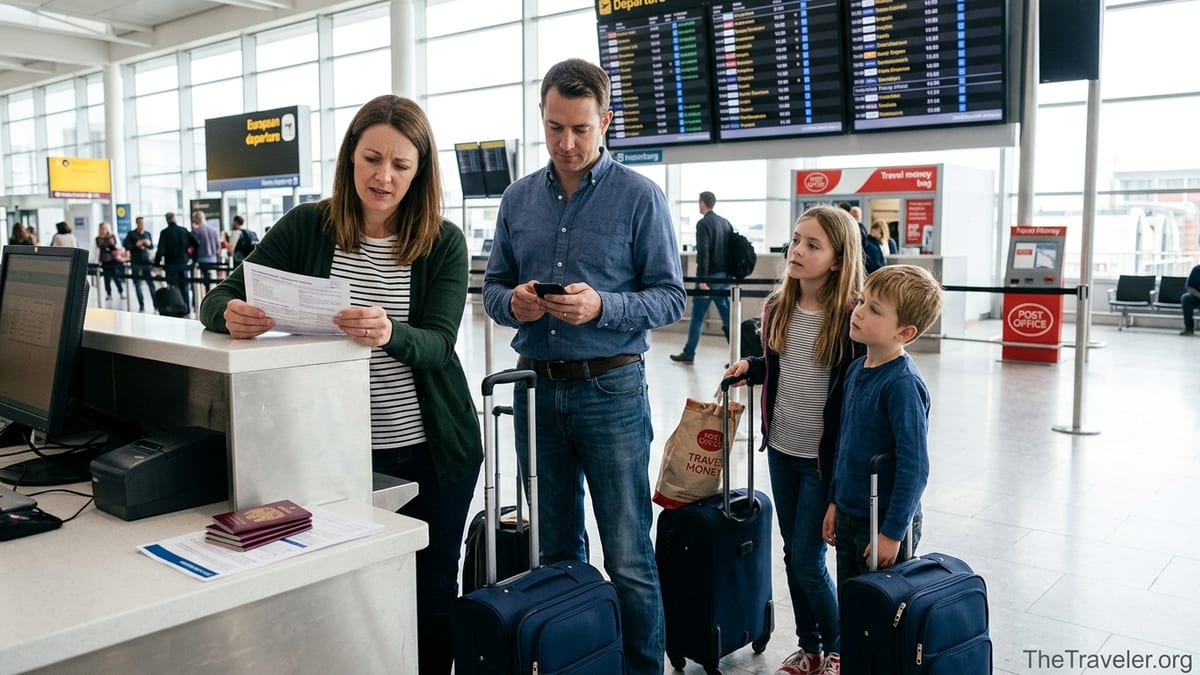
What Post Office Travel Insurance Actually Offers Families
Post Office travel insurance is a mainstream UK product built around three core tiers: Economy, Standard and Premier. All three can be bought as family policies that cover one or two adults plus children on the same policy, typically with under‑18s included at no extra premium when travelling with an insured adult. For a typical family of four heading to the Costa del Sol in August, a one‑week Standard policy might come out around the £35 to £50 mark depending on ages and medical history, while Premier can be closer to £60 to £80.
On paper, the cover levels look reassuring for international trips. Independent reviews in 2026 highlight medical expense limits up to around £15 million on Premier, which is ample for emergencies in destinations such as the United States where a single night in hospital can run into tens of thousands of pounds. Cancellation cover, however, is more modest. For a family holiday to Orlando costing £5,000 to £7,000, the typical Post Office cancellation limit can fall short of the full trip value, especially on Economy or Standard, meaning not every pound is protected if you have to cancel.
For families, one advantage is flexibility around children. Post Office policies generally allow kids to be covered when travelling with another responsible adult named on the policy, which can help when grandparents take grandchildren on a short break without the parents. The brand also offers optional add‑ons such as winter sports, cruise cover and gadget cover, useful if your teenagers will be skiing in France or carrying expensive phones and tablets on a city break in New York.
That said, the overall structure is mid‑market rather than tailored specifically to families. Limits on lost baggage, travel delays, and personal liability are competitive but not exceptional. If you are planning a once‑in‑a‑lifetime safari in Kenya or a three‑week Japan itinerary with multiple internal flights, you may find the upper tiers of more specialist insurers provide higher cancellation caps and more nuanced disruption cover than Post Office’s three‑tier model.
Real-World Pricing Examples Compared With Family Specialists
To judge whether Post Office is right for families, it helps to look at real‑world quotes. In June 2026, a sample quote for a family of four, with two adults in their late thirties and two children aged 8 and 11, travelling for seven days to Florida in October produced Premier cover in the rough region of £70 to £90. That put Post Office among the cheaper half of providers on leading comparison sites, but not the very cheapest. Budget brands such as InsureandGo or Admiral’s basic tiers sometimes undercut that price by £10 to £20, while premium specialists like Staysure or LV= may charge slightly more but offer higher cancellation limits for expensive long‑haul trips.
For a simpler European beach holiday, say a week in Portugal during the school summer holidays, Post Office Standard cover for the same family can often come in around £35 to £45. A comparable policy from a large supermarket‑branded insurer might be only a few pounds cheaper, while a bare‑bones online‑only policy from a lesser‑known brand could be under £30. The price gap in Europe is modest, which means families might be comfortable paying a slight premium for the reassurance of a well‑known high‑street name.
The picture changes if you buy annual multi‑trip cover. Post Office’s annual European family policies for two adults and up to four children often sit in the £90 to £150 range, depending on ages and health. That is broadly in line with the market. The catch is that annual policies have upper age limits, with some Post Office annual products capped around age 75 for adults, which can be restrictive for multigenerational families travelling with older grandparents. In contrast, some specialist providers are more flexible for older travellers willing to answer more detailed medical questions.
What these examples show is that Post Office rarely looks wildly overpriced, but nor is it consistently the best value. The most important question for families is not “Can I save £5?” but “Am I getting the right cover for the way we actually travel?” A family that mainly takes package holidays to Spain may find Post Office cover entirely adequate, whereas parents planning longer, more complex itineraries might justify paying a little more to protect bigger non‑refundable costs.
Strengths: High Medical Limits and Simple Family Setup
For families, the biggest strength of Post Office travel insurance lies in its headline medical cover. Independent 2026 reviews highlight that Premier policies in particular offer generous medical expense limits, sometimes up to £15 million, which is well above the minimum £2 million to £5 million that many travel experts recommend for international trips. This matters when you are travelling with children who may be more prone to accidents, infections, or asthma flare‑ups in unfamiliar climates.
Imagine a family from Manchester taking their two children, aged 6 and 9, to California for the first time. On day three, the youngest develops severe appendicitis and is rushed to a hospital in Los Angeles. A straightforward appendectomy and two nights in hospital in the United States can easily exceed £25,000 once surgeon fees, anaesthesia, imaging, and post‑operative care are included. A Premier‑level Post Office policy is designed to cope with that sort of bill, and it should also arrange repatriation flights if the doctors decide the child should travel home earlier than planned.
Another strength for families is the relatively simple setup for children. Many family policies allow free cover for children under 18 when insured with an adult, which can be attractive for parents on a budget. A family policy can also be more convenient than juggling separate single‑trip policies, ensuring everyone is on the same wording and the same emergency assistance line. For busy parents trying to organise passports, airport parking and car seats, that simplicity has real value.
There is also some flexibility for children to travel without both parents. Post Office policies have in the past allowed children named on a family policy to travel with other insured adults, such as one parent or a grandparent. For a real‑life example, consider a 15‑year‑old going on a school exchange trip to Germany. If the school requires evidence of insurance, parents may be able to show the existing family annual policy rather than buying a separate policy via the tour operator, provided the wording confirms solo travel for teenagers is included.
Weaknesses: Customer Service and Claims Experience
Where Post Office travel insurance attracts more criticism is in its claims handling and customer service. Review aggregators and consumer sites report relatively low average review scores for Post Office insurance products, with a common theme of slow communication, repeated document requests, and delays in paying valid claims. Some reviewers describe waiting several months for reimbursement of a few hundred pounds after submitting all requested paperwork, only receiving a payment after escalating to a complaint.
Real‑world accounts include families who suffered accidents on skiing holidays in France or Austria, where winter sports add‑ons were in place but the claims administration felt disjointed. Parents report long phone queues, difficulty confirming which medical reports were needed, and conflicting information about whether private clinics were acceptable. Others highlight issues where medical bills were initially expected to be paid upfront by the family and only reclaimed later, despite headline wording that suggests direct billing may be available in some circumstances.
This is not unique to Post Office. The UK Financial Ombudsman Service has seen a sharp rise in travel insurance complaints more broadly, with thousands of cases each year involving delays, unclear exclusions, or disputes over medical evidence. Families under stress after a child’s hospital stay abroad are particularly sensitive to poor communication. However, given Post Office’s scale and the number of policies sold through high‑street branches, reviewers expect a smoother experience than some report receiving.
For a family considering Post Office cover, the lesson is not that every claim will be problematic, but that you cannot rely on brand familiarity alone. Before buying, read recent independent reviews to understand patterns. If you see multiple reports of long delays in paying modest medical or cancellation claims, ask yourself how comfortable you would feel if you were trying to chase a £3,000 hospital bill or a cancelled £4,000 holiday while juggling work and childcare back home.
Policy Gaps Families Often Overlook
Even a decent mainstream policy can leave gaps that matter more for families. One common issue is underinsurance on cancellation. A Post Office Standard policy might include cancellation cover of, for example, £2,000 per person, which sounds generous. Yet a two‑week summer package to Florida or the Maldives can easily cost £6,000 to £8,000 for four people once flights, accommodation, and theme park tickets are added. If your total non‑refundable cost is higher than the policy’s cancellation limit, you would only be partially covered if you had to cancel because a child fell seriously ill before departure.
Another area to scrutinise is how pregnancy, pre‑existing conditions and mental health are treated. Many travel insurers, including Post Office, cover emergency complications of pregnancy up to a certain gestation but do not cover routine antenatal care or cancellation simply because you decide you are too uncomfortable to travel late in pregnancy. Families where one parent has a chronic condition such as diabetes or a history of heart problems need to declare these fully during medical screening, or risk having related claims declined later. Similarly, some policies can be cautious around mental health conditions, especially when assessing cancellation claims.
Activity cover is a further trap. Families rarely stick to staying by the pool, and children might sign up for banana boat rides, quad biking excursions or zip‑lining in Costa Rica. Standard policies may exclude or limit cover for higher‑risk activities. In recent years, ombudsman decisions have highlighted holiday injuries where insurers refused claims on the grounds that the activity was not listed as covered, or that the traveller did not have the appropriate licence for a hired scooter overseas. Parents should check Post Office’s list of included sports and upgrades carefully, and consider whether active teenagers will realistically stay within those boundaries.
Finally, gadget and baggage cover can be surprisingly low for modern family travel habits. A typical Post Office add‑on might cap single‑item gadget cover at a few hundred pounds. Yet a 14‑year‑old might be carrying a smartphone worth £600, a tablet in their backpack and wireless headphones in their pocket. If multiple items are stolen from a hotel room in Rome or from a rental car in Orlando, you could quickly exceed baggage and gadget limits. Families with a lot of tech may need either a higher‑tier add‑on or separate gadget insurance to avoid painful gaps.
When Post Office Travel Insurance Can Make Sense for Families
Despite its weaknesses, there are clear scenarios where Post Office travel insurance can be a sensible choice for families. One is the straightforward European package holiday. A family staying at a mainstream resort in Spain, Portugal or Greece, booked as a package through a UK tour operator, may not need the bells and whistles of a boutique policy. For such trips, a reasonably priced Post Office Standard or Premier plan can provide ample medical cover, decent baggage protection and basic delay and cancellation benefits.
Another case is for families who value the convenience of buying cover alongside other travel services. Busy parents picking up currency and renewing a passport might appreciate being able to arrange insurance at the same time. The Post Office brand can also feel reassuring for less tech‑savvy relatives, such as grandparents who are more comfortable walking into a branch than navigating comparison sites on a smartphone. In multigenerational holidays where one party is taking the organisational lead, simplicity and trust in a familiar brand can be significant.
Post Office annual policies can also suit families who take multiple short trips within Europe each year. For example, a family who visits relatives in Ireland twice a year, enjoys a summer week in Cyprus and an Easter city break in Amsterdam may find an annual family policy more cost‑effective than buying three or four single‑trip policies. As long as each trip falls within the maximum trip length and everyone meets medical screening requirements, Post Office can be a convenient umbrella solution.
Finally, families with relatively low trip costs and few pre‑existing medical conditions may be less exposed to the policy’s limitations. If your typical holiday is a week in a self‑catering cottage in Brittany booked with flexible terms, your non‑refundable risk may be limited. In that context, paying for the highest‑end specialist insurance might not be necessary, and a mid‑market provider like Post Office can be a reasonable compromise between price and cover.
When Families Should Probably Look Elsewhere
There are, however, situations where Post Office travel insurance may not be the best choice for an international family trip. One is when you are spending a large amount on a single holiday. If you have paid £7,000 for a fortnight in Orlando, including non‑refundable villa rental, theme park tickets and car hire, you should match that investment with insurance that offers cancellation cover close to your total outlay, not just a few thousand pounds per person. Some specialist family or premium insurers explicitly target higher‑value trips and business‑class flights with correspondingly higher limits.
Another red flag is complexity. If your itinerary involves multiple countries, internal flights, adventure activities and remote locations, such as a three‑week tour taking in Thailand, Cambodia and Vietnam with kayaking and jungle trekking, you may be better served by an insurer that emphasises 24/7 medical assistance, strong partnerships with hospitals and clear direct‑billing arrangements. Reviews of Post Office suggest that its assistance network, while functional, is not its standout strength. A more specialist brand may be better equipped to coordinate evacuations or complex medical care in less developed healthcare systems.
Families with significant medical histories should also consider looking beyond Post Office. If a parent or child has a serious cardiac history, ongoing cancer treatment, cystic fibrosis or other complex conditions, a specialist medical travel insurer that undertakes detailed underwriting and offers tailored terms may be more suitable. These policies can be more expensive but are often more transparent about what is and is not covered, reducing the risk of disputes if you need to claim for a relapse or complication abroad.
Finally, if customer service and claims handling are high priorities for you, it is worth comparing Post Office’s recent review scores with those of competitors. Some insurers build their brand around fast digital claims, clear communication and proactive assistance, even if their headline prices are slightly higher. If you can afford a modest premium for a smoother claims journey during a stressful family emergency, a provider with stronger customer satisfaction scores may offer better peace of mind than relying on a high‑street legacy name.
The Takeaway
For UK families weighing up Post Office travel insurance for international trips, the product sits comfortably in the mid‑market: familiar, reasonably priced, with strong medical limits on its top tier, but not without important caveats. It is rarely a terrible choice, but it is also rarely the standout best option for every situation. The key is to match what is on offer with the reality of how your family travels and what you can afford to lose if something goes wrong.
If your holidays are mostly short, straightforward European breaks with modest non‑refundable costs and few pre‑existing medical issues, a Post Office Standard or Premier policy can provide solid, if unspectacular, protection. You benefit from high medical limits, simple family policies and the convenience of buying cover in a familiar environment. For many households, that combination will be good enough, especially when budgets are tight.
However, if you are booking expensive long‑haul itineraries, travelling with complex medical histories, or planning activity‑heavy adventures outside usual tourist circuits, it is worth taking the time to shop around. Look beyond the brand name to compare cancellation limits, exclusions, activity cover and, crucially, recent claims experiences. A more specialist or premium insurer may cost a little more up front but could save you thousands, and a great deal of stress, if you have to cancel, cut short, or urgently reroute a family trip.
Ultimately, the right answer to whether families should use Post Office travel insurance is “sometimes”. Treat it as one option among many, not an automatic default. Before your next international trip, list the real costs you need to protect, check your family’s medical realities, read the wording line by line, and compare at least three providers. Your children will remember the holiday memories, not the paperwork. But the quality of that paperwork can make all the difference if your family adventure takes an unexpected turn.
FAQ
Q1. Is Post Office travel insurance good enough for a standard family beach holiday?
For a typical one or two week package holiday in Europe with modest non‑refundable costs, Post Office Standard or Premier cover will usually be adequate, offering high medical limits and reasonable baggage and delay benefits.
Q2. Does Post Office travel insurance let children travel without both parents?
Many Post Office family policies allow insured children to travel with one parent or another insured adult such as a grandparent, but you should always check the specific policy wording and age limits before relying on this.
Q3. How does Post Office family pricing compare with other insurers?
Post Office family premiums are generally mid‑range: often slightly cheaper than some big name banks and brands, but sometimes more expensive than budget online insurers, with differences of roughly £5 to £20 on a typical week‑long trip.
Q4. Are there common complaints about Post Office travel insurance claims?
Recent customer feedback frequently mentions slow communication, repeated document requests and delays in paying valid claims, so families should be prepared for the possibility of a drawn‑out process if they need to claim.
Q5. Is Post Office a good choice for expensive long‑haul family trips?
It can be, but often it is not ideal if your total non‑refundable costs are very high. Cancellation limits on some tiers may not fully cover a £6,000 or £7,000 holiday, so it is wise to compare with insurers that specialise in higher‑value trips.
Q6. What medical cover does Post Office offer for children abroad?
On higher tiers, Post Office policies typically provide multi‑million pound medical limits that apply equally to adults and children, which is usually sufficient for emergencies in regions with very high healthcare costs such as North America.
Q7. Does Post Office cover adventure activities for teenagers?
Some sports and activities are included as standard, while higher‑risk options such as winter sports or certain water sports may require add‑ons. Parents should check the covered activities list carefully before allowing teenagers to join excursions.
Q8. How does Post Office annual family cover work?
An annual multi‑trip policy covers multiple journeys within a year, each up to a maximum trip length, for all named family members. This can be cost‑effective for families taking several European trips, provided everyone meets the medical criteria and age limits.
Q9. What should families check in the small print before buying?
Key points include cancellation limits versus total trip cost, pre‑existing medical condition rules, pregnancy clauses, activity exclusions, baggage and gadget limits, and any requirements for using approved medical providers abroad.
Q10. How can families reduce problems if they need to claim?
They should declare all medical conditions honestly when buying, keep receipts and medical reports while travelling, contact the insurer’s assistance line as soon as an issue arises, and follow up claims in writing, escalating to the formal complaints process if delays become unreasonable.