


Trenton, New Jersey’s often-overlooked capital, is far more than a government town. This compact city sits on ground that helped decide the American Revolution, yet today it is also a hub for public art, Latino and Italian food, and riverfront green space. With most major sights within a short walk or drive of each other, Trenton rewards travelers who slow down, look closely, and balance its dramatic past with its very alive present.
Get the latest updates straight to your inbox!
Walking Through Revolutionary Trenton
Any visit to Trenton should start with its Revolutionary War story. On December 26, 1776, George Washington crossed the ice-choked Delaware River and led a surprise attack on Hessian forces stationed here, winning the Battle of Trenton. A week later, the Second Battle of Trenton unfolded along the Assunpink Creek, cementing the city’s place as a turning point in the war. Today, you can trace those events on foot in a morning or afternoon and get an unusually vivid sense of how close-run the Revolution really was.
The Old Barracks Museum, a low stone complex a short walk from the State House, is the most immersive starting point. The barracks were built in the 1750s to house British soldiers and later quartered Hessian troops before Washington’s attack. Interpreters in 18th-century dress demonstrate musket drills, medical practices, and daily life for ordinary soldiers, and guided tours walk you through the rooms where they slept and strategized. As of mid-2026, the museum typically keeps Wednesday to Saturday daytime hours, and adult admission is in the mid-teens in dollars, with discounts for seniors and students, so it is wise to budget an hour or two and check current hours before you go.
From the barracks, it is a short stroll to the Trenton Battle Monument in the historic Battle Monument neighborhood. The towering column marks the spot where American artillery fired down into the streets during the first Battle of Trenton. Standing at its base, you can look down the gentle slope toward downtown and picture Hessian troops scrambling below. The immediate area is largely residential, so many visitors pair a quick stop at the monument with a walk through nearby streets to see 19th-century row houses and corner churches that speak to Trenton’s later industrial heyday.
If you visit around late December, Trenton’s Patriots Week turns this quiet history into a city-wide festival. Reenactors in Continental and Hessian uniforms march through downtown, recreate the fighting around the Old Barracks and along the Assunpink Creek, and host lectures and children’s activities. Expect family crowds, food vendors, and full hotels in and around the capital region at that time, especially on the weekend closest to December 26. Even if you are not a reenactment fan, being in the city when drum corps echo off brick walls adds an undeniable electricity to the streets you have just walked in peacetime.
Exploring the Mill Hill Historic District and Assunpink Creek
South of downtown, the Mill Hill Historic District offers one of the most atmospheric neighborhoods in the city and another window into Revolutionary Trenton. The name dates back to a mill built here in the late 1600s, and by the 1700s the area around Assunpink Creek became a key crossing and, in January 1777, the scene of the Second Battle of Trenton. Today, the creek is still there, sliding under stone bridges and past brick row houses that were mostly built in the 19th century, long after the smoke cleared.
A walk through Mill Hill is best done slowly. Start near Mill Hill Park, a green bowl of lawns and trees that sink down to the creek, edged by stone walls and footbridges. Office workers picnic here at lunchtime on warm days, and during events you will see families with strollers and lawn chairs lining the slopes. Cross one of the pedestrian bridges and listen to the water rushing over the low dam; it is easy to picture soldiers once barricaded along these banks. The park also regularly hosts festivals, from Juneteenth celebrations to outdoor concerts, so it’s worth checking what might be on the calendar.
Above the park, narrow streets lined with restored brick townhouses, colorfully painted doors, and pocket gardens give Mill Hill a village feel. The annual Mill Hill Garden Tour, typically held in early summer, opens dozens of private backyards and courtyards to visitors for a modest ticket fee, often in the range of a few tens of dollars. Trolleys or shuttle buses circle the neighborhood, food trucks park along the park edge, and residents chat about heirloom roses and urban vegetable patches. Even if you miss the official tour, simply wandering these streets offers a contrast to the more imposing government buildings uphill.
For a taste of everyday Trenton, time your Mill Hill walk to coincide with a community event in the park, such as a local pride festival or a weekend arts market. The crowd tends to be a mix of longtime Trentonians, state workers, and visitors from across New Jersey. Food vendors might range from barbecue stands to pupusa trucks, and local organizations hand out flyers for neighborhood clean-ups and history walks. It is a good way to see how residents today inhabit what was once a literal battleground.
Museums, Government Buildings, and Public Art
Trenton’s political role means that several of its most interesting sights cluster around the State House complex. The New Jersey State Museum, facing the river a short walk from the capitol, combines art, history, and natural science under one roof. General admission is free, with a suggested donation box in the lobby, making it a budget-friendly stop for families. Permanent exhibits often include Native American artifacts from the region, fossils and dioramas from New Jersey’s prehistoric past, and galleries devoted to paintings and sculpture by state artists. A small planetarium offers ticketed shows that are popular with school groups and weekend visitors alike.
Steps away, the gold-domed New Jersey State House itself is one of the oldest continuously used state capitol buildings in the country. On weekdays, free guided tours typically take visitors through the legislative chambers, ornate rotundas, and hallways lined with portraits and historical displays. You will pass security screening similar to an airport’s but on a smaller scale, so budget extra time and leave pocketknives and large bags behind. The juxtaposition of 18th- and 19th-century architecture with contemporary civic debates playing out inside adds another dimension to Trenton’s history.
Across from the capitol, the Trenton War Memorial, a grand 1930s building, hosts concerts, graduations, and civic events in its large auditorium. Even if you do not attend a performance, the building’s sculptures and inscriptions, honoring New Jerseyans who served in World War I and later conflicts, are worth a quick look. The plaza and steps around the War Memorial also give good views down toward the Delaware River and, on clear days, across to Morrisville, Pennsylvania.
Throughout this government district and into downtown, public art has slowly transformed many blank walls into color. Trenton has a growing portfolio of murals, from portraits of local jazz musicians to abstract patterns splashed across warehouse facades. On a typical weekday, you might see office workers cutting through alleys lined with spray-painted butterflies and political slogans. Several local arts organizations occasionally offer guided mural walks or open-studio weekends where you can step inside former factories now housing painters, sculptors, and printmakers. Even without a formal tour, it is worth detouring down side streets to see what you discover on the brick canvases.
Along the Delaware: Parks, Trails, and the Riverfront
The Delaware River that Washington once crossed in secret is now one of Trenton’s best leisure assets. While the city’s industrial past means not every stretch of shoreline is picturesque, there are several access points where visitors can walk, bike, or simply sit and watch the water move by. For travelers who like to mix history with fresh air, planning a few hours along the river can balance museum time with movement.
At the edge of downtown, you can pick up segments of the Delaware & Raritan Canal State Park trail, which runs along the old canal bed that once moved coal and goods between the Delaware and central New Jersey. In the Trenton area the path is generally level and suitable for walking or cycling, with views of canal locks, stone bridges, and, in some sections, the backs of 19th-century brick buildings that remind you of Trenton’s manufacturing boom. Bring a reusable water bottle and sunscreen, since shade can be patchy, especially at midday.
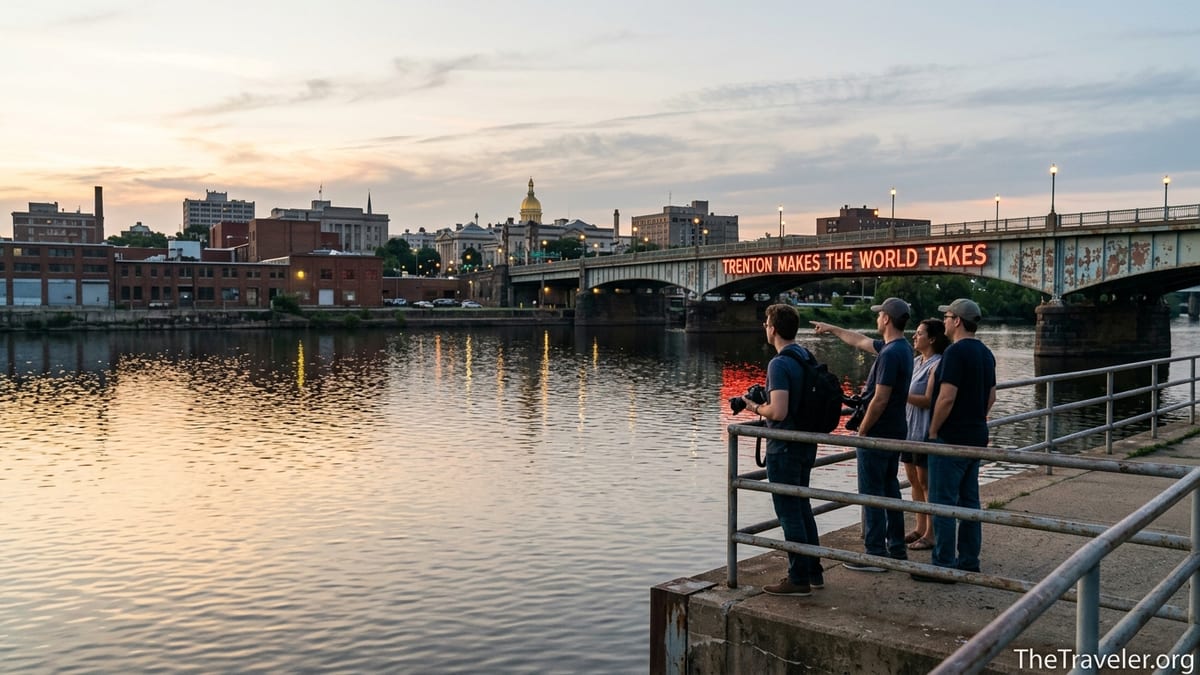
Further north and south along the river, small parks and overlooks give changing perspectives. A short drive upriver brings you to viewing spots where you can see the famous “Trenton Makes The World Takes” sign on the Lower Trenton Bridge, its red letters lighting up at night. Many visitors choose to photograph it from the New Jersey side in the evening, when reflections shimmer on the water. It is one of the most instantly recognizable images of the city and a reminder of its role in steel, rubber, and ceramic production in the 19th and 20th centuries.
During warmer months, look for seasonal outdoor events along the riverfront, from fun runs and charity walks that use the canal path to occasional festivals and food truck gatherings in nearby parking lots and plazas. These can be good opportunities to sample local vendors without committing to a full sit-down meal, and they draw a mix of city residents, suburban families, and cyclists passing through on longer rides. As with much of Trenton, the atmosphere along the river is low-key and local rather than heavily commercialized, so come expecting everyday life rather than a polished tourist promenade.
Eating and Drinking: Trenton Tomato Pie, Latin Flavors, and More
Trenton’s food scene reflects both its industrial-immigrant roots and its current demographics, with Italian, Puerto Rican, Dominican, and Mexican influences especially strong. The single most famous local specialty is the Trenton-style tomato pie, a cousin of pizza where the cheese goes on first and the tomato sauce is ladled over the top. Some of the classic pizzerias that serve it sit just outside city limits in the suburbs, but within or near Trenton you can still find long-running spots where families share pies on metal stands and argue politely over whether a plain cheese or a half-sausage, half-onion order is more authentic.
In and around the downtown core, small diners and luncheonettes cater to state workers and locals on weekdays, offering hearty sandwiches, breakfast platters, and daily specials at prices that are often under or around ten dollars. You might find a short-order cook flipping pork roll, egg, and cheese sandwiches on a griddle while a line of people in business attire, construction gear, and jeans waits for takeout coffee. Hours can skew early in the day, with some places closing by mid-afternoon, so lunch is often the best time to explore this side of the food scene.
On the south and east sides of the city, a wave of Latin American restaurants and food trucks adds color and variety. It is common to find counter-service spots where you can order arroz con gandules, pernil, tacos al pastor, or Dominican-style stews, with generous portions served in foam clamshells or on plastic trays. Many of these businesses operate on thin margins and cater primarily to neighborhood regulars, but visitors who are comfortable with a no-frills setting are usually rewarded with flavorful plates for well under twenty dollars per person. Basic Spanish helps, but menus often include photos or English translations.
For an evening drink, Trenton’s options are modest but growing. A couple of craft breweries and bars within the city limits or just beyond pour local ales and lagers, sometimes naming beers after Revolutionary themes or neighborhood landmarks. On weekends when the Trenton Thunder baseball team plays at its nearby stadium across the river in Mercer County, some visitors combine a late-afternoon museum visit with a casual dinner and a night game, grabbing beers and ballpark snacks as the sun sets over the river. Even without a planned outing, it is worth asking locals or your hotel desk which places currently feel lively and welcoming, since openings and closings can shift from year to year.
Events, Neighborhood Culture, and Practical Tips
Beyond Patriots Week, Trenton’s annual calendar is dotted with events that give texture to local life. The city’s Heritage Week, typically scheduled around state history milestones, highlights historic churches, libraries, and civic institutions with talks, tours, and children’s activities. One year you might find a presentation at the Trenton Friends Meeting House about the role of Quakers in the Revolution; another year, librarians at the New Jersey State Library might display rare documents from the Revolutionary and reform eras. Most events are free or low-cost, making them accessible to travelers on a budget.
Mill Hill Park and other green spaces host cultural festivals that showcase everything from Caribbean music to Juneteenth commemorations. A pride festival in June might bring rainbow flags, local bands, and community organizations to the park, while a fall arts fair could line the walkways with painters, jewelry makers, and food stalls. These gatherings are excellent opportunities to see how diverse Trenton’s population is today, hear local musicians, and pick up a handmade souvenir rather than a mass-produced trinket.
Trenton’s compact size makes it navigable by car, train, or on foot in targeted areas. The city’s main train station sits on the Northeast Corridor, with regular service connecting to New York City and Philadelphia, and from there local buses and rideshares can take you to downtown sights in a few minutes. Drivers should factor in one-way streets and government-complex parking garages near the State House and museum district, where daily rates are comparable to other small East Coast cities. Street parking regulations are actively enforced on weekdays, especially in the core government area, so always check signs before leaving your car.
As with many small cities, Trenton has blocks that feel lively and others that are quieter or more run-down. Visitors who are used to heavily touristed destinations may be surprised by how uncrowded many sidewalks and attractions are, especially on weekends when state offices are closed. Basic urban common sense applies: stay aware of your surroundings, avoid wandering unfamiliar areas late at night, and when in doubt, ask museum staff, shopkeepers, or restaurant owners which routes they recommend. In return, you will often get candid tips that help you discover bakeries, murals, or viewpoints not on any official map.
The Takeaway
Trenton will likely never compete with New York or Philadelphia for sheer volume of attractions, and that is part of its appeal. A day or weekend here lets you stand where the course of the American Revolution pivoted, step into a working state capitol, and then sit on a park bench along the Assunpink or the Delaware watching commuters head home. The mix of Revolutionary landmarks, modest but thoughtful museums, murals and maker spaces, and deeply local food spots gives the city a personality that is quieter but more authentic than many visitors expect.
For travelers who like their history textured with real neighborhoods and everyday life, Trenton offers exactly that combination. Plan your visit around a few anchor sites like the Old Barracks Museum, Mill Hill, and the State Museum, then leave unscheduled time to follow the sound of drums from a reenactment, stumble on a new mural, or duck into a crowded lunch counter. In doing so, you will discover a capital that wears its past openly but continues to evolve in ways that reward those who pay attention.
FAQ
Q1. How much time do I need to see the main sights in Trenton?
Most visitors can see key historic sites such as the Old Barracks Museum, Trenton Battle Monument, Mill Hill Park, and the New Jersey State Museum in a full day. If you want to add riverfront walks, neighborhood exploring, and an evening event or baseball game, plan on a weekend stay.
Q2. Is Trenton safe for visitors?
Trenton is a working city with both busy and quieter areas. The main attractions around the State House, Old Barracks, downtown, and Mill Hill see regular foot traffic, especially during the day. Use normal city awareness, avoid poorly lit unfamiliar streets late at night, and ask locals or hotel staff for up-to-date advice on routes and parking.
Q3. When is the best time of year to visit Trenton?
Spring and fall offer comfortable temperatures for walking and outdoor events. Late December is popular for Patriots Week battle reenactments, though it can be cold and crowded. Summer brings festivals and garden tours but also heat and humidity, while winter outside of holiday events tends to be quieter and better for museum-focused trips.
Q4. Do I need a car to get around Trenton?
You can visit Trenton without a car if you arrive by train and focus on downtown, the State House, museums, and Mill Hill, which are reachable by walking or short rideshares. A car is useful if you want to explore farther along the Delaware & Raritan Canal trail, visit outlying neighborhoods, or combine Trenton with other central New Jersey sights.
Q5. How much does it cost to visit the museums and historic sites?
The New Jersey State Museum generally offers free admission with a suggested donation, while the Old Barracks Museum charges a modest ticket fee, typically in the mid-teens for adults with discounts for seniors and students. Special exhibits, the planetarium, or guided tours may have additional charges, so checking current prices before you go is sensible.
Q6. What is special about Trenton’s Revolutionary War history?
Trenton was the site of two key Revolutionary War battles in late 1776 and early 1777 that boosted American morale and helped shift momentum after earlier defeats. Walking between the Old Barracks, the Battle Monument, and Assunpink Creek lets you see how close together these events unfolded and why the city is often called a crossroads of the Revolution.
Q7. Where can I try authentic Trenton tomato pie?
Tomato pie, a local style of pizza with cheese underneath the sauce, is served at long-running pizzerias in and around Trenton. Some classic spots sit just outside city limits in neighboring towns, while others are a short drive or rideshare from downtown. Ask museum staff or locals for their current favorite, since loyalties and ownership can change.
Q8. Are there good options for families with children?
Yes. Families often combine the Old Barracks Museum, which features engaging costumed interpreters, with the New Jersey State Museum’s hands-on exhibits and planetarium shows. Mill Hill Park, the Delaware & Raritan Canal trail, and seasonal events like festivals or baseball games provide space for kids to run around between more structured stops.
Q9. Can I tour the New Jersey State House?
On most weekdays, the State House offers free guided tours that cover public areas such as legislative chambers and ceremonial spaces. You will go through security screening similar to other government buildings, and tour times can change when the legislature is in session, so it is wise to confirm schedules in advance.
Q10. What should I wear and bring for a day in Trenton?
Comfortable walking shoes are important, since you will likely be on your feet exploring historic streets, museums, and parks. In warmer months, bring sunscreen and a reusable water bottle for canal or river walks; in winter, dress in layers for moving between indoor and outdoor sites. A small backpack or crossbody bag is convenient, but avoid large or restricted items when visiting government buildings.