


Digital eSIMs have quickly become one of the easiest ways to stay connected abroad, and Airhub is one of the names that now appears alongside bigger players in the space. It offers data, calls, and SMS across more than 190 countries, often at prices that look far better than what major carriers charge for international roaming. Before you rely on Airhub for a long-haul trip, though, it is worth understanding exactly how the service works in practice, what kind of plans it sells, and the real strengths and weaknesses travelers have reported from the road.
Get the latest updates straight to your inbox!
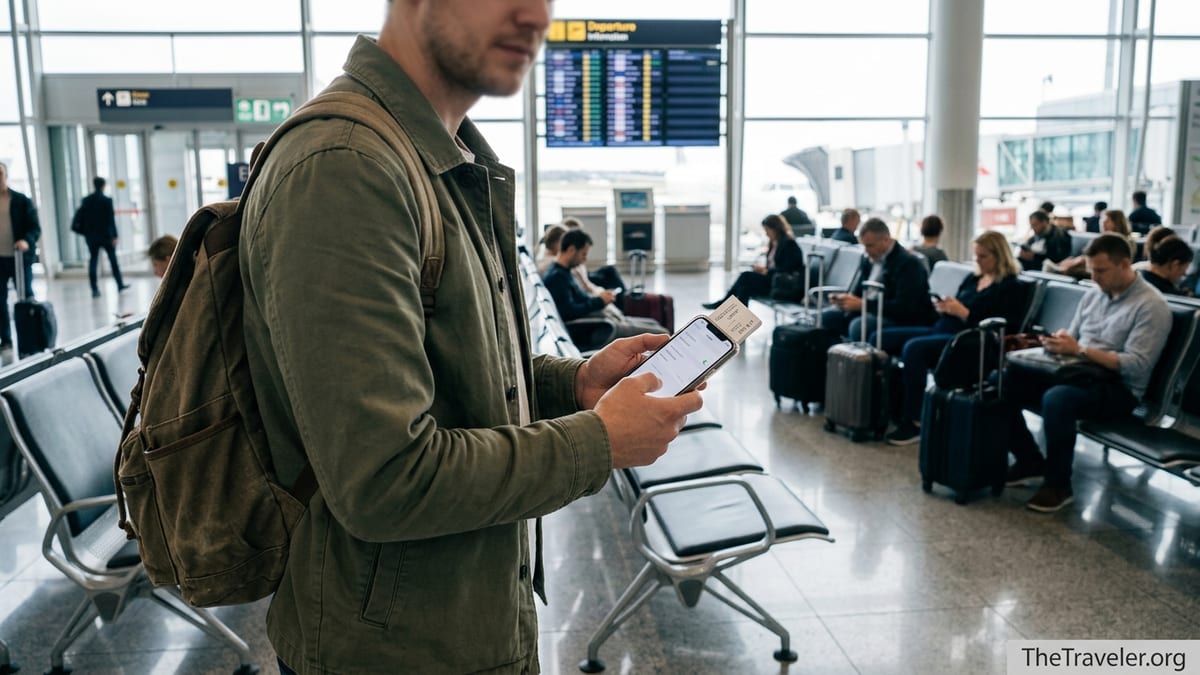
What Airhub Is and How It Works
Airhub is a travel eSIM provider that sells prepaid and in some cases postpaid mobile plans that you download digitally to your phone instead of inserting a physical SIM card. According to its own product pages, it has coverage in more than 190 countries, including popular destinations such as the United States, Canada, France, Spain, Italy, Japan, Thailand, and the United Arab Emirates. In many of these places, Airhub offers multiple plan options per country, from small data bundles for a few days to larger packages intended for longer trips.
You buy an Airhub plan through its website or the Airhub app on iOS and Android. The process is similar to other eSIM providers: you choose your destination, pick a plan, pay with a card or digital wallet, then either scan a QR code or install the eSIM directly through the app. Once installed, the eSIM appears in your phone’s mobile data settings alongside your regular carrier line, and you can toggle which one you want to use for data and calls. For example, a traveler from New York heading to Paris could purchase a France eSIM that activates on arrival and keep their US number active only for iMessage or WhatsApp.
Unlike many competitors that focus on data-only plans, Airhub markets combined packages that can include local data, local call minutes, SMS, and in some cases international calling minutes. A typical example is a United States plan that includes a data allowance plus domestic calls and texts for 30 days, which can be attractive if you expect to call hotels, restaurants, or rideshare drivers directly on local numbers instead of relying on internet-based apps.
Technically, Airhub is not a mobile network operator itself. It partners with existing carriers in each country and resells access through its own brand and app. This is standard practice in the travel eSIM market, but it means your experience will depend heavily on which local network your specific plan uses and how well that partner actually performs in the cities and regions you visit.
Coverage, Countries, and Where Airhub Works Best
For many travelers, the biggest draw of Airhub is sheer coverage. The company promotes service in over 190 countries, with particularly heavy booking volumes for destinations such as the United States, the United Kingdom, France, Spain, Italy, Germany, Switzerland, Egypt, Japan, Thailand, Singapore, Vietnam, Turkey, Qatar, Kuwait, the UAE, and Saudi Arabia. That breadth matters if you have a multi-country itinerary or are heading somewhere less mainstream where not every eSIM provider has a local deal in place.
Consider a traveler planning a three-week trip that starts in London, continues through Paris and Barcelona, then finishes with a stopover in Istanbul. In theory, they could stitch together individual Airhub plans for the UK, France, Spain, and Turkey, or choose a regional Europe or global plan where available. The advantage is that they can manage everything inside the same app and avoid queuing at kiosks in each airport. However, because the underlying local carrier may change from country to country, performance and speeds can vary noticeably along the route.
Airhub can also be useful in regions where buying a physical SIM is inconvenient or where language barriers make registering a local card tricky. For example, a first-time visitor to Japan arriving late at Tokyo Haneda Airport might prefer to land with an eSIM already installed rather than navigating vending machines or counters after a long flight. By purchasing a Japan eSIM before departure and activating it on landing, they can immediately use maps to find the train into the city and message their hotel.
That said, coverage on paper is not the same as reliable connectivity in practice. Independent testing published in 2026 by technology outlets that compared multiple travel eSIM providers found Airhub strong on the number of countries it served and on the variety of plans per destination, but experiences varied when it came to speed consistency and network quality in specific locations. In busy urban centers like Paris or Bangkok, Airhub customers may see perfectly good 4G or 5G speeds, while in rural areas or on long train journeys they might face slower data or more frequent drops depending on the local partner network and congestion at peak times.
Plans, Pricing, and How Airhub Compares
Pricing is one of Airhub’s headline selling points. On its site, some European country plans start at just a few dollars for several gigabytes of data over a week, and there are often more than ten plan options for a single destination. For example, a short-stay visitor to France might see a budget plan with a smaller data allowance at a lower price, plus medium and large packages aimed at travelers who stream more or stay longer. In North America, Airhub frequently offers United States plans with combined data and unlimited local calls for about what a major US carrier might charge for a single day of international roaming.
These prices can look especially appealing when compared with traditional roaming from home carriers. A US traveler whose carrier charges around 10 dollars per day to use their domestic plan abroad could quickly spend more than 100 dollars on a ten-day trip to Italy, while an Airhub eSIM with enough data for maps, messaging, and casual browsing might cost a fraction of that. Even if they buy two separate eSIMs, one for Italy and another for a short hop into Switzerland, the total often remains below the roaming bill they would otherwise face on return.
However, it is important to compare Airhub thoughtfully with other digital-only providers such as Airalo, Nomad, and Holafly. Independent eSIM comparison sites and travel tech reviewers in 2025 and 2026 often highlight Airalo for its polished app and clear data tracking, Holafly for its unlimited data offers in certain countries, and Nomad for aggressive per-gigabyte pricing in Europe and North America. Airhub slots into this landscape more as a coverage and flexibility specialist, with many plan variants per country and the ability to bundle voice and SMS, rather than always as the single cheapest option for pure data.
Real-world examples illustrate the trade-offs. A backpacker planning a one-month rail trip through Germany, Austria, and the Czech Republic might find that a regional Europe data eSIM from a competitor works out slightly cheaper per gigabyte than buying multiple Airhub country plans. By contrast, a digital nomad spending three months in the United States who needs a local number for client calls may prefer an Airhub subscription-style plan that combines data with unlimited domestic minutes, because alternative providers often focus on data-only packages that still leave them relying on internet calling apps.
Real Traveler Experiences: Praise and Red Flags
Traveler feedback on Airhub is mixed and polarized. On the positive side, technology publications that tested several travel eSIMs in 2026 described Airhub as a trusted option for broad coverage, praising the clean, minimalist interface of the app and the fact that it offers many different plans per country. In particular, reviewers liked that some Airhub plans include local voice minutes and SMS, which many rival eSIM providers do not consistently offer. For travelers who want to make traditional phone calls to local numbers without juggling additional apps, this can be a genuine advantage.
Alongside that praise, many individual users report entirely smooth trips. A typical success story might be a Canadian traveler who buys an Airhub eSIM for a two-week vacation in Spain. They install the eSIM the night before departure, turn off their home carrier’s roaming, and land in Barcelona with data working within minutes. Over the course of the trip, they use maps in Barcelona, Valencia, and Seville, upload photos over hotel Wi-Fi, and still have data left at the end. For this type of moderate-use scenario in well-covered urban areas, Airhub often performs exactly as advertised.
At the same time, there is a noticeable volume of critical posts about Airhub in online communities dedicated to eSIMs and budget travel. Some travelers describe situations where an Airhub global or regional plan worked in only a subset of the countries it claimed to cover, or where speeds dropped to an almost unusable level despite full signal bars. Others recount buying large data bundles for multi-country Europe trips, only to find that the eSIM either would not connect on arrival or required repeated manual network selection changes with little guidance from support.
The most serious frustration tends to center around customer service and refunds when things go wrong. Several users detail long waits for email responses, difficulty getting approval for refunds despite marketed money-back guarantees, or support agents attributing poor performance to local coverage issues without offering practical solutions. While every travel eSIM company attracts some negative reviews, the pattern here suggests that anyone considering Airhub should be prepared with a fallback plan if connectivity is critical, such as being willing to buy a local physical SIM or a backup eSIM from another provider if the first one fails during a trip.
Key Limitations, Fine Print, and Common Pitfalls
Before committing to Airhub for international travel, it is important to read the plan details carefully and understand several specific limitations. One of the most relevant for heavy users is that Airhub does not currently market truly unlimited data plans in the way some rivals do. Data bundles have fixed caps, and while these often are generous for short trips, they may not be ideal for remote workers who plan to tether a laptop or stream high-definition video regularly. In practice, travelers who burn through a 20 or 30 gigabyte package mid-trip may find themselves topping up more often than expected.
Another limitation is the lack of local phone numbers attached to many plans. While some offerings include local call minutes, in several regions Airhub still operates with virtual numbers or call routing solutions that are more complex than simply receiving a straightforward local SIM with a visible domestic number on your phone. Travelers who specifically need a local number for two-factor authentication with banks or government services should check whether the plan they choose includes an actual number that can receive SMS codes, and not assume this is available by default.
Travelers also report confusion around activation rules. Some Airhub plans activate immediately upon installation, while others activate when the eSIM first connects to a local network in the destination country. A common pitfall is installing the eSIM too early, such as while still at home, then accidentally triggering activation before the trip starts. For instance, a traveler might test their new Europe eSIM on a local partner network at home and unknowingly start the validity period days before their departure. By the time they land in Rome, a seven-day plan is already half used on the calendar even though little or no data was consumed.
Finally, Airhub’s refund and guarantee policies can be stricter than marketing headlines suggest. While the company promotes money-back assurances in some materials, user reports indicate that refunds are often contingent on detailed troubleshooting steps and proof that the problem is on Airhub’s side rather than due to device compatibility or local coverage. If you buy a large regional plan, especially a global one intended to cover many destinations, it is wise to test it early in your trip while you still have alternatives, and keep expectations realistic about how easily you will recover funds if performance falls short.
How to Prepare Your Phone and Use Airhub Safely
Getting the basics right before departure goes a long way toward making Airhub work smoothly. First, confirm that your smartphone supports eSIM and is fully unlocked by your carrier. Most recent iPhone models and high-end Android devices such as Google Pixel and Samsung Galaxy lines support eSIM, but older budget devices often do not. If your phone is financed or still under contract, call your carrier to confirm that it can accept eSIMs from third parties before buying a plan.
Next, decide how you want to handle your primary number. Many travelers keep their home SIM active but disable data roaming, then use Airhub exclusively for mobile data. This way, they can still receive occasional SMS codes or urgent calls on their usual number while routing all apps through the cheaper eSIM data connection. For example, an American traveler in Tokyo might switch off data on their US carrier line, set Airhub as the default data source, and still receive a one-time passcode from their bank over the US number when needed.
It is also smart to take screenshots of your plan details and any installation instructions before you leave, especially if you expect to land without Wi-Fi. Save or print the QR code if your phone allows it, and download the Airhub app in advance so that you do not find yourself in an airport trying to install everything on patchy free Wi-Fi. When you arrive, connect to airport Wi-Fi if available, then activate and test the eSIM in a calm spot rather than rushing through the process at passport control.
Once the eSIM is active, monitor your usage and network selection inside your phone settings. If speeds suddenly drop in the middle of a city, manually switching to another available network operator sometimes restores acceptable performance, particularly in countries with multiple partner carriers. If you rely on tethering a laptop for work, test hotspot functionality on day one in a low-stakes setting instead of waiting until just before a video call.
Alternatives and When to Consider Another Option
Even if Airhub looks like a strong candidate, it is worth comparing it with at least one or two alternative solutions for your specific itinerary. For short city breaks in well-connected destinations, digital-only providers such as Airalo, Nomad, and Holafly often offer very similar or better value, with some focusing on unlimited data in select countries and others on very granular regional plans. Travel technology reviews in 2026 frequently highlight these three providers as benchmarks in the eSIM market, particularly praising app quality and transparent data tracking.
For example, a traveler heading to Seoul and Tokyo for ten days might compare a combined Airhub Asia plan with separate country plans from Nomad or Airalo. If they do not care about voice minutes and plan to rely on messaging and VoIP apps, a straightforward data-only plan from a competitor could be simpler and slightly cheaper. Conversely, if they intend to make regular local calls to hotels, restaurants, or local tour operators, an Airhub package with bundled voice minutes may justify a small price premium.
In some situations, a traditional local physical SIM can still beat any travel eSIM on both price and reliability. Long-term visitors, such as students spending a semester in Spain or digital nomads planning six months in Thailand, may find that visiting an official carrier store within a day or two of arrival yields a full local plan with generous data, domestic calls, and a local number that is well supported in banks and government systems. Airhub and other travel eSIMs are often better suited to trips measured in days or a few weeks rather than many months.
If you are risk-averse or traveling for work where connectivity is mission-critical, consider splitting your bets. You might buy a modest Airhub plan to bridge the gap from the airport and your first day in-country, then switch to a physical SIM once you are settled. Alternatively, you can carry a secondary eSIM from another provider as backup. Spending a bit extra on redundancy can be far cheaper than missing an important meeting or losing access to navigation in an unfamiliar city.
FAQ
Q1: Is Airhub safe and legitimate to use for international travel?
Airhub is a real company with broad coverage and has been included in independent tests of travel eSIMs, which suggests it is a legitimate service rather than a fly-by-night scam. However, online user reviews show a mix of very positive and very negative experiences, especially around customer support and refunds, so it is wise to treat it as one option among several and not assume it will be flawless on every trip.
Q2: How do I know if my phone will work with an Airhub eSIM?
Your phone must support eSIM and be unlocked from your home carrier. Most recent iPhones and many newer Android devices such as Pixel and Galaxy models meet these requirements. You can usually confirm eSIM support in your phone’s settings under mobile or cellular options, and you should contact your carrier to verify that the device is unlocked before purchasing an Airhub plan.
Q3: Can I keep my regular phone number while using Airhub abroad?
Yes. You can keep your physical SIM with your regular number installed and active, but turn off data roaming on that line. Then you set Airhub as the default data connection. This lets you continue receiving calls or SMS on your usual number, such as bank verification codes, while using the cheaper eSIM data for everyday internet use.
Q4: Does Airhub offer truly unlimited data plans?
At the time of writing, Airhub emphasizes fixed data bundles rather than widely marketing true unlimited data plans. While some packages are generous, they still include caps, which may not suit travelers who plan to stream video heavily or tether a laptop for work. If unlimited data is essential, it can be helpful to compare Airhub with providers that specifically advertise unlimited offers in your destination.
Q5: Will Airhub give me a local phone number for calls and SMS?
Some Airhub plans include local call minutes and SMS, and in certain countries you may receive a local-style number for making and receiving traditional calls. However, this is not guaranteed across all destinations and plan types. If a real local number is important for you, for instance to receive one-time passwords from local services, check the individual plan description carefully before purchase.
Q6: What should I do if my Airhub eSIM does not work when I land?
First, connect to airport Wi-Fi if possible and open the Airhub app to check whether the eSIM shows as installed and active. Confirm that mobile data is enabled for the Airhub line in your phone settings and try manually selecting a different local network. If it still does not work, contact Airhub support through the app and document your steps. In parallel, be prepared to buy a local SIM or a backup eSIM from another provider so you are not stranded without connectivity.
Q7: Can I use my Airhub eSIM to share internet with my laptop?
In many cases, yes, but hotspot and tethering support depends on both the specific plan and the local carrier Airhub uses in that country. Some users report successful tethering on Airhub, while others find it blocked or unstable. If you plan to work remotely and rely on tethering, test hotspot functionality early in your trip and consider a larger data allowance or a secondary connection as backup.
Q8: How does Airhub compare to buying a local physical SIM card?
Airhub is usually more convenient, since you can install it before departure and avoid language barriers or lines at airport kiosks. It can also be cheaper than international roaming from your home carrier. However, a local physical SIM bought in-country is sometimes less expensive and may provide more reliable speeds and a properly supported local phone number, especially for long stays of several months.
Q9: Can I top up or extend my Airhub plan while I am traveling?
Airhub typically allows you to buy additional plans or top-ups through its app while you are abroad. In practice, many travelers simply purchase another eSIM package for the same country when they run out of data or their validity period ends. Before traveling, confirm in the app that top-ups are available for your chosen destination so you know you can extend service without switching providers mid-trip.
Q10: Is Airhub the best eSIM provider for international travel?
No single provider is best for every traveler and every destination. Airhub stands out for its wide country coverage and the variety of plan options, especially those with calls and SMS. Other brands may offer better app experiences, lower per-gigabyte prices in specific regions, or unlimited data in selected countries. The safest approach is to compare Airhub with at least one or two competitors for your particular route and, if connectivity is critical, consider having a backup option ready.