


The Blue Mosque, or Sultanahmet Camii, is one of Istanbul’s most visited landmarks and an active place of worship. That combination means the dress code is taken seriously, especially since restoration works finished and visitor flows increased again. Knowing exactly what to wear before you arrive will save you time in line, avoid awkward last-minute scrambling for scarves or skirts, and help you step inside respectfully and comfortably.
Get the latest updates straight to your inbox!
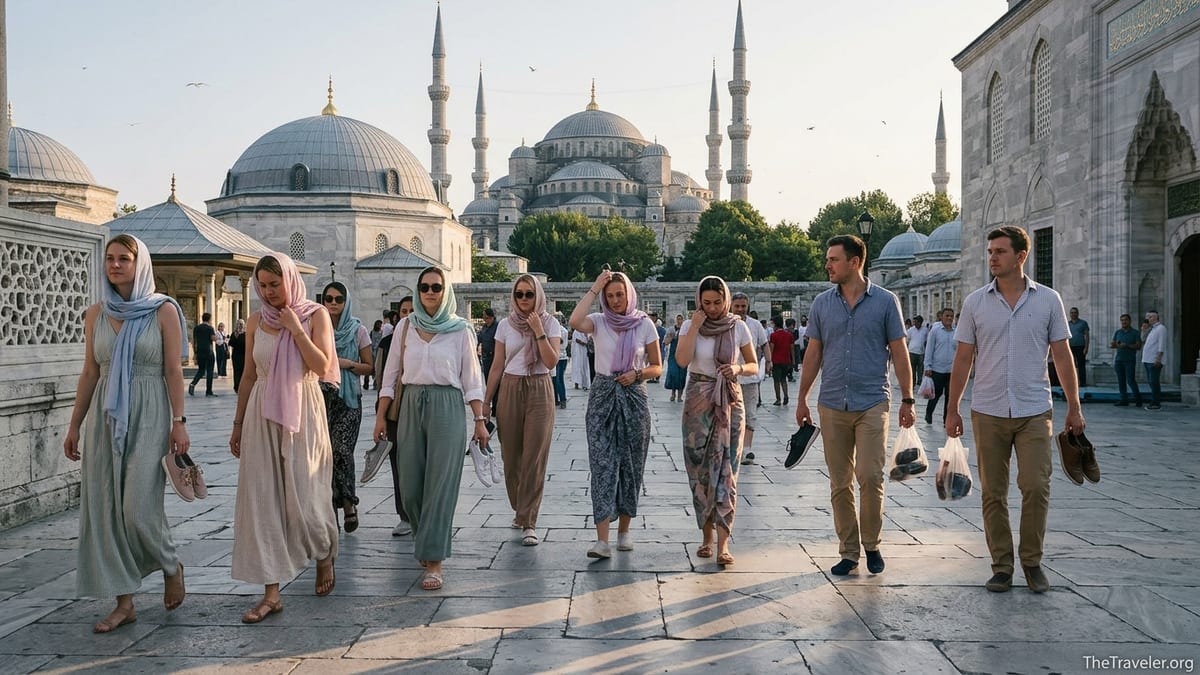
Understanding the Blue Mosque Dress Code
The Blue Mosque follows the general mosque guidelines used across Turkey, with additional on-site checks due to the sheer number of visitors. Everyone, regardless of gender or religion, must cover shoulders and knees, avoid tight or transparent clothing, and remove shoes before stepping onto the carpeted prayer hall. The mosque is free to enter, and the dress rules are the main filter at security and at the visitor entrance on the south side of the building.
For women, the minimum requirements are covered shoulders and arms, covered legs down to at least mid-calf, and a headscarf that hides hair. Short sleeves that end just above the elbow are often accepted if they are not tight, but attendants may still insist on a shawl if the sleeve is borderline. Low-cut necklines, crop tops, and slit skirts that ride above the knee are almost always flagged at the door. Many travelers report attendants checking side slits in dresses or skirts and handing out wraparound skirts when slits are too high.
For men, shoulders and legs to below the knee must be covered. Knee-length tailored shorts that fully cover the knees sometimes pass, but you can be asked to use one of the wrap skirts if they ride up. Sleeveless shirts, vests, sports singlets and very tight T-shirts are typically refused. Jeans, chino trousers, linen pants or modest long shorts with a regular cotton shirt are all widely accepted and are what you will see most Turkish men wearing if they visit as tourists.
Because the Blue Mosque is an active place of worship, there are additional modesty expectations beyond clothing. Visitors are expected to speak quietly, avoid posing for glamorous photos in the prayer area, and skip any clothing with large offensive slogans. Think in terms of what you would wear to a religious ceremony at home: respectful, clean and reasonably conservative. This mindset will keep you within the spirit of the rules, even as small details vary at the discretion of the attendants on a given day.
What Happens If Your Outfit Is Not Acceptable
If you arrive at the Blue Mosque underdressed, you will not be turned away automatically. Instead, you are usually directed to a kiosk or stand near the visitor entrance where staff distribute or rent simple cover-ups. These are lightweight wrap skirts, poncho-style tops and basic scarves designed strictly for modesty, not for style. Availability can change with the season and time of day, and there can be short queues for these items during peak visiting hours.
In recent seasons, many travelers have reported that basic coverings for shoulders and legs are still provided on site, but headscarves for women can run out at the busiest times in summer. That means you may end up buying a scarf from one of the souvenir stands on the path between Sultanahmet tram stop and the mosque, where vendors sell cotton and viscose scarves that work well as temporary hijabs. Prices there change frequently, but visitors commonly report paying a modest amount in local currency for a basic scarf bought at short notice.
If attendants decide your clothes are too tight, too short or too revealing, they will usually point to exactly what needs to be covered and hand you the relevant garment. It is rare to be denied entry altogether unless you refuse to use the cover-ups or your outfit is clearly inappropriate. However, relying entirely on the mosque’s loan items means you may have to wear something that is synthetic, hot and not very comfortable on a crowded summer day.
A better strategy is to treat the on-site coverings as a backup plan. Arrive already dressed in something that almost certainly complies, then fine-tune with a scarf or shawl if you are asked. This not only shows respect but keeps you from wasting your limited sightseeing time adjusting unfamiliar garments in the middle of a busy security line.
Practical Outfit Ideas for Women
For many female travelers, the key question is how to stay cool in Istanbul’s summer heat while remaining modest. Daytime temperatures in July and August often climb well above 30 degrees Celsius, and you may be queuing in direct sun before entering. A reliable option is a loose, ankle-length cotton or linen dress with sleeves to the elbow. Think of the breathable, relaxed-cut dresses sold by global brands such as H&M, Uniqlo or Mango in their summer collections. Pair this with a light pashmina or viscose scarf that can be wrapped over your hair for the mosque but worn loosely around your shoulders elsewhere.
If you prefer separates, wide-leg trousers in natural fabrics, combined with a long, loose blouse that falls at least mid-hip, work very well. Travelers often mention wearing linen palazzo pants or light jersey culottes with a long-sleeved tunic from brands like Zara or Marks & Spencer. Darker colors are more forgiving in crowded spaces, but many women opt for soft neutrals like beige, light blue or olive that look good in photos taken in Sultanahmet Square.
Leggings are acceptable only if fully covered by a tunic or dress that reaches well below mid-thigh. Shorts, mini skirts and short skater dresses will almost always require you to add a wrap skirt at the entrance. If you own a sarong or beach pareo, it can double as a modesty layer, worn over shorter clothing when you approach the mosque. This approach is popular with travelers who spend the morning along the Bosphorus or on a cruise and visit the mosque later that same day.
Footwear is flexible, since you will remove your shoes before stepping inside. Choose shoes that are easy to slip on and off while standing in line. Many visitors opt for simple leather sandals, lightweight trainers or slip-on sneakers. Remember that you will be walking on stone and paving around Sultanahmet, so avoid shoes that rub or blister easily just because you think they look more conservative.
Practical Outfit Ideas for Men
Men visiting the Blue Mosque have a simpler checklist, but poor preparation can still lead to discomfort. Long, breathable trousers are the safest choice in all seasons. Linen or lightweight cotton chinos in beige, navy or khaki are ideal, and you will see similar styles on many European and Turkish visitors. In the hotter months, some men wear loose sports pants or technical hiking trousers, which are modest and comfortable for a full day of sightseeing that may also include the Grand Bazaar or the Basilica Cistern.
On top, a short-sleeved shirt with a collar nearly always passes the dress code. Polo shirts or casual button-downs from brands like Decathlon, Uniqlo or Gap are popular because they handle heat better than thick T-shirts. Avoid sleeveless gym tops, very tight athletic shirts or anything with large, aggressive slogans across the chest. A simple cotton T-shirt is usually fine, but a collared shirt adds a slightly more respectful tone and often makes attendants more relaxed about borderline shorts or trousers.
Shorts are the main potential problem for men. Many travelers describe wearing longer tailored shorts that fully cover the knees and being admitted, while others with slightly shorter shorts are given a wrap skirt. If you are visiting in high summer and really want to wear shorts, bring a light wrap or sarong that you can tie over them before joining the queue. Alternatively, pack a pair of thin travel trousers in your daypack and pull them on over your shorts just for the mosque visit.
Men also need to remove shoes before entering, so slip-on trainers, simple loafers or sandals with secure straps are all good options. Socks are optional inside, but the marble floors and carpets can feel cool, even in summer. Many visitors prefer to keep thin ankle socks on for comfort and hygiene, especially when the prayer hall is crowded.
Seasonal and Weather Considerations
Istanbul’s climate makes seasonal planning important. In summer, long, flowing clothing that loosely covers your arms and legs is far more comfortable than tight jeans or thick leggings. Many visitors rely on airy maxi dresses, wide-leg linen trousers, and oversized cotton shirts that can be rolled at the sleeves. Breathable fabrics such as cotton, linen and lightweight viscose manage the combination of heat and humidity better than synthetic blends, especially when you are waiting outside under the sun in the middle of the day.
In spring and autumn, the weather can swing between sunny and cool, especially around the Bosphorus. A layered outfit works best: for example, a long-sleeved T-shirt under a knee-length cardigan or light trench coat, combined with jeans or chinos. You can remove the outer layer while walking around Sultanahmet Square, then put it back on if you feel underdressed approaching the mosque. This flexibility is useful if you also plan to visit cafes in nearby neighborhoods like Cankurtaran or Sirkeci, where people dress more casually.
Winter visits to the Blue Mosque require warmth as well as modesty. While the prayer hall is enclosed, the floors can feel cold and the courtyard is exposed to wind and rain. Many locals and international visitors wear wool coats, padded jackets and scarves outside, then keep a simple sweater or long-sleeved top underneath that still meets the dress code. Thermal leggings or long underwear can be worn under jeans or wool trousers without any issue, and thick socks are a good idea since you will be walking barefoot or in socks on the carpets.
Regardless of season, remember that Istanbul often experiences bursts of rain. An inexpensive compact umbrella or a light waterproof jacket in your daypack can make the difference between a comfortable wait in line and a miserable one. Just store wet umbrellas carefully at the entrance and avoid dripping water around the prayer area.
Headscarves, Bags and Other Practical Details
For women, headscarves are the main addition to everyday outfits. The mosque’s own supply can vary, so packing your own scarf is the most reliable option. A rectangular scarf in cotton, linen or viscose that is at least 170 cm long tends to be the easiest to style. Many travelers buy a scarf in Istanbul itself, either at the Grand Bazaar or at the smaller Arasta Bazaar just behind the Blue Mosque, where stalls sell Turkish-made cotton and silk-blend scarves in a wide range of colors and patterns. These double as attractive souvenirs long after your trip.
You do not need to know any special wrapping technique. The simplest method is to place the scarf over your head so it covers your hair and neck, then cross the ends loosely under your chin and drape them over your shoulders or chest. Safety pins are optional, but some women like to tuck one small pin into a handbag pocket to secure the scarf against wind. Attendants are mainly looking for coverage of hair, neck and shoulders, not for a particular regional style of hijab.
As for bags, modesty guidelines do not restrict size or type, but practicality matters. A small crossbody bag or compact daypack is easier when you need to remove shoes and carry them in a plastic bag inside the mosque. Many visitors use a lightweight canvas tote for this purpose. Keep valuables such as wallets and phones in a zippered inner pocket, as the area around the mosque can become extremely crowded during peak hours and there are occasional reports of pickpocketing near the queues.
If you are carrying a professional camera, be mindful of how and where you use it. Photography is allowed in most parts of the Blue Mosque’s visitor area, but avoid photographing people who are praying and keep flash turned off. Even a perfectly modest outfit can feel intrusive if paired with constant, close-range photography of worshippers during sensitive moments like Friday prayers.
How Your Mosque Outfit Fits Into a Full Day in Sultanahmet
Most travelers do not visit the Blue Mosque in isolation. A common first-day itinerary in the old city combines Sultanahmet Square, Hagia Sophia, the Basilica Cistern and often the Grand Bazaar. Planning an outfit that works across all of these stops saves time and avoids the need to return to your hotel to change. A long, breathable dress or loose trousers and a tunic for women, and chinos plus a collared shirt for men, work seamlessly at all four sites, as well as in cafes and restaurants in the surrounding streets.
If your hotel is near Sirkeci, Gülhane or along the tram line, you will likely be walking up and down hills and over uneven stone streets. Comfortable shoes should take priority over style, especially if you are carrying an extra scarf and perhaps a light sweater in your bag. Many visitors structure their day so that indoor attractions like the Basilica Cistern or the Archaeology Museums fall in the early afternoon heat, while they visit the Blue Mosque in the morning or late afternoon when the sun is lower and lining up in modest clothing is more pleasant.
Remember that prayer times affect visiting hours. Around midday and mid-afternoon prayers, the mosque closes to tourists so that worshippers can pray in peace. This can create a surge in visitors just before and after the closure. Dressing appropriately before you arrive means you can move through the entrance checks quickly and avoid missing your preferred visiting window because you needed to shop for emergency cover-ups.
Finally, keep cultural context in mind as you explore the neighboring streets of Fatih district, which tend to be more conservative than districts like Beyoğlu or Karaköy on the other side of the Golden Horn. While you do not need to dress as strictly as you do inside the mosque, outfits that feel entirely normal in London or Los Angeles may attract lingering looks here, especially away from the main tourist square. A slightly more modest version of your usual travel clothing will make you more comfortable throughout the day.
The Takeaway
Deciding what to wear to the Blue Mosque is less about mastering a complex set of rules and more about understanding the spirit of respect behind them. Covered shoulders and knees for everyone, headscarves for women, clothing that is not tight or transparent and shoes that can be easily removed will satisfy the basic requirements. Building an outfit around breathable fabrics and simple, loose silhouettes means you can meet those standards without suffering in Istanbul’s summer heat or shivering on a winter morning.
Prepare one or two mosque-ready outfits before your trip, including at least one scarf if you are a woman, and pack them in a way that fits with your broader Istanbul plans. Think about a full day that might include tram rides, long walks over cobbles, museum visits and dinner in a nearby restaurant. Clothes that look tidy, feel comfortable and err modestly on the side of caution will serve you well in every setting.
Above all, remember that the Blue Mosque is not just a famous postcard image but a living place of worship. Dressing thoughtfully helps preserve its atmosphere for those who come to pray, and it also enhances your own experience. Instead of worrying at the door about whether your hemline is too short or your shoulders are too bare, you can focus on the stunning interior tiles, the quiet rhythm of daily prayer and the feeling of standing in one of Istanbul’s most historic spaces.
FAQ
Q1. Do women have to wear a headscarf inside the Blue Mosque?
Yes. Female visitors are expected to cover their hair, neck and shoulders with a scarf or shawl while inside. You can bring your own or, if available, use one supplied at the entrance, but bringing a personal scarf is more reliable and usually more comfortable.
Q2. Are shorts allowed for men at the Blue Mosque?
Long shorts that fully cover the knees are sometimes accepted, but this depends on staff discretion. If your shorts are even slightly above the knee, you will likely be asked to wear a wrap skirt over them. To avoid any issue, lightweight long trousers are the safest choice.
Q3. Can I wear leggings or skinny jeans?
Leggings and very tight jeans are only acceptable if they are covered by a longer top or dress that reaches well past mid-thigh. If you arrive in leggings with a short top, attendants may ask you to add a wrap skirt for modesty. Looser trousers or wide-leg pants are more comfortable and less likely to cause problems.
Q4. What happens if my outfit is not considered modest enough?
If your clothing does not meet the dress code, staff at the entrance will direct you to borrow or rent simple cover-ups such as wrap skirts, poncho-style tops or scarves. You will only be refused entry if you decline to use these items or if your outfit is clearly inappropriate and cannot be reasonably covered.
Q5. Do children need to follow the same dress code?
Young children are treated more leniently, but older children and teenagers are generally expected to follow similar rules to adults. It is a good idea to dress them in T-shirts with sleeves and shorts or skirts that cover the knees, so you do not need to negotiate at the entrance.
Q6. Is there a place to store my shoes and bags inside?
You will remove your shoes before entering and usually carry them with you in a plastic bag provided at the door. Small backpacks and handbags are allowed, but keep them with you and avoid blocking walkways or prayer areas. There is no dedicated large-luggage storage inside, so leave big suitcases at your hotel.
Q7. Can I visit the Blue Mosque straight from a Bosphorus cruise or beach trip?
Yes, but plan ahead. If you are wearing beach clothing, pack modest layers in your daybag, such as a long dress, wide-leg trousers and a scarf. You can change in a restroom near the mosque or at a nearby cafe before joining the queue, so you do not rely entirely on the mosque’s loan cover-ups.
Q8. Are sleeveless tops ever acceptable?
No. Sleeveless tops, tank tops and strapless dresses are not considered acceptable for either men or women. You must cover bare shoulders with a cardigan, shirt, shawl or poncho-style covering. Bring a light layer even in midsummer so you can easily meet this requirement.
Q9. Do I need to dress modestly in the streets around the Blue Mosque too?
The streets around Sultanahmet Square are used to international visitors, so casual Western clothing is common. However, as soon as you step onto mosque grounds or into more residential parts of Fatih, modest clothing feels more appropriate and comfortable. A slightly more conservative version of your usual travel outfit is a good compromise.
Q10. Can I take photos inside if I am dressed correctly?
Photography is generally allowed in the visitor areas, regardless of what you are wearing, but modest dress should be matched with modest behavior. Keep your voice low, turn off flash, and avoid photographing people who are praying. Staff may intervene if photo shoots become disruptive or disrespectful, even if the clothing itself meets the dress code.