


For years, Payoneer has been marketed as a kind of magic wallet for global earners: open an account, get paid from anywhere, spend anywhere. For frequent travelers, though, the reality is more nuanced. Payoneer can be an incredibly useful part of your financial toolkit in some situations, and an expensive, frustrating extra step in others. The key is knowing exactly when the platform plays to its strengths and when you are better off using alternatives like Wise, Revolut, or a good no-foreign-fee credit card.
Get the latest updates straight to your inbox!
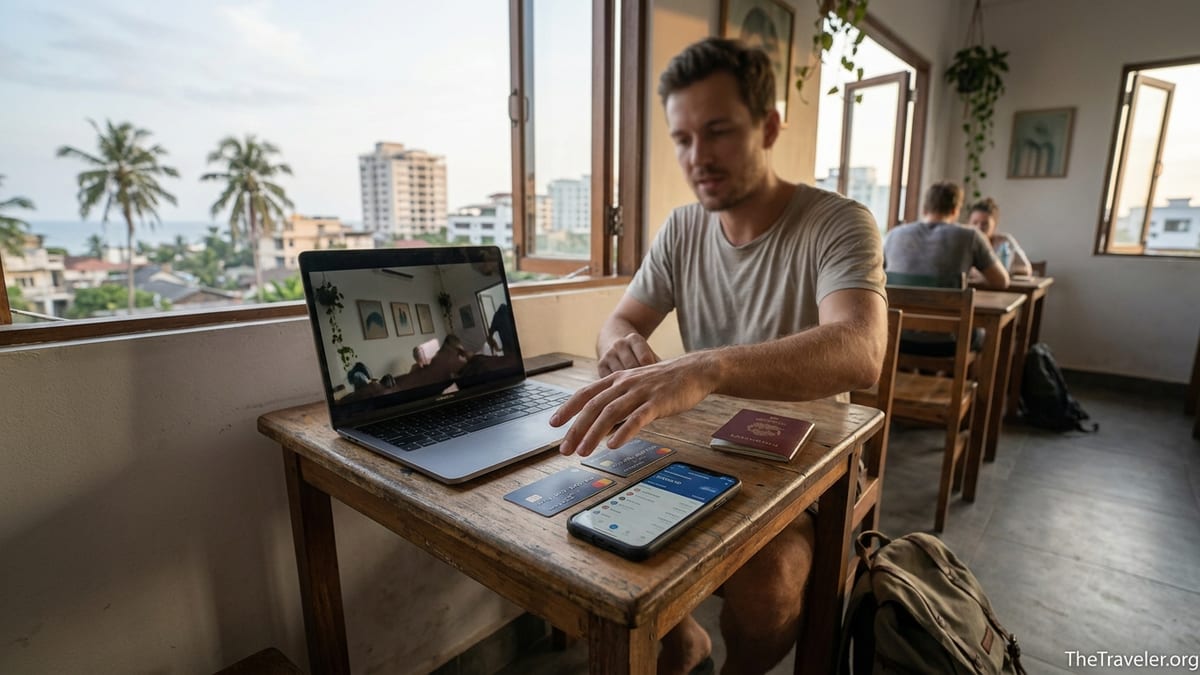
What Payoneer Really Is (And What It Is Not)
Payoneer is first and foremost an infrastructure tool for getting paid across borders. It is deeply integrated into more than 2,000 marketplaces and platforms, including giants like Amazon, Airbnb, Upwork, Fiverr, and various ad networks. In other words, for millions of freelancers, hosts, and online sellers, Payoneer is the default rail the platform uses to send money, not something they consciously chose as a travel card in the first place.
When you open a Payoneer account, you can receive money in multiple currencies into balances that work like local accounts: for example, you might have virtual receiving details in USD, EUR, and GBP. These balances can be spent with a Payoneer-branded Mastercard, withdrawn to a bank account, or used to pay suppliers and other Payoneer users. This architecture is what makes Payoneer powerful for location-independent workers who earn in one place and live in several others throughout the year.
What Payoneer is not is a cheap general-purpose travel card. Unlike dedicated travel products that focus on low foreign exchange markups and transparent ATM fees, Payoneer’s pricing is optimized around marketplace payouts and business use. There is typically a foreign exchange markup of around 2 percent above the mid-market rate when converting between currencies, plus fixed fees for withdrawals and card usage in some scenarios. For a pure tourist who only needs a way to spend on holiday, that usually compares poorly to alternatives.
Understanding this distinction is crucial. Payoneer shines when it is the most direct way to receive your income from global platforms and then use it across borders. It is rarely the optimal first-choice product for someone whose only goal is to spend cheaply abroad.
When Payoneer Makes Strong Sense for Digital Nomads
Consider a classic digital nomad scenario. You are a Brazilian designer earning primarily through Upwork and Fiverr, both of which support payouts directly to Payoneer with no fee added by the marketplaces themselves for that withdrawal. In a typical month, you might receive 2,000 USD from Upwork and 1,500 USD from Fiverr into your Payoneer USD balance, with the transfers themselves costing you nothing on Payoneer’s side.
If you are living in Chiang Mai for three months, then moving on to Lisbon and later to Tbilisi, managing local bank accounts in each country is impractical. Here, Payoneer’s combination of multi-currency balances and a Mastercard becomes genuinely helpful. You can keep your income in USD, use the Payoneer card in Thailand to pay for coworking or cafes where Mastercard is accepted, and move on without ever having opened a Thai bank account. Three months later, you can withdraw some of that balance in euros at an ATM in Portugal or pay for an apartment deposit directly from your card.
The value proposition becomes clearer when you add payments to other freelancers and suppliers. That same designer might hire a video editor in the Philippines who also uses Payoneer. Paying them from your Payoneer balance is typically low-friction and cheaper than an international bank transfer from a traditional bank. For a nomad who sits in several countries per year, having an ecosystem that allows them to earn, pay collaborators, and spend locally without constantly wiring money in and out of domestic accounts can justify the fees.
Of course, the fees still matter. A 2 percent foreign exchange markup when paying in Thai baht or withdrawing in euros on a USD balance adds up. But for many digital nomads, the alternative is worse: high wire fees from home-country banks and long delays in receiving funds. In these cases, Payoneer acts as the stable center of your financial life while your physical location keeps changing.
Where Payoneer Fits for Marketplace Hosts and Sellers
A second group for whom Payoneer often makes sense is travelers who earn from platforms tied to specific countries but live on the move. This includes Airbnb hosts managing properties in one country while slow traveling elsewhere, Amazon marketplace sellers, or content creators paid via ad networks that default to Payoneer for international payouts.
Take an example of a couple from Poland who own a small guesthouse in the Tatra Mountains but spend winters in Southeast Asia. They list their property on booking platforms and choose Payoneer as the payout method because it is one of the standard options available for non-eurozone bank accounts. Their bookings generate income in euros, which flows into their Payoneer EUR balance. While they are in Thailand for four months, they can use their Payoneer card to pay for local expenses in baht directly. The platform’s deep integration with Payoneer saves them the hassle of managing separate bank accounts or dealing with complex international transfers every month.
Similarly, an Amazon seller based in Turkey might receive marketplace payouts in multiple currencies depending on where they are selling: pounds for the UK, euros for Germany, and dollars for the United States. Payoneer allows them to collect all of these into one dashboard. If that seller then decides to spend two months in Spain and one in Morocco, they can lean on the Payoneer card to spend those earnings locally, rather than repeatedly wiring money back to a Turkish bank and then out again.
In these examples, Payoneer’s advantage is not that it is the cheapest card for travel spending, but that it sits directly in the payout flow of high-volume platforms. When most of your money reaches you via those rails anyway, using Payoneer as the first layer of your travel finance stack is often more practical than diverting everything through multiple hops and additional accounts.
The key question for marketplace earners is not “Is Payoneer the cheapest card in Spain or Thailand?” but rather “Given that my payout is already landing here, what is the least costly way to move or spend that money?” In many cases, that answer is to withdraw strategically and combine Payoneer with another specialist tool rather than relying on it alone for all travel spending.
The Fee Reality: When Costs Outweigh Convenience
Frequent travelers need to look closely at Payoneer’s fee structure before deciding how heavily to rely on it abroad. Receiving money from major platforms is often free, which is excellent for freelancers and sellers. However, fees start to appear when you convert currencies, withdraw cash, or use the card itself in certain ways. Recent independent breakdowns in 2026 pricing suggest foreign exchange markups of roughly 2 percent over the mid-market rate when converting between currencies, plus fixed charges for ATM withdrawals and an annual fee if you hold the Payoneer Mastercard.
Imagine an American freelancer in Mexico City who receives 3,000 USD into Payoneer each month and then withdraws pesos from ATMs using the Payoneer card. On each withdrawal, they might pay a fixed fee in the range of a few dollars, plus the embedded exchange margin. If they withdraw the equivalent of 1,000 USD in a month, the 2 percent FX markup alone could cost them around 20 USD, plus ATM charges from both Payoneer and the local bank. Compared to a low-foreign-fee debit card from a US bank combined with a specialist provider like Wise, which typically offers smaller FX markups, this quickly becomes expensive.
Another area where costs add up is converting balances between currencies within Payoneer to then send out to a local bank. For example, a UK-based nomad who receives 2,000 USD from a US client and converts it to GBP in Payoneer before sending it to a British bank account will pay the FX spread plus a withdrawal fee. If they do this every month, they may find they are losing far more to conversion costs than they would with a dedicated low-cost transfer service where conversion is the main product.
These realities do not mean Payoneer is unusable for travel, only that it should be used consciously. For high-value trips or long stays, running a simple comparison before each major move can pay off: check roughly what Payoneer will charge you to convert and withdraw 1,000 USD into your next country’s currency, then compare that with receiving the same amount through an alternative like Wise and spending or withdrawing there. In some scenarios Payoneer remains “good enough” for the convenience of having everything in one place, but in others the hidden friction makes it less appealing than it first appears.
Smart Ways Travelers Combine Payoneer With Other Tools
For frequent travelers who cannot avoid Payoneer because of platform integrations, the most effective approach is often to treat it as a hub rather than as a stand-alone solution. You let Payoneer do what it does best: receive payments from marketplaces and clients in multiple currencies, offer you virtual account details, and give you a place to park funds. Then you layer on other tools that are optimized for specific parts of the journey, such as low-cost currency conversion or everyday card spending.
One common pattern is the “Payoneer to Wise” pipeline. A Serbian developer might receive 4,000 USD per month into Payoneer from Upwork and an ad network. Instead of using the Payoneer card exclusively, they transfer larger chunks less frequently to a Wise account in a matching currency, convert there at competitive rates, and then spend using a Wise debit card while traveling. This way, Payoneer remains useful as the default payout method, but Wise handles the heavy lifting of conversions and daily card usage in places like Spain, Vietnam, or Canada.
Another pattern is to pair Payoneer with a solid home-country bank account that offers a debit or credit card with no foreign transaction fees. For example, a US-based nomad using an American no-FX-fee credit card might pull periodic transfers from Payoneer into a US checking account and then rely on the domestic card for the majority of in-person and online spending while abroad. The US account becomes the primary travel wallet, while Payoneer remains the inflow channel and backup card.
More advanced travelers sometimes add a regional neobank on top, such as a European digital bank card with fee-free euro spending. A freelancer who spends summers in Europe could route earnings from Payoneer to that euro account ahead of time, minimizing FX exposure and enjoying free or low-cost payments at restaurants, public transport kiosks, and supermarkets across the eurozone. In each of these examples, Payoneer holds a vital but limited role within a broader ecosystem, rather than serving as the only financial tool a traveler carries.
Real-World Use Cases Where Payoneer Is a Clear Win
Despite its limitations, there are travel situations where Payoneer is not just acceptable but arguably the best realistic option. One is for freelancers in countries where receiving international bank transfers is costly, unreliable, or heavily restricted. A creative from Pakistan, for instance, might struggle to receive direct payments from US clients into a local bank account in USD. Payoneer, used by many of the major freelance platforms, gives them a stable way to collect earnings and then either withdraw to a local bank in local currency or spend directly abroad when they travel to Dubai or Istanbul.
Another clear win is for travelers who move every few weeks and cannot maintain stable banking relationships in each place. A social media manager from South Africa who spends two months in Bali, then six weeks in Berlin, then three months in Buenos Aires can receive all her client payments into Payoneer. She may opt to keep most of her money parked in a major currency balance and use the Payoneer card only for card payments in countries where she does not have a local account, accepting the FX markup as the price of constant mobility. Compared to opening and closing local bank accounts repeatedly, this is often a reasonable trade-off.
Payoneer can also be a lifesaver for last-minute earnings access while on the road. Imagine an Argentine photographer in Lisbon who finishes a rush job for a US client paid via a marketplace that only supports Payoneer for non-US bank payouts. Within a short time, the money appears in their Payoneer USD balance. Instead of waiting days for a wire to clear to a home bank in Argentina, the photographer can immediately use the Payoneer card at local supermarkets or withdraw euros from an ATM to pay rent.
In all of these cases, Payoneer’s value lies less in shaving every possible percentage point off fees and more in making money earned in one part of the world available quickly and predictably in another. For frequent travelers who care as much about reliability and speed as about pure cost, this can justify keeping Payoneer at the core of their financial setup, especially when their income streams are already tied into it.
When Frequent Travelers Should Look Elsewhere
There are also plenty of situations where Payoneer is a poor fit for frequent travelers, or at best a secondary option. If you rarely or never receive income from platforms that integrate with Payoneer, and your main goal is simply to pay for hotels, restaurants, and local transport abroad, then a competitive debit or credit card from your home bank or a dedicated travel account from a provider like Wise or a regional neobank is usually better value.
For example, a US-based remote employee earning a regular salary into a domestic bank account, who spends four months a year in Europe, has little reason to route money through Payoneer at all. They can instead rely on a fee-free international credit card paired with a low-cost ATM card or service for occasional cash withdrawals. In that context, Payoneer would simply add another account to manage, with its own fees and verification requirements, without delivering meaningful benefits.
Travelers who are extremely fee sensitive or managing thin margins may also want to keep Payoneer at arm’s length. Independent reports and user experiences show that costs can be unpredictable if you are not careful: small changes in terms or unanticipated FX markups on card transactions can turn what looked like a low-fee solution into a relatively expensive one. If your business model depends on squeezing every fraction of a percent out of cross-border payments, you will usually find more transparent, consistently cheaper options elsewhere.
Finally, if your travels are focused in regions where other providers have stronger coverage or better regulatory status, those tools may trump Payoneer. In much of Europe, for instance, digital banks that operate as fully licensed banks may offer stronger deposit protections and local features such as national account numbers, domestic direct debits, and instant transfers. For a long-term traveler based mostly within the European Union, it often makes sense to let those providers sit at the center and treat Payoneer, if used at all, as a side channel for a specific client or platform.
The Takeaway
For frequent travelers, Payoneer is neither a universal solution nor a product to be dismissed out of hand. It is a specialized tool built primarily for receiving and managing cross-border income from platforms and global clients. When your life and work are arranged around those channels, Payoneer can be one of the most practical ways to turn earnings from Amazon, Airbnb, Upwork, or ad networks into spendable money while you live a nomadic life.
The platform makes the most sense if you are a digital nomad, marketplace host, or online seller whose income already flows through Payoneer by default, especially if you move too often to justify opening local bank accounts everywhere you go. Used thoughtfully alongside other services geared towards low-cost conversion and everyday card spending, it can form the backbone of a robust travel finance setup.
On the other hand, if your travel pattern looks more like a few trips per year from a stable home base, or if you do not rely on platforms that pay through Payoneer, then other options are likely to serve you better. A well-chosen combination of a home-country bank card, a specialist low-fee transfer service, and perhaps a regional digital bank will often deliver lower costs and clearer terms.
Ultimately, the decision is not about whether Payoneer is “good” or “bad” for travelers in the abstract. It is about fit. Map out where your income actually comes from, how often you change countries, and how sensitive you are to fees versus convenience. In scenarios where Payoneer is already the natural hub for your earnings, embracing it and optimizing around its strengths can make your travels smoother. Where it is not, keeping it in reserve or avoiding it altogether may be the more sensible path.
FAQ
Q1. Is Payoneer a good primary travel card for tourists who do not earn online?
For most tourists who receive their income into a regular bank account and only travel a few weeks a year, Payoneer is not the best primary travel card. A competitive debit or credit card from a home bank or a dedicated travel product usually offers lower foreign transaction fees, clearer terms, and more straightforward support for occasional trips.
Q2. When does Payoneer offer the most value to frequent travelers?
Payoneer offers the most value when you are already receiving income from marketplaces and clients that use it as a default payout method and you move between countries often. In that situation, Payoneer serves as a central hub for multi-currency earnings that you can then pair with other tools optimized for low-cost conversion or daily spending.
Q3. Are Payoneer’s foreign exchange rates good for everyday spending abroad?
Payoneer’s foreign exchange rates are typically serviceable but rarely the cheapest available. Independent comparisons suggest that the platform often adds a noticeable margin over the mid-market rate when converting currencies, which can make daily spending abroad more expensive than using specialist services whose main focus is transparent FX.
Q4. Can I live full-time as a digital nomad using only Payoneer?
It is possible to live full-time as a digital nomad using only Payoneer, especially if your income already flows in from supported platforms. However, most experienced nomads find it more efficient to combine Payoneer with at least one additional service, such as a low-fee transfer provider or a domestic bank card, to reduce costs and add redundancy.
Q5. How does Payoneer compare to Wise or regional digital banks for long stays in one region?
For long stays in a single region, Wise and regional digital banks often provide stronger local features and better visibility on fees. They may offer local account numbers, domestic transfers, and clear FX margins. Payoneer, by contrast, is usually most compelling at the point of receiving cross-border income rather than as the main day-to-day spending account.
Q6. Is the Payoneer Mastercard widely accepted when traveling?
The Payoneer Mastercard generally works anywhere Mastercard is accepted, which covers most hotels, restaurants, online merchants, and ATMs in popular travel destinations. As with any card, travelers should carry a backup payment method in case of occasional acceptance issues or network outages.
Q7. What is the main financial risk of relying only on Payoneer while traveling?
The main financial risk is concentration: if your Payoneer account is frozen for verification, subject to delays, or affected by a technical issue, you may temporarily lose access to your funds. This is why many frequent travelers prefer to maintain at least one additional account or card in parallel, spreading their risk across providers.
Q8. Do I need Payoneer if I already have a strong domestic bank card with no foreign fees?
If you do not earn through platforms that require or strongly favor Payoneer, and you already have a domestic card with no foreign transaction fees, adding Payoneer is usually unnecessary. Its main benefits are tied to receiving and managing global income rather than improving spending terms for someone who is already well served by their home bank.
Q9. How should I decide whether to withdraw cash from Payoneer or spend directly with the card?
The best approach depends on local conditions and your fee sensitivity. In countries where card acceptance is high, paying directly with the card may limit ATM fees. Where cash is still widely used, it can be cheaper to make fewer, larger withdrawals rather than many small ones. Comparing estimated Payoneer fees with those of a backup card or service before each trip helps you choose the most economical option.
Q10. Is Payoneer suitable for occasional remote workers who travel once a year?
For occasional remote workers who travel infrequently, Payoneer is usually only worth adding if a key client or platform insists on paying through it. In that case, you can treat Payoneer primarily as a receiving account and then move funds to a preferred bank or travel card. If no one requires it, sticking with simpler, lower-fee arrangements is often the better choice.