


More news on this day
Burundi’s quiet shift of its political capital from lakeside Bujumbura to inland Gitega has unintentionally produced one of Africa’s most remote airport journeys, forcing travelers to rely on a 69‑kilometre overland link between the new seat of government and the country’s main international gateway.
Get the latest news straight to your inbox!
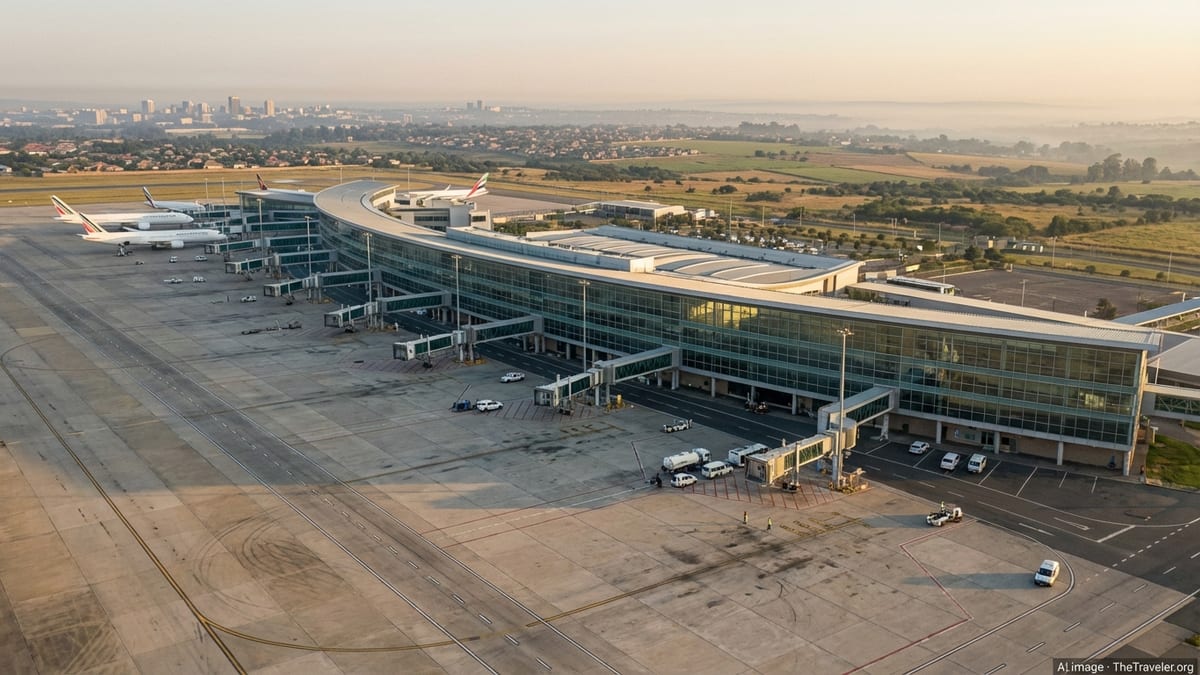
A Capital in the Hills, an Airport on the Lake
Gitega became Burundi’s political capital in 2019, when the government completed a long‑discussed plan to relocate the seat of power from Bujumbura on Lake Tanganyika to the country’s central highlands. Publicly available regional profiles describe a two‑capital arrangement in which Gitega holds political institutions while Bujumbura remains the economic hub.
Located on the central plateau, Gitega sits roughly in the geographic middle of the country and closer to several provincial centers than Bujumbura. This interior position was one of the original arguments for the move, presented as a way to rebalance national development away from the lakeshore.
Air connectivity, however, did not follow the politicians. Melchior Ndadaye International Airport, on the northern edge of Bujumbura, continues to function as Burundi’s only international airport, handling all scheduled commercial flights into the country. Guides for visitors emphasize that anyone flying into Burundi still lands in Bujumbura, regardless of whether their final destination is Gitega.
The result is a capital city with no regular commercial air service of its own. Even as Gitega grows in political stature, travelers must make a separate surface journey inland to reach the new seat of government.
Gitega’s Defunct Airfield and the 69‑Kilometre Gap
Historically, Gitega had its own airstrip, classified in aviation directories as Gitega Airport with the IATA code GID. It is described as a small public aerodrome on a low ridge at the northwestern edge of the city, with a short grass runway suitable for light aircraft.
More recent summaries of the city’s infrastructure note that Gitega Airport is now effectively defunct, with no scheduled passenger services. Specialist airport databases list Bujumbura’s Melchior Ndadaye International as the nearest active airport to Gitega, placing it about 68 to 69 kilometres to the west as the crow flies.
That 69‑kilometre separation has become the defining feature of Burundi’s new capital travel pattern. For diplomats, aid workers, business travelers and domestic officials, the journey from runway to ministries now involves a lengthy road transfer across the central plateau rather than a short urban hop.
In African terms, where many capitals have airports on the urban periphery or within a short taxi ride, a 69‑kilometre gap between capital core and primary international airport stands out as one of the continent’s more remote official airport journeys.
From Bujumbura’s Terminal to Gitega’s Hilltop
Transport guides for Burundi describe the standard capital route as beginning at Melchior Ndadaye International Airport, approximately 11 kilometres north of central Bujumbura, followed by road travel inland. The airport itself is a compact single‑terminal facility, serving regional and a limited number of international connections.
From the airport or downtown Bujumbura, travelers typically join National Road 2, which climbs out of the Rift Valley escarpment toward the central plateau. Route planners and commercial journey calculators put the driving distance between Bujumbura and Gitega in the 100 to 110 kilometre range, depending on the exact start and end points, with average travel times of around one and a half to two and a half hours.
Various online route tools list travel options that include private cars, shared taxis and intercity buses. Fares remain relatively modest by international standards, but costs fluctuate with fuel prices, road conditions and demand from residents commuting between the economic and political capitals.
Travel advisories and regional transport analyses stress that, while the map distance may be barely 70 kilometres in a straight line, the real journey time is shaped by mountain roads, security checkpoints and seasonal weather. For first‑time visitors, the capital transfer is less an airport run than a full intercity leg that must be factored carefully into arrival or departure schedules.
Regional Context: A Capital Outlier in Africa
The physical separation between Gitega and its main airport places Burundi in a small group of African countries where the political capital is served only indirectly by air. In continental terms, most capitals sit either on top of their principal airport or within a short suburban radius, such as Addis Ababa, Kigali or Nairobi.
There are exceptions, including states with multiple capitals or where newer political centers have been created away from historic economic hubs. Burundi’s arrangement resembles other cases where a government has moved inland for strategic or symbolic reasons while retaining the original city as the aviation gateway.
Analysts of Burundi’s development strategy note that the capital relocation was driven more by administrative and political considerations than by transport efficiency. Plans for major new aviation infrastructure around Gitega have not advanced publicly, leaving the country reliant on improved roads and surface connections to bridge the airport gap.
Until that changes, the 69‑kilometre journey between Gitega and Melchior Ndadaye International Airport is likely to remain a defining feature of Burundi’s place on the African travel map and a practical consideration for anyone planning official or business trips into the country.
Planning for Travelers and Investors
Travel and investment guides increasingly flag the capital’s distance from the airport as a logistical factor. International visitors with meetings in Gitega are advised to build the road leg into their flight plans rather than treating Bujumbura airport as an urban arrival point.
Tourism and shuttle operators based in Bujumbura now promote fixed‑price road transfers to Gitega and other provincial centers, positioning the lakeside city as a multimodal hub for both domestic and regional travel. That positioning aligns with trade corridor studies that identify Bujumbura as Burundi’s primary gateway for goods and passengers, even as political functions consolidate on the plateau.
For Burundi, the challenge is to convert the long capital–airport journey into an opportunity, using road improvements and better services along the corridor to knit the two cities more closely together. For now, Gitega remains one of Africa’s most remote capitals in aviation terms, its seat of power perched nearly 70 kilometres from the country’s only international runway.
https://bujumbura.org/capital-of-burundi/
https://bujumbura.org/getting-there/melchior-ndadaye-airport/
https://way4i.com/gitega-transport-hub/
https://www.aircalculator.com/airport_maps.php?iata=GID&type=map