


More news on this day
Subic Bay, Manila and a constellation of emerging ports across Luzon are rapidly reshaping the Philippines’ cruise landscape, as new infrastructure, relaxed entry rules and fresh itineraries turn the archipelago into one of Asia’s most ambitious maritime hubs.
Get the latest news straight to your inbox!
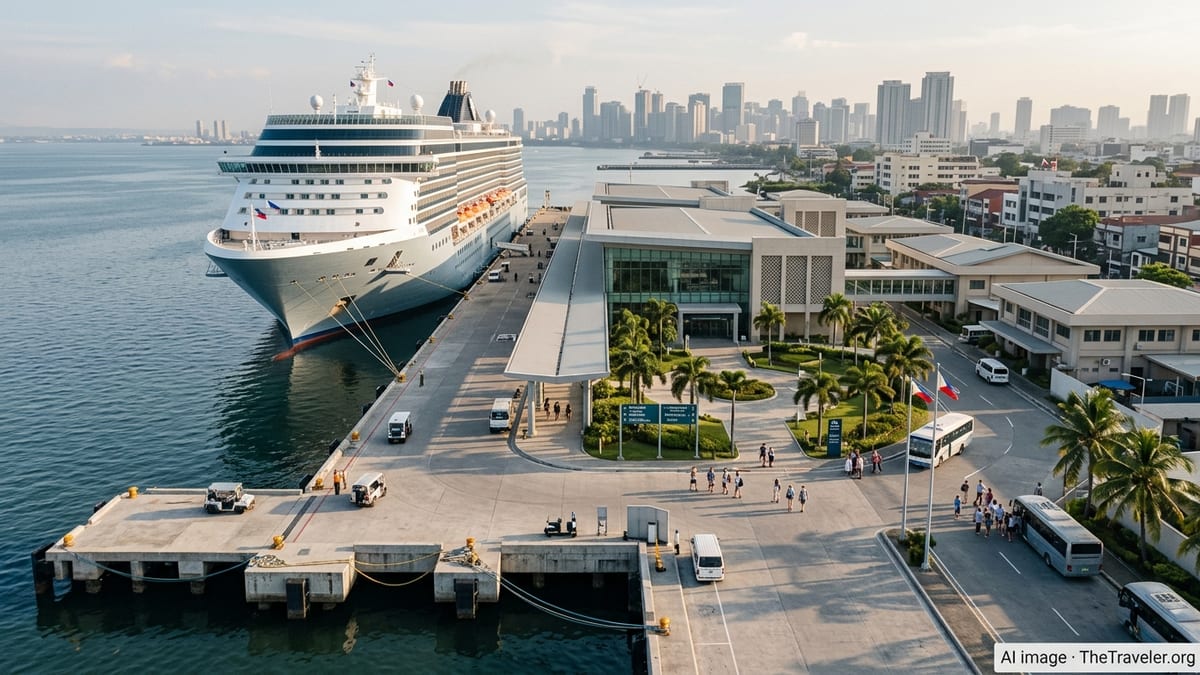
Luzon Steps Forward as the Philippines Targets Cruise Hub Status
Publicly available information from Philippine authorities and cruise industry events indicates that the country is positioning itself as a major cruise center in Asia, with Luzon at the core of this strategy. Government agencies highlight a pipeline of at least a hundred cruise calls over the current season and next, spanning both international and domestic routes. This push is framed as part of a broader effort to brand the Philippines as a gateway to Southeast Asia’s islands and heritage-rich coastal cities.
Central to this vision is the concept of a Luzon-focused maritime corridor, linking key gateways such as Subic Bay and Manila with secondary ports in Northern Luzon and beyond. Policy documents on maritime development identify Manila and Subic Bay together as one apex of a national “Turquoise Triangle” of cruise destinations, placing them alongside well-known beach and nature stops such as Boracay and Palawan. This networked approach is designed to cut sailing times between ports while encouraging longer itineraries that remain within Philippine waters.
The government has moved to support this ambition with regulatory changes. A dedicated Cruise Visa Waiver program, launched by the Bureau of Immigration in coordination with tourism officials, allows eligible foreigners on cruise itineraries to enter the Philippines without securing individual visas in advance, subject to conditions. The initiative is marketed as a tool to make homeporting and multiple calls at Philippine ports more attractive to global cruise brands.
These measures coincide with growing international recognition. The Philippines has recently collected regional cruise and ports-of-call accolades at industry award events, reinforcing marketing campaigns that promote the archipelago as a rising star in Asian cruising. This external validation has strengthened arguments for further investments in Luzon’s port and tourism infrastructure.
Subic Bay Reimagined as a Cruise and Logistics Gateway
Subic Bay, once known primarily as a strategic naval base, is emerging as a versatile maritime asset that blends cruise tourism with cargo and logistics. The Subic Bay Freeport Zone is managed as a special economic and freeport area, and in recent years local authorities have actively promoted its sheltered deep-water harbor and tourism attractions, including ocean parks, nature reserves and heritage sites, as selling points for visiting cruise lines.
Recent cruise calls underscore this repositioning. Coverage from Subic-based media describes the arrival of international cruise vessels carrying predominantly European passengers, seen locally as a revival of a pre-pandemic cruise program. Separate reports highlight the maiden visit of one of the largest cruise ships yet to dock at Subic Bay, signaling that the harbor can accommodate sizeable vessels as itineraries diversify beyond traditional Southeast Asian circuits.
Subic’s role is reinforced by its integration into regional trade routes. Schedules from terminal operators show Subic appearing as a regular stop on container services that link Southeast Asia with major Chinese ports, reflecting the bay’s importance in freight and logistics. This dual function as both cargo hub and emerging cruise stop is considered an advantage for cruise homeporting, given the availability of road access, support services and an international airport within the wider freeport zone.
The wider policy context is also shifting in Subic’s favor. Discussions around the Luzon Economic Corridor, an infrastructure initiative that connects Subic with Clark, Manila and Batangas, frame the bay as one of four anchor ports intended to accelerate trade and travel. Although some large rail projects remain in flux, the long-term vision presents Subic as a key node in both passenger and freight movements along Luzon’s western seaboard.
Manila Homeport Operations Expand Regional Cruise Options
Manila, the country’s capital and largest urban center, remains the primary cruise gateway on Luzon, and homeport operations are gradually expanding. Available itineraries marketed for the coming seasons include roundtrip departures from Manila to nearby Asian cities such as Hong Kong, often on five-night sailings that blend sea days with urban and coastal port calls. Travel agencies promote these as Manila homeport cruises, reflecting a shift from purely transit calls to embarkation-focused business.
Luxury and expedition cruise lines also feature Manila and Subic Bay in tandem. Recent tour programs from high-end operators list consecutive calls at Manila and Subic on regional voyages that move through the Philippines before continuing toward other Asian destinations. This pattern provides a template for more complex homeporting models, in which passengers may start or end their journeys in Manila while still experiencing lesser-known ports such as Subic as part of the same itinerary.
Within the capital itself, cruise-related development has centered on modernizing passenger facilities at the main Manila harbor and improving connectivity to airports and hotels. While some industry analysts argue that further upgrades are needed for Manila to compete with long-established cruise hubs in the region, the steady growth in scheduled calls and homeport offerings suggests that operators see clear potential in using the city both as a turnaround port and as a key stop on wider Asian routes.
Manila’s inclusion in national cruise planning documents alongside Subic Bay confirms their twin status as Luzon’s primary deep-water cruise anchors. Together, they form the backbone for itineraries that can fan out toward Northern Luzon, the Visayas and Palawan, giving cruise planners flexibility to tailor routes for different segments, from short regional escapes to longer, country-focused sailings.
Northern Luzon Ports Join the Cruise Map
Beyond Manila and Subic Bay, a series of smaller ports in Northern Luzon are being upgraded to capture spillover benefits from the cruise boom. The Philippine Ports Authority has identified terminals such as Currimao in Ilocos Norte and Salomague in Ilocos Sur as cruise-capable facilities, with infrastructure projects underway to improve berthing capacity, passenger handling areas and access roads.
Reports from the Ilocos region describe a program of expansion and modernization at Currimao aimed at accommodating larger cruise vessels. The area has hosted a growing roster of international ships over the past decade, from mainstream brands to niche operators, turning coastal towns into gateways for inland heritage attractions and scenic drives. Salomague, meanwhile, has received calls from mid-sized international cruise ships whose passengers disperse to nearby historic cities and beach destinations.
National and regional tourism agencies see these ports as entry points to lesser-known attractions in Northern Luzon, from UNESCO-listed heritage districts to coastal landscapes that differ from the better-known tropical islands further south. By strengthening Currimao and Salomague, planners seek to balance cruise traffic more evenly across Luzon, reducing pressure on Manila while encouraging longer itineraries that loop through multiple northern calls before or after Subic Bay or the capital.
Passenger statistics published by the ports authority categorize Manila and Northern Luzon ports together for reporting purposes, underscoring the view that these facilities operate as part of a wider cruise region. As upgrades progress, Northern Luzon’s cruise profile is expected to rise, adding depth to the Philippines’ portfolio of ports of call and helping to justify more frequent homeporting in the area.
Policy Reforms and Recognition Accelerate the Homeport Shift
The evolving cruise map around Luzon is backed by a set of policy reforms intended to lower barriers for both operators and passengers. The Cruise Visa Waiver stands out as a flagship measure, allowing certain visa-required nationals on organized cruise itineraries to enter Philippine territory without securing individual visas beforehand, provided they remain within the framework approved for the voyage. Authorities describe this as a targeted response to competition from neighboring cruise hubs with streamlined entry regimes.
Infrastructure initiatives complement these regulatory moves. The Philippine Ports Authority has announced plans for dedicated cruise terminals and improved passenger facilities not only in Luzon but also in key destinations such as Bohol, Coron and El Nido, effectively knitting together a nationwide cruise circuit. In Luzon, these plans intersect with broader transport corridors that link Subic, Manila and other ports by road and, in the longer term, potential rail connections.
International recognition reinforces the narrative of a country on the rise in cruise tourism. Industry award programs have recently cited the Philippines as a top cruise destination in Asia, and some have singled out its ports of call for excellence. These accolades are widely used in promotional material to support the claim that the Philippines is evolving into a cruise hub for the region, even as analysts note that port infrastructure and passenger facilities must continue to improve to meet global benchmarks.
Together, these developments point to a gradual but meaningful shift from sporadic ship visits toward structured homeporting centered on Luzon. Subic Bay, Manila and a growing constellation of northern ports now function as a combined maritime platform that allows cruise lines to base ships, rotate passengers and design itineraries that keep more economic value within the Philippines while showcasing the diversity of its coastal destinations.
Bureau of Immigration Cruise Visa Waiver overview
Philippine Ports Authority cruise-dedicated ports program
Maritime Industry Development Plan: Turquoise Triangle and cruise routes