


More news on this day
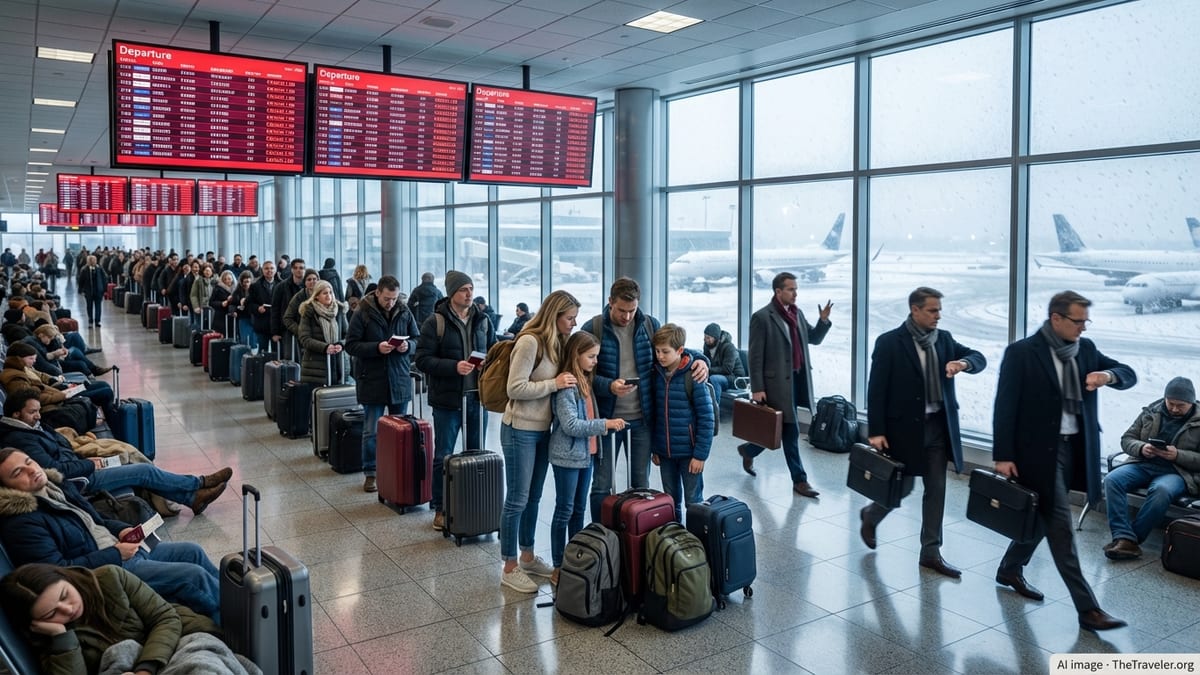
Hurricane Lowell’s sweep past Kauaʻi has pushed Lihue Airport into days of turmoil, with long lines, constrained operations and worried visitors highlighting how a single facility now shapes the island’s tourism fortunes.
Get the latest news straight to your inbox!
Storm Lowell Exposes a Critical Travel Bottleneck
Lihue Airport, Kauaʻi’s sole commercial air gateway, closed on the afternoon of September 7 as Hurricane Lowell neared the island, halting all departures and arrivals. County updates show that operations were suspended from 2:30 p.m. local time as winds strengthened and officials focused on public safety and damage assessment.
The facility has since reopened with what state transportation updates describe as limited operations, noting no significant structural damage but ongoing constraints on capacity and services. Airlines have restored scheduled flights, yet the stop-start pattern has created a sharp backlog of passengers trying to leave or reach the island.
Reports from travelers over the last 24 hours describe security queues stretching out of the terminal and into parking areas, with some visitors arriving several hours before departure only to face gridlock at check-in and screening. Social media posts and traveler forums characterize the scene as chaotic, with intermittent power issues and equipment outages compounding the slowdown.
The disruption comes just days after Kauaʻi endured heavy rain, strong winds and flooding associated with Lowell, which also knocked out power to large portions of the island and forced closures of schools, government offices and many visitor-facing businesses.
Visitor Backlog Collides With Peak Travel Demand
The storm and airport shutdown hit during a period of relatively robust visitor volumes, magnifying the pressure on Lihue’s limited infrastructure. State tourism data show that Kauaʻi welcomed more than 120,000 visitors in both May and June 2026, with daily census figures in the high 20,000s in recent months, even as overall arrivals have eased slightly compared with 2025.
This steady flow of travelers means that losing even a day of flights can quickly translate into thousands of people seeking rebooked seats. With Lihue handling both interisland hops and transpacific services from the U.S. mainland, each cancellation or delay ripples across multiple routes as airlines work to reposition aircraft and crews.
Passenger accounts indicate that some visitors are being advised to arrive at the airport at least three hours before domestic departures, a marked shift for an island facility that typically processes travelers more quickly than busier hubs like Honolulu. Others describe missing flights despite early arrival because of extended waits at TSA checkpoints and baggage drop counters.
Publicly available information from local tourism organizations and accommodation providers suggests that some travelers are opting to reroute through other islands or postpone Kauaʻi trips entirely, wary of airport congestion and lingering storm impacts on roads, beaches and utilities.
Hawaii’s Tourism Recovery Faces New Strain
The snarls at Lihue come as Hawaii navigates a delicate tourism recovery. Statewide visitor spending and arrivals have been trending modestly higher in 2026 compared with last year, supported by increased air capacity and strong demand from U.S. mainland markets. On Kauaʻi, visitor counts have risen for several recent months even as some forecasts anticipate slower growth through 2026 amid broader economic headwinds.
Kauaʻi’s economy is particularly sensitive to these swings. Official planning documents and economic outlooks emphasize tourism as the island’s primary driver of jobs and income, with more than 1.4 million visitors recorded in 2025. Any sustained interruption, whether from a natural disaster or transport bottleneck, can quickly affect businesses from hotels and vacation rentals to restaurants, tour operators and retail.
The aftermath of Hurricane Lowell also overlaps with ongoing efforts to “right-size” tourism’s footprint on Kauaʻi through destination management plans that seek to balance resident quality of life with visitor demand. While these plans promote more sustainable and geographically dispersed tourism, they also rely heavily on the smooth functioning of infrastructure such as Lihue Airport to spread arrivals over time and reduce pressure on popular sites.
With a single commercial airport, the island has little redundancy. When Lihue’s runway, terminal or security systems are disrupted, there is no nearby alternate field that can absorb large numbers of diverted flights, leaving both residents and tourists temporarily cut off or stranded.
Travelers Urged to Prepare for Delays and Changing Conditions
Recent guidance from state tourism and emergency management agencies urges travelers heading to Kauaʻi to closely monitor airline communications, confirm flight status before going to the airport and anticipate longer waits for check-in and security screening. Advisories also recommend allowing extra time to navigate traffic, construction zones or storm-related detours on roads leading to Lihue.
Hotel operators and vacation rental managers are updating guests on power restoration, water availability and access to popular beaches, trails and attractions. Some properties remain on backup generators or with partial services, and certain coastal and west-side areas continue to assess damage and clear debris. Travelers are being encouraged to remain flexible with itineraries, particularly for activities that depend on ocean conditions or road access.
Posts on visitor forums suggest that some travelers who arrived after the storm have experienced relatively smooth journeys through the airport, while others departing at similar times encountered severe queues. The uneven experience appears tied to the timing of flight banks, staffing levels and intermittent technical issues, underscoring how quickly conditions can change at a small island facility working through a surge of rebooked passengers.
Travel experts following the situation recommend that visitors consider carrying on luggage when possible to reduce time in check-in lines, pre-arrange ground transportation and ensure that accommodation plans can accommodate late arrivals or unexpected overnight stays if flights are delayed or canceled.
Balancing Visitor Support With Local Recovery
As cleanup continues across Kauaʻi, public statements from tourism agencies stress the need to support local businesses while acknowledging that some communities are still in the early stages of recovery. Emergency management updates highlight ongoing work to restore full power and communications, repair damaged infrastructure and document property losses.
Some residents posting online describe the competing pressures of wanting visitor spending to help small businesses reopen, while also asking would-be travelers to be patient with reduced services, longer lines and periodic closures. Calls for visitors to treat Kauaʻi as a community first and a resort destination second have resurfaced, particularly in the hardest hit neighborhoods.
The current airport congestion illustrates how quickly a shock event can test Hawaii’s visitor system, especially on islands dependent on a single air gateway. Tourism planners have previously identified airport capacity, weather resilience and emergency coordination as key risks for the state’s visitor industry, and Lowell’s impact on Lihue offers a fresh example of those vulnerabilities.
In the weeks ahead, attention is likely to focus on how quickly Lihue Airport can return to normal throughput, whether airlines adjust schedules to smooth peak surges and how the experience of stranded or delayed travelers influences future demand for Kauaʻi compared with other Hawaiian islands.
Associated Press coverage of Hurricane Lowell’s impact on Kauaʻi and travel
Hawaii Department of Transportation weather-related airport and highway updates