


On an island famous for champagne spray and shoulder-to-shoulder sunbeds, Ftelia Beach feels like a secret shared in a low voice. Exposed to the powerful Meltemi winds on Mykonos’s wild north coast, this wide, raw bay has quietly become a favorite for wind addicts, barefoot bohemians, and anyone who prefers salt in their hair over sequins on their shirt. If you are drawn to big skies, serious wind, and a slower, more elemental side of Mykonos, Ftelia is where it all comes together.
Get the latest updates straight to your inbox!
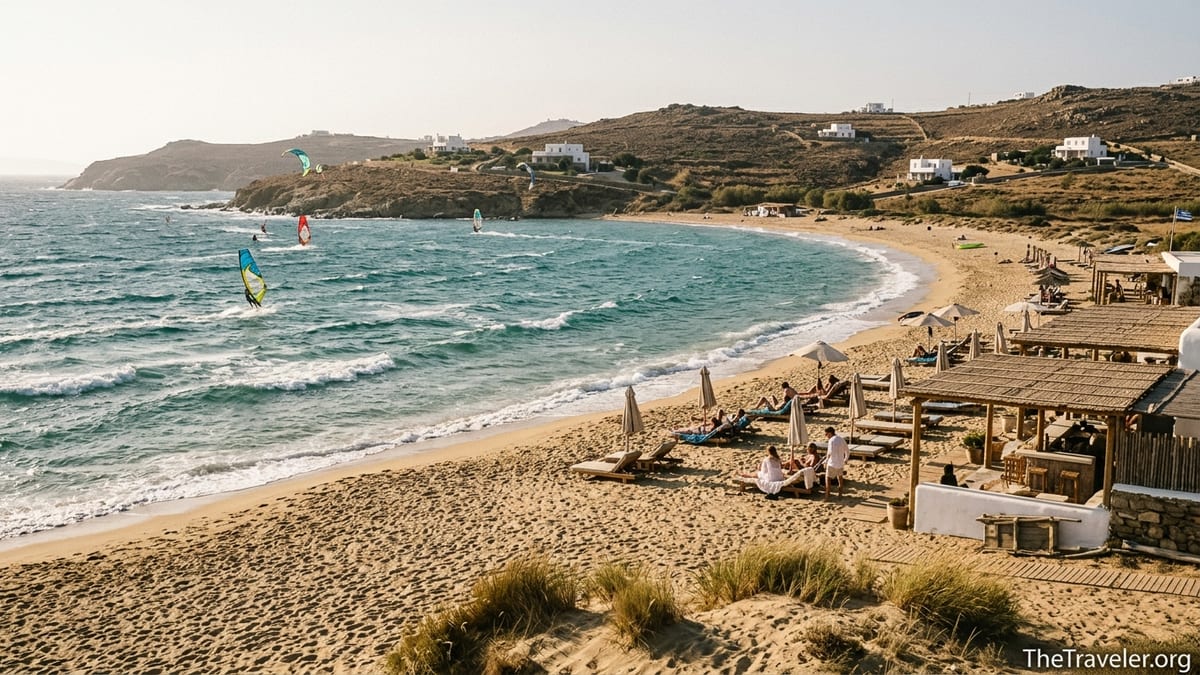
A Windswept Bay Made for Wind Lovers
Ftelia sits on the north coast of Mykonos, about a 15 to 20 minute drive from Mykonos Town, in a wide, half-moon bay that faces directly into the prevailing Meltemi. In summer, that north wind blows most days, usually strongest from late morning through the afternoon. Instead of trying to tame it with windbreaks and dense rows of umbrellas, Ftelia embraces the elements: the beach is long, relatively undeveloped, and open, with the wind whipping across coarse golden sand and pushing whitecaps across the bay.
The result is a shoreline that windsurfers and kitesurfers rate as one of the island’s most reliable wind spots. Local guides describe Ftelia as catching the Meltemi almost daily between late May and September, with the wind often building into solid riding conditions by midday. In practical terms, that means fewer glassy swimming days, but many more hours where riders can plane across choppy turquoise water without waiting for a gust.
Unlike some smaller coves, Ftelia’s bay is wide, so even when the wind is up and the water is alive with boards and kites, it rarely feels cramped. Advanced riders take advantage of the long fetch that lets wind-driven chop build into playful ramps, while intermediates enjoy a forgiving sandy bottom and plenty of room to fall, relaunch, and try again. On rare still mornings, when the Meltemi takes a break, the same bay shifts mood entirely, turning calm enough for long, mellow swims and paddle sessions before the breeze returns.
This dependable wind pattern is exactly why Ftelia has remained a niche favorite. Casual beach-hoppers tend to avoid the gusts and blowing sand, leaving the wind-chasers to enjoy what they came for: hours of steady conditions, a big sky, and the constant hum of the Aegean.
Inside Mykonos’s Historic Windsurf and Kitesurf Playground
Ftelia has a long reputation among Greek windsurfers as a classic north-wind spot. Local and European riders have been coming here since long before Mykonos became a global party island, drawn first by the reliable Meltemi and only later by the low-key beach scene that grew up around it. Today, the beach is still a go-to for anyone traveling with a board bag or kite quiver.
Most visitors rent gear rather than fly with their own. While there is not a major purpose-built wind center directly on the sand in the same way you might find in dedicated surf resorts, several Mykonos-based outfitters supply Ftelia riders with equipment, from modern freeride and wave boards to mid-size kites suited to the stronger afternoon winds. Many riders also base themselves near Korfos Bay, where a Duotone-affiliated center operates, then head to Ftelia on the windiest days to take advantage of the more open-water conditions.
Conditions vary across the day. Mornings are often better for learners and improvers when the wind is still building and the chop is smaller. By mid-afternoon, the bay can feel like an outdoor stadium for spectators, with sails carving fast lines just offshore and kites lofting above the ridge line. On a peak July afternoon, you might see 20 or more riders on the water at once, yet still find plenty of clear space between them thanks to the width of the bay.
For complete beginners, private lessons typically start at around the kind of rates you would expect in a European resort island, and it is common for instructors to schedule first-timers for earlier time slots before the wind peaks. More experienced riders generally opt for equipment rental packages, which often work out better value if you are planning several sessions in a week rather than a single taster lesson.
Laid Back Vibes in a Boho Beach Scene
What makes Ftelia stand out, even for non-riders, is the way it balances this active wind culture with a genuinely relaxed, bohemian beach atmosphere. Compared with the high-density party beaches on the south coast, Ftelia feels uncluttered. Most of the sand is still open and free, and sunbed zones are concentrated in front of a handful of beach venues, leaving long stretches where you can just drop a towel and let the wind do what it does.
The soundscape is different too. Instead of pounding daytime megaclub beats, Ftelia tends to hum with more organic, downtempo playlists and the constant white noise of the wind. Even at its liveliest, the atmosphere is less about champagne theatrics and more about sunset cocktails, barefoot dancing in the sand, and lingering over long, shared tables of mezze.
On a typical July afternoon, you might see a kiteboarder walking up the beach with a 9-meter kite on his shoulder while a group of friends play backgammon under a straw pergola, and a couple in linen shirts sip iced coffees at the bar. Families who are comfortable with wind often settle here too, using the quieter back sections of the beach and ducking into the sea between gusts rather than lying motionless in the sun.
Because the bay is open and undeveloped in large parts, it also keeps a stronger sense of place than some more heavily built-up beaches. Low, scrubby hills, a few whitewashed houses scattered in the distance, and the outline of Panormos Bay beyond remind you that you are in the Cyclades, not a generic resort strip. For many repeat visitors, that unpolished beauty, combined with Mykonos’s signature sense of style, is exactly the point.
Beach Clubs, Food, and the Taste of Ftelia
Ftelia’s laid back vibe does not mean a lack of creature comforts. The beach is home to a small but distinctive collection of venues that lean into natural materials, earthy tones, and relaxed, barefoot-chic service rather than high-gloss glitz. Wooden decks spill onto the sand, reed canopies throw dappled shade, and low-slung loungers are arranged loosely rather than in rigid, shoulder-to-shoulder rows.
Alemagou is the name most visitors recognize, often featured on international lists of Mykonos’s best beach clubs. The space is all rough-hewn timber, woven roofs, and hand-crafted pottery, with a menu that mixes elevated Greek cooking and modern Mediterranean dishes. It is the kind of place where you might order grilled octopus on fava puree, a tomato and caper salad, and a carafe of chilled Assyrtiko, then lose track of time as the music slowly builds toward sunset. A set of two sunbeds and an umbrella here in high season typically costs a premium by Greek-island standards, but regulars treat it as a full-day experience: arriving late morning, swimming or watching the surfers, and staying on for sunset drinks and dinner.
Further along the bay, Ftelia Beach Club offers another focal point, branding itself as an “open beach experience” that combines a multi-level restaurant, lounges, and beach beds within a few steps of the water. Here, resident DJs provide a laid back soundtrack that rises in tempo as the day unfolds, while the kitchen focuses on seafood and unfussy Aegean dishes. Expect plates like grilled local fish, shrimp saganaki, and shared platters of fried calamari, alongside lighter snacks such as watermelon and feta salads or pita with dips for grazing between swims.
Prices across Ftelia’s venues are comparable to other stylish spots on Mykonos: coffee and soft drinks come in around the range you would find at popular Cycladic cafés, cocktails sit in the mid-teens in euros, and main dishes at dinner edge up toward what you might pay in Mykonos Town’s trendier restaurants. For budget-conscious travelers, the key is that the beach itself remains public. You can bring your own towel, cooler, and snacks, set up a little farther from the clubs, and still enjoy the scene, then perhaps wander in later for a single drink at the bar.
What unites these different spaces is a commitment to a slower rhythm: long lunches instead of quick bites, barefoot hosts instead of formal uniforms, and a music policy that favors warm, organic sounds over relentless big-room drops. It all feeds into that sense of Ftelia as somewhere you settle for the day, rather than just tick off between stops.
How to Reach Ftelia and Navigate the Wind
One of the reasons Ftelia has stayed relatively under the radar is access. Unlike many of Mykonos’s southern beaches, there is no direct public bus service here. Local beach guides and transport overviews note that reaching Ftelia from Mykonos Town typically involves a private vehicle: a rental car, ATV, scooter, or a taxi arranged in advance. The drive from town is straightforward, heading inland toward Ano Mera before dropping down toward the north coast, and usually takes under 20 minutes in normal traffic.
For many visitors, renting a small car for at least a day or two is the most flexible option, especially if you also want to explore more remote beaches like Fokos or Lia. Daily rental rates fluctuate by season, but if you book ahead in spring or early summer, you can often secure a compact car at a mid-range European price point. ATVs and scooters are common too, but require extra caution on Mykonos’s narrow, sometimes windy roads, and travelers should always check their travel insurance and licensing before opting for a quad bike.
Taxis exist, but they are relatively few on the island and can be expensive for repeat trips, especially in peak months like July and August. Many visitors report fares to remote beaches reaching levels that quickly add up if used daily. Pre-booking through hotel concierge services or local taxi apps is strongly advised if you plan to arrive or leave Ftelia at busy times such as late afternoon or early evening.
Once you arrive, logistics are simple. There is usually free, informal parking on dirt areas behind the beach, often within a short, level walk of the sand, which is helpful for anyone carrying boards or families with strollers. From there, you can either head straight to the more developed central section, where sunbeds and beach clubs cluster, or wander left or right along the bay to find a quieter patch of sand with nothing but wind, sea, and sky in front of you.
Who Ftelia Beach Is Best For (And When To Go)
Ftelia is not the right Mykonos beach for everyone, and that is exactly why its fans love it. If you dream of calm turquoise water, little-kid-friendly shallows, and perfectly still hair in every photo, you will probably be happier on the south coast at places like Ornos, Platis Gialos, or Psarou, which are naturally more sheltered from the Meltemi. On big wind days, conditions at Ftelia can feel intense for non-riders: blowing sand, whitecaps, and a serious breeze that tugs at hats and umbrellas.
Where Ftelia shines is for travelers who see wind as part of the adventure. Windsurfers, kitesurfers, and wing-foilers come for the conditions and stay for the vibe, often building their entire Mykonos itinerary around the windiest summer months. Photographers and nature lovers appreciate the drama of the big sky and the ever-changing light over the waves, especially in the late afternoon when the sun starts to sink behind the headland.
Couples and groups of friends who prefer a more relaxed, boho social scene over high-octane clubbing often base themselves in Mykonos Town or nearby villages and treat Ftelia as their “day escape” beach. They spend the morning on loungers or towels, linger over a long lunch at Alemagou or Ftelia Beach Club, and then stay for sunset drinks and low-key dancing as the colors shift over the bay. For these travelers, the wind becomes part of the sensory experience: hair tangled with salt, light sweaters pulled on after the sun dips, and the constant background roar of the Aegean.
Timing-wise, June through early September offers the most consistent wind for riders, with July and August typically delivering the strongest Meltemi days. Shoulder months like late May and late September can be ideal for visitors who want some wind and atmosphere but prefer slightly cooler temperatures and a calmer island overall. Winter brings a different kind of wild, but most beach clubs are closed and services limited, so it is best left to locals and serious off-season travelers.
Practical Tips for Enjoying Ftelia’s Windy, Laid Back Magic
To get the most out of a day at Ftelia, a little planning goes a long way. The wind here is not a gentle breeze but a real, sustained force, so packing accordingly makes a big difference. Lightweight but secure sun protection is essential: high-factor reef-safe sunscreen, a hat that can be tightened or clipped, and sunglasses that will not fly off your face in the first gust. Many regulars also bring a light scarf or buff to shield their face from blown sand when the wind really picks up in the afternoon.
On the beach, choose your setup based on how close you want to be to the action. If you love watching riders, aim for the central section near the launch zones, where you will have a front-row view of jumps and fast carving turns. If your priority is reading or napping with minimal sand spray, walk a little further along the bay, where you can often find wind angles that feel slightly less direct, or set up just behind the first line of sand where the wind has lost a bit of speed.
For food and drink, consider how long you plan to stay. If you are treating Ftelia as an all-day outing, reserving sunbeds and a lunch table at one of the beach clubs can simplify everything, especially in high summer when walk-in spaces fill by midday. On a more spontaneous visit, it is perfectly acceptable to bring your own picnic, then drift into a bar later for a coffee, beer, or sunset cocktail. Many travelers budget on the basis that a full day using a pair of loungers with drinks and a shared lunch at a stylish venue will cost more than a simple towel-on-the-sand day, but still less than a blowout party session on the island’s most expensive beaches.
Above all, go with the wind rather than fighting it. Accept that your hair will tangle, your beach towel may need weighing down with stones or a bag, and your conversations will occasionally compete with the roar of the gusts. In return, you get a version of Mykonos that feels closer to the elements: big, bright, slightly wild, and quietly luxurious in the way it gives you space to breathe.
The Takeaway
Ftelia Beach is where Mykonos reveals its wilder, less curated side. Set on the north coast and fully exposed to the Aegean’s Meltemi winds, it offers a rare combination: serious wind conditions for riders, ample space on the sand, and a small cluster of beautifully designed, barefoot-chic venues that understand the art of lingering. It is not the glossy, wave-free postcard that many visitors expect from Mykonos, and that is exactly why people who fall for it return year after year.
If you love the idea of watching windsurfers carve across whitecaps while you sip a coffee under a reed canopy, of trading perfectly set hair for sun-salted curls, and of swapping crowded party beaches for a more relaxed, boho rhythm, Ftelia belongs on your itinerary. Give it at least one long, unhurried day, and let the wind, the music, and the wide-open bay do the rest.
FAQ
Q1. Is Ftelia Beach suitable for families with children?
Ftelia can work for families who are comfortable with wind and choppier water, but it is not the gentlest swimming spot for small kids. On strong Meltemi days, blowing sand and waves can be overwhelming, so many families prefer more sheltered beaches like Ornos or Platis Gialos for long, calm swims.
Q2. Can I get to Ftelia Beach by public bus from Mykonos Town?
No, there is currently no direct public bus service to Ftelia. Most visitors reach the beach by rental car, ATV, scooter, or pre-booked taxi from Mykonos Town or nearby villages such as Ano Mera.
Q3. Do I need to be a windsurfer or kitesurfer to enjoy Ftelia?
Not at all. While riders love the bay for its steady wind, plenty of visitors come just for the boho beach clubs, open space on the sand, and laid back atmosphere. You can simply watch the action or, if you are curious, book a beginner lesson.
Q4. What is the best time of year to visit Ftelia for wind conditions?
The most consistent wind usually arrives between late May and September, with July and August often providing the strongest Meltemi days. Shoulder months can still offer good conditions with fewer crowds, but wind strength may be more variable.
Q5. Are there sunbeds and umbrellas, or should I bring my own gear?
Yes, several venues at Ftelia rent sunbeds and umbrellas, especially in the central section of the bay. Prices vary by season and row from the water. Large parts of the beach remain free, so you can always bring your own towel and shade if you prefer a simpler setup.
Q6. Is the water at Ftelia safe for swimming?
The water is generally clean and clear, with a sandy bottom, but it can be choppy when the wind is strong. Confident swimmers usually enjoy it, while weaker swimmers and young children may find calmer conditions elsewhere on the island more comfortable.
Q7. How expensive are food and drinks at Ftelia’s beach clubs?
Prices at Ftelia’s main venues are broadly in line with other stylish spots on Mykonos. Expect coffee and soft drinks at typical Cycladic café prices, cocktails at mid-range European bar levels, and main dishes at rates similar to trendy restaurants in Mykonos Town.
Q8. Do I need to reserve in advance for beach clubs at Ftelia?
In high season, it is advisable to reserve sunbeds and lunch or dinner tables in advance, especially at popular spots such as Alemagou. Outside peak months, walk-ins are more feasible, but reservations are still a good idea for weekends or larger groups.
Q9. Is Ftelia a good option if I am staying without a car?
It can be, but you will need to plan your transport. Without a rental car, you will rely on taxis or private transfers, which can be harder to secure at short notice and more expensive than buses. Many travelers without vehicles choose one or two dedicated Ftelia days rather than visiting daily.
Q10. How does Ftelia compare with Mykonos’s famous party beaches?
Compared with party-focused spots like Paradise or Super Paradise, Ftelia is more low-key and bohemian. It still has stylish venues and music, but the atmosphere centers on long lunches, sunsets, and wind sports rather than full-scale daytime clubbing.