


“Always book direct” has become modern travel gospel, especially if you follow airline and hotel loyalty programs. Yet in Southeast Asia and parts of East Asia, millions of travelers quietly do the opposite. They open the blue-and-white Traveloka app, tap a few promo codes, and routinely walk away with cheaper fares, better cancellation terms, or smoother customer service than they would have received by booking direct. The truth is more nuanced than any slogan: there are specific, repeatable situations where Traveloka makes more sense than going straight to an airline or hotel website.
Get the latest updates straight to your inbox!
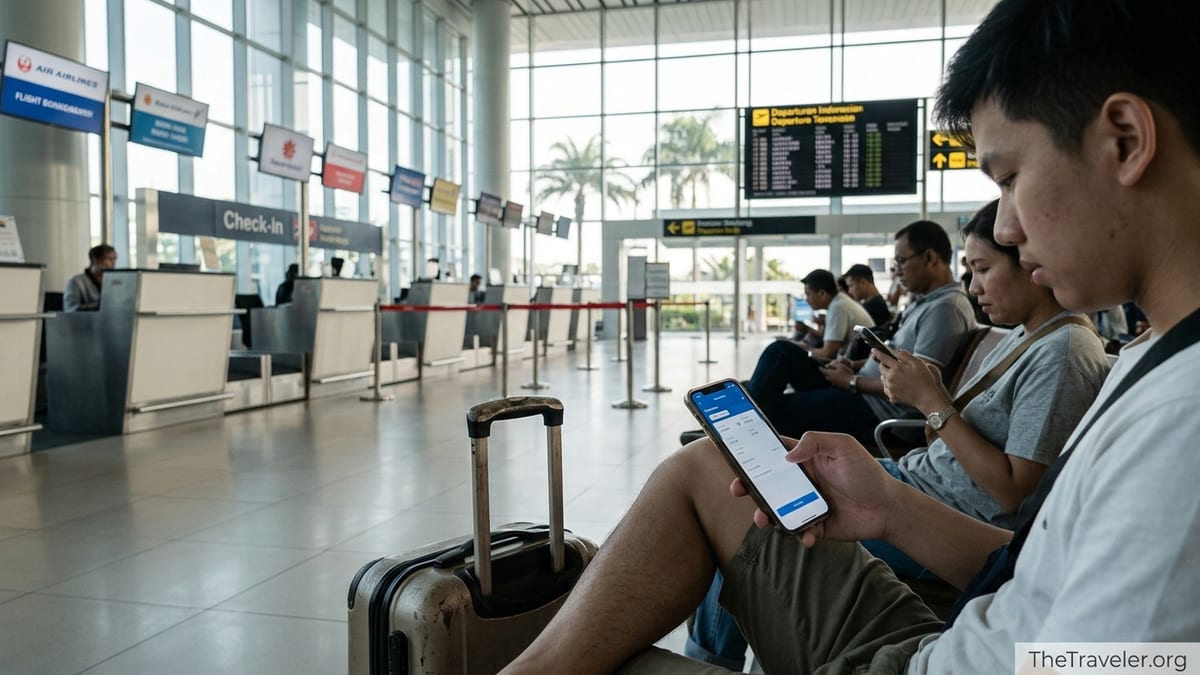
Understanding What Traveloka Really Is
Traveloka started in Indonesia as a flight metasearch engine and later grew into a full online travel agency offering flights, hotels, attractions, transport, and dynamic packages across Southeast Asia. For travelers in Indonesia, Singapore, Malaysia, Thailand, Vietnam, and the Philippines, it functions much like Booking.com or Expedia does in Europe or North America, but with a heavier emphasis on local payment methods and regional promotions. That context matters, because many of the advantages of using Traveloka over booking direct are tied to how travel is priced and sold in this particular part of the world.
On the surface, booking through Traveloka or booking direct often appears to show the same base rate. Airlines and hotels like to maintain rough parity to avoid upsetting distribution partners. The differences usually appear in layer two: promo codes, bank partnerships, loyalty perks, and how fees and refunds are structured. This is where Traveloka’s strength lies. Rather than earning from you solely on commissions, Traveloka invests aggressively in limited-time sales, co-branded campaigns, and app-only discounts that can beat the best public price on an airline or hotel site.
Another key piece is payment flexibility. Many local airlines and smaller hotels in the region accept only certain credit cards or require clunky bank transfers. Traveloka, by contrast, supports a long list of options such as Indonesian virtual accounts, e-wallets, and pay-later services alongside standard cards. For a traveler who wants to lock in a promotional fare tonight but will only get paid next week, that flexibility can be more valuable than a small discount for booking direct.
Finally, because Traveloka consolidates flights, hotels, trains, buses, and attractions under one account, it becomes a single point of contact when things go wrong. Instead of chasing a low-cost carrier in Indonesia and a small guesthouse in Vietnam separately, you can message Traveloka customer service in-app. When you are dealing with tight connections, language barriers, or last-minute trip changes, that extra layer of support can matter more than earning a handful of airline miles.
When Traveloka Delivers Lower Real-World Prices
Traveloka’s most obvious advantage over booking direct arises during big promotional campaigns. A common scenario involves bank tie-ins. As of June 2026, for example, a major Indonesian bank is running a Traveloka campaign that offers discounts of up to roughly 750,000 rupiah over a limited period to cardholders who book through the Traveloka app, across products from flights and hotels to trains and car rentals. The hotel’s own website, or the airline’s direct booking page, does not participate in this bank-specific deal, so the Traveloka route ends up noticeably cheaper for the exact same room or seat on the same dates.
Regional coupon aggregators currently show active Traveloka promo codes in markets like Malaysia and Singapore that cut hotel prices by around 5 to 10 percent, sometimes more for first-time users. One widely promoted code in mid 2026 offers about 6 percent off eligible hotels for stays booked by late July. Another campaign in Malaysia targets first-booking customers with discounts of roughly triple-digit ringgit amounts once they hit a minimum spend. These are not marginal savings. On a three-night city break in Kuala Lumpur or Bangkok, a 6 percent discount can easily cover your airport transfer or two meals.
Airline-specific promotions can tilt the scales even further. Traveloka has periodically partnered with carriers such as Malaysia Airlines or AirAsia for flash sales where certain routes are discounted only if booked through Traveloka during a narrow window. A traveler pricing a Kuala Lumpur to Tokyo return might see identical fares on the airline’s own site and on Traveloka, but once they apply a Traveloka flash-sale code, the OTA total can drop by double digits while the airline’s checkout stays at the full amount. For flexible travelers who can watch for these campaigns, Traveloka often wins outright on price.
Packages and cross-product bookings can also be cheaper via Traveloka. Because it sells flights, hotels, and attractions together, the platform can stack promotions across categories in a way individual suppliers cannot. A family planning a Bali holiday might combine a discounted full-service airline fare with a mid-range hotel and prepaid attraction tickets, using one large bank coupon that applies to the entire basket. The same family trying to book each piece individually on airline, hotel, and attraction websites would struggle to find a single promotion that covers such a bundle.
Payment Flexibility and Local Banking Partnerships
One of the strongest cases for using Traveloka instead of booking direct is payment flexibility, especially if you are based in Southeast Asia or using local banking products during a longer stay. Airlines and hotels often accept only international credit cards and a narrow suite of payment options. Traveloka is built for markets where not everyone has a traditional credit card, so it integrates virtual accounts, local debit cards, e-wallets, and pay-later solutions alongside standard Visa and Mastercard payments.
Consider an Indonesian traveler booking a domestic flight from Jakarta to Labuan Bajo and a simple guesthouse on Flores. The small guesthouse does not accept foreign cards and requires a bank transfer within a few hours to hold the room, and the airline’s site may reject some local debit cards. By using Traveloka, the traveler can pay for both with a familiar e-wallet or by generating an ATM virtual account, all at once. That ease often outweighs the theoretical benefit of booking direct, especially for budget trips or bookings made on the go from a phone.
Credit-card promotions amplify the advantage. Banks across Indonesia, Singapore, and Malaysia regularly run joint campaigns with Traveloka where cardholders receive large discounts or additional rewards points if they book through the app. For example, a bank might push a weekend deal that gives a percentage discount up to a capped amount for the first ten bookings of the day that hit a set minimum spend. A couple planning a honeymoon to Japan who time their purchase during such a campaign can save the equivalent of a night in a Tokyo business hotel just by routing their booking through Traveloka instead of paying the airline and hotels directly.
For international travelers, these banking tie-ins can still be relevant. Even if you use a foreign credit card, you might benefit from Traveloka’s own member-only app promotions, occasional cashback, or bundle deals that do not appear when you search on an airline or hotel website. It is not uncommon to see a Traveloka page display a “member price” badge for logged-in users that quietly shaves a few extra percent off the publicly listed rate, while the property’s direct site remains stuck at the standard tariff.
Cancellation Policies, Refunds, and Customer Support
The usual argument against online travel agencies is that they complicate refunds and changes. There is truth to that, particularly with opaque or heavily discounted rates. However, in many Southeast Asian markets, Traveloka’s scale and local presence can mean faster support than dealing with a small airline or guesthouse directly, especially if you need help in Bahasa Indonesia or Thai and are uncomfortable calling a foreign call center.
On hotel bookings, Traveloka often presents a wider range of cancellation options than a small property’s own site can handle. A family booking a resort in Phuket might see nonrefundable, partially refundable, and fully refundable room types on Traveloka with clear timelines spelled out in English and local languages. The hotel’s own site, built on a basic booking engine, might only show a nonrefundable “special rate” and a more expensive flexible rate with little detail. By choosing the right room type in Traveloka, the family can balance price and flexibility more precisely than they could booking direct.
For flights, Traveloka sometimes layers its own protection products on top of airline rules. A budget traveler flying from Jakarta to Bangkok on a low-cost carrier could add an optional Traveloka refund or change protection at checkout. While not free, this add-on can simplify the process if a sudden visa issue or illness forces a change, because the traveler can work through Traveloka’s customer support rather than negotiating directly with an airline that has limited English-language phone support.
When disruptions strike, consolidated support can be an advantage. Imagine you booked a multi-leg journey within Indonesia, combining flights on two different carriers and a hotel in Sorong before a Raja Ampat dive trip. If bad weather cancels your first flight, you can use Traveloka’s in-app help center to address both the missed connection and the hotel check-in, rather than calling each company separately. In practice, that single contact point often saves hours of hold music and reduces the risk of misunderstandings across languages and time zones.
Regional Reality: Where Traveloka Has Stronger Inventory Than Direct
Another underappreciated reason to favor Traveloka over booking direct is inventory. In markets like Indonesia, Vietnam, and Thailand, many small hotels, guesthouses, homestays, and local transport options never develop sophisticated English-language websites or online payment systems. They might rely almost entirely on regional platforms such as Traveloka for international visibility. In these cases, “booking direct” is either impossible or functionally more difficult than using the OTA.
A traveler planning a road trip across Java could open Traveloka and see dozens of small city hotels, village guesthouses, and local car-hire-with-driver options, complete with photos, reviews, and instant confirmation. Many of these properties either lack any direct booking engine or hide it behind a static informational site that requires WhatsApp messages or bank transfers. For short stays or complex itineraries, the friction cost of arranging everything manually often outweighs any small savings you might theoretically get from dealing with each supplier individually.
Traveloka also shines for regional transport that would otherwise demand local know-how. It sells tickets for Indonesian trains, certain domestic buses, and airport transfers that may be difficult for foreign visitors to book directly without speaking the local language or understanding payment requirements. By treating these as straightforward app purchases, Traveloka becomes more than a middleman. It turns fragmented local services into a cohesive, bookable network that feels closer to the integrated rail systems of Europe or Japan.
In some cases, Traveloka-exclusive deals add value beyond price. A boutique hotel in Yogyakarta might choose to participate in a Traveloka campaign that upgrades guests who book certain room types through the platform or includes extras such as breakfast or late checkout. Those perks might not appear at all on the property’s own website, simply because its small team does not have the tools or bandwidth to run equivalent promotions across multiple channels.
When Booking Direct Still Wins
None of this means you should abandon direct bookings altogether. For major international hotel chains and global full-service airlines, going straight to the brand’s website often remains the smarter play. Large hotel groups such as Marriott, Hilton, Hyatt, and IHG base their loyalty programs on direct bookings, offering points, elite night credits, and member-only rates that are not always extendable to third-party channels. If you travel frequently for work and are chasing elite status, the long-term value of those points and benefits can easily surpass a one-time discount from an OTA.
Similarly, many airlines in North America and Europe still prioritize customers who booked directly when handling irregular operations like cancellations or missed connections. If you are flying a complex multi-city itinerary on a single airline, especially in premium cabins, dealing directly with the carrier often means faster rebooking and greater flexibility if something goes wrong. Traveloka is strongest for point-to-point travel in Asia, not for complicated global round-the-world tickets.
Direct booking can also provide more transparent fee structures in some markets. While airlines and OTAs across the world have introduced various service and convenience fees, a direct airline site might be clearer about seat-selection, baggage, and payment charges than a third-party screen that only reveals extra costs at the last step. Savvy travelers using Traveloka know to click through to the final payment page and compare the bottom-line total, not just the initial fare.
In other words, Traveloka is not a universal replacement for booking direct. It is a powerful tool that excels in certain contexts: Southeast Asian routes, bank promotions, mixed-transport itineraries, and trips focused more on value and convenience than on maximizing global loyalty status. The smartest travelers toggle between both approaches instead of clinging to a single rule.
Practical Booking Strategies That Use Traveloka Wisely
The most effective way to decide between Traveloka and booking direct is to treat every trip as a mini price and policy comparison. Start by searching your flights or hotels in Traveloka, noting the total price after any visible promo codes or member discounts. In a separate tab, pull up the airline or hotel website and price the exact same dates and room or fare class. Pay attention to whether the direct site offers a loyalty member rate or an official app-only reduction, then compare the final amounts once all taxes and fees are visible.
If Traveloka is clearly cheaper and the cancellation terms are similar or better, it usually makes sense to book through the app, especially if you can stack a bank or card promotion on top. For example, if a hotel in Bali costs the equivalent of 100 dollars per night on its own site but falls to around 92 dollars per night on Traveloka after a June promo code and member discount, and both channels offer free cancellation up to three days before arrival, the OTA route is the logical choice for most leisure travelers.
When prices are within a few percent of each other, consider the non-monetary factors. Booking your fifth stay of the year at a Hyatt in Bangkok might be better done direct to earn elite-qualifying nights, while a one-off stay at an independent guesthouse in Lombok may be fine through Traveloka. Likewise, if you are traveling with family and value having a single app to manage flights, hotels, and ground transfers, a small price premium on Traveloka could be worth paying for the consolidated itinerary and customer support.
Lastly, pay attention to the type of rate you select. Deeply discounted nonrefundable fares and rooms are where both OTAs and direct sites can become rigid. If your plans are even slightly uncertain, look for flexible or partially refundable options and read the conditions carefully in Traveloka’s booking interface. A flexible Traveloka booking that costs marginally more than a rock-bottom direct rate can save you far more if a schedule change, visa issue, or personal emergency forces you to revise your trip.
The Takeaway
Traveloka earns its place in the savvy traveler’s toolkit not by breaking the rules of global travel distribution but by bending them in favor of regional realities. In Southeast Asia and neighboring markets, its dense network of partnerships, bank promotions, and localized payment options often delivers lower real-world prices and smoother logistics than booking direct, particularly for non-chain hotels, domestic flights, and multi-modal itineraries.
At the same time, direct bookings still matter, especially if you care about global loyalty programs, elite benefits, or complex premium itineraries with major airlines and hotel brands. The smartest strategy is not to pick a side but to compare: check Traveloka, check the direct site, weigh the total price and flexibility, and then choose the option that fits the specific trip in front of you.
If you are flying from Jakarta to Bali with a local carrier and staying in a mid-range Ubud guesthouse, there is a good chance Traveloka plus a bank promo will beat booking direct while offering easier payment and support. If you are crossing the Pacific in business class and aiming to requalify for airline status, direct with the airline still usually wins. Knowing the difference is what turns Traveloka from just another app on your phone into a quiet advantage every time you travel through its home region.
FAQ
Q1. Is Traveloka always cheaper than booking directly with airlines or hotels?
Not always. Traveloka can be cheaper during promo campaigns, bank tie-ins, or member-discount periods, but direct sites may win when loyalty benefits or best-rate guarantees are factored in. Comparing final prices, including all taxes and fees, is essential for each booking.
Q2. When does it make the most sense to use Traveloka instead of booking direct?
Traveloka makes the most sense for Southeast Asian travel, especially domestic flights, regional hotels, and mixed transport itineraries, or when you can stack app promotions and bank discounts. It is also particularly useful when you need local payment options that airline or hotel websites do not support.
Q3. Are Traveloka’s promo codes and bank discounts really worth the effort?
Yes, in many cases. Active campaigns often give around 5 to 10 percent off, sometimes more for first-time users or large transactions. On multi-night hotel stays or multi-ticket flight bookings, those percentages can translate into substantial savings that easily justify a few extra minutes spent applying codes.
Q4. Is it safe to book flights and hotels through Traveloka?
Traveloka is a well-established regional online travel agency working with hundreds of airlines and hotel partners. While no platform is entirely risk-free, it is widely used across Southeast Asia and has customer support channels to handle changes, cancellations, and issues that may arise during your trip.
Q5. What about loyalty points and elite status if I book via Traveloka?
For major global hotel chains and some airlines, bookings through third-party platforms like Traveloka may not earn loyalty points, elite night credits, or status benefits. If you are chasing or maintaining elite status, weigh the long-term value of those benefits against any one-time Traveloka discount before deciding.
Q6. Can I get better cancellation or refund terms with Traveloka?
Sometimes. Traveloka frequently offers multiple rate options, from nonrefundable to fully refundable, and may sell add-on protection products for flights. In some cases, its room or fare options can be more flexible or better explained than a small property’s direct site, but you should still read each policy carefully.
Q7. How does Traveloka help with local payments in Southeast Asia?
Traveloka supports a range of local payment methods, including e-wallets, bank virtual accounts, and pay-later options in addition to standard credit cards. This is particularly useful for travelers who do not have international cards or who prefer to pay using local banking products while in the region.
Q8. What should I watch out for when using Traveloka so I do not overpay?
Always click through to the final payment page and compare the total price, checking for service or convenience fees and optional add-ons. It is also smart to open the airline or hotel website in another tab for the same dates and room or fare type so you can be sure the Traveloka deal is genuinely better.
Q9. Is Traveloka useful for non-Asian travelers visiting the region?
Yes. Even if you are based in North America or Europe, Traveloka can make it much easier to book regional flights, trains, buses, and smaller hotels that do not appear on global OTAs. Its English interfaces and consolidated itinerary management are particularly helpful for first-time visitors to Southeast Asia.
Q10. How should I decide between Traveloka and booking direct for each trip?
Use a simple rule: check both. Price your flights or hotel on Traveloka and on the direct site, compare total costs, cancellation policies, and loyalty benefits, then choose the option that offers the best combination of savings, flexibility, and support for that specific itinerary.