


Guayama sits on Puerto Rico’s south coast between San Juan and Ponce, framed by mangrove coastline on one side and the Carite mountains on the other. It is an appealing base for travelers who want to explore less visited corners of the island, but its lodging market looks nothing like San Juan or Condado. Rooms here are scattered between the compact urban center, low key beach communities near Pozuelo, cabins and tiny houses in the Carite highlands, and a handful of options in neighboring south coast towns. Choosing the right base matters more than searching for a single “best hotel.”
Get the latest updates straight to your inbox!
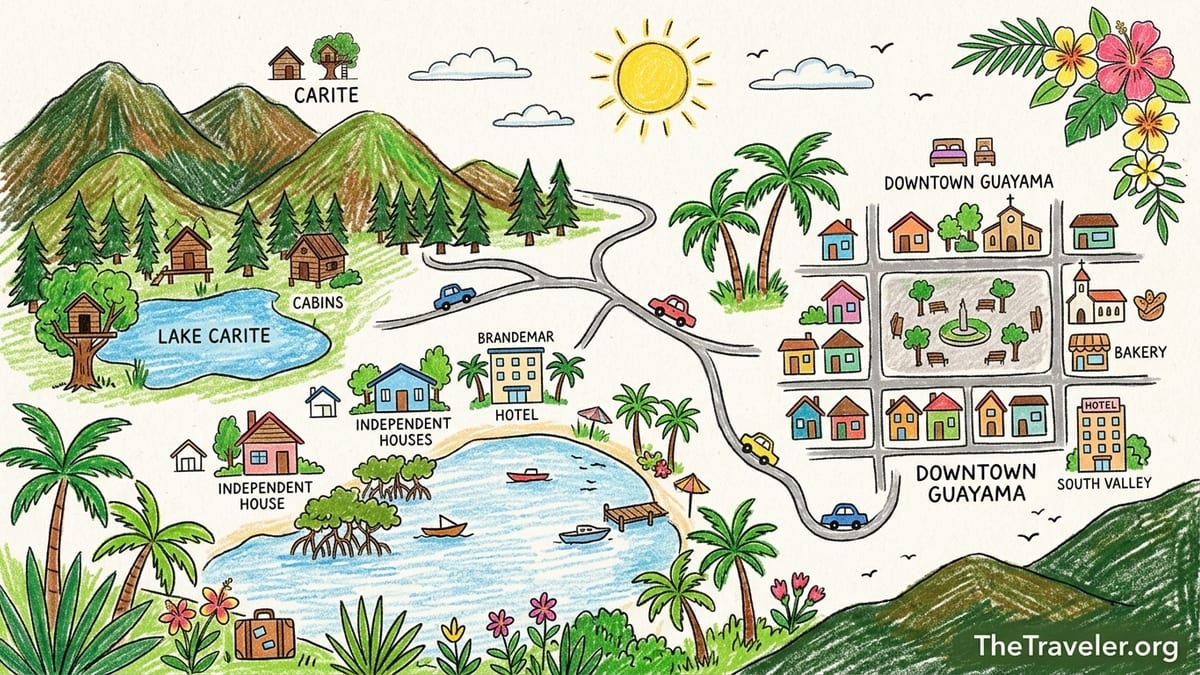
How Guayama’s Lodging Is Structured
Compared with Puerto Rico’s big visitor hubs, Guayama’s accommodation scene is smaller and more dispersed. Puerto Rico’s official tourism search already lists Guayama as one of the municipalities you can filter for, but you will not find dense strips of hotels or large beachfront resorts. Instead, options are spread across urban neighborhoods, coastal barrios like Pozuelo and Algarrobo, and the upland Carite area near the state forest and Lake Carite. Municipal planning materials for 2026 describe lodging and short term rentals as dispersed near natural attractions, established infrastructure and the central urban grid, which matches what you see on major booking platforms and rental sites.
In practice that means most visitors sleep in small hotels, guesthouses and self catering rentals rather than branded resorts. Around the town center, for example, properties such as South Valley 1 J&L Properties Rental appear on international booking sites as a budget friendly stay with private rooms and parking. Near the water, you are more likely to find independent spots like Hotel y Restaurant Brandemar Maria Soto, a modest hotel and restaurant located on Calle Coral in the coastal Algarrobo area, along with several family run houses in Pozuelo and Los Limones listed on vacation rental platforms. In the hills, numerous cabins and tiny homes around Carite and Lake Carite cater to couples and families looking for cooler air and access to the forest.
Because there are relatively few places of each type, availability can swing quickly for popular weekends and holidays. Prices also range widely. Recent listings in Guayama show entire homes starting around 50 to 80 US dollars per night before taxes and fees, while waterfront houses or larger villas at golf developments can run several hundred dollars per night in high demand periods. If you have a specific base preference, especially coastal or Carite cabins, it is worth checking dates and booking early rather than assuming you can choose on arrival.
The other implication of this spread is that your base choice will strongly shape your experience. Staying in downtown Guayama feels like a small Puerto Rican city with plazas and corner bakeries. Basing at Pozuelo or Los Limones means a sleepy, low rise shoreline focused on local life and bay views more than postcard beaches. Carite brings cloud forest, cool evenings and rural roads. Meanwhile, some travelers decide to stay in neighboring towns such as Salinas or Patillas, where paradores, RV parks and seaside hotels are more concentrated, then drive into Guayama for specific sights and meals. The rest of this guide breaks down those trade offs in detail.
Staying near Downtown Guayama
The compact urban zone around Guayama’s central plaza, municipal buildings and main streets suits travelers who want a local town feel rather than a beach vacation. Accommodation here is almost entirely in small hotels, apartments and private homes. South Valley 1 J&L Properties Rental, for instance, is listed as a hotel style property within the municipality, and there are several entire home rentals marketed simply as “convenient house in Guayama” or “comfortable 2 bedroom home” that sit within a short drive of the plaza. These tend to have straightforward amenities such as air conditioning, private bathrooms, a basic kitchen and one parking space.
Parking is usually on site or street side, but streets can be narrow and one way, so a compact rental car is easier to manage than a large SUV. Downtown traffic is lighter than in San Juan, yet you should still plan a few extra minutes when arriving, especially during weekday business hours. At night, the center calms down. Having off street parking at your lodging is a big plus if you expect to come and go after dinner.
The main advantage of the urban base is access to services. Guayama has supermarkets, pharmacies, bakeries and local restaurants that stay open into the evening, although hours taper earlier than major tourist districts. You will find cafeterias and bakeries serving coffee and sandwiches from early morning, along with simple sit down restaurants for comida criolla and pizzerias that operate after dark on busy nights. For families, this makes dinner logistics easier than in isolated coastal or mountain rentals where you might need to drive 15 to 25 minutes for a meal or cook at home. It is still wise to confirm closing times once you arrive, particularly on Sundays and Mondays.
From downtown, you can drive to most attractions on the south coast without excessive backtracking. Guavate’s famous “pork highway” food stretch in the mountains is typically around 30 to 40 minutes away by car, Carite State Forest trailheads are a similar drive, and coastal spots in Guayama or neighboring Salinas and Arroyo are within roughly 20 to 40 minutes depending on traffic and exact location. For day trips to Ponce, plan on about an hour each way. Wi Fi in town based rentals is generally reliable because most properties tap into urban cable or fiber services, and many listings emphasize high speed connections and dedicated workspaces for remote workers. If your priority is connectivity and errands, downtown is usually the safest bet.
Using Guayama’s Coastal Barrios as a Base
Guayama’s coastline fronts a protected bay lined with mangroves and low waves, so “coastal” here does not automatically mean a wide, open ocean resort beach. Areas like Punta Pozuelo and Los Limones have narrow strips of sand and calm waters that attract local families, fishers and boat owners rather than package tourism. The historical presence of the Club Náutico de Guayama in the Pozuelo area underscores how much recreational boating shapes the shoreline compared with swimming oriented resorts. Many houses sit close to the water, protected by sea walls and shaded patios, with views across the bay instead of expansive surf.
Most visitor friendly accommodation in these barrios appears as full homes on vacation rental platforms. For example, there are beachfront houses in the Pozuelo area such as one commonly advertised as a “cozy beachfront house” with several bedrooms, outdoor terraces and direct bay access. Another property marketed as a beach house near Los Limones Beach functions as a whole home rental with a small yard and easy walk or short drive to the shore. These stays prioritize space and local setting over resort style amenities. Travelers should not expect daily housekeeping, front desks or on site entertainment.
Parking at coastal rentals is generally straightforward, with driveways or gated spaces typical for single family houses. Roads along the bay can be narrow and sometimes uneven, so careful night driving is important. After dark, neighborhood lighting is limited in stretches and restaurant options are fewer than in town. Some small seafood spots and food kiosks operate along the coast, but many visitors staying in Pozuelo or Los Limones end up either cooking in their rentals or driving into Guayama or nearby Salinas for more variety. For families with children, having a kitchen and outdoor space at the house often compensates for the need to drive for dining and groceries.
Time savings depend on what you plan to do. If your focus is relaxing by the water, fishing, boating or paddling in the bay, staying right on the coast cuts daily driving significantly. However, drives from Pozuelo back to central Guayama or onward to the Carite mountains and Guavate still take roughly 25 to 45 minutes, so coastal bases are not a shortcut for exploring the rest of the island. Wi Fi is typically available since many rentals highlight it as a standard amenity, though signal strength may vary between older concrete houses and newer properties. For remote work, it is important to choose a listing where recent reviews specifically mention good internet.
Retreating to Carite and the Mountain Rentals
The Carite area, including Carite barrio in Guayama and the lands around Carite State Forest and Lake Carite, offers one of the most distinctive base options in the region. The state forest itself spans several municipalities, but Guayama’s planning documents emphasize the importance of the Carite sector within its boundaries, highlighting rivers, streams and the reservoir as key natural assets. Travelers have increasingly discovered this area through cabins, treehouses and tiny homes marketed as forest or lake retreats. On one major rental platform, for example, you will find properties like off grid agroecological farm stays, a “Little Mango House” treehouse, and a cluster of lakeside cabins such as the Alberta, Ontario and Terra Nova cabins at “Carite by the Lake,” all located within Guayama’s upland zones.
These rentals tend to emphasize scenery, privacy and cool mountain air over urban conveniences. Many are built with large terraces facing the water or forest, outdoor showers, fire pits and shared docks. Some operate partially off grid with solar power or limited electrical capacity, which can affect air conditioning and heating options. The elevation moderates temperatures compared with the coast, so evenings can feel noticeably cooler, sometimes requiring a light jacket even when San Juan feels warm and humid. Parking is typically on gravel drives directly adjacent to the cabin or tiny home, but guests should expect narrow, winding access roads and occasionally steep driveways. A confident driver and a well maintained rental car are advisable.
Restaurant access is the main trade off. Carite has a few roadside eateries and, within a 20 to 30 minute drive, you can reach the Guavate pork highway area with its concentration of lechoneras and weekend crowds. For groceries and wider dining choices you will almost always drive back down toward Guayama, Cayey or other nearby towns. This means stocking up before heading up to your cabin and planning around the fact that driving mountain roads at night takes longer and demands more attention than cruising the coastal highway. Families often appreciate the space to gather, barbecue and enjoy the outdoors, but must be comfortable with a more self contained, semi rural stay.
On the plus side, a Carite base places you closest to some of the region’s standout outdoor experiences. Lake Carite access points, local trails and river spots such as Charco Azul and area waterfalls are more convenient from these rentals than from the coast or downtown; drives might be 10 to 25 minutes rather than 40 to 60 minutes. For travelers whose plans center on hiking, birdwatching, paddling or simply reading on a deck overlooking the lake, that proximity saves meaningful time each day. Internet connectivity varies more widely than in town. Some cabins advertise strong Wi Fi for streaming and remote work, while off grid farm stays may rely on mobile hot spots or have limited bandwidth. If you must work, scrutinize recent reviews that mention internet speed and reliability.
Using Nearby South Coast Towns as Your Base
Given Guayama’s modest and dispersed lodging inventory, some visitors choose to sleep in neighboring coastal municipalities such as Salinas, Arroyo or Patillas and treat Guayama as a day trip. This strategy can make sense if you prefer more conventional beach access or want the service profile of a parador or organized RV park. For instance, to the west in Salinas, current booking listings show properties like La Gozadera Park RV Royal, a campground style complex with RV sites and small units that offers structured facilities and on site parking. To the east and west along the south coast you also find several official paradores under Puerto Rico’s Paradores de Puerto Rico program, though these are located outside Guayama itself.
In these neighboring towns, you are more likely to stay within a short walk or direct view of a sandy, swimmable beach backed by small inns or guest oriented restaurants. Parking tends to be simpler, often inside the property’s lot. Restaurants stay open later in established tourist pockets, and there may be bars or boardwalks with evening ambiance. Families who want to combine Guayama’s attractions with classic days on the sand often appreciate the balance that a Salinas or Patillas base provides. At the same time, you should weigh the extra daily driving: expect roughly 20 to 40 minutes each way between these towns and Guayama’s main urban area in typical traffic.
For travelers planning a broader circuit of Puerto Rico, using a neighboring town as a hub can help with one night stays, since more properties are listed on major hotel platforms and may have 24 hour front desks. That said, if your interest in Guayama is specific, such as attending a local event or exploring Carite State Forest over several days, staying in Guayama itself, even in a simple apartment or house, will likely prove more convenient despite the lower density of services. Think of Salinas and other nearby municipalities as complementary bases that trade authenticity and proximity for slightly smoother logistics and more beach infrastructure.
Connectivity in these south coast towns is generally comparable to or better than in Guayama’s coastal areas because of their long standing role in regional tourism. Wi Fi is standard in most hotels and many paradores promote it as part of their offering. Families driving between towns will appreciate how the main highway network makes hops between Salinas, Guayama and Patillas straightforward. The trade off is that you sacrifice being able to walk out your door into Guayama’s plazas or Carite’s forest while gaining more linear coastline geared to visitors.
Practical Considerations: Parking, Driving and Daily Logistics
No matter where you base yourself around Guayama, a car is practically essential. Public transportation is limited, and rideshare coverage outside major cities can be sporadic, especially at night. When choosing a base, it is worth thinking through your daily driving patterns. A downtown stay may involve shorter drives for groceries, pharmacies and simple meals, with longer loops into the mountains or along the coast for excursions. A Carite cabin reverses that equation: maximum convenience for hikes and lake time, longer drives for supplies and coastal visits. Coastal rentals sit somewhere in the middle, handy for bay based activities but requiring a car trip for most errands and interior attractions.
Parking varies by base type but rarely disappears completely. Urban rentals may rely on street parking or single driveways; asking your host or hotel about their specific arrangement can avoid surprises, such as needing to move the car on certain days. Coastal homes and Carite cabins almost always include a private parking area inside the property line, though these can involve tight turns or unpaved surfaces. Hotels like Hotel y Restaurant Brandemar Maria Soto, located in the coastal zone, typically offer on site parking for guests as well. If you plan to arrive after dark, especially in countryside or coastal neighborhoods, try to get clear directions in advance since GPS can occasionally route you through less ideal roads.
Dining and evening options differ significantly. Downtown Guayama supports the widest everyday choice, which is important if you prefer to walk or take short drives to dinner after a long day exploring. Coastal barrios maintain a handful of seafood and casual spots that can be vibrant on weekends and quiet midweek. Carite based stays lean heavily on home cooking and planned trips to eat along the Guavate pork highway or in town. For all bases, carrying some snacks and breakfast supplies avoids early morning or late night scrambles for food, especially on holidays when businesses may close.
Wi Fi and mobile coverage are generally solid in the urban grid and along the main coastal corridors. Vacation rental platforms show that nearly all currently listed Guayama properties include Wi Fi, with some highlighting dedicated workspaces, which aligns with the tourism trend toward remote work capable stays. In the mountains, coverage pockets can appear, so remote workers should pick places where reviewers explicitly praise the connection. Families will find that streaming and kids’ online needs are easiest to meet from town or well equipped coastal homes. Carite cabins are better suited to those comfortable unplugging or working with occasional slowdowns.
The Takeaway: Who Should Stay Overnight in Guayama?
Deciding whether to base yourself in Guayama, and in which part of the municipality, comes down to your priorities. Travelers who should stay overnight in Guayama itself include those planning multiple days in Carite State Forest, Lake Carite and the surrounding rivers, visitors focusing on Guavate and the central mountain food culture, and anyone attending local events, family gatherings or sports tournaments in town. In these cases, even a simple apartment or small hotel near the urban center offers a practical, time saving base. Couples seeking a nature oriented retreat with decks, views and cool nights will be happiest in the Carite cabins and tiny homes, provided they are comfortable driving mountain roads and planning their meals.
Coastal bases around Pozuelo and Los Limones make the most sense for groups that prioritize bay views, a laid back neighborhood feel, and staying in stand alone homes where children can play in yards or adults can gather on terraces. These guests usually appreciate having a car and do not mind driving into town or neighboring municipalities for variety in restaurants and beaches. Travelers whose mental picture of Puerto Rico centers on a wide, wave washed beach lined with multiple hotels, bars and rental huts may, however, feel underwhelmed if they expect the Guayama shore to deliver that template. The coastline here is more about mangroves, boats and sheltered waters.
On the other hand, travelers better served by using Guayama as a day trip include first time visitors with only a few nights on the island, people wanting a full service resort experience, and those for whom nightlife, extensive dining options and long sandy beaches are top priorities. Basing in established resort or parador clusters elsewhere on the south or southeast coast, then driving into Guayama for an afternoon in the historic center or a day in Carite, will likely match their expectations more closely. Under tight itineraries, you might devote a single day to Guayama and Carite as part of a longer loop rather than reshuffling your luggage to move bases for one night.
In the end, Guayama rewards travelers who choose their base with eyes open: understanding that coastal does not automatically mean resort beach, mountain cabins often mean self catering, and small town centers trade density of services for local texture. With that mindset, you can pick the urban grid, the bay, the mountains or a neighboring town as your hub and enjoy this stretch of Puerto Rico’s south coast on its own terms.
FAQ
Q1. Is Guayama a good first base in Puerto Rico for a short trip?
For most first time visitors with only a few days, Guayama is better as a day trip from a larger hub such as San Juan or a south coast resort town, since it has fewer hotels and less beach infrastructure than major tourist areas.
Q2. Does staying on Guayama’s coast mean I will have a classic resort style beach?
No. The Guayama shoreline around Pozuelo and Los Limones faces a sheltered bay with mangroves and relatively narrow sandy sections, so it feels more like a calm local waterfront than a wide oceanfront resort beach.
Q3. Is downtown Guayama walkable for restaurants and services?
The streets around the central plaza and main avenues are compact and walkable for basic needs, with bakeries, small restaurants and shops, but you will still want a car for major supermarkets, attractions and evening flexibility.
Q4. How much driving time does a Carite cabin save for outdoor activities?
If you stay near Lake Carite or in the Carite highlands, drives to forest trails, river spots and lake access can drop to about 10 to 25 minutes, compared with 40 minutes or more from the coast or neighboring towns.
Q5. Are there hotels in Guayama with on site parking?
Yes. Small hotels such as Hotel y Restaurant Brandemar Maria Soto near the coastal zone, along with several apartment style rentals in town, typically offer on site or dedicated guest parking, though it is always wise to confirm before booking.
Q6. Is Guayama suitable for families with children?
Yes, especially if you choose a full home rental with a kitchen and outdoor space on the coast or in the mountains, or a centrally located apartment in town. Families should plan on renting a car and stocking groceries in advance.
Q7. How reliable is Wi Fi in Guayama accommodations?
In town and many coastal rentals, Wi Fi is generally reliable and widely available, with numerous listings highlighting high speed connections, while in Carite and off grid cabins connectivity can vary and should be checked through recent reviews.
Q8. Should I stay in Guayama or Salinas if I want more restaurant choices at night?
If evening dining variety and later hours matter most, basing in Salinas or another nearby south coast town with a stronger visitor focus may be better, while still allowing easy day trips into Guayama.
Q9. Do I need a car if I stay right in downtown Guayama?
Yes. While you can walk within the immediate center, attractions like Carite State Forest, coastal barrios, neighboring towns and even some supermarkets require driving, and taxis or rideshares may not be readily available.
Q10. Who should definitely plan to spend at least one night in Guayama?
Travelers planning several days of hiking or relaxing in Carite, visitors attending events or family gatherings in the municipality, and those seeking a quiet, less touristed base on the south coast should strongly consider staying overnight.