


Thessaloniki is a compact, late-night city where most visitors never stray far from the waterfront and the old town. Choosing the right area to stay in will shape how much you walk, how late you stay out and how much you spend getting around. This guide compares Thessaloniki’s main hotel areas by walkability, nightlife, safety and value, with concrete examples of where different types of travelers tend to book.
Get the latest updates straight to your inbox!
Understanding Thessaloniki’s Layout and How Locals Move Around
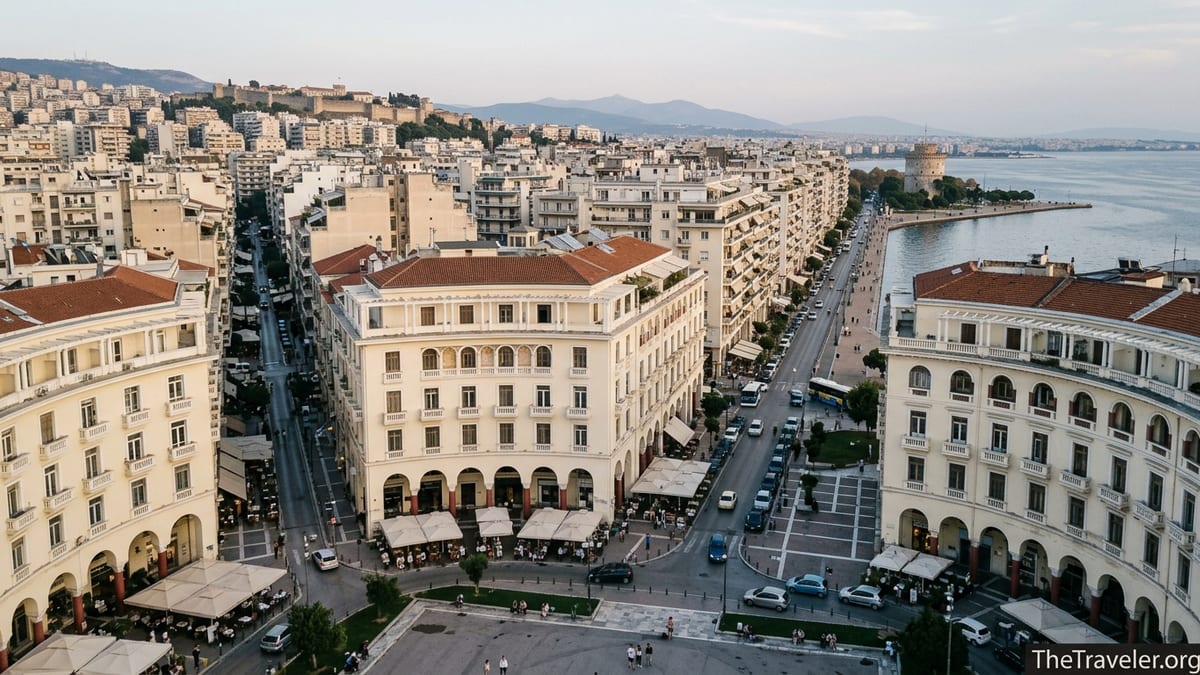
Thessaloniki hugs the Thermaic Gulf in a long curve, with the flat commercial center along the waterfront and the historic Upper Town climbing the hill behind. For visitors, the most relevant axis runs from the western port and Ladadika district through Aristotelous Square and east along the seafront promenade toward the White Tower and Makedonia Palace hotel. Most first-time visitors stay within a 15-minute walk of this strip, which keeps nearly all major sights, restaurants and nightlife within reach on foot.
The central area is relatively small compared with many European cities. Walking from Ladadika near the port to the White Tower at the eastern edge of the old waterfront typically takes around 20 to 25 minutes at a relaxed pace. Streets such as Tsimiski, Egnatia, Venizelou and Mitropoleos form the main grid of the commercial center, with Aristotelous Square as the obvious reference point. Hotels that advertise a “central location” are most convenient when they are within roughly 500 meters of the square, which local hoteliers often treat as the true heart of the city.
Public transport in Thessaloniki is improving, but most short city breaks are still largely on foot, supplemented by taxis and buses. The airport sits well outside the center, around 13 kilometers away, so airport-side hotels serve a very different purpose from city rooms. Before you book, it helps to decide whether you want to step straight out into nightlife, wake up in a quiet hillside neighborhood or minimize transfers for a very early flight.
City Center & Aristotelous Square: Best for First-Time Visitors and Walkability
The city center around Aristotelous Square is the most versatile base in Thessaloniki and the one that suits most first-time visitors. Aristotelous Square opens directly onto the waterfront on Nikis Avenue and is surrounded by pedestrian streets, cafes and mid-range hotels. From here you can walk to the Roman Forum, the Rotunda, Agia Sofia church, the White Tower and the Modiano and Kapani markets in 5 to 15 minutes. Streets like Tsimiski and Mitropoleos give quick access to shopping and casual dining, while Ladadika and Valaoritou nightlife districts sit a short walk to the west.
Hotel options here run from simple pensions above shops to polished four stars in renovated buildings. As an example, a modern three-star within a few minutes’ walk of Aristotelous Square might offer compact rooms with balconies and basic breakfast for a moderate nightly rate, often representing good value for couples and solo travelers who care more about location than size. In busy months such as May, June and September, rates in this core area often run higher than equally comfortable rooms 10 or 15 minutes farther north, so budget-conscious visitors sometimes choose a slightly uphill location by Agios Dimitrios church or the university and trade a short climb for better prices.
In terms of safety, the central streets around Aristotelous Square, Agia Sofia and the waterfront are usually busy until late thanks to the large student population. Visitors commonly note that they feel comfortable walking here in the evening, provided they stick to well-lit streets and keep the usual city awareness. The main annoyance is more likely to be late-night noise from scooters or groups on the square than serious crime. If you are sensitive to sound, ask for an interior or higher-floor room away from main avenues.
For value, the city center rewards booking early, especially for weekends, festivals and university events when Thessaloniki fills quickly. Travelers planning day trips to Vergina, Pella or Halkidiki often prefer to stay central and rely on intercity buses or tours, rather than sleeping near the bus station. Overall, this is the most balanced choice for walkability, sightseeing and everyday dining without needing taxis.
Ladadika: Nightlife, Dining and Car-Free Streets at Your Door
Ladadika is Thessaloniki’s most atmospheric entertainment district, a compact grid of cobbled, mostly pedestrianized streets between the port and the city center. Once a trading area of oil and spice warehouses, it was regenerated in the late 20th century and is now packed with tavernas, meze restaurants, bars and small live-music venues. Local nightlife and tourism boards regularly highlight Ladadika as the city’s beating heart after dark, and for many visitors, dinner and drinks here become a nightly ritual.
Accommodation in Ladadika is a mix of small boutique hotels in restored stone buildings and modern design hotels tucked into side streets. A typical example would be a 4-star boutique property on Morichovou Square or Katouni Street with exposed brick interiors, double-glazed windows to keep out noise and a breakfast room overlooking the cobbles. Rates here are often slightly higher than similar-quality rooms a few blocks inland, reflecting the premium location. For travelers who want to step out of their door into a taverna-lined street, the price difference is frequently worthwhile.
Walkability from Ladadika is excellent. Aristotelous Square is roughly a 7 to 10-minute walk, depending on your exact street, and the waterfront promenade is even closer. You can stroll to Valaoritou’s late-night bars in around 10 minutes and reach the White Tower in about 20 minutes on foot along the seafront. Because the district is so compact, it is easy to pop back to your room between daytime sightseeing and late-night plans, which many visitors appreciate in hot months.
Ladadika is generally considered safe, with a constant flow of people until late, but being a nightlife zone, it attracts typical city-center issues such as occasional overcharging in very touristy bars, aggressive touting for some venues and rare reports of drink spiking. Visitors who stick to busy, well-known establishments, watch their drinks and confirm prices before ordering cocktails tend to have a smooth experience. If you are a light sleeper, look carefully at recent guest reviews and prioritize hotels that emphasize soundproofing and upper floors.
Valaoritou: Late-Night Bars, Student Energy and Urban Grit
Valaoritou refers both to a street and the wider nightlife district just north of Egnatia Street, a short walk inland from Ladadika and the port. This is Thessaloniki’s alternative and student-heavy nightlife zone, with bar clusters in converted industrial buildings, small music venues, rooftop spaces and inexpensive shot bars. Local nightlife guides and student associations frequently point to Valaoritou when describing where young residents head after midnight, especially for contemporary music and DJ sets.
Hotels directly in Valaoritou are limited, but several budget and mid-range properties lie within a 5 to 10-minute walk, often on Egnatia or on smaller streets closer to the university. A typical mid-range city hotel here might offer clean, businesslike rooms, a basic breakfast buffet and 24-hour reception at prices slightly lower than comparable properties right on Aristotelous Square. This makes the area attractive for budget-conscious travelers who want to enjoy nightlife but do not need a charming historic facade.
The trade-off is atmosphere and noise. Streets in and around Valaoritou can feel more urban and less polished than Ladadika or the waterfront, with graffiti, busy traffic on Egnatia and late-night crowds spilling outside bars. Some visitors appreciate the local, lived-in character and lower prices, while others find it a bit gritty. If you choose this area, consider rooms facing interior courtyards and pack earplugs, especially for Friday and Saturday nights.
From a safety perspective, Valaoritou is busy and generally safe when bars are open, although late-night intoxication sometimes leads to minor scuffles or petty theft risks typical of nightlife zones. Solo travelers are usually fine if they avoid very quiet side streets in the early hours, keep valuables out of sight and rely on licensed taxis if they feel uncomfortable walking back. The upside is that you are still close to the main center, and it is easy to walk to Aristotelous, Ladadika and the waterfront during the day.
Waterfront & Nea Paralia: Seaside Promenades and Higher-End Comfort
Thessaloniki’s waterfront divides into the historic old seafront around Nikis Avenue and the newer promenade area known as Nea Paralia, which stretches east from the White Tower past a series of themed parks toward the city’s concert hall. Staying directly on or near the water offers some of the city’s best views, especially from upper-floor rooms facing the gulf and Mount Olympus on clear days. Locals of all ages use the promenade for evening strolls, jogging and cycling, so the atmosphere is lively but more spread out than the dense streets of Ladadika.
Accommodation along the waterfront skews toward mid-range and upscale. On the old seafront near Aristotelous Square, you will find traditional city hotels with balconies over Nikis Avenue, which are popular with couples and business travelers who want both views and instant access to cafes. Farther east near Nea Paralia, larger properties including a well-known seafront hotel complex near the White Tower attract conference guests and visitors who prefer more resort-like facilities such as pools, full-service restaurants and wellness centers. Nightly rates here are often at the higher end of Thessaloniki’s spectrum, particularly for front-facing sea-view rooms.
Walkability from the waterfront depends on your exact position. From Nikis Avenue near Aristotelous, you are in the thick of the center and can walk almost everywhere. From a hotel nearer the concert hall, expect a 25 to 35-minute walk to Aristotelous, or a short taxi ride when tired or in bad weather. The promenade is flat and pleasant, so many visitors are happy to walk one way and taxi back. For nightlife, you will be slightly farther from Ladadika and Valaoritou than central hotels, but summer evenings often revolve around the seafront itself, with drinks at cafes and bars that line the promenade.
In terms of safety, the waterfront is one of the most visible and patrolled parts of the city, with families, joggers and students out until late on warm nights. As with any urban seafront, it is sensible to avoid overly secluded spots in the very small hours and to keep valuables secured when sitting with bags at your feet. Overall, the waterfront suits travelers who value open views and a more relaxed pace over being steps from late-night club zones.
Ano Poli (Upper Town): Views, History and Quiet Nights
Ano Poli, the Upper Town, climbs the hillside above the center behind the Roman Forum and Agios Dimitrios church. It is one of the few areas where Thessaloniki’s pre-modern street pattern survives, with narrow lanes, Ottoman-era houses and sections of the old city walls. Many visitors come up for sunset views across the bay, especially around the Trigonion Tower and Vlatadon Monastery, and end up wishing they had booked a room here for the village-like atmosphere.
Accommodation in Ano Poli consists mainly of guesthouses, small boutique hotels and apartments in renovated traditional houses. A typical guesthouse might offer stone-walled rooms, wooden balconies and shared courtyards where guests sit with coffee. Rooms can be surprisingly affordable compared with central hotels, especially when you factor in the character and views. The main cost is not money but effort: steep streets and staircases mean that staying here is less convenient for people with mobility issues or those who tire quickly of hills.
Walkability from Ano Poli to the commercial center is good in distance but challenging in gradient. It usually takes around 15 to 20 minutes to walk downhill from a mid-level Upper Town guesthouse to Aristotelous Square, and a little longer to climb back up, especially in summer heat. Some visitors choose to walk down during the day and take a taxi back at night, which is a common local pattern. Taxis are relatively affordable for these short hops, so couples and small groups often find the combination of quiet nights and easy rides worthwhile.
In terms of safety, Ano Poli is generally considered a calm, residential area, particularly away from the student pockets closer to the university. Nights are much quieter than in Ladadika or Valaoritou, and you are unlikely to be disturbed by bar noise. Street lighting can be patchy in some lanes, so it is wise to stick to main routes and carry a charged phone. For travelers who prioritize charm, history and sleep quality over door-step nightlife, Ano Poli is one of Thessaloniki’s best-value choices.
Airport-Side Hotels: Convenience for Flights, Trade-offs for City Life
Thessaloniki International Airport lies several kilometers outside the city, closer to the road toward Halkidiki than to the waterfront. Around it you will find a handful of large hotels and smaller properties aimed at business travelers, conference guests, casino visitors and passengers with early flights. One of the best-known options is an upscale resort-style hotel with extensive gardens and a casino nearby, located roughly 3 kilometers from the terminal and about 13 kilometers from the city center by road. This kind of property often provides scheduled shuttles both to the airport and to central Thessaloniki, making it practical for very short stays.
The main advantage of airport-side accommodation is predictability. If you have a flight departing around dawn or arriving past midnight, sleeping near the terminal removes concerns about late or early taxis, public transport limitations or heavy traffic on the ring road. Business travelers attending events at nearby conference venues also benefit from short transfers and on-site facilities such as meeting rooms, spa areas and large pools that are rare in compact city hotels.
The drawbacks are isolation and limited walkability. The area around the airport is not set up for strolling or casual sightseeing, and outside of larger hotels and the adjacent casino complex there is little in the way of evening entertainment within a comfortable walk. Visitors who stay here but plan to explore Thessaloniki each day will usually rely on shuttle schedules or 20-minute taxi rides to reach the center, which can add both time and cost compared with simply booking downtown.
From a safety perspective, the airport and its hotels are as secure as most transport hubs and business districts, although traveler reports sometimes mention aggressive taxi touting or hard-selling from some budget car rental desks in the wider airport area. Booking official taxis or transfer services in advance, confirming prices clearly and organizing car rentals through reputable agencies helps avoid these irritations. For a classic city-break experience with evening promenades and bar-hopping, staying by the airport is rarely the best option; instead, think of these hotels as functional bases for flight logistics or conferences.
Balancing Nightlife, Safety, Walkability and Value
Choosing where to stay in Thessaloniki is ultimately about prioritizing among four factors: nightlife, safety, walkability and value for money. If nightlife is your top concern and you plan to be out until very late, Ladadika and Valaoritou put you closest to the action. In Ladadika, you can move between tavernas with live rebetiko music, cocktail bars and late-night eateries without ever needing a taxi, while in Valaoritou you are within a few blocks of student bars and clubs in converted warehouses. Both districts are busy and feel alive well after midnight, which many travelers enjoy.
If you prefer a calm base but still want to enjoy evenings out, the city center and waterfront around Aristotelous Square are a good compromise. You can walk to nightlife zones in 10 to 15 minutes but sleep on streets that are more mixed-use and slightly quieter. Families and solo travelers often favor this area for its combination of convenience and a more everyday local feel. Ano Poli goes a step further toward peace and character, swapping noise and flat streets for hillside views; it suits visitors who are comfortable walking or budgeting for frequent short taxi rides.
In terms of value, the best deals often appear slightly outside the noisiest core. For example, a simple but well-reviewed hotel north of Egnatia Street near Agios Dimitrios may offer significantly lower rates than a similarly rated property on the waterfront, yet still be within a 10 to 15-minute walk of Aristotelous Square. Apartments and guesthouses in Ano Poli can offer larger spaces at reasonable prices, especially in shoulder seasons. By contrast, sea-view rooms on Nikis Avenue or resort-style properties near Nea Paralia and the airport frequently command premium prices but deliver more space, amenities and, in the case of airport hotels, extensive leisure facilities.
Safety considerations in Thessaloniki are broadly similar to those in other mid-sized European cities. The central and waterfront areas are generally safe, thanks in part to the city’s university population and the habit of residents to stay out late. Issues that do arise often relate to minor scams, overcharging in touristy bars or pickpocketing in crowded places rather than violent crime. Whatever area you choose, keeping to busy, lit streets at night, watching your belongings in packed venues, checking recent hotel reviews and using licensed taxis or reputable ride services will go a long way toward a trouble-free stay.
The Takeaway
Thessaloniki is a city where your choice of neighborhood can shift your experience from tavernas under fairy lights to quiet hillside sunsets, from sea-view promenades to ultra-convenient airport stopovers. The compact center means you rarely go very wrong, but small differences in location matter when you are walking home after midnight or trying to catch a 6 a.m. flight. For most short city breaks, a hotel near Aristotelous Square, Ladadika or the central waterfront offers the best blend of walkability, nightlife access and everyday safety.
If you want to eat and drink right on your doorstep, Ladadika is hard to beat; if you want nightlife with a grittier, more student-heavy vibe and often lower prices, Valaoritou is your spot. Travelers who prize quiet and character above all else will likely be happiest in Ano Poli, treating taxis as part of the budget, while those with tight flight schedules may appreciate the practicality of airport-side hotels despite their distance from the city vibe. Weigh which of nightlife, walkability, safety and value matter most to you, then match them to the area that fits best. Thessaloniki’s small scale means that whichever you choose, the rest of the city is rarely more than a pleasant walk or short ride away.
FAQ
Q1. What is the best area to stay in Thessaloniki for first-time visitors?
For most first-time visitors, the city center around Aristotelous Square is the best base. It offers easy walkability to major sights, markets, Ladadika and the waterfront, along with a wide range of hotel options across different budgets.
Q2. Is Ladadika safe at night for tourists?
Ladadika is one of the busiest nightlife areas and is generally safe, with many people out late. As in any entertainment district, it is wise to keep an eye on your belongings, stay in well-known venues, watch your drinks and use common sense when walking back to your hotel in the early hours.
Q3. How far is Thessaloniki airport from the city center?
Thessaloniki International Airport is roughly 13 kilometers from the city center by road. Depending on traffic, the drive usually takes around 20 to 30 minutes by taxi, shuttle or pre-arranged transfer.
Q4. Is Ano Poli a practical place to stay without a car?
Ano Poli can work well without a car if you are comfortable with hills. It is about a 15 to 20-minute walk downhill to central Thessaloniki, and many travelers take taxis back up, which are relatively affordable for the short distance. The reward is quieter nights and historic character.
Q5. Where should I stay in Thessaloniki for the best nightlife?
If nightlife is your top priority, staying in or near Ladadika or within walking distance of Valaoritou is ideal. These areas concentrate tavernas, bars and clubs, allowing you to move between venues on foot and avoid long late-night taxi rides.
Q6. Are waterfront hotels worth the higher price?
Waterfront hotels along Nikis Avenue and toward Nea Paralia often cost more, especially for sea-view rooms, but many travelers find the views and promenade access worth it. If you value open vistas, sunsets and morning walks by the water, the premium can be justified.
Q7. Is Thessaloniki walkable for most visitors?
Yes, central Thessaloniki is quite walkable. Most key sights, markets, Ladadika, Aristotelous Square and the lower part of Ano Poli are within 10 to 25 minutes on foot from centrally located hotels. Steep streets mainly affect the Upper Town rather than the flat center.
Q8. Which area offers the best value for money on accommodation?
Areas slightly north of the core center, such as the streets around Agios Dimitrios or near the university, along with parts of Ano Poli, often offer better-value rooms than the waterfront or Ladadika, while still being within walking distance of the main sights.
Q9. Should I stay near the train or bus stations instead of the center?
Staying near the train or intercity bus stations can be practical if you have very early departures, but the streets are less atmospheric and farther from key sights. Most visitors prefer central areas and simply take a short taxi ride to their train or bus when needed.
Q10. Are airport-side hotels in Thessaloniki a good option for a city break?
Airport-side hotels are convenient for late-night arrivals, early departures or conferences, but they are not ideal for a classic city break. You will likely rely on shuttles or taxis to reach the center, so for sightseeing and nightlife it is usually better to stay downtown.