


Thessaloniki is often a second thought after Athens and the Greek islands, but for many travelers it ends up being the highlight of their trip. Greece’s second city combines serious Byzantine history with a famous food scene, late-night energy and easy access to beaches on the Halkidiki peninsula. Whether it is worth visiting for you depends on what you want from your Greece itinerary. This guide compares food, nightlife, history, prices, walkability, nearby beaches and crowd levels to help you decide if Thessaloniki deserves a place on your route.
Get the latest updates straight to your inbox!
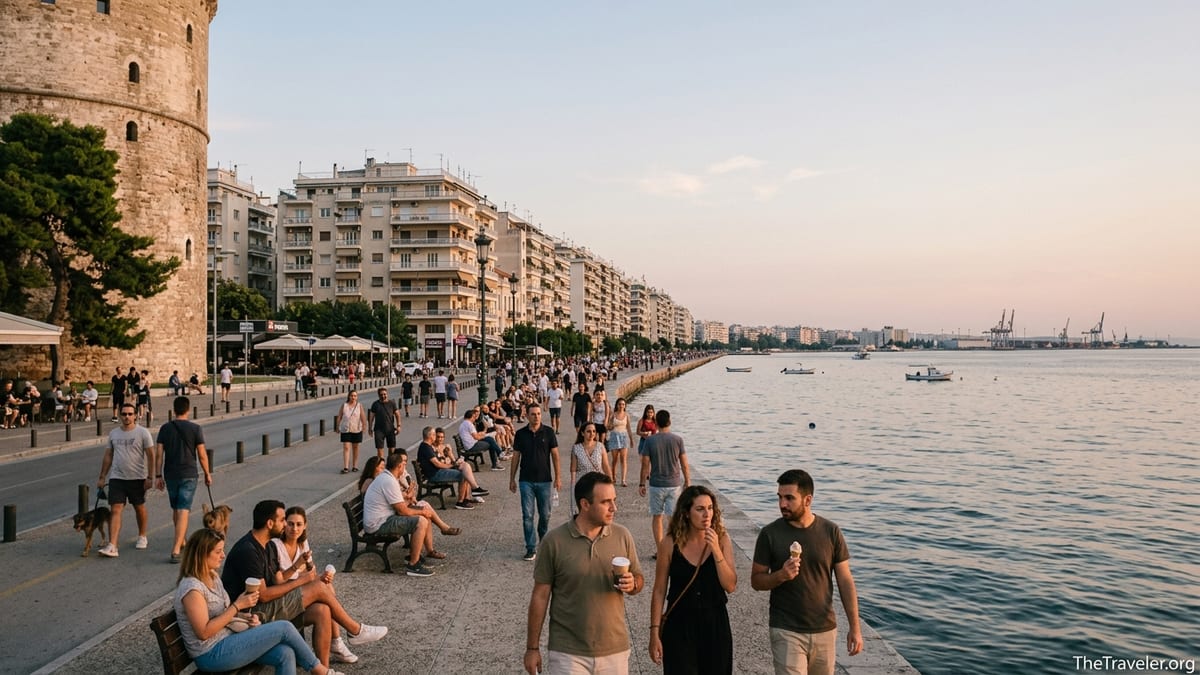
Thessaloniki in a Nutshell: Who Is This City For?
Thessaloniki is a compact port city in northern Greece with a largely local feel and a big student population. You will not find the whitewashed island aesthetic of Santorini here. Instead, you get waterfront promenades, Ottoman and Byzantine architecture, lively squares and backstreets lined with cafés and ouzeris filled with locals rather than tour groups. It is a city you experience on foot and through its food, rather than by ticking off a long list of blockbuster sights.
Travelers who tend to love Thessaloniki are those who enjoy slow city breaks, café culture and history layered into everyday life. If you like wandering from a Byzantine church to a modern coffee bar, then to a market for snacks before sunset drinks by the sea, this city fits well. Visitors who come expecting an island-style beach resort, or who want polished picture-perfect old towns, may find it less compelling than Athens plus an island. The charm here is more urban and lived-in.
Thessaloniki also works well as a base. The city has an international airport and rail and bus links into mainland Greece and the Balkans, plus summer buses and tours to Halkidiki’s beaches. Many travelers use it as a starting or ending point for trips that combine northern Greece, Meteora or Mount Olympus with a few days of island time elsewhere.
In pricing, Thessaloniki tends to sit below Athens and far below peak-season islands like Mykonos. A sit-down meal with wine in a mid-range taverna can easily come in cheaper than the same spread in Plaka or on a Cycladic waterfront. Budget-conscious travelers and long-term backpackers often find they can stay longer here without burning through their funds, especially outside August.
Food Capital of Greece: What to Expect From the Dining Scene
Thessaloniki has a reputation within Greece as a culinary capital, with a food culture shaped by Greek, Ottoman, Jewish and Balkan influences. You see this in the mix of meze tavernas, pastry shops and modern bistros that cluster in districts like Ladadika, Athonos Square and the streets near the Rotunda. Classic dishes include spicy soutzoukakia meatballs, bougiourdi baked feta with peppers, and seafood meze that arrives as a string of small plates to share.
Breakfast and snacks are a highlight. Locals grab sesame bread rings called koulouri from street vendors, or line up at pastry shops for bougatsa, the city’s trademark flaky pie filled with sweet cream or savory cheese. Prices are typically friendly for visitors: a generous slice of cream bougatsa with coffee in a central bakery might run to just a few euros, making it easy to eat well even on a tight budget. Around Navarinou Square and Aristotelous Square you will find several long-running family bakeries that are busy from early morning with office workers and students.
For sit-down meals, areas like Ladadika are packed with tavernas that cater to both locals and visitors. You might order a spread of grilled octopus, fried zucchini, village salad and a carafe of house wine and pay noticeably less than in major island resorts in July or August. In the upper town, Ano Poli, small neighborhood tavernas often add city views to the mix, serving hearty grills and casseroles on terraces overlooking the Thermaic Gulf. The atmosphere is relaxed rather than formal, and lingering over a long meal is very much part of the culture.
Thessaloniki also has a modern café and barista scene. Third-wave coffee bars around streets like Valaoritou and in the city center serve specialty brews and cold freddo espresso, a Greek staple in hot weather. Prices for quality coffee tend to be lower than in many Western European capitals, and ordering a freddo and sitting for an hour people watching is completely acceptable; you are not pushed to move on quickly.
Nightlife: Late, Local and Lively Rather Than Glamorous
If nightlife is important to you, Thessaloniki makes a strong case for inclusion on a Greece itinerary. It is a major university city, and that student population keeps bars and clubs busy for most of the year. The tone skews casual and social rather than high-glamour. You will see lots of groups in jeans and sneakers sharing carafes of wine or rounds of tsipouro rather than VIP tables with bottle service.
Ladadika is the most famous going-out district, a grid of cobbled streets lined with bars, meze places and venues with live rebetiko or laiko music. It tends to start filling up after 9 or 10 pm, with tables spilling into the streets and music drifting between venues. Drink prices here are generally lower than on islands known for nightlife; a draft beer or simple mixed drink often costs significantly less than in clubs on Mykonos or in touristy corners of Santorini, though some late-night venues do charge higher cover or cocktail prices.
For a more local feel, the Valaoritou area inland from the port has a concentration of bars, small clubs and rooftops that particularly attract students and young professionals. On a summer night, you might start with an aperitif on a terrace bar looking toward the port, then move to a small club for Greek pop or electronic music into the early hours. Along Nikis Avenue, the waterfront promenade, cafés shift into bar mode in the evenings, serving cocktails with views of the White Tower and the bay.
If your idea of a Greece trip includes late nights followed by slow mornings and leisurely lunches, Thessaloniki fits well. However, if you are looking specifically for beach clubs, large outdoor parties and a resort atmosphere, islands like Ios, Zakynthos or parts of Crete will deliver that more directly. Thessaloniki’s strength is urban nightlife with a strong local backbone, not all-inclusive or poolside party scenes.
History and Culture: A Compact Open-Air Museum
Historically, Thessaloniki was founded in the 4th century BC and became one of the key cities of the Roman and Byzantine empires. Today, the city has one of the densest concentrations of early Christian and Byzantine monuments in the world. Fifteen of its churches, monasteries, city walls and baths form a collective UNESCO World Heritage listing, including landmarks such as the Rotunda, the Church of Agios Dimitrios and the Byzantine walls and Heptapyrgion fortress overlooking the city.
In practical terms, this means you can spend a day walking between centuries without long transfers. Starting at the waterfront, you might visit the White Tower museum, then head up to the Roman Forum, step into the dark, incense-scented interior of Agios Dimitrios to see its mosaics, and continue uphill toward Ano Poli to walk along the fortifications. Admission fees for individual sites are generally modest compared with major Western European city museums, and combination tickets sometimes cover multiple archaeological sites, making it good value for history-focused travelers.
The city’s museums add depth. The Archaeological Museum of Thessaloniki displays finds from ancient Macedonia, including sculpture and goldwork from nearby sites, while the Museum of Byzantine Culture covers everyday life and art from the Byzantine period with well-curated, modern exhibits. Both are walkable from the city center and can comfortably fill half a day if you enjoy museums. Because Thessaloniki’s visitor numbers are lower than Athens, galleries and churches are often pleasantly uncrowded outside peak weekends and religious holidays.
If you are building a Greece itinerary around history, Thessaloniki pairs well with destinations like Vergina, where royal Macedonian tombs were found, and Pella, the ancient capital of Macedon. Organized day tours and public transport links connect the city with these sites, allowing you to base in Thessaloniki and make excursions rather than changing hotels each night. For travelers who prefer to unpack once and explore widely from a single base, this is a practical advantage.
Prices, Walkability and Everyday Practicalities
One of Thessaloniki’s strengths as a city break destination is that it is easy to get around without a car. The historic and commercial core runs roughly from the port and Ladadika area through Aristotelous Square to the White Tower and the museums just beyond. This corridor is flat and highly walkable, with a long seafront promenade used by locals for evening strolls. From here, it is a climb but still a reasonable walk or short taxi ride up to Ano Poli and the city walls for views and sunset.
Public buses cover the wider city and the airport connection, and there are abundant taxis. Compared with many European capitals, local transport and taxi fares are often relatively affordable, though rising fuel costs in recent years mean you should still check current airport transfer rates and confirm prices or use metered taxis where possible. A typical urban bus ticket is usually just a few euros or less, and many visitors find they mainly walk within the center and use buses only for specific trips.
In terms of day-to-day expenses, Thessaloniki is usually cheaper for accommodation and food than high-demand island destinations at the height of summer. City-center guesthouses and mid-range hotels often offer double rooms at rates that would only buy you a basic studio on a popular island in August. Eating in neighborhood tavernas off the main squares can bring main dishes down to prices that feel modest by Western European standards, especially at lunch. Coffee, street snacks and bakery items remain accessible even for backpackers or students traveling on a tight budget.
On the downside, the city is quite built-up and can feel busy at rush hour. Sidewalks are not always in perfect condition, and the climb to Ano Poli is steep in places, which can be tiring in high summer heat or challenging for travelers with mobility issues. There is also construction and infrastructure work in parts of the center at various times, including metro works, which can affect traffic and streetscapes. If you want a completely tranquil, village-like atmosphere, Thessaloniki on its own will not deliver that, but it can be balanced with quieter day trips.
Beaches and Day Trips: How Close Is the Sea Experience?
Although Thessaloniki sits on the sea, its central waterfront is more promenade than beach. You can sit at cafés overlooking the water, watch sunsets and ferries, and take boat trips in season, but there is no long stretch of sandy swimming beach directly in front of the main city. This often surprises travelers who assume that any Greek coastal city will have central beaches like those on some islands.
For a proper beach day, most locals head to the Halkidiki peninsula, which begins within driving distance south of the city. In summer, buses and organized excursions run from Thessaloniki to popular seaside towns and beach bars on the first and second “fingers” of Halkidiki. Depending on which beach you choose and the traffic, you might spend from roughly one to two hours each way reaching clearer water and sandy bays. This makes Thessaloniki suitable for travelers who are happy to combine city life with occasional beach days, rather than those who want to step out of their hotel directly onto sand every morning.
Closer to the city, there are smaller, more low-key coastal spots reachable by local transport or car where you can swim, but they do not compare in atmosphere or water clarity to the better-known beaches further along the peninsula. Many visitors who want a strong beach focus choose to spend several days in Halkidiki or on an island, using Thessaloniki only as an arrival or departure base. Others enjoy the contrast: two or three days of museums, markets and nightlife in Thessaloniki, followed by several days of doing very little on a beach elsewhere.
If you are planning a wider mainland itinerary, Thessaloniki also works as a hub for non-beach day trips. Organized tours and regional buses link the city to Mount Olympus for hiking, to Meteora for its monasteries on rock pillars, and to nearby wine regions in northern Greece. This allows you to sample mountains, monasteries and seaside landscapes while sleeping in the same city every night, which can simplify logistics for families or travelers who dislike frequent hotel changes.
Crowd Levels Compared With Athens and the Islands
One of Thessaloniki’s attractions for many travelers is that, while it is busy and energetic, it does not feel as saturated with visitors as Athens or the most famous islands in high season. Walking down Tsimiski Street or along the waterfront in July, you will hear Greek spoken all around you, interspersed with visitors from elsewhere in Europe and the Balkans. Tourist groups exist, particularly around major churches and the White Tower, but they are fewer, and the city does not revolve around them in the way some island towns do in August.
This relative lack of mass tourism changes the experience. Restaurant menus in many neighborhoods are written primarily for locals; English is widely spoken in central areas, but you are often sitting next to local families and students rather than other visitors. It also means that visiting out of peak tourist months, such as April, May, late September or October, can be especially rewarding: the city’s everyday life continues at full strength, even as coastal resorts on some islands wind down.
That said, Thessaloniki is not quiet. It is a major urban center, and central streets can be noisy with traffic and scooters. Weekends see busy nightlife, and during local festivals, university terms and major cultural events, accommodation can book out quickly. If you value absolute calm, choose accommodation on side streets or in upper neighborhoods away from major plazas. Compared with a small Cycladic village, the city will always feel more intense, but compared with a cruise-ship day in Santorini or a packed alley in Mykonos Town, Thessaloniki usually feels more breathable.
For some travelers, this balance is ideal: enough buzz to feel alive and interesting, without the sense that every shop and café exists solely for short-term visitors. If you enjoy feeling like you are in a real Greek city rather than a seasonal resort, this may be the deciding factor in favor of adding Thessaloniki to your route.
How Thessaloniki Fits Into a Greece Itinerary
Whether Thessaloniki is worth visiting often comes down to how much time you have in Greece and what kind of trip you want. With one week in the country focused mainly on first-time highlights, some travelers prioritize Athens plus one island and skip the north entirely. With 10 to 14 days, including Thessaloniki becomes more realistic, especially if you are flying in or out of its airport or are interested in northern Greece’s history and landscapes.
A common pattern is to spend two or three full days in Thessaloniki at the start or end of a longer trip. For example, you might land in Thessaloniki, spend two days exploring the city’s food, museums and nightlife, then continue by bus or rental car to Halkidiki for four or five days of beaches, and finally connect to Athens or another destination. Alternatively, those interested in classical and Byzantine history might pair Thessaloniki with visits to Vergina, Pella and Meteora, forming a loop through the north before flying home.
For multi-country trips in the Balkans, Thessaloniki can be a convenient bridge between Greece and North Macedonia or other neighboring countries. International buses link the city with Skopje and further connections, and using Thessaloniki as a cultural and culinary stop on a wider regional itinerary lets you sample Greek urban life without committing your entire trip to the country. This is appealing for travelers who like variety and are moving overland.
Families and slower travelers often appreciate that Thessaloniki does not demand a strict sightseeing schedule. You can structure days around a late breakfast, one major sight, a long lunch, a siesta, and a sunset walk along the seafront without feeling you are “missing” dozens of must-see attractions. As long as you are comfortable walking and navigating a medium-sized city, Thessaloniki can be a relaxed base that still feels interesting for several days.
The Takeaway
Thessaloniki is worth visiting if you value food, nightlife, history and local atmosphere over beaches at your doorstep and postcard-perfect island scenery. It offers rich Byzantine heritage, a serious dining and café culture, late but laid-back nights, walkable neighborhoods and generally more manageable prices than Greece’s most touristed islands. What it does not offer is an all-in-one beach resort experience or a fully polished historic center aimed primarily at visitors.
If your ideal Greece trip is built around swimming every day, cliffside sunset views and island-hopping, then Thessaloniki is best treated as a gateway or add-on rather than the core of your itinerary. But if you are curious about Greece beyond the islands, enjoy urban exploration and want to eat and drink extremely well in places where most of the other tables are filled with locals, the city can be one of the most rewarding stops you make.
In practical terms, Thessaloniki fits particularly well into itineraries of 10 days or more, into trips that combine city life with Halkidiki’s beaches, and into routes focused on northern Greece’s history and landscapes. For solo travelers, couples and groups of friends who like a mix of culture and nightlife, it is an especially strong choice. Think of it less as a rival to Santorini or Mykonos, and more as Greece’s northern capital of everyday life, best enjoyed at street level with a coffee, a plate of meze and time to wander.
FAQ
Q1. Is Thessaloniki worth visiting on a first trip to Greece?
Yes, if you have at least 10 days and enjoy cities, food and history. With only a week focused on classic highlights, many travelers prioritize Athens plus one island instead.
Q2. How many days do I need in Thessaloniki?
Two full days is enough to see key sights and sample the food scene, while three to four days allows time for museums, Ano Poli, nightlife and a nearby day trip.
Q3. Is Thessaloniki cheaper than Athens and the islands?
In general, accommodation and everyday dining tend to be more affordable than in Athens and significantly cheaper than peak-season islands like Mykonos or Santorini.
Q4. Can I use Thessaloniki as a base for beaches?
Yes, if you are willing to travel out to Halkidiki or nearby coastal towns for beach days. The city’s own central waterfront is for strolling and cafés, not for long sandy beaches.
Q5. Is Thessaloniki safe for solo travelers at night?
Central areas are generally considered safe with normal city precautions. Stick to well-lit streets, use licensed taxis when needed, and keep an eye on your belongings in busy nightlife zones.
Q6. Is Thessaloniki walkable?
Yes, the central area from the port to the White Tower and main museums is very walkable. Ano Poli involves hills, so some visitors use taxis or buses to avoid steep climbs.
Q7. Does Thessaloniki have good nightlife compared with the islands?
Thessaloniki offers lively, year-round urban nightlife driven by locals and students, with bars and clubs open late. It lacks the beach-club, resort-party vibe of some islands but suits travelers who prefer a more local scene.
Q8. What is the best time of year to visit Thessaloniki?
Spring and autumn are ideal for comfortable temperatures and sightseeing. Summer brings more heat and nightlife, while winter is cooler but the city remains lively and less touristy.
Q9. Is Thessaloniki a good choice for families?
Yes, for families who are comfortable in cities. The seafront promenade, parks and relatively compact center make it manageable, especially when combined with day trips or a few nights at the beach.
Q10. Should I choose Thessaloniki or Athens if I can only visit one?
Athens is the better single choice for first-time visitors focused on iconic ancient sites. Thessaloniki is often preferred by those who prioritize food, nightlife and a less tourist-heavy atmosphere over headline monuments.