


I booked a cave tubing and caving adventure on the Tanamá River in Utuado because every local I asked described it as “real Puerto Rico.” I wanted an honest test of my comfort with dark caves, moving river water and muddy jungle trails, not a sanitized resort excursion. This is exactly what I got. Below is a practical, from-the-ground account of what the tour was actually like, what it cost, how physically demanding it felt, and who should (and should not) sign up.
Get the latest updates straight to your inbox!
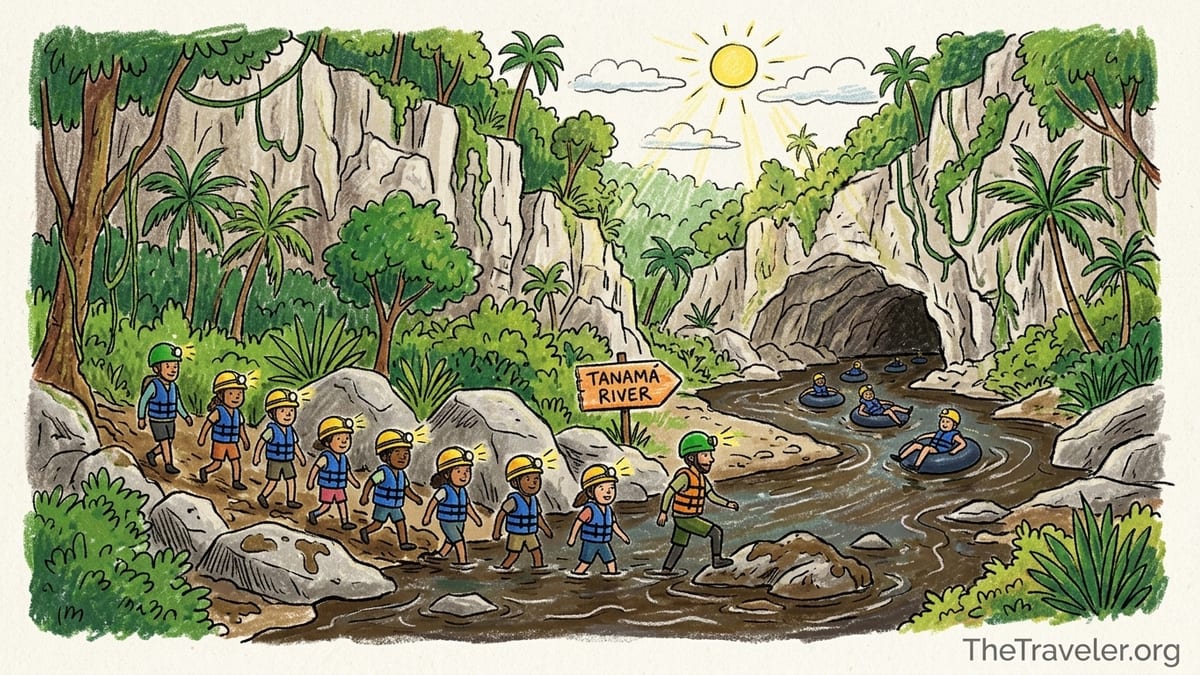
Operator, Tour Chosen and Current River Status
I did my Tanamá adventure with Tanama River Adventures, a long-running family operation based near the Caguana sector of Utuado that focuses on small-group river, caving and rappelling tours. Discover Puerto Rico currently lists them among the main operators on the Tanamá, offering hiking, cave tubing, caving, rappelling, waterfall time and river trekking in the karst region between Utuado and Arecibo. When I checked their site and Discover Puerto Rico the week of my trip, both emphasized that river levels and tour availability change frequently with rain, and that they confirm conditions close to the tour date rather than promising anything months in advance.
I chose one of their river caving and hiking style tours that combines a hike down to the river, time walking and swimming in the water, a full caving segment through a dark cavern and a short tubing float on the way out. It did not include rappelling, which they reserve for separate, more advanced departures. The focus was caving and river trekking, with a taste of tubing.
Before writing this, I checked again in October 2026 that Tanama River Adventures is operating and that the Tanamá is open for tours. At the time of publication, departures are running on days when rainfall has been moderate and the river is within their safe operating levels. However, heavy rain in the central mountains can push the Tanamá into flood very quickly. My calm, manageable river conditions are not a guarantee of yours. On days with strong recent rain, operators may cancel or change itineraries at short notice, and that is exactly what you should want them to do for safety.
The key point: do not assume the river is safe just because someone online had a peaceful float. You must rely on the specific operator’s assessment at the time of your tour and be prepared for rescheduling if weather shifts.
Booking, Price Paid, Meeting Point and Group Size
I booked directly through Tanama River Adventures’ online request form and then finalized by WhatsApp, which seems to be their preferred method for confirming details and sending meeting instructions. They responded within a day, asked about our ages and general fitness, and made it clear that participants needed to be comfortable walking on uneven ground, getting fully wet and spending time in dark, enclosed spaces.
For a weekend tour in high season, I paid just under 80 US dollars per person including tax for the river caving and hiking style tour. This lined up with public price ranges listed on aggregator sites, where similar Tanamá river trekking and caving tours with this operator hover in the 70 to 80 US dollar band depending on the exact itinerary. Payment was a mix of online deposit and cash on arrival. They confirmed that prices can rise slightly year to year, so anyone reading this later should check the current rate before budgeting.
The meeting point was their base near PR-111 in the Caguana area of Utuado, a drive of around 1 hour and 45 minutes from San Juan in normal traffic. Our instructions emphasized leaving extra time for the winding mountain roads and for a quick bathroom break in Utuado town. We met at 8:00 a.m. sharp, and by 8:30 a.m. we were gearing up. Late arrivals would have delayed the entire group, and the staff were upfront that chronic lateness can lead to missing the tour.
Our group was small: eight participants plus two guides. Ages ranged from early 20s to early 50s, with a mix of friends and couples. This smaller size mattered later in the caves where tight spaces and dark pools would have been chaotic with a busload of people.
Safety Briefing, Rules and Age or Health Restrictions
The safety briefing was more thorough than many hiking tours I have done elsewhere. In shaded space at the base, the lead guide explained the basic route, estimated time on the trail and in the water, and pointed out that there was no way to “skip” the cave section once we committed to it. If anyone felt unsure during the briefing, the time to speak up was then, not halfway into the darkness.
They covered helmet and life jacket fit, signals to stop or move, and the expectation that we would listen to instructions before each technical section, such as steep muddy slopes or deeper river crossings. They asked about heart conditions, recent surgeries and pregnancy, and they stated plainly that this particular route was not for guests with serious mobility issues or people unable to walk steadily on uneven ground for several hours. For younger participants, they usually prefer children to be at least around 10 to 12 years old and comfortable in water; for my departure all participants were adults.
The briefing also talked frankly about fear and claustrophobia. They explained that some parts of the cave would be very dark and would narrow to the point where we might need to shuffle sideways or duck under low ceilings. Anyone with a strong, known claustrophobia response was gently urged to consider one of their more open river hikes instead. They did not use scare tactics, but they did not sugarcoat the experience either.
Finally, we were told that the guides had full authority to turn the group around or modify the day if the river rose, storms built up or someone in the group could not safely continue. That possibility actually made me more relaxed, not less, because it showed they were watching the weather and group, not just trying to push the tour through on autopilot.
The Hike Down: Mud, Slopes and First Contact With the River
The day began with a hike from the base down toward the Tanamá. This is not a manicured national park trail. It is a mix of farm track, narrow forest path and steeper, root-filled sections that become very slick after rain. On our November departure, the ground was damp but the sky was clear, which meant plenty of mud without active rainfall.
The first 20 to 30 minutes were mostly downhill on a narrow dirt path under the trees. I am reasonably fit and hike regularly, and I still found myself using my hands in a few steep, loose sections. There were improvised steps in places and ropes to hold on to where the grade was most intense, but anyone expecting a smooth, gravel path will be surprised. The guides set a slow, steady pace, paused often to check that everyone was upright, and pointed out where to place our feet on the steeper slopes.
By the time we reached the river, my shoes were completely caked in mud and I was sweating through my shirt despite the shade. The Tanamá itself at that point was running clear and at a moderate level, wide enough to feel impressive but not roaring. Close to shore, the water hit mid-calf to knee height; in the center of the channel, in some pools, it dropped quickly to chest depth even for taller adults. The guides used their paddles and their own bodies as depth markers so that nervous swimmers knew where they could stand and where they would definitely float.
From that point on, we alternated between hiking along the riverbank on boulders and entering the river itself to wade, swim or float short sections. This blend of terrain is what makes the tour feel more like “river trekking” than just tubing. Your feet and legs are working almost constantly, either to balance on slick rock or to push through moving water.
Inside the Cave: Darkness, Water and Claustrophobia in Practice
The caving section was the mental centerpiece of the day. At the downstream end of a limestone wall, the river disappears into a large, black opening. This is where helmets and headlamps earn their keep. The guides lined us up, had us switch on our lights, and made each person demonstrate that the chinstrap on their helmet was snug. They also reminded us again that any feelings of panic should be voiced immediately.
Inside, the cave shifted quickly from “dim” to “truly dark.” After the first curve, there was no natural light, only the small cones from our headlamps and the red glow of the guides’ torches. The ceiling was high at first, then dropped lower in sections where we had to duck slightly or tilt our heads to avoid rock formations. The floor alternated between boulders and smooth rock covered by ankle to waist deep water. In a few pockets, the guides warned that the water could be over our heads for a couple of steps and encouraged those less confident in swimming to hold their arm or use the sides as support.
As someone who is usually comfortable in dark spaces, I was surprised by how intense the sensory shift felt. The sound of the river echoing in the cave made it harder to judge how fast the water was moving, and the narrow headlamp beam made the world shrink to a few feet at a time. I did not feel overwhelming fear, but my heart rate definitely spiked in one low, narrow section where we had to move single file, sideways, while the water pushed against our legs. One participant who had said she “might be a little claustrophobic” decided to stay close to the lead guide and kept up a steady flow of conversation to stay calm. She later admitted the cave was the hardest part emotionally, but said the guides’ steady tone and clear instructions kept it manageable.
It is important to be blunt: if you have a history of panic in elevators, MRI machines or crowded trains, you should be very cautious about signing up for this kind of tour. The darkness is real, the sense of enclosure is real, and there is no quick way to exit once you are deep inside. The guides can coach you, slow the pace and find wider spots to rest, but they cannot magically remove the cave roof.
Tubing, Swimming and How Physically Hard It Really Felt
After the main cave passage, we emerged into a more open canyon section where sunlight filtered down between tall limestone walls. Here the guides handed out sturdy river tubes and arranged us in a loose chain, using the current to carry us through a wide bend in the river. Anyone imagining a lazy, all-day float will be surprised: the tubing portion was a relatively short reward segment after a long period of hiking and caving. You spend far more time on your feet than sitting in a tube.
The current on our day was moderate. We bobbed through small riffles, bounced gently off smooth rock walls and spun in slow circles when the canyon widened. The guides positioned themselves at the front and rear to catch anyone drifting too close to obstacles. For stronger swimmers, this part felt easy and playful. For two people in our group who were less confident, the life jackets and the simple fact of sitting in a tube rather than free-swimming seemed to reduce anxiety significantly.
Overall, the tour took a bit over five hours from briefing to return to the base, including snack and photo stops. In terms of physical load, for me it felt like a solid half-day mountain hike with an added core and balance component from the river walking. By the end, my legs and hips were pleasantly sore, and two participants who were less used to uneven terrain were visibly spent. None of us were elite athletes and we all managed, but I would not recommend this to someone who gets winded climbing a single flight of stairs or who has unstable ankles or knees.
Interestingly, the activity that felt hardest was not the tubing or even the darkest part of the cave, but the sustained effort of walking on round, shifting river rocks. My feet were working overtime to find stable placements, and my ankles took several small twists that would have been bigger problems in less supportive shoes. If you are training at home, focus less on cardio alone and more on balance and leg strength: think step-ups, lunges and short hikes on uneven trails.
Gear, Helmets, Life Jackets and What Happens to Your Stuff
Tanama River Adventures provided helmets with mounted lights, adjustable life jackets and in our case basic gloves for rock sections. The helmets and jackets were in good condition and were clearly rinsed and checked between tours. Fit checks were non-negotiable, and the guides were quick to swap gear if something sat too loose or rode up when we lifted our arms.
For footwear, the operator strongly recommended closed-toe shoes with good grip that you are willing to get fully soaked, such as dedicated water shoes with sturdy soles or older trail runners. I wore retired trail running shoes with synthetic socks and was glad I did; flip-flops, open sandals or anything with a smooth sole would have been a recipe for falls. Several people in our group who brought lightweight water shoes with very thin soles mentioned that they could feel every rock and would upgrade next time.
Phones and bags are a big practical question. At the base, there was a simple area where we could leave dry clothes and non-valuables. For the river and cave, the guides encouraged us to bring only absolute essentials. They carried a dry bag for emergency items and a group first aid kit. Participants could bring a small dry bag or waterproof phone pouch clipped to their life jacket, but any loose backpack would quickly become a liability in the cave and river. I chose to leave my main camera behind and carried only a waterproof phone in a neck pouch, which I tucked into my life jacket on the more technical sections.
Changing facilities at the base were basic and functional rather than luxurious. There were simple bathrooms and an outdoor rinse area where we could hose off mud and change into dry clothes. There were no private shower stalls or lockers like you might see at a large resort. This is an adventure base in the mountains, not a spa, so plan accordingly and keep valuables to a minimum.
Weather, River Safety and Why Conditions Matter So Much
Weather is central to any Tanamá River adventure. The river drains a steep, heavily vegetated interior, and localized storms can raise water levels and speed significantly within a short window. The day I went, we lucked out with clear skies and only light rain in the days before, which meant the river was high enough for a good float but not so high as to cover ledges or create dangerous hydraulics in the cave.
The guides shared stories, without dramatizing, of days when they arrived at the put-in and called tours off because overnight storms had raised the river into a brown torrent. They described how the same passage we floated peacefully could become forceful enough that even strong swimmers would have trouble moving sideways to shore. In those conditions, reputable operators simply do not take clients into the canyon or caves. They might switch to a drier hike, offer a refund or reschedule, but they will not “make it work” in unsafe water.
This is worth emphasizing for anyone trying to shoehorn a Tanamá adventure into a rigid vacation schedule. My experience happened during relatively benign conditions on a specific day. You cannot extrapolate from that to your own trip. Even in the dry season, tropical weather can surprise you, and a forecast of “scattered showers” on the coast can translate to heavy rain in the central mountains. The only reliable safety call is the one your operator makes the night before or the morning of your tour, when they can see both the radar and the river.
If you arrive in Utuado to find your Tanamá tour canceled for weather, treat that as a sign you chose an operator who values your life over your money. Have a backup plan that could include visiting Caguana Indigenous Ceremonial Park or exploring other, safer attractions instead of trying to find someone who will take you on the water regardless of conditions.
Fear, Swimming Ability and How Honest You Need to Be With Yourself
Going in, I was more worried about my swimming than the caves. I can swim, but I am not fast, and I had never spent so much time in moving river water. In practice, the life jacket, the guides’ positioning and the fact that most of the time we were either in shallow water or on our feet made the swimming sections feel manageable. There were a few deeper pools where we had to cross short stretches without touching bottom, but these were brief and well supervised.
For truly non-swimmers, the situation is more complicated. The life jacket keeps you afloat, but it does not keep you from feeling anxious when your feet cannot find the bottom and the current pushes you sideways. If the thought of bobbing through chest-deep water in a helmet and vest already makes you queasy, this might not be your tour. A calmer river walk or a dry cave visit elsewhere could be a better fit.
Claustrophobia is another honest self-assessment point. On paper, “a cave section with headlamps” can sound adventurous and fun. In reality, the combination of darkness, humidity, echoing water and occasional narrow segments can trigger visceral fear even in people who do fine on airplanes or elevators. In our group, one participant visibly tensed up in the narrowest corridor, but she had flagged her concern to the guides at the start, and they stuck close, talked her through breathing and moved quickly to a wider chamber for a break. She finished the tour proud but emotionally drained.
Age is less critical than condition and mindset. The oldest person on our tour was in his early 50s, a regular hiker who handled the terrain with only a few extra pauses on steep sections. A much younger participant who did not exercise much found the day considerably harder. Operators in the Tanamá region often list rough age ranges on their booking pages, but they consistently stress that it is physical condition and comfort in nature that matter most.
The Takeaway: Who Should Go, Who Should Skip and What I Would Pack Differently
For the right traveler, a Tanamá River adventure in Utuado is an unforgettable highlight of Puerto Rico. You hike through working farmland and secondary forest, scramble down muddy slopes, wade a cool mountain river, explore a limestone cave by headlamp and finish with a canyon float between towering rock walls. It is a day that feels far removed from cruise ports and city traffic, and it delivers a genuine sense of discovery.
You should seriously consider booking a similar tour if you already enjoy day hikes of several hours, are comfortable getting completely wet, and feel at least somewhat curious rather than terrified by dark, enclosed spaces. If you like the idea of combining physical effort with geology and local nature, and you are willing to trust experienced guides and weather calls, this experience earns its reputation.
You should look for an easier alternative if you avoid uneven ground, have joint or balance issues, cannot tolerate sustained darkness or have severe anxiety about water. In that case, consider more accessible activities such as guided cave visits with walkways, short river swims in calmer, lifeguarded spots, or scenic hikes that do not involve entering caverns or fast-moving water. There are many ways to enjoy Puerto Rico’s karst region without committing to a multi-hour river and cave trek.
If I could repack for this tour, I would change three things. First, I would bring sturdier, light hiking shoes with even more aggressive tread for the slick mud and river rocks. Second, I would choose quick-drying shorts over the heavier fabric I wore; staying wet is a given, and lighter materials are more comfortable during the hike out. Third, I would pack a compact microfiber towel and a full change of clothes in a simple bag for after the tour, plus a second, completely dry set of socks for the drive back. Those are small tweaks, but they would have made the transition from wild river canyon to mountain road home noticeably more comfortable.
FAQ
Q1. Is the Tanamá River cave tubing tour suitable for beginners?
It can be suitable for adventurous beginners who are reasonably fit, able to walk on uneven ground for several hours and comfortable getting fully wet and muddy. However, it is not a gentle resort float. Expect real hiking, rocks, dark caves and moving water. If you are very sedentary or nervous in natural settings, it may feel overwhelming.
Q2. Do I need to be a strong swimmer to join a Tanamá River adventure?
You do not need to be a fast or technically strong swimmer, but you must be comfortable in water with a life jacket on, including short sections where you cannot touch the bottom. Non-swimmers who panic easily in water are not good candidates for this tour, and should discuss their comfort level honestly with the operator before booking.
Q3. How dark and enclosed are the caves on this tour?
Once you are inside the main cave, it is completely dark except for headlamps. Some sections are tall and roomy, while others narrow enough that you may need to move single file and duck your head. If you have a history of claustrophobia or panic in tight spaces, this environment can be challenging and should be considered carefully.
Q4. What should I wear on a Tanamá River caving and tubing trip?
Wear closed-toe shoes with good grip that you can get fully wet, such as old trail runners or sturdy water shoes. Pair them with quick-drying shorts or leggings and a synthetic top. Avoid cotton, flip-flops or open sandals. Bring a full dry change of clothes and a light towel to leave at the base for after the tour.
Q5. Can I bring my phone or camera into the cave and river?
You can bring a phone or small camera if it is in a reliable waterproof case or pouch that secures to your body. Large cameras, loose bags and anything you would be devastated to lose are better left at the base. Guides sometimes carry a group dry bag, but storage space and responsibility for valuables are limited.
Q6. Are there age limits for Tanamá River Adventures tours?
Exact age guidelines depend on the specific tour, but river caving and tubing routes usually require participants to be old enough to follow instructions, fit gear correctly and manage several hours of activity. On my departure, everyone was an adult. Families should confirm minimum ages and suitability for children directly with the operator when booking.
Q7. What happens if it rains on the day of my tour?
If rain has raised the river to unsafe levels or is forecast to do so, reputable operators will modify, postpone or cancel tours, sometimes at the last minute. They may offer an alternative activity, rescheduling or a refund, depending on their policy. Do not pressure guides to run a river tour in conditions they judge unsafe.
Q8. How tiring is the hike and river trekking compared to a normal walk?
The combination of steep, sometimes muddy slopes and extended time walking on slippery river rocks makes this significantly more demanding than a flat walk or city sightseeing. Even reasonably active people can finish the day feeling well used, especially in the legs and core. Regular hikers will find it manageable but still engaging.
Q9. What safety equipment is provided and what should I bring myself?
On my tour, the operator provided helmets with headlamps, life jackets and basic protective gear, plus guides trained in river and cave travel. You should bring appropriate footwear, clothing, any personal medications, sun protection for the open sections, and a small waterproof pouch if you want to carry a phone.
Q10. How far in advance should I book a Tanamá River adventure?
For weekends and busy seasons, booking at least a couple of weeks ahead is wise, especially if you have a specific date in mind or are traveling in a group. However, since weather can force changes, keeping some flexibility in your schedule and staying in close contact with the operator in the days before your outing is just as important as booking early.