


Doha’s Hamad International Airport has grown into one of the world’s major long-haul hubs, which means many itineraries now involve an overnight stop in Qatar. Whether you have a short six-hour layover or a full night between flights, choosing the right place to sleep can make the difference between arriving wrecked or refreshed. This guide walks through the most practical options in and around the airport, from airside transit hotels to nearby properties in the city, so you can match your budget, visa status and arrival time to the right kind of stay.
Get the latest updates straight to your inbox!
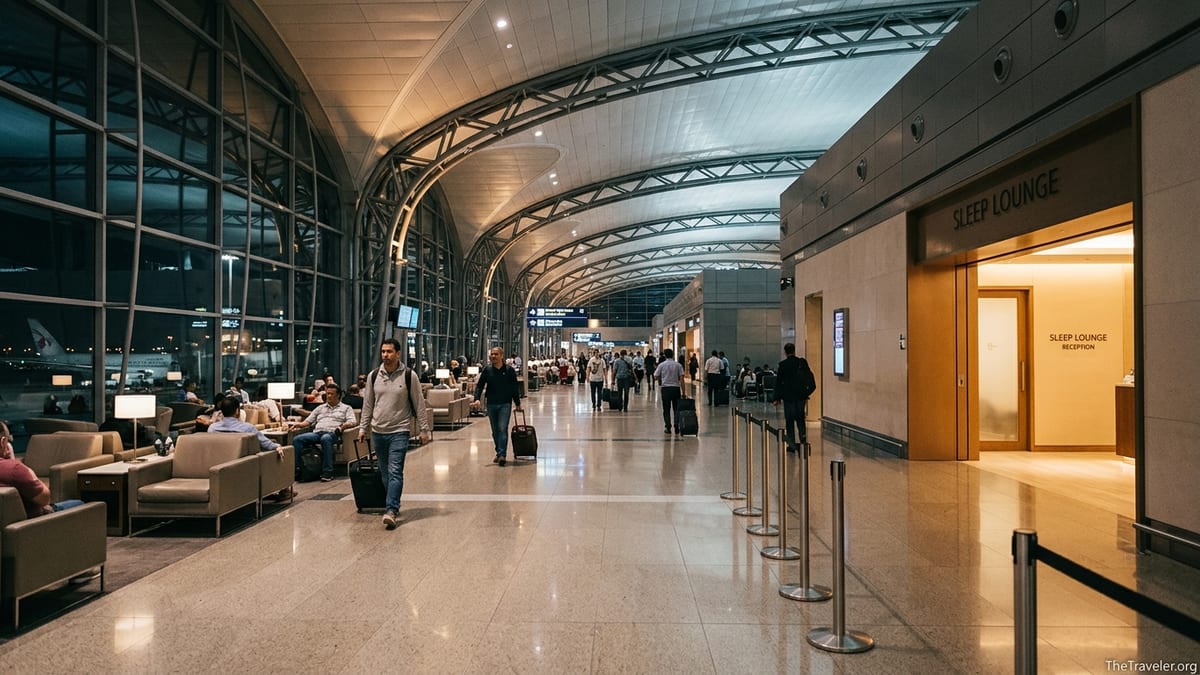
Understanding Your Overnight Options at Hamad International
The first decision in Doha is whether to remain “airside” inside the secure transit area or pass through immigration and stay “landside” in the city. If you are on a true transit without entering Qatar, your choices are essentially the Oryx Airport Hotel, the Sleepover Doha South Node sleep lounge, or finding a quiet corner in the terminal’s free rest zones. These work best for layovers where you prefer to avoid passport control and keep things simple.
Travelers who are eligible to enter Qatar, however, gain access to a much wider range of hotels within 10 to 20 minutes of Hamad International Airport. Doha offers everything from budget-friendly city hotels under roughly 60 to 80 US dollars per night in off-peak periods to upscale brands such as Hyatt Regency Oryx Doha and several waterfront properties near the Corniche. With the Doha Metro’s Red Line running directly from the airport into the city, it is often faster and more comfortable than many expect to leave the terminal for the night.
Before you book, consider three key variables: the length of your layover, the time of day you arrive, and whether you will need to collect and re-check luggage. A five-hour overnight stop arriving at 1:00 in the morning might justify a sleep pod close to your gate, while a 12-hour daytime layover could be ideal for a city hotel with a pool and blackout curtains. Clarifying these details upfront makes the hotel search far more focused and realistic.
Finally, check whether your airline, particularly Qatar Airways, offers a transit accommodation program on your specific ticket. On some eligible itineraries with layovers between 8 and 24 hours, the airline may arrange complimentary or subsidized hotel stays in the city, which can completely change the value calculation compared to paying out of pocket for a room inside the terminal.
Sleeping Inside the Terminal: Oryx Airport Hotel
For many overnight passengers, the Oryx Airport Hotel is the most convenient option because it is located airside inside the main passenger terminal of Hamad International Airport, close to the South Node. You do not pass through immigration or collect checked baggage, which saves time and avoids any visa considerations. From many gates it is a five to ten minute walk, with clear signage in the concourse pointing to the hotel’s entrance above luxury retail shops.
Rooms at Oryx Airport Hotel are typically priced at a premium compared to city hotels. Recent online rates often start in the low to mid hundreds of US dollars for a standard room, and the property usually allows flexible booking blocks, such as stays of 6, 12 or 24 hours. That premium buys door-to-door convenience: you can be in your room showering within 30 minutes of landing, and later walk straight to your departure gate without re-clearing security.
The hotel caters specifically to transit travelers, so amenities are oriented to recovery rather than resort-style leisure. Rooms are sound-insulated and equipped with blackout curtains to block terminal lighting. Many guests book an entry pass to the associated wellness facilities, including a temperature-controlled indoor pool, gym and spa-style showers, which are particularly attractive on long-haul itineraries. The environment is functional, polished and quiet, ideal if your priority is simply to sleep as deeply as possible between flights.
The main drawbacks are price and limited availability at peak times. During major events or busy travel seasons, same-day walk-up rates can be significantly higher than those booked weeks in advance, and some nights the hotel sells out. If you are planning a long connection in Doha and know you will want a proper bed airside, reserving the Oryx Airport Hotel ahead of time is wise, especially for late-night arrivals when alternative options in the terminal might already be busy.
Sleep Pods and Lounges: Sleepover Doha South Node and Quiet Zones
Passengers who do not need a full hotel room but still want a private space to lie down can consider Sleepover Doha South Node, the rebranded sleep ’n fly lounge located in the transit area. Positioned in the South Node of the terminal, this facility offers a mix of FlexiSuite sleep pods, compact cabins and double or bunk configurations aimed at solo travelers, couples and families. Because it is airside, you can access it without entering Qatar, and it is especially popular with economy passengers who want something more comfortable than a general waiting area but at a lower price than the Oryx Airport Hotel.
Typical bookings at Sleepover Doha are sold by time blocks, often in increments of a few hours rather than whole nights. Recent examples show smaller pods starting at under 100 US dollars for a shorter stay, with larger cabins priced higher. Each pod or cabin comes with a flat or reclined sleeping surface, basic bedding and power outlets, and some units offer space for hand luggage underneath. Showers are sometimes available either within the lounge or via paid access to nearby facilities, which can be valuable on longer multi-flight journeys.
For travelers on a strict budget, Hamad International Airport also provides free “quiet rooms” with reclining loungers and dimmed lighting. These are not private and can fill up during late-night peaks, but they are generally more restful than sitting upright in a regular gate area. Many passengers with early morning departures aim to claim a lounger in these quiet zones, using eye masks and earplugs to improve sleep quality. You will still have your hand luggage with you at all times, so packing light and keeping valuables organized is important.
When choosing between a sleep pod and free quiet zones, think about your sleep style and connection time. A traveler with a six-hour overnight layover who struggles to sleep in public may find that paying for a private pod yields a far better rest, effectively buying back a full day of energy at the destination. On the other hand, someone used to sleeping on planes might be perfectly content with a lounger and a travel pillow, putting that same money toward a hotel at the final stop instead.
Staying Landside: Airport-Adjacent Hotels and Transfers
If you are eligible to enter Qatar and comfortable passing through immigration, staying landside often provides better value, particularly on longer layovers. One of the closest traditional hotels to Hamad International Airport is Hyatt Regency Oryx Doha, roughly a 10-minute drive from the terminal along Ras Abu Aboud Street. This full-service property typically offers rooms that can be more spacious than transit options, with prices that are often competitive with or below airside hotels, especially outside major event periods.
Airport-adjacent hotels commonly arrange paid or complimentary shuttle services to and from Hamad International, though the specifics vary and can change over time. Some travelers instead opt for metered taxis or ride-hailing services available from the official ranks outside arrivals. For budgeting purposes, a one-way taxi from the terminal to a hotel close to the airport is typically modest in cost compared to the room rate itself, making it a small fraction of the overall stopover budget.
Beyond immediate airport surroundings, several mid-range and upscale hotels in central Doha are also realistic options on longer overnight stops. Properties along the Corniche or near West Bay can usually be reached in around 20 to 30 minutes by taxi under normal traffic conditions. For example, some travelers enjoy spending an early evening at a hotel overlooking Doha’s skyline and then catching the metro back to the airport the next morning, combining rest with a brief taste of the city.
To decide whether a landside stay makes sense, factor in immigration queues, potential security screening on departure and the time required to travel between airport and hotel. On a short six-hour overnight layover, the margin for delays can feel uncomfortably tight, but with 10 to 14 hours or more, many passengers find the trade-off in comfort and price makes leaving the airport worthwhile.
Using Doha Metro and City Hotels for Longer Layovers
The Doha Metro’s Red Line connects Hamad International Airport Terminal 1 station directly with central areas such as Msheireb, where passengers can transfer to other lines, and West Bay. Trains are modern, air-conditioned and designed for travelers with luggage, which makes them an appealing option if your layover stretches into double digits and you want both a proper night’s sleep and a glimpse of Doha beyond the terminal.
With a 12-hour or longer overnight stop, many passengers book a standard city hotel reachable either via the metro or a short taxi ride from a metro station. For instance, a traveler arriving around midday might ride the Red Line to Msheireb, check into a mid-range hotel nearby, rest for several hours in a dark, quiet room, and then enjoy a short evening walk along the Corniche before returning to the airport early the next morning. Room rates at these properties can be significantly lower than airside hotels, especially during periods of reduced business travel.
The metro is generally most convenient for layovers that include at least a few daytime hours when trains are running frequently and attractions are open. If your flight arrives in the very early morning and departs again at dawn, a taxi straight to and from a nearby hotel may be faster than aligning your schedule with train departures. Always leave ample buffer time for getting back through security and to your gate, particularly during busy travel seasons and holidays in Qatar.
Choosing a city hotel for an overnight stop also opens up more varied dining options than the airport food court alone. Many Doha properties include late-night room service, lobby cafes or nearby restaurants, allowing you to sit down for a proper meal after a long flight. This can be particularly welcome for families or travelers adjusting to new time zones, who may prefer the privacy of a hotel restaurant over crowded terminal seating areas.
Transit Programs, Visas and Practical Booking Tips
Before locking in a hotel, confirm whether your itinerary qualifies for any airline-operated transit accommodation programs. Qatar Airways, for example, has periodically offered schemes where passengers on certain tickets with layovers of 8 to 24 hours in Doha can receive complimentary or discounted hotel stays in the city. These arrangements typically apply only when no shorter connection is available and often require advance registration, so it is worth checking the airline’s current rules well before travel.
Visa policies for entering Qatar have evolved over time and may depend on your nationality, length of stay and recent regulatory changes. Many travelers from countries with visa waiver or visa-on-arrival agreements find it straightforward to pass through immigration for an overnight stay, but requirements can differ and may be updated periodically. Always verify entry conditions with an official government or airline source close to your date of travel, particularly if you are planning to leave the terminal solely to reach a hotel.
When comparing accommodation, look closely at the time-based nature of bookings for airside properties. Oryx Airport Hotel and Sleepover Doha South Node often allow shorter, block-style reservations rather than fixed afternoon-to-morning stays, which can be either a benefit or a limitation depending on your schedule. It is common to see options such as 6-hour blocks priced lower than traditional overnight city hotel rates, but if your layover spans 10 or 12 hours, the total cost may climb closer to a standard full-night booking.
Finally, pay attention to cancellation policies and potential schedule changes. Long-haul flights can be retimed or rerouted, which may either shrink or extend your layover. Choosing a rate that allows modifications, even at a slightly higher price, can save money and stress if your flight details shift after you have already reserved a room or sleep pod.
The Takeaway
For an overnight stop at Doha’s Hamad International Airport, the best place to stay depends less on a single “perfect” hotel and more on how much time you have, whether you can or want to enter Qatar, and how highly you value convenience over cost. Airside, the Oryx Airport Hotel offers maximum simplicity and privacy at a premium price, while Sleepover Doha South Node and the airport’s quiet zones provide more budget-conscious ways to lie flat without crossing the border.
Landside, a cluster of nearby hotels such as Hyatt Regency Oryx Doha and numerous city properties connected by taxi or the Doha Metro can deliver more space and local flavor, often for less money than comparable options inside the terminal. With a longer layover, many passengers find that stepping outside the airport, even for a single night, turns a tedious wait into a mini stopover with proper rest and a chance to see a bit of Doha.
Whatever you choose, planning ahead is crucial. Verify your visa situation, double-check transit program eligibility, compare the total cost of airside versus landside stays and leave generous buffers for security and boarding. With the right choice tailored to your circumstances, an overnight at Hamad International Airport can become a smooth, restorative pause rather than a test of endurance between long-haul flights.
FAQ
Q1. Can I stay inside Hamad International Airport overnight without a hotel?
Yes, it is generally allowed to remain airside in Hamad International Airport overnight. Many travelers sleep in free quiet rooms with reclining loungers or rest in standard seating areas. Facilities such as rest zones, 24-hour eateries and free Wi-Fi make it feasible to stay in the terminal if you are comfortable sleeping in public spaces.
Q2. Is the Oryx Airport Hotel inside the secure transit area?
Yes, Oryx Airport Hotel is located airside within the passenger terminal at Hamad International Airport, near the South Node. Transit passengers can walk directly from their arrival gate to the hotel without passing through immigration, and later proceed from the hotel to their departure gate after check-out.
Q3. How expensive is it to book the Oryx Airport Hotel for a layover?
Prices vary by season and demand, but recent examples suggest that standard rooms often start in the low to mid hundreds of US dollars for short stays. Some bookings are sold in blocks of hours, such as 6 or 12 hours, rather than fixed overnight times. Because rates can change frequently, it is best to check current prices for your specific dates.
Q4. What is Sleepover Doha South Node and who is it best for?
Sleepover Doha South Node is a sleep lounge in the airport’s transit area offering sleep pods and compact cabins that can be rented by the hour. It suits travelers who want more privacy and comfort than regular seats but do not need a full hotel room. Solo travelers, couples and families on medium-length layovers often use these pods to get a few hours of proper rest.
Q5. Are there hotels very close to Hamad International Airport outside the terminal?
Yes, several hotels are located within a short drive of the airport. One of the closest full-service options is Hyatt Regency Oryx Doha, which is typically around 10 minutes by car from the terminal. Other mid-range and upscale properties in Doha can generally be reached within 20 to 30 minutes by taxi, depending on traffic and location.
Q6. Can I use the Doha Metro to reach a hotel from the airport during an overnight layover?
In many cases yes, particularly for longer layovers that include daytime or evening hours. The Doha Metro Red Line connects Hamad International Airport Terminal 1 with central areas such as Msheireb and West Bay. From there, some hotels are within walking distance or a short taxi ride. For very late-night arrivals or extremely early departures, however, a direct taxi may be more practical.
Q7. Do I need a visa to leave Hamad International Airport and stay in a city hotel?
Whether you need a visa depends on your nationality and current Qatari entry rules. Many travelers benefit from visa waiver or visa-on-arrival arrangements, but the details can change. Always check official guidance for your passport country and travel dates before planning to leave the terminal for an overnight hotel stay.
Q8. Does Qatar Airways provide free hotel stays for long layovers in Doha?
Qatar Airways has at times offered transit accommodation programs that provide complimentary or discounted hotel rooms in Doha for passengers with eligible long layovers when no shorter connection is available. These offers are subject to specific fare conditions and may change over time, so you should review the airline’s current rules or contact them directly when booking your itinerary.
Q9. How much buffer time should I allow when returning to the airport from a city hotel?
As a general guideline, plan to arrive back at Hamad International Airport at least three hours before an international departure, adding extra time during busy holiday periods or major events. This buffer covers travel back to the airport, check-in if needed, security screening and the walk to your gate. Passengers staying near the airport can sometimes manage with slightly less time, but it is safer to build in a comfortable margin.
Q10. Is it safe to sleep in public areas of Hamad International Airport?
Hamad International Airport is modern and well-staffed, and many passengers do sleep in public seating or quiet rooms during overnight layovers. As in any busy international hub, you should keep valuables close, use luggage locks where possible and avoid leaving belongings unattended. Most travelers report feeling comfortable resting in the terminal, especially in designated rest zones.